Mongruel Anna Claudia Baumel, Medici Emília Patrícia, Machado Rosangela Zacarias, Clay Keith, André Marcos Rogério
Vector-Borne Bioagents Laboratory (VBBL), Faculdade de Ciências Agrárias e Veterinárias (FCAV), Universidade Estadual Paulista "Júlio de Mesquita Filho" (UNESP), Jaboticabal 14884-900, São Paulo, Brazil.
Lowland Tapir Conservation Initiative (LTCI), Institute for Ecological Research (IPÊ), Campo Grande 79046-150, Mato Grosso do Sul, Brazil.
Microorganisms. 2024 Nov 8;12(11):2270. doi: 10.3390/microorganisms12112270.
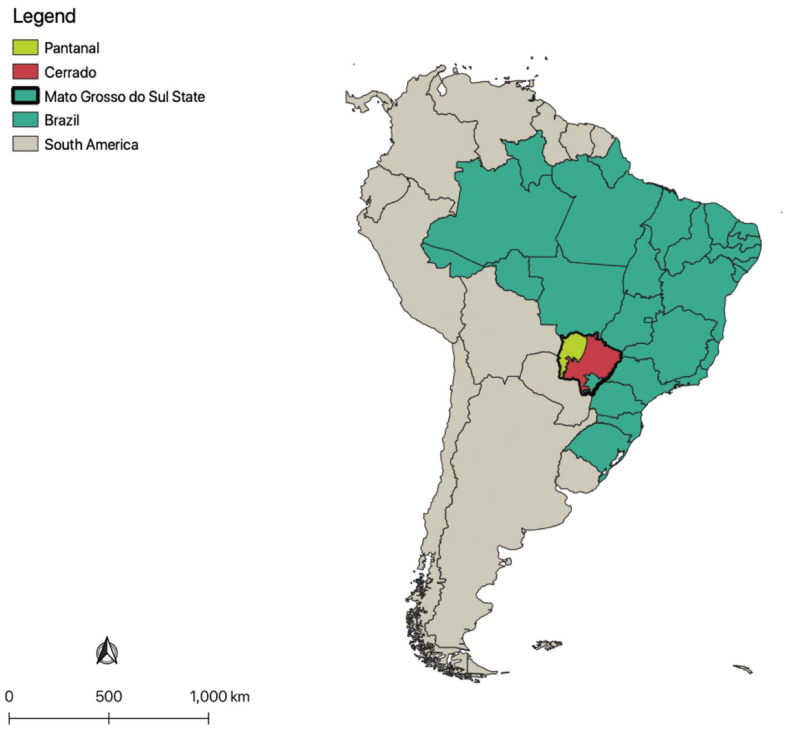
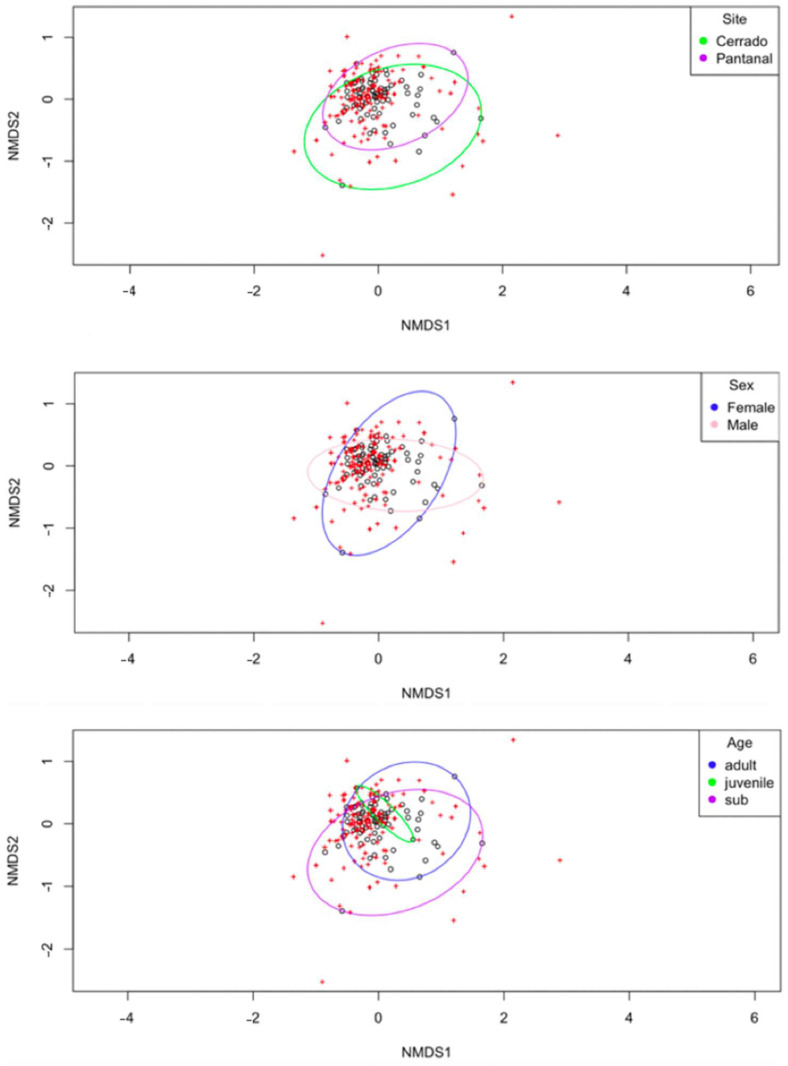
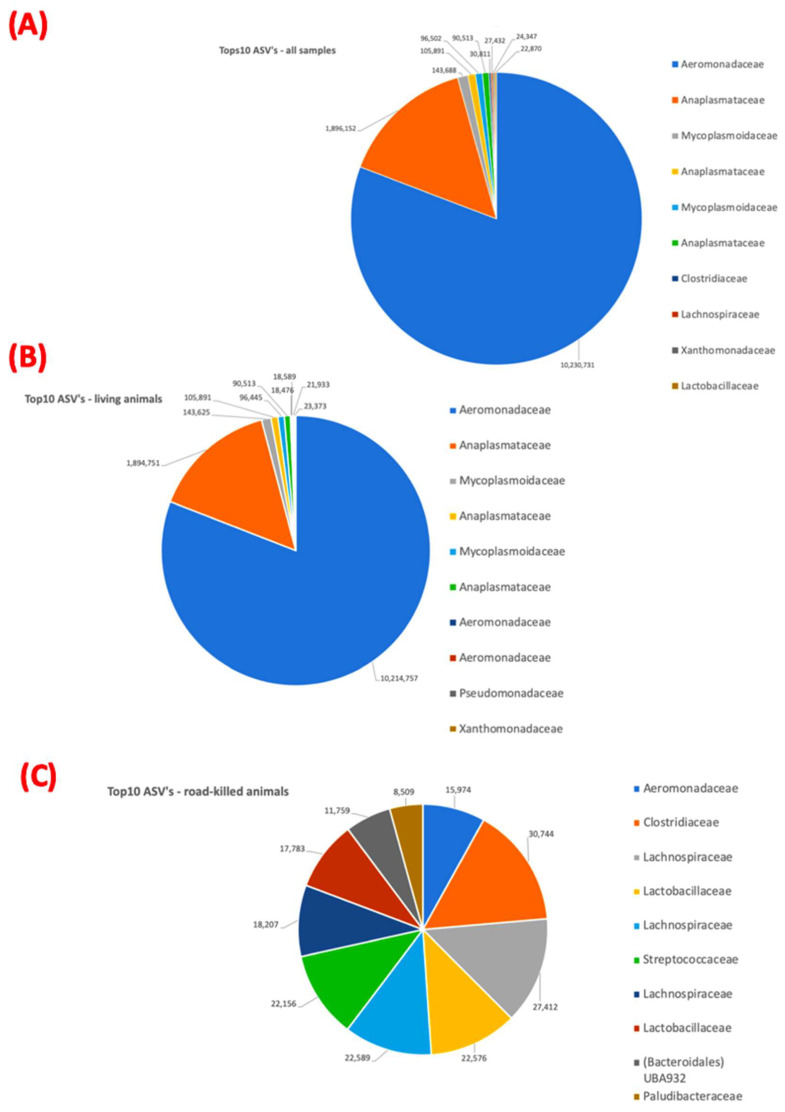
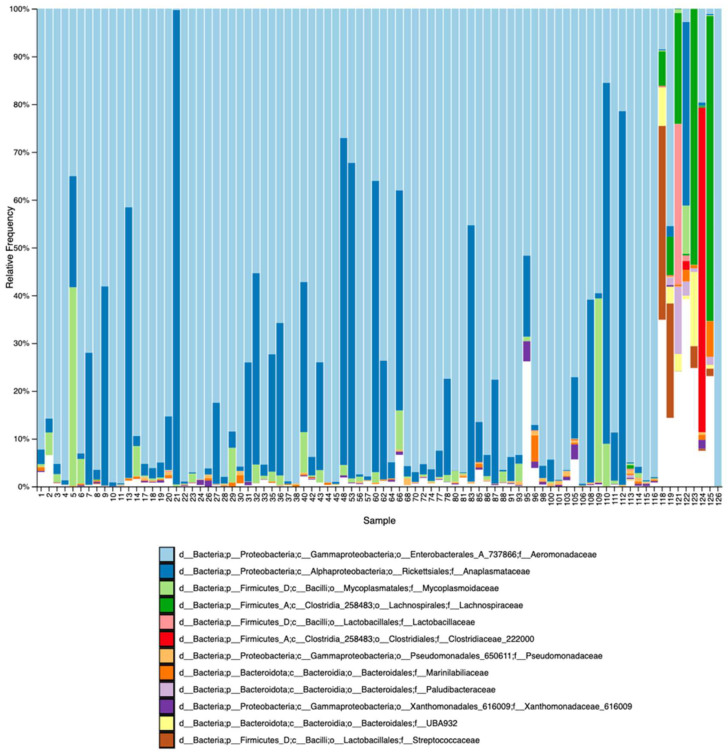
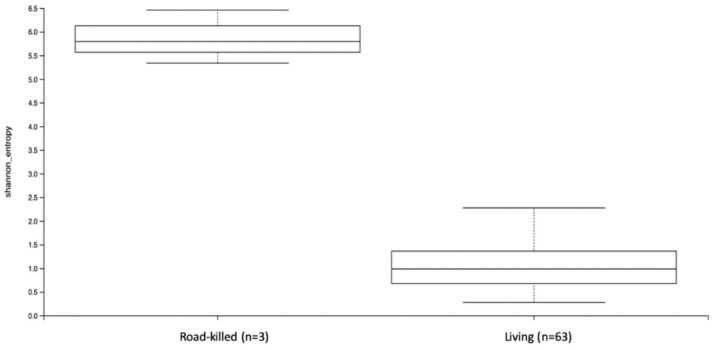
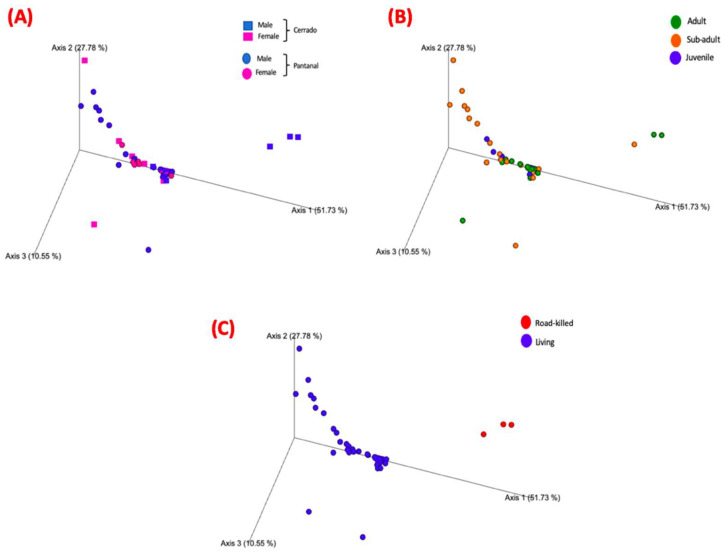
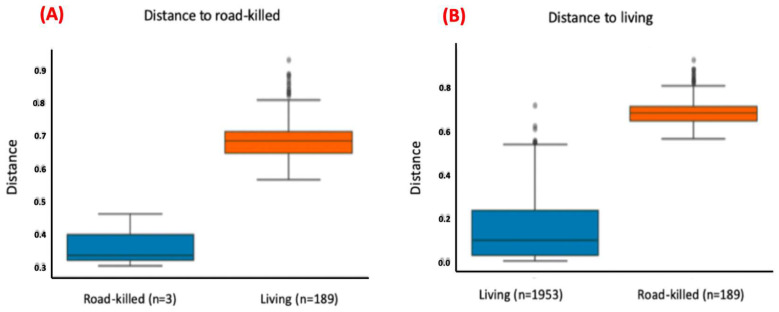
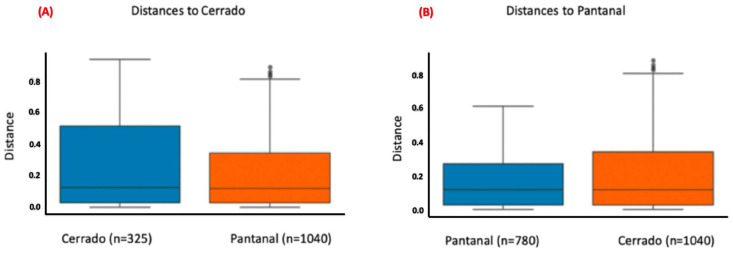
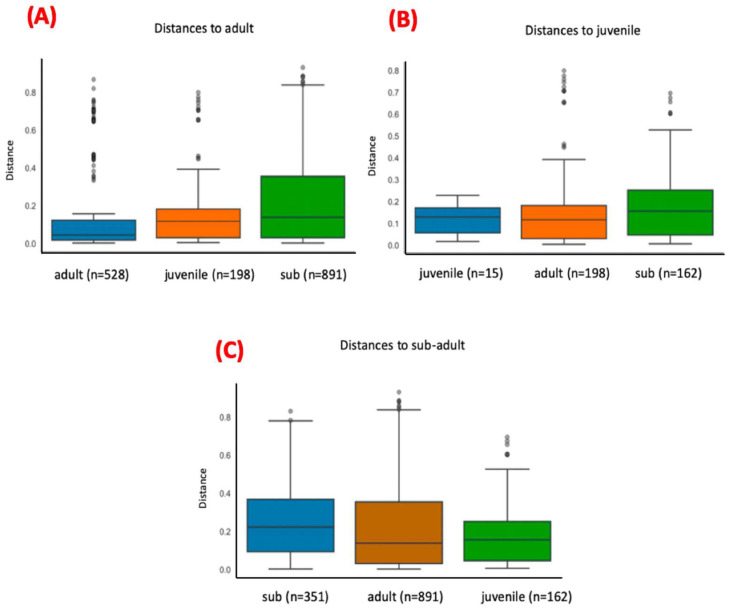
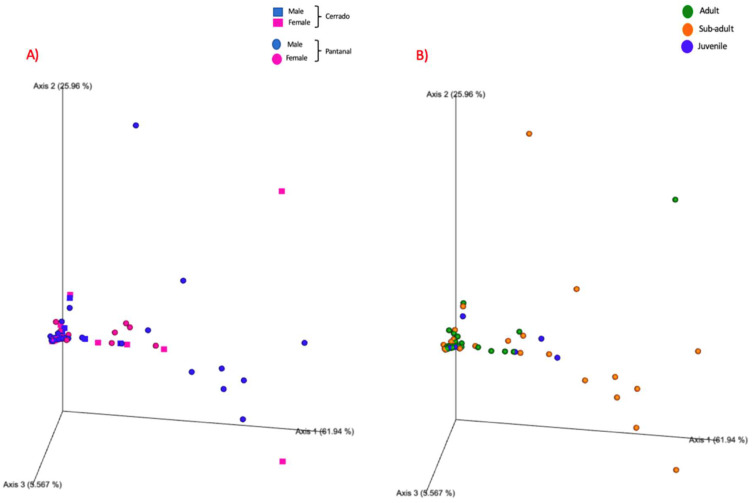
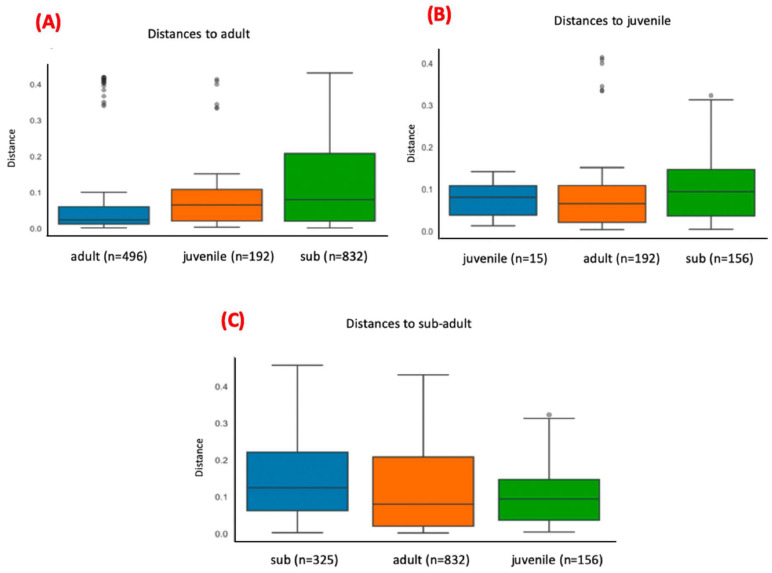
Microbiome studies targeting hypervariable regions of the 16S rRNA gene are suitable for understanding interactions between animals and their associated bacteria. While many studies focus on the gut microbiome, assessments of blood microbiota remain scarce despite the prevalence of blood-borne pathogens in vertebrates. This study aimed to investigate the bacterial community in blood samples from 79 living and 7 road-killed lowland tapirs (), a vulnerable species, sampled in two biomes in midwestern Brazil: Pantanal and Cerrado. Animals were categorized by condition (living or road-killed), sex, age, and biome. V3-V4 16S rRNA fragments were obtained from 86 blood samples and 4 negative controls. After filtering contaminants, 13,742,198 sequences representing 2146 ASVs were analyzed. Alpha diversity significantly differed by condition, while beta diversity differed by condition, site, and age (adults vs. sub-adults). For living animals (79/86 samples), alpha diversity showed no significant differences, but beta diversity differed by age. Different vector-borne bacterial pathogens, including , , and spp., were detected. Additionally, evidence of transient translocation of microbial communities from other body regions to the bloodstream was observed. Amplification of bacterial 16S rRNA from blood samples of wild provided novel information about the diversity of blood-borne microbiota of lowland tapirs, members of a poorly studied mammalian family. Next-generation sequencing proved to be a valuable tool for screening potential vector-borne pathogens in this host.
针对16S rRNA基因高变区的微生物组研究适用于理解动物与其相关细菌之间的相互作用。虽然许多研究聚焦于肠道微生物组,但尽管脊椎动物中血源性病原体普遍存在,对血液微生物群的评估仍然很少。本研究旨在调查来自79只活体和7只道路死亡的低地貘(一种濒危物种)的血液样本中的细菌群落,这些样本采自巴西中西部的两个生物群落:潘塔纳尔湿地和塞拉多。动物按状态(活体或道路死亡)、性别、年龄和生物群落进行分类。从86份血液样本和4个阴性对照中获得V3-V4 16S rRNA片段。在过滤污染物后,分析了代表2146个ASV的13742198条序列。α多样性在不同状态下有显著差异,而β多样性在不同状态、地点和年龄(成年与亚成年)下存在差异。对于活体动物(79/86个样本),α多样性没有显著差异,但β多样性在不同年龄下存在差异。检测到了不同的媒介传播细菌病原体,包括……和……属。此外,还观察到微生物群落从其他身体区域短暂转移到血液中的证据。从野生……的血液样本中扩增细菌16S rRNA,为低地貘(一个研究较少的哺乳动物家族成员)血源微生物群的多样性提供了新信息。下一代测序被证明是筛选该宿主中潜在媒介传播病原体的有价值工具。