Salazar Vásquez Antonio F, Selvadurai Paul A, Bianchi Patrick, Madonna Claudio, Germanovich Leonid N, Puzrin Alexander M, Wiemer Stefan, Giardini Domenico, Rabaiotti Carlo
Institute for Geotechnical Engineering, ETH Zurich, 8093, Zurich, Switzerland.
Eastern Switzerland University of Applied Sciences, 8640, Rapperswil, Switzerland.
Sci Rep. 2024 Dec 2;14(1):29954. doi: 10.1038/s41598-024-75942-9.
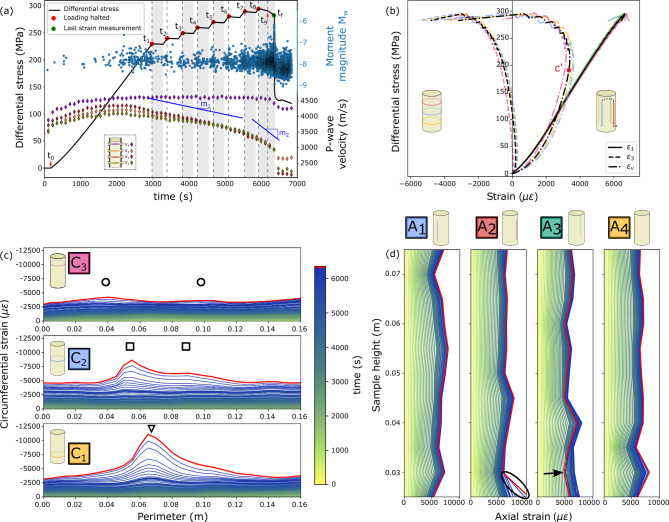
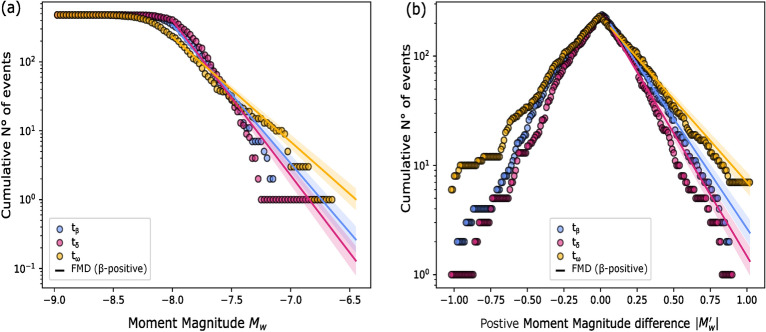
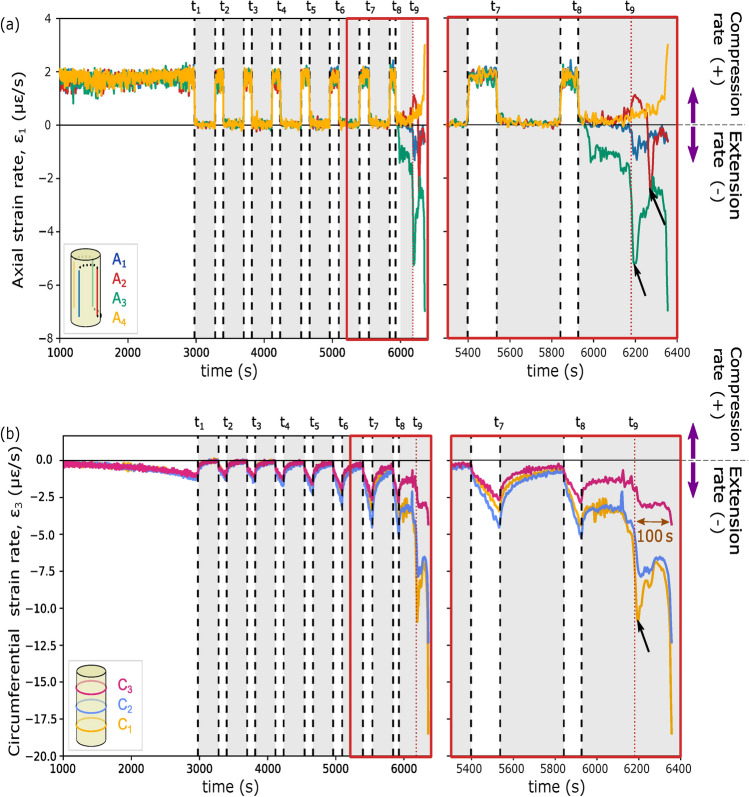
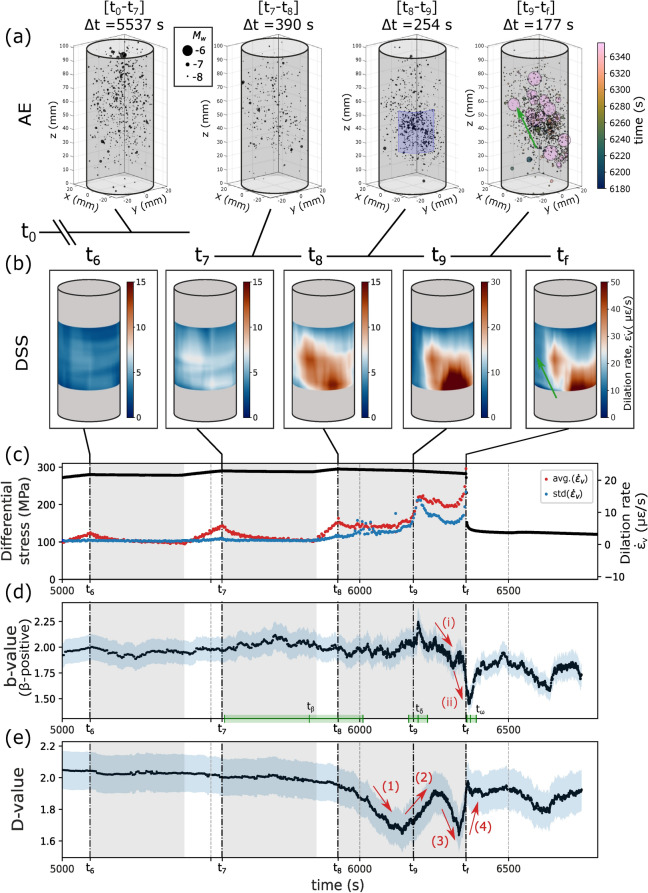
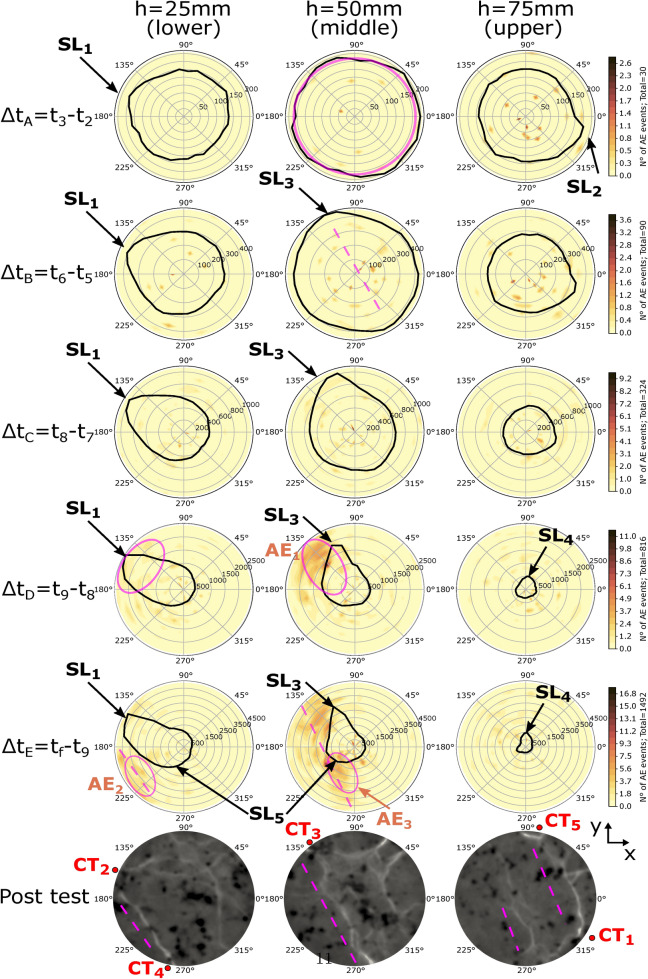
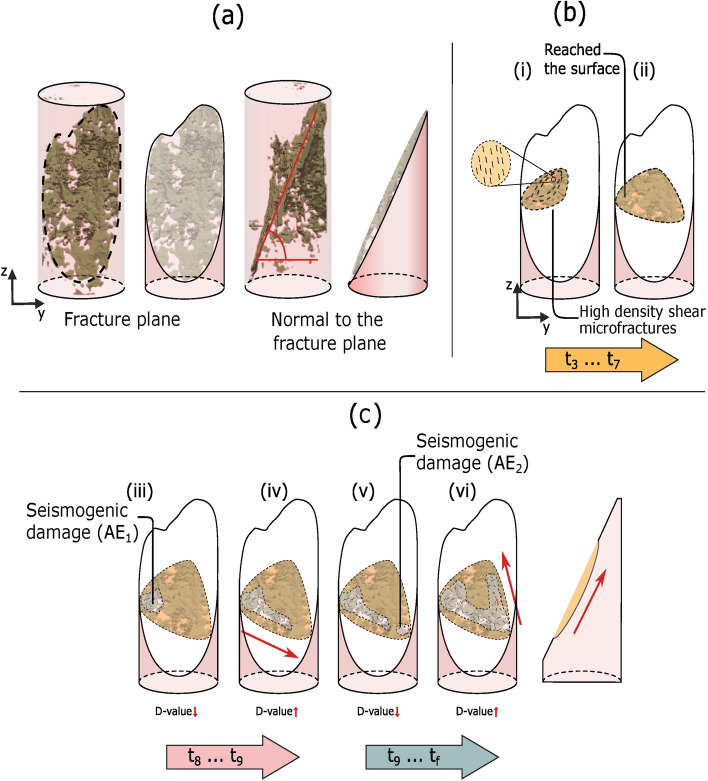
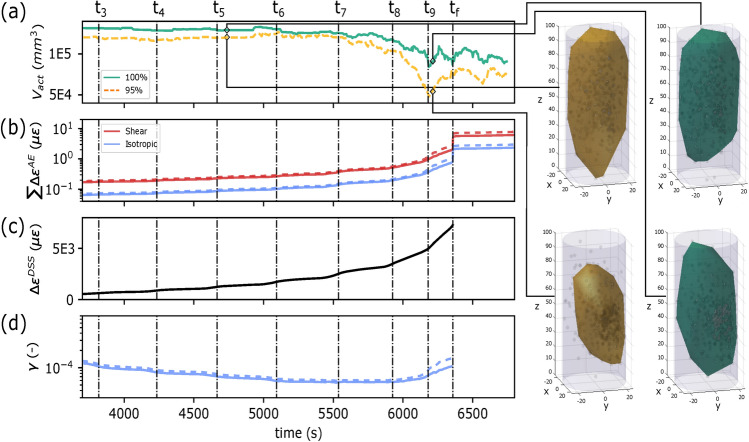
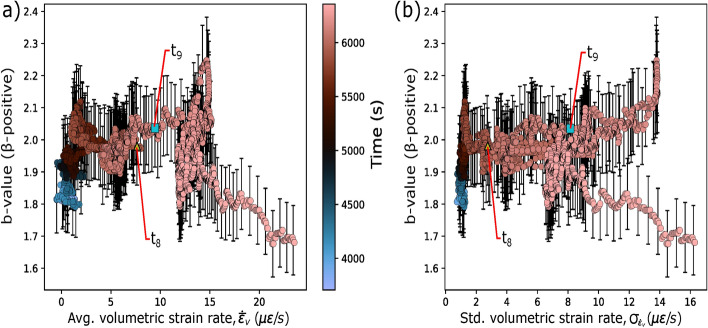
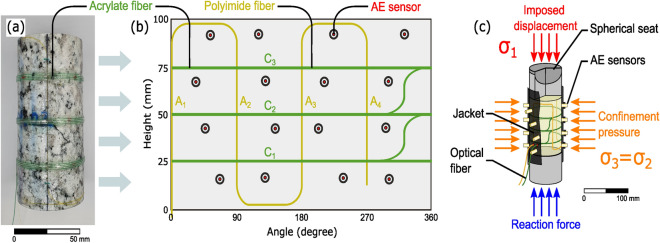
Recent laboratory tests and large-scale observations have revealed the complex interplays between aseismic and seismic deformation, as well as the progressive localization of the rock failure process. To investigate these processes, we conducted triaxial tests that combined distributed strain sensing (DSS) with acoustic emission (AE) sensors. Progressive strain localization was detected by DSS at 80% of the peak stress but did not produce measurable AEs. Closer to the peak stress, regions exhibiting strain localizations began to show clusters of AEs. This reveals that DSS measurements are more informative during the preparatory stage of brittle rock failure. The frequency-magnitude distribution of the AEs showed an inverse correlation with the volumetric deformation rate a few seconds preceding catastrophic failure. Our results are consistent with recent large-scale observations and offer crucial insights into progressive failure assessment.
近期的实验室测试和大规模观测揭示了无震变形与地震变形之间的复杂相互作用,以及岩石破坏过程的渐进局部化。为了研究这些过程,我们进行了三轴试验,将分布式应变传感(DSS)与声发射(AE)传感器相结合。DSS在峰值应力的80%时检测到渐进应变局部化,但未产生可测量的声发射。在接近峰值应力时,出现应变局部化的区域开始显示出声发射簇。这表明在脆性岩石破坏的准备阶段,DSS测量提供的信息更多。声发射的频率-震级分布与灾难性破坏前几秒的体积变形率呈负相关。我们的结果与近期的大规模观测结果一致,并为渐进破坏评估提供了关键见解。