
沉默SMAD4通过阻断IL-17A信号通路抑制哮喘中的炎症和铁死亡。
Silencing SMAD4 inhibits inflammation and ferroptosis in asthma by blocking the IL-17A signaling pathway.
作者信息
Rao Xingyu, Luo Hong, Luo Kaiyuan, Hu Chaohua
机构信息
Department of Pediatrics, First Affiliated Hospital of Gannan Medical University, No.128, Jinling Road, Zhanggong District, Ganzhou, 341000, China.
Department of Surgery I, The Third Affiliated Hospital of Gannan Medical University/Affiliated Stomatological Hospital, No. 46, Jingjiu Road, Zhanggong District, Ganzhou, Jiangxi Province, 341000, China.
出版信息
Respir Res. 2024 Dec 6;25(1):429. doi: 10.1186/s12931-024-03052-1.
BACKGROUND
The TGF-β/SMAD signaling pathway is crucial in the pathogenesis of asthma. However, SMAD family member 4 (SMAD4), a key mediator of TGF-β, its roles and underlying mechanisms in asthma remain unclear.
METHODS
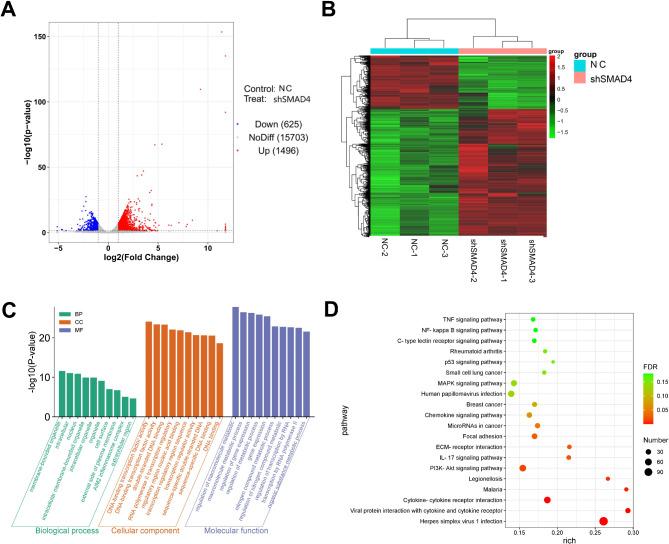
The in vivo and in vitro roles of SMAD4 in asthma were investigated through an ovalbumin (OVA)-induced mouse model and an interleukin-13 (IL-13)-induced cell model. The molecular mechanism of SMAD4 influenced asthma was examined using transcriptome sequencing, followed by feedback experiments involving recombinant human interleukin 17 A (rhIL-17 A), an IL-17 A signaling pathway activator.
RESULTS
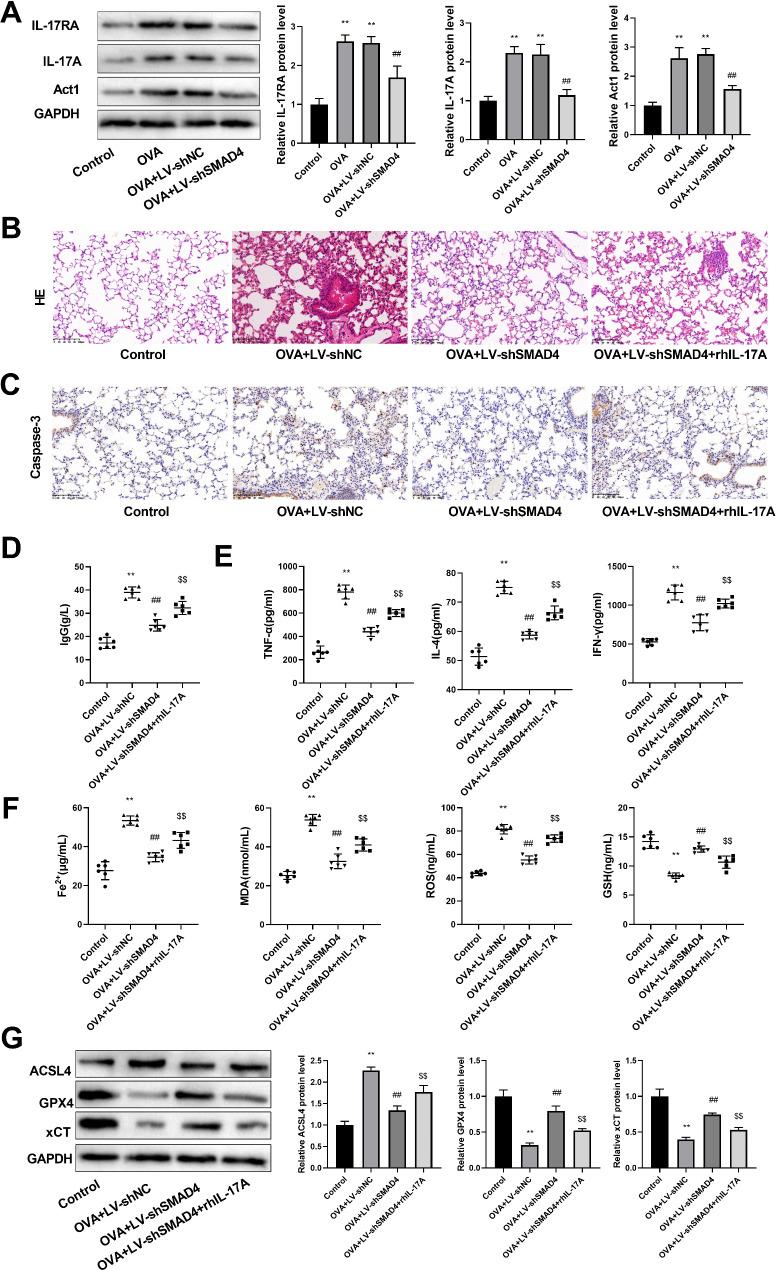
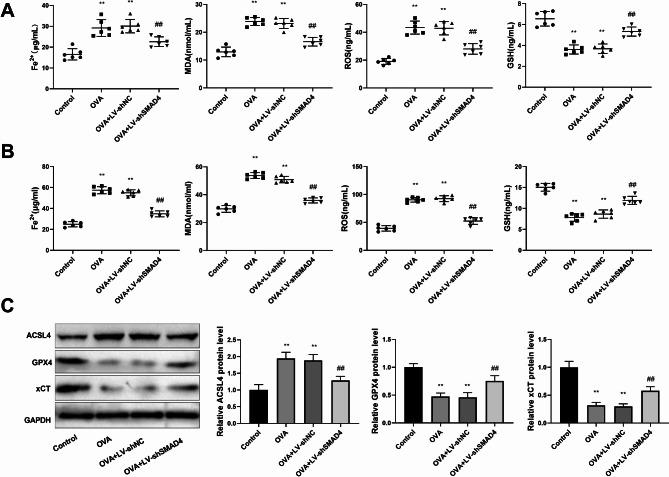
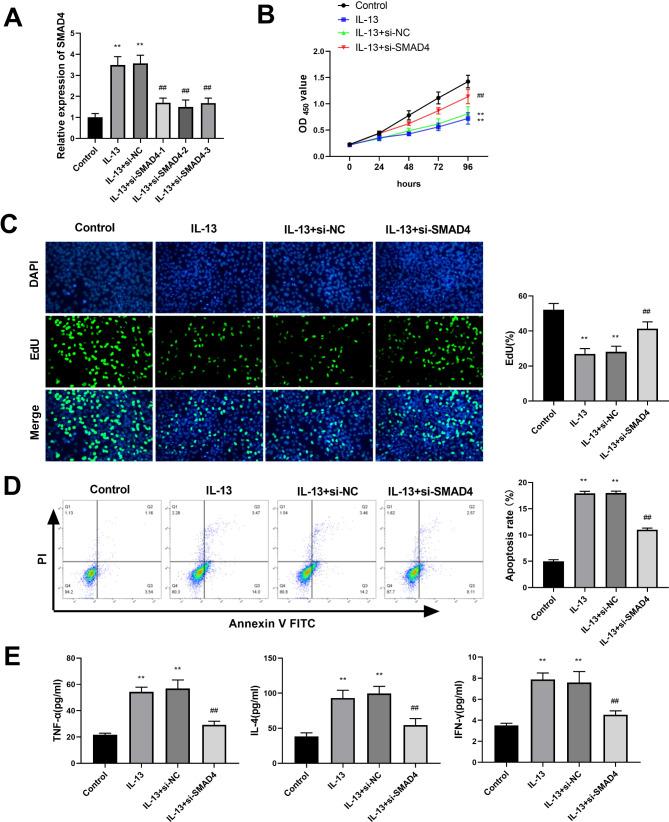
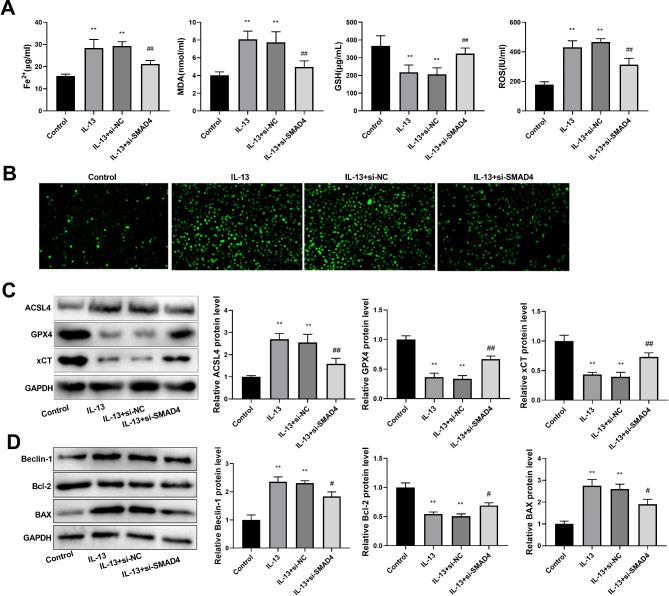
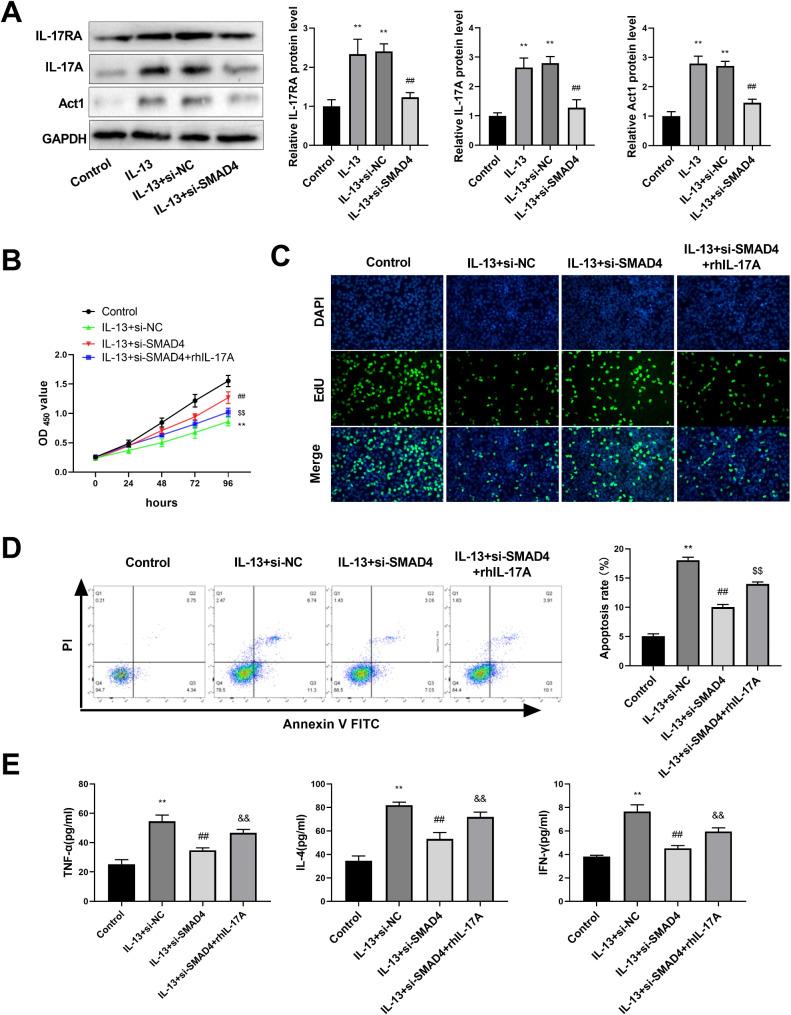
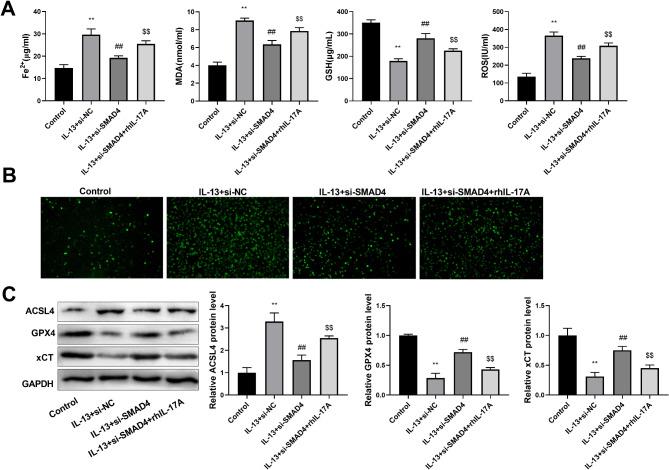
SMAD4 was highly expressed in the asthma models. SMAD4 silencing alleviated damage to lung tissue and decreased inflammatory infiltration. Expression levels of Caspase-3, IgG, and inflammatory factors were reduced after silencing SMAD4. Silencing SMAD4 suppressed ferroptosis. Silencing SMAD4 also enhanced IL-13-induced BEAS-2B cell proliferation and suppressed apoptosis. Furthermore. IL-17 A signaling pathway was promoted in the asthma models, as evidenced by elevated IL-17RA, IL-17 A, and Act1 protein levels. SMAD4 silencing inhibited the expression levels of these IL-17 A pathway-associated proteins. Moreover, rhIL-17 A treatment notably reversed the impacts of SMAD4 silencing on asthma in the IL-13-induced cell model and OVA-induced mouse model, indicating that silencing SMAD4 inhibited inflammation and ferroptosis in asthma by blocking the IL-17 A signaling pathway.
CONCLUSION
Silencing SMAD4 prevents inflammation and ferroptosis in asthma by inhibiting the IL-17 pathway, which provides a novel potential approach for asthma therapy.
背景
转化生长因子-β(TGF-β)/SMAD信号通路在哮喘发病机制中至关重要。然而,SMAD家族成员4(SMAD4)作为TGF-β的关键介质,其在哮喘中的作用及潜在机制仍不清楚。
方法
通过卵清蛋白(OVA)诱导的小鼠模型和白细胞介素-13(IL-13)诱导的细胞模型,研究SMAD4在哮喘中的体内和体外作用。采用转录组测序检测SMAD4影响哮喘的分子机制,随后进行涉及重组人白细胞介素17A(rhIL-17A)(一种IL-17A信号通路激活剂)的反馈实验。
结果
SMAD4在哮喘模型中高表达。沉默SMAD4可减轻肺组织损伤并减少炎症浸润。沉默SMAD4后,半胱天冬酶-3、IgG和炎症因子的表达水平降低。沉默SMAD4可抑制铁死亡。沉默SMAD4还可增强IL-13诱导的BEAS-2B细胞增殖并抑制细胞凋亡。此外,哮喘模型中IL-17A信号通路被激活,IL-17RA、IL-17A和Act1蛋白水平升高证明了这一点。沉默SMAD4可抑制这些与IL-17A通路相关蛋白的表达水平。此外,rhIL-17A处理显著逆转了沉默SMAD4对IL-13诱导的细胞模型和OVA诱导的小鼠模型中哮喘的影响,表明沉默SMAD4通过阻断IL-17A信号通路抑制哮喘中的炎症和铁死亡。
结论
沉默SMAD4通过抑制IL-17通路预防哮喘中的炎症和铁死亡,这为哮喘治疗提供了一种新的潜在方法。

 Zotero 插件