Wang Xuelian, Ma Tingyao, Liu Hongfei, Zhang Shujing, Yang Guoliang, Zhao Yue, Kong Lu, Gao Ran, Chen Xiaohong
Department of Otolaryngology, Head and Neck Surgery, Beijing Tongren Hospital, Capital Medical University, Beijing, China.
National Human Diseases Animal Model Resource Center; State Key Laboratory of Respiratory Health and Multimorbidity, National Health Commission (NHC) Key Laboratory of Comparative Medicine, Institute of Laboratory Animal Science, Chinese Academy of Medical Sciences (CAMS) and Peking Union Medical College (PUMC), Beijing, China.
Front Immunol. 2024 Dec 4;15:1483887. doi: 10.3389/fimmu.2024.1483887. eCollection 2024.
Recurrent or metastatic adenoid cystic carcinoma (ACC) of the head and neck is rare and highly aggressive. Due to the ineffectiveness of immune checkpoint therapies, this study aims to investigate the tumor immune microenvironment of primary tumor tissues and lung metastatic tissues and to comprehend the challenges of immunotherapy.
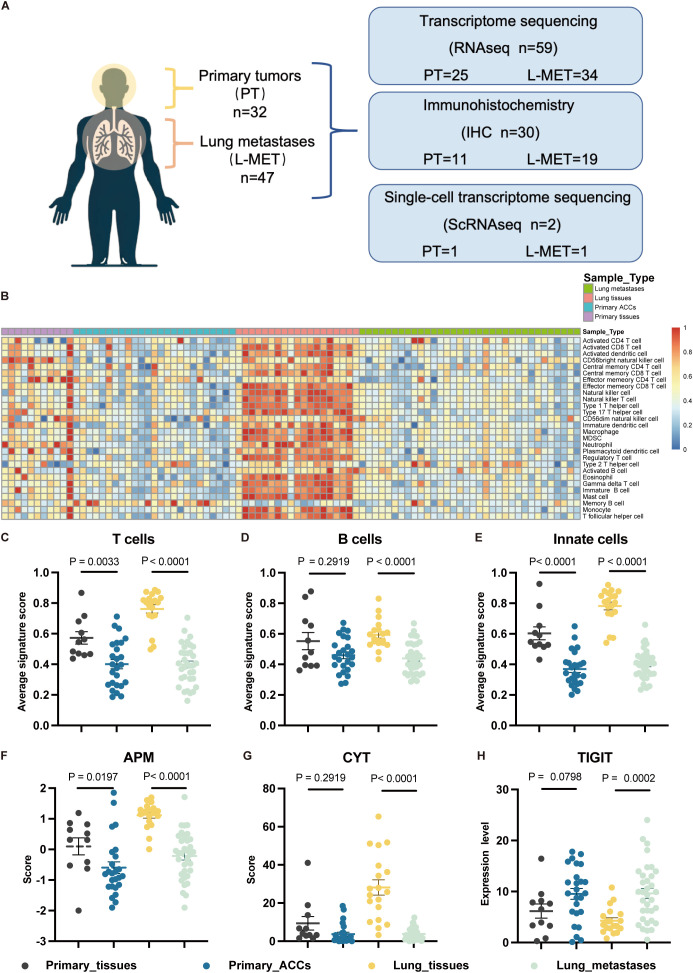
We analyzed RNA sequencing data and constructed immune landscapes from 25 primary tumors and 34 lung metastases. The data were then validated by immunohistochemistry and single-cell sequencing analysis.
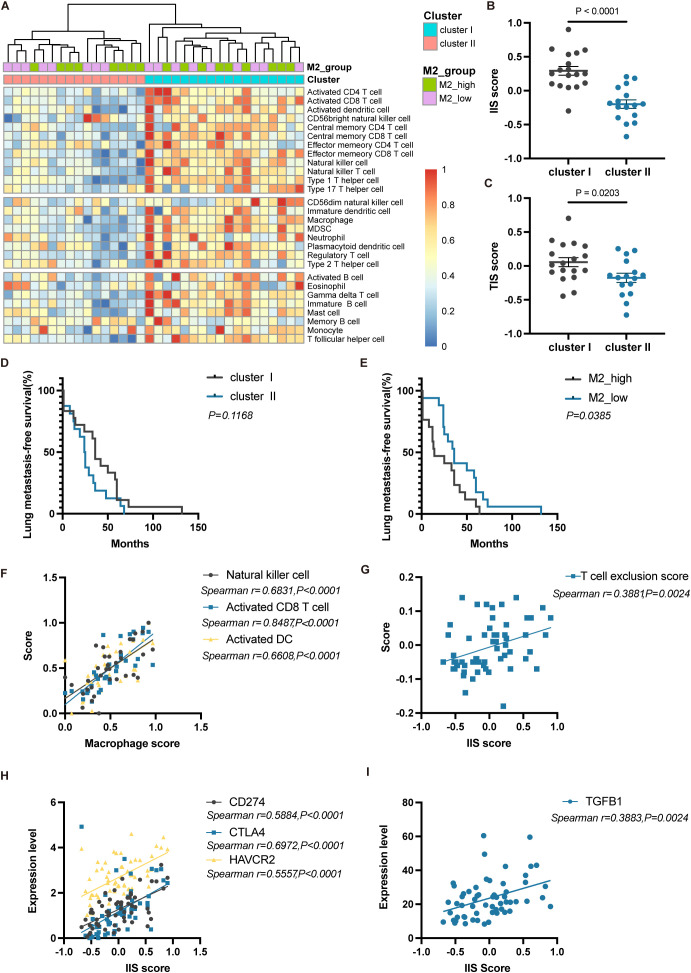
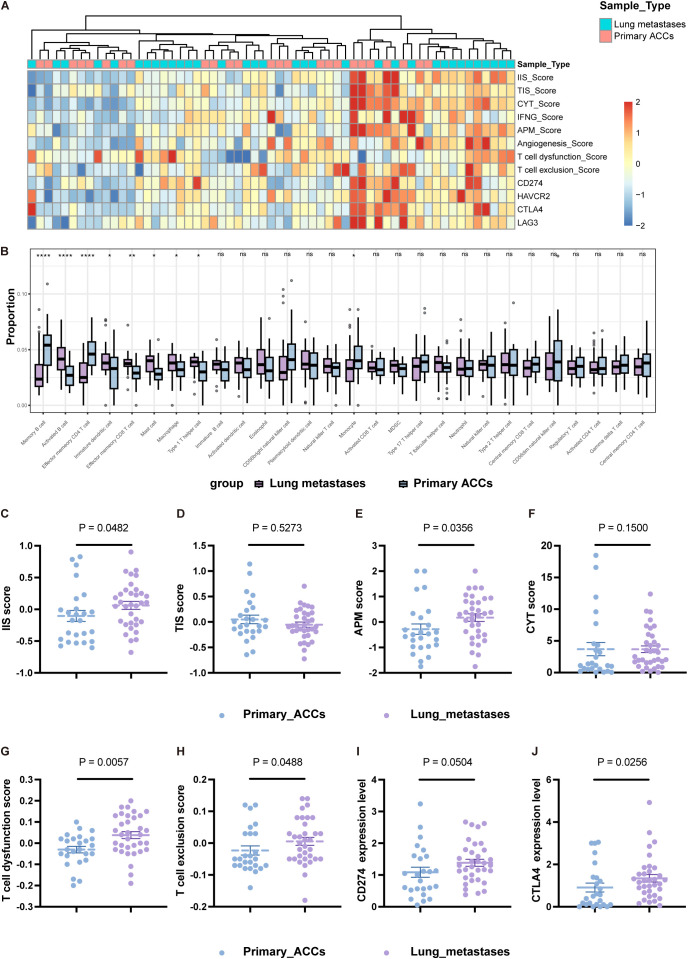
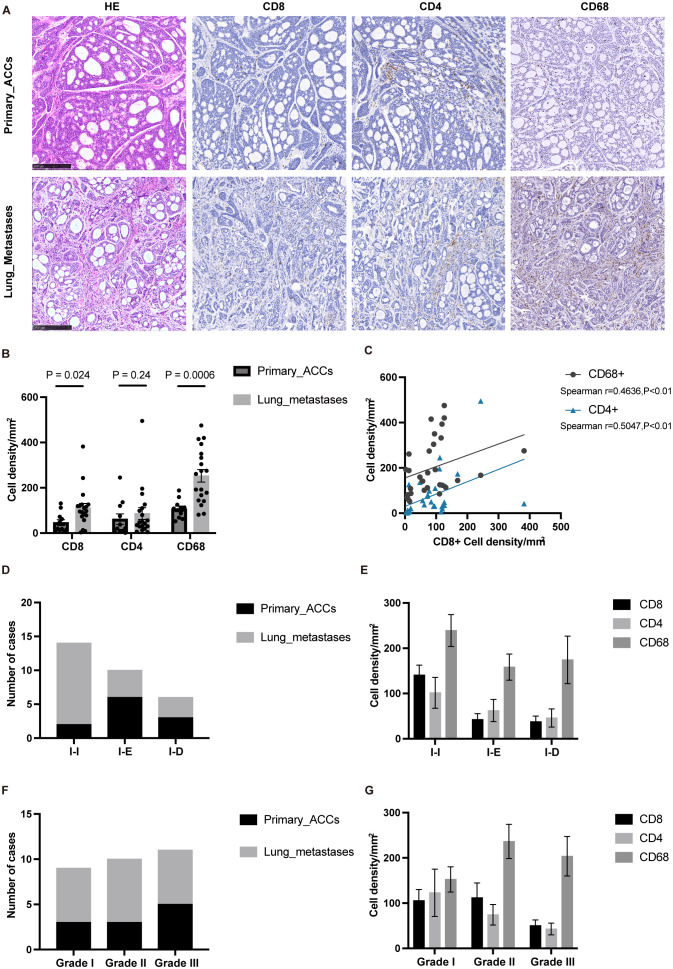
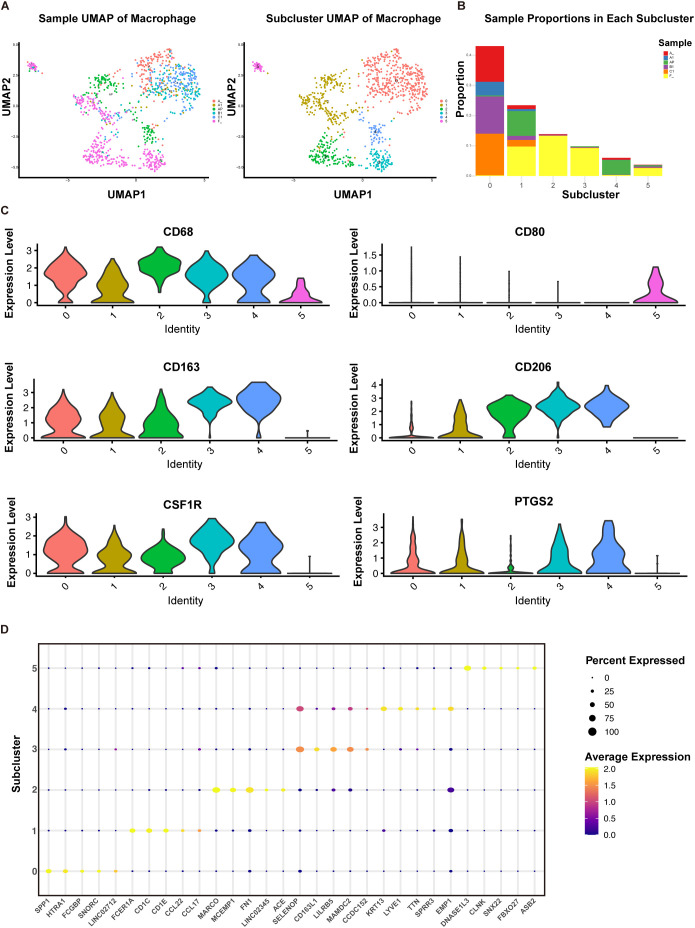
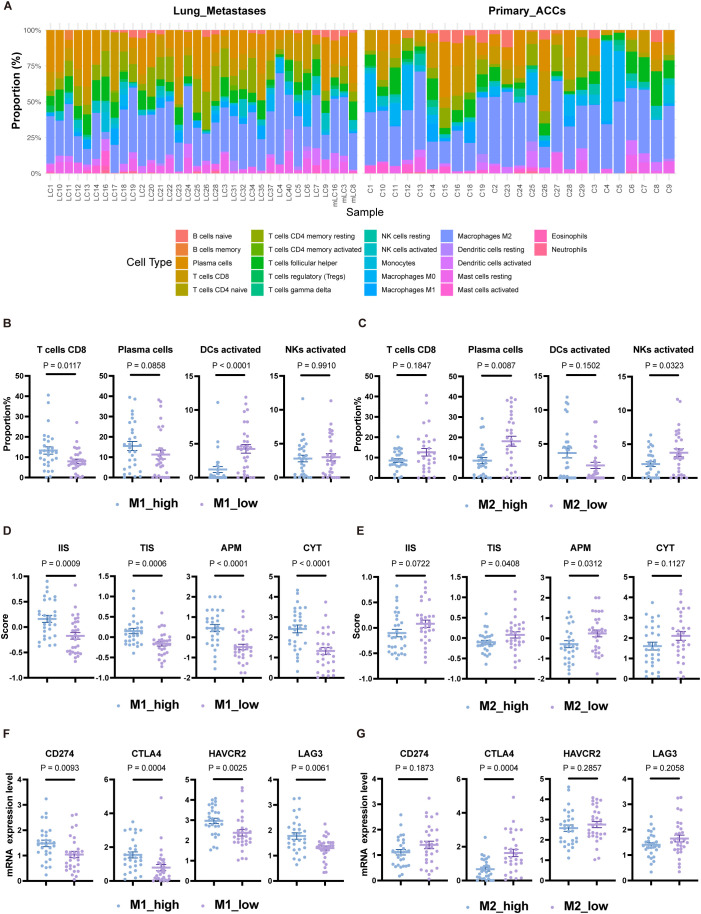
Compared to adjacent normal tissues, both primary and lung metastatic ACC showed low immune infiltration. Lung metastases had higher immune infiltration levels and antigen presentation scores but also higher T cell exclusion and dysfunction scores. Single-cell sequencing data and immunohistochemistry revealed abundant immunosuppressive tumor-associated macrophages in lung metastases. Patients with high M2 macrophage infiltration had shorter lung metastasis-free survival.
Primary and lung metastatic ACC exhibit heterogeneous tumor immune microenvironments. Higher immune cell infiltration in lung metastases is countered by the presence of suppressive tumor-associated macrophages, which may limit effective anti-tumor responses.
头颈部复发性或转移性腺样囊性癌(ACC)罕见且侵袭性强。由于免疫检查点疗法无效,本研究旨在调查原发性肿瘤组织和肺转移组织的肿瘤免疫微环境,并了解免疫治疗面临的挑战。
我们分析了RNA测序数据,并构建了来自25个原发性肿瘤和34个肺转移灶的免疫图谱。然后通过免疫组织化学和单细胞测序分析对数据进行验证。
与相邻正常组织相比,原发性和肺转移性ACC均显示出低免疫浸润。肺转移灶具有更高的免疫浸润水平和抗原呈递评分,但T细胞排斥和功能障碍评分也更高。单细胞测序数据和免疫组织化学显示肺转移灶中存在大量免疫抑制性肿瘤相关巨噬细胞。M2巨噬细胞浸润高的患者无肺转移生存期较短。
原发性和肺转移性ACC表现出异质性的肿瘤免疫微环境。肺转移灶中较高的免疫细胞浸润被抑制性肿瘤相关巨噬细胞的存在所抵消,这可能会限制有效的抗肿瘤反应。