Schwegmann Sebastian, Bhardwaj Manisha, Storch Ilse
Chair of Wildlife Ecology and Management University of Freiburg Freiburg Germany.
Ecol Evol. 2024 Dec 23;14(12):e70696. doi: 10.1002/ece3.70696. eCollection 2024 Dec.
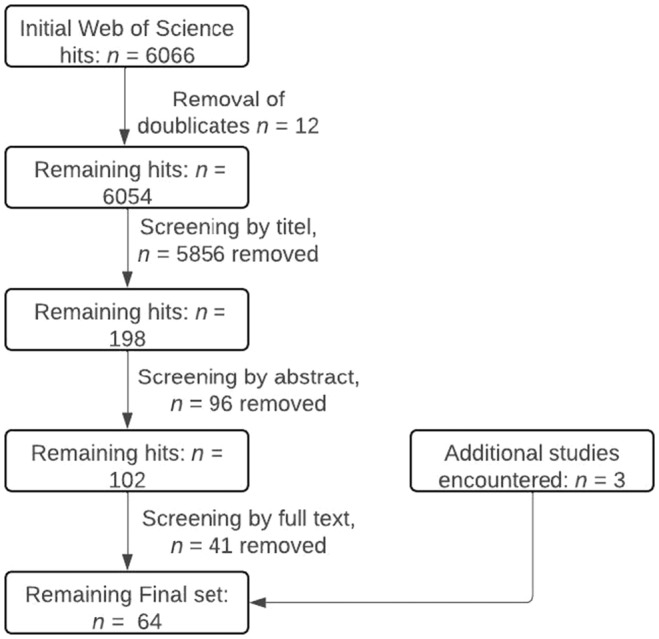
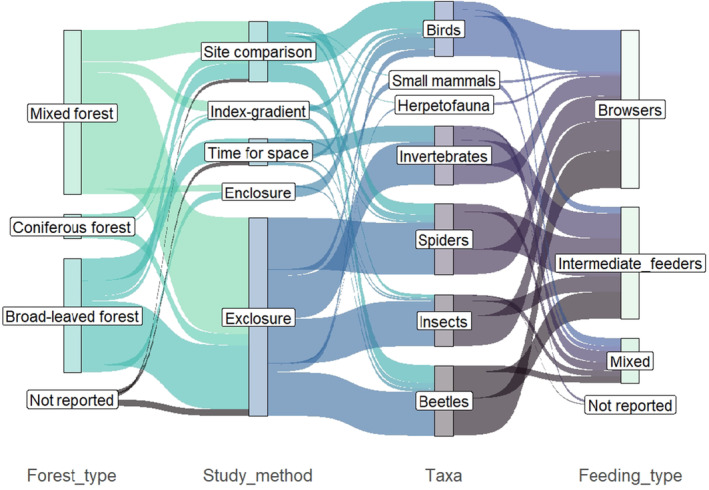
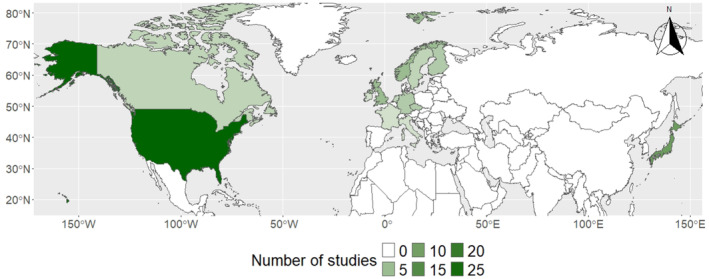
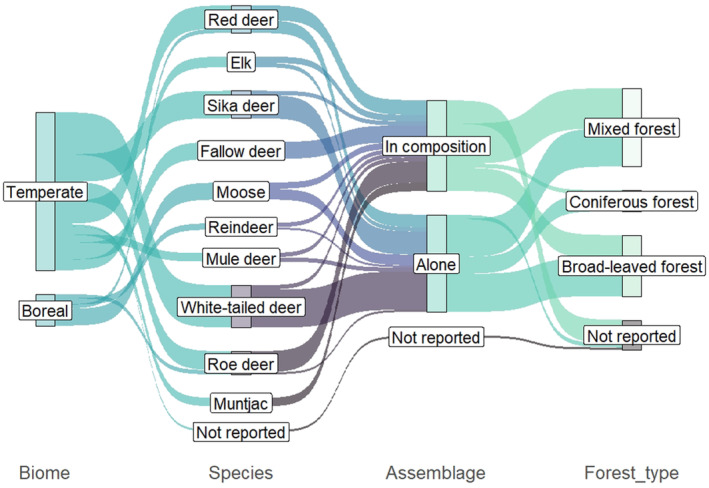
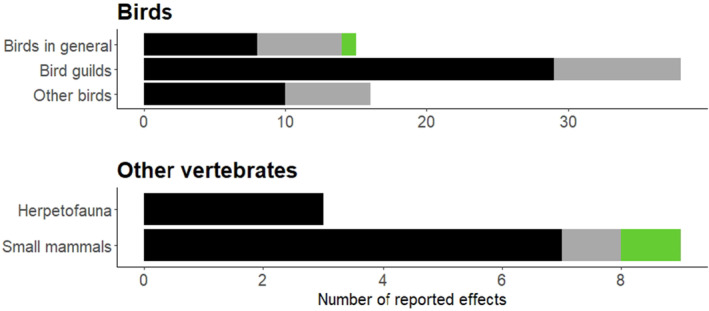
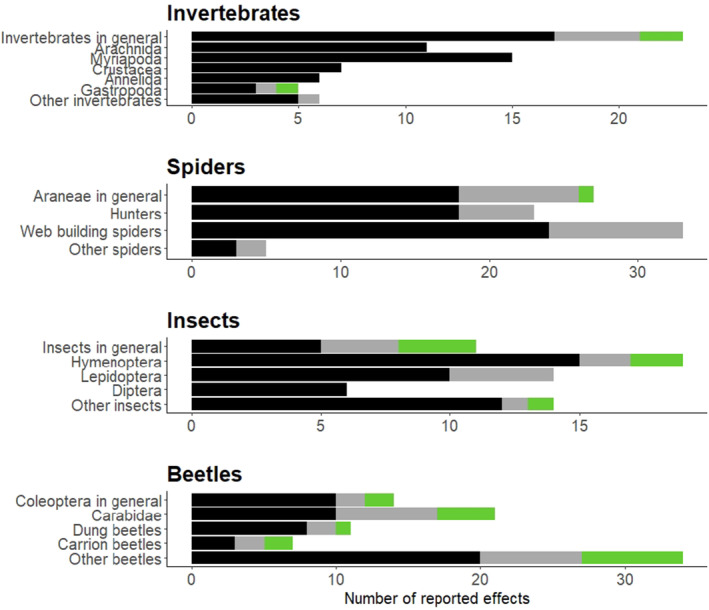
Deer are the most abundant large herbivores in temperate and boreal forests across the Northern Hemisphere. They are ecosystem engineers known to alter understory vegetation and future tree species composition by selective browsing. Also, deer have strong impacts on faunistic groups, often mediated by vegetation. The ongoing loss of faunal biodiversity in forests worldwide can be exacerbated by high deer population densities. Adapted deer management for the purpose of forest biodiversity conservation requires a holistic understanding of deer-fauna relationships. In this systematic map, we examine the existing literature assessing the effects of deer on faunal communities in boreal and temperate forests. Our aim is to synthesize currently described trends and identify research gaps for our understanding of deer as biotic drivers of forest communities. We reviewed 64 studies on how the abundance, species richness, or diversity of faunal taxa responded to different levels of deer abundance or density in forest ecosystems across the Northern Hemisphere. In total, we found almost 400 individual reported effects of nine native deer species on forest-dwelling faunal communities. However, our systematic map reveals that comprehensive synthesis of the current literature remains a challenge. Published studies often do not report contextual data essential for comparison and meta-analysis, for example, deer density, forest management, and predation pressure. Moreover, the methodological approaches of the included studies often only account for potential linear effects of deer on fauna, likely oversimplifying the complexity of direct and indirect effects that deer can have on their ecosystem. We recommend that multi-level enclosure experiments be applied to assess the impact on faunal taxa. This approach combines robust causal inference with the potential straightforward comparison and replication between deer species, forest types, and system productivity, which will facilitate the utilization of the results in future research and management.
鹿是北半球温带和寒温带森林中数量最多的大型食草动物。它们是生态系统工程师,已知会通过选择性啃食来改变林下植被和未来的树种组成。此外,鹿对动物群落有强烈影响,这种影响通常由植被介导。全球森林中动物生物多样性的持续丧失可能会因鹿的高种群密度而加剧。为保护森林生物多样性而进行适应性鹿管理需要全面了解鹿与动物群落的关系。在这张系统地图中,我们研究了评估鹿对寒温带和温带森林动物群落影响的现有文献。我们的目的是综合当前描述的趋势,并确定在理解鹿作为森林群落生物驱动因素方面的研究空白。我们回顾了64项关于北半球森林生态系统中动物类群的丰度、物种丰富度或多样性如何对不同水平的鹿的丰度或密度做出反应的研究。我们总共发现了九种本土鹿对森林栖息动物群落的近400个个体报告效应。然而,我们的系统地图显示,对当前文献进行全面综合仍然是一项挑战。已发表的研究往往没有报告比较和荟萃分析所需的背景数据,例如鹿的密度、森林管理和捕食压力。此外,纳入研究的方法往往只考虑了鹿对动物群落的潜在线性影响,可能过于简化了鹿对其生态系统可能产生的直接和间接影响的复杂性。我们建议采用多层次围栏实验来评估对动物类群的影响。这种方法将有力的因果推断与鹿种、森林类型和系统生产力之间潜在的直接比较和复制相结合,这将有助于在未来的研究和管理中利用这些结果。