Liu Siyu, Xiao Xiaomei, Yue Fangjing, Su Cong, Tong Yujun, Xu Weiyun
Department of Breast Surgery, the Affiated Hospital of South West Medical University, Luzhou, China.
Department of Emergency Medicine, Suining Central Hospital, Suining, China.
Front Immunol. 2024 Dec 13;15:1487508. doi: 10.3389/fimmu.2024.1487508. eCollection 2024.
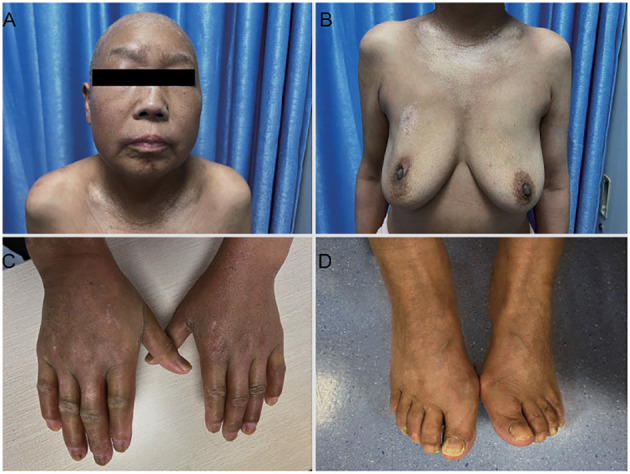
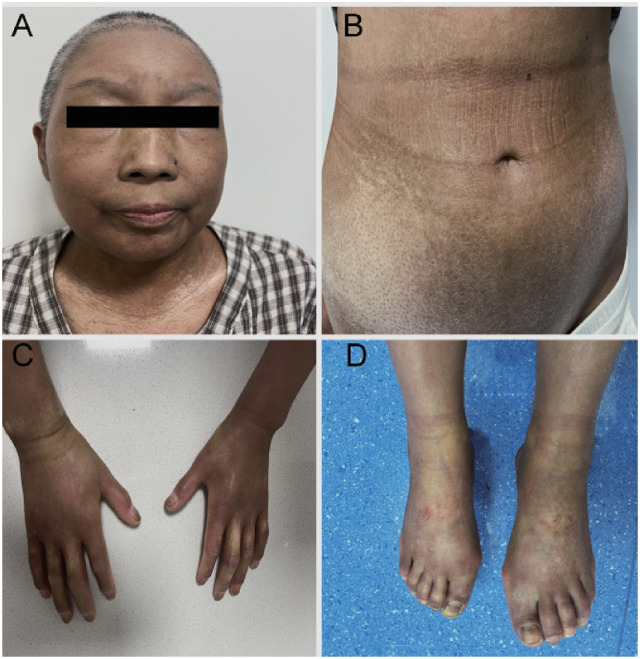
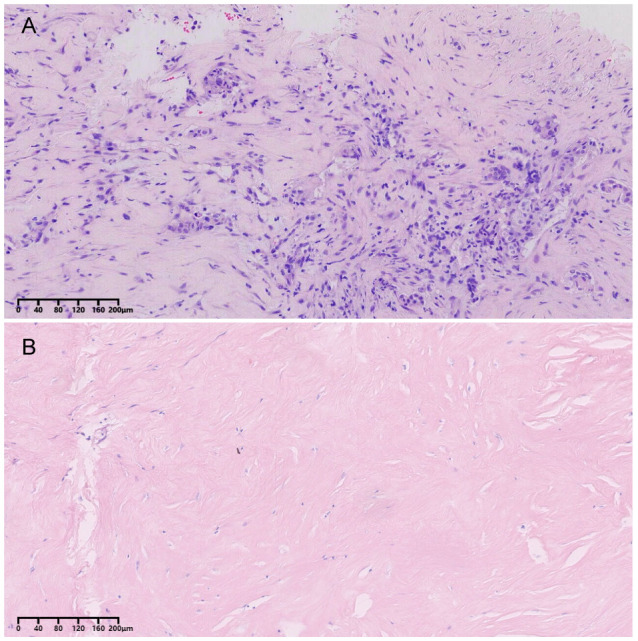
Systemic sclerosis (SSc) is an autoimmune connective tissue disease with skin fibrosis being the first and most common manifestation. Patients with SSc have a higher risk of developing malignant tumors than the general population. However, the sequence and underlying mechanisms linking SSc to malignancy remain controversial. This article presents the case of a 59-year-old woman who was diagnosed with SSc after developing skin fibrosis during neoadjuvant therapy for breast cancer. Despite aggressive antitumor treatments, including targeted therapy, SSc did not improve and progressed rapidly with increasing dermatofibrosis. Remarkably, the SSc entered remission following the cessation of antitumor therapy. Additionally, we reviewed the literature on SSc and malignant tumors, examined their relationship, and discussed key points regarding their identification and potential for adverse drug reactions.
系统性硬化症(SSc)是一种自身免疫性结缔组织病,皮肤纤维化是其首要且最常见的表现。与普通人群相比,SSc患者发生恶性肿瘤的风险更高。然而,将SSc与恶性肿瘤联系起来的先后顺序及潜在机制仍存在争议。本文介绍了一例59岁女性病例,该患者在乳腺癌新辅助治疗期间出现皮肤纤维化后被诊断为SSc。尽管进行了包括靶向治疗在内的积极抗肿瘤治疗,但SSc并未改善,且随着皮肤纤维化加重而迅速进展。值得注意的是,在停止抗肿瘤治疗后,SSc进入缓解期。此外,我们回顾了关于SSc与恶性肿瘤的文献,研究了它们之间的关系,并讨论了关于其识别及药物不良反应可能性的关键点。