Wang Shubin, Zhang Shuo, Ma Liang, Zhao Youzhi, Gao Liang, Cao Yuxiang, Xie Pengjie
Shenmu Ningtiaota Mining Company, Shaanxi Coal and Chemical Industry Group, Shenmu, Shaanxi 719300, China.
Key Laboratory of Thermo-Fluid Science and Engineering of Ministry of Education, Xi'an Jiaotong University, Xi'an, Shaanxi 710049, China.
ACS Omega. 2024 Dec 17;9(52):51554-51569. doi: 10.1021/acsomega.4c09079. eCollection 2024 Dec 31.
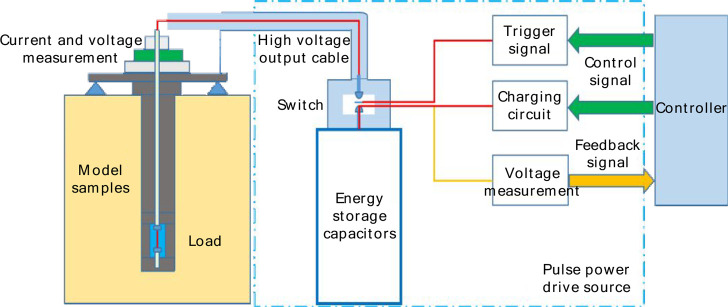
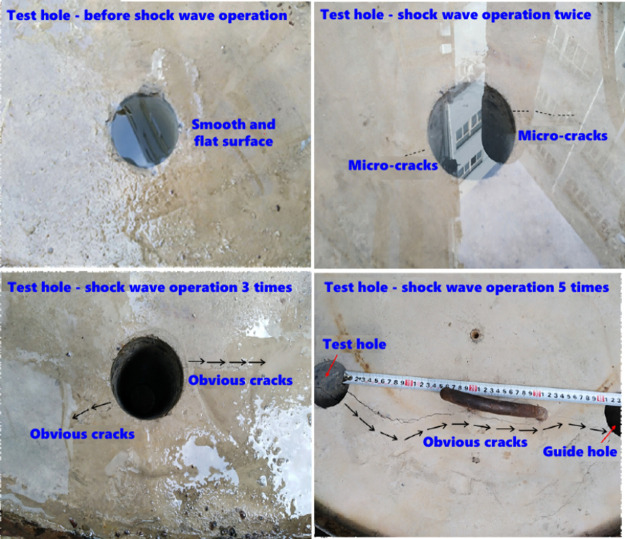
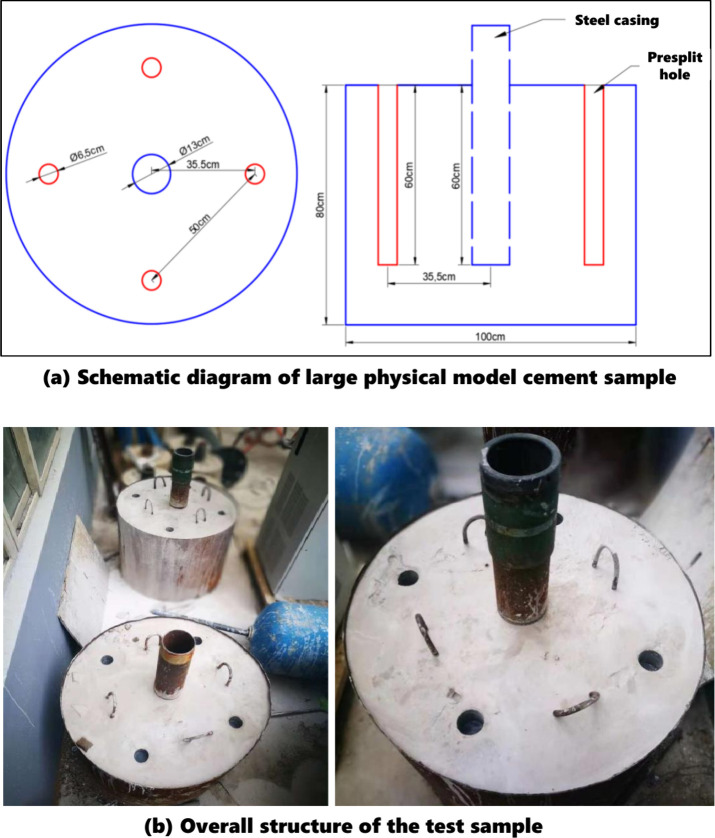
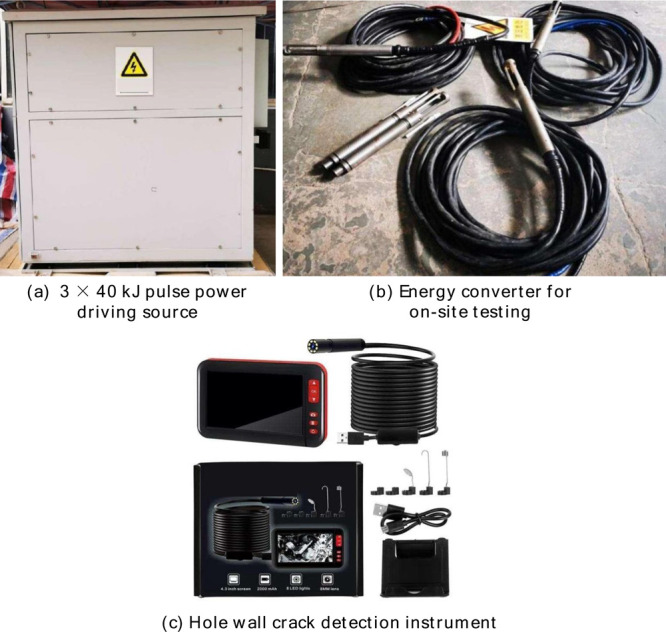
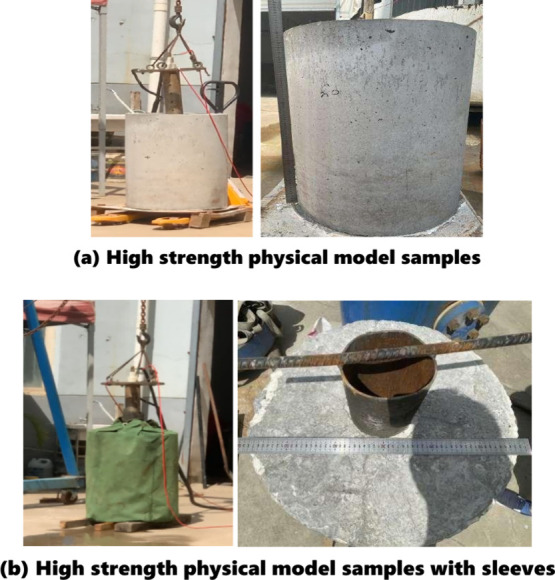
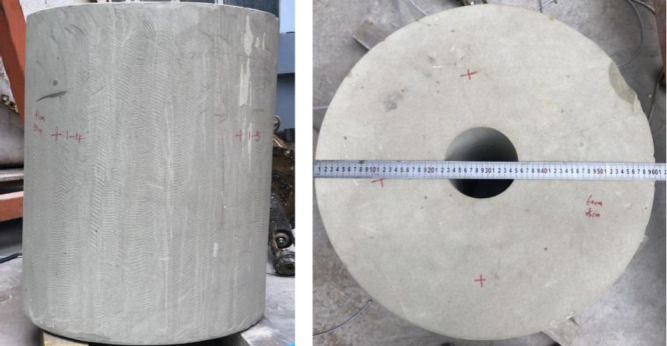
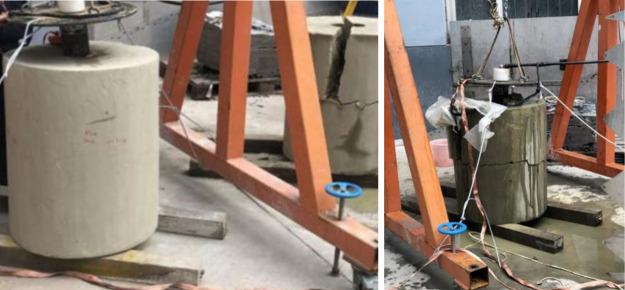
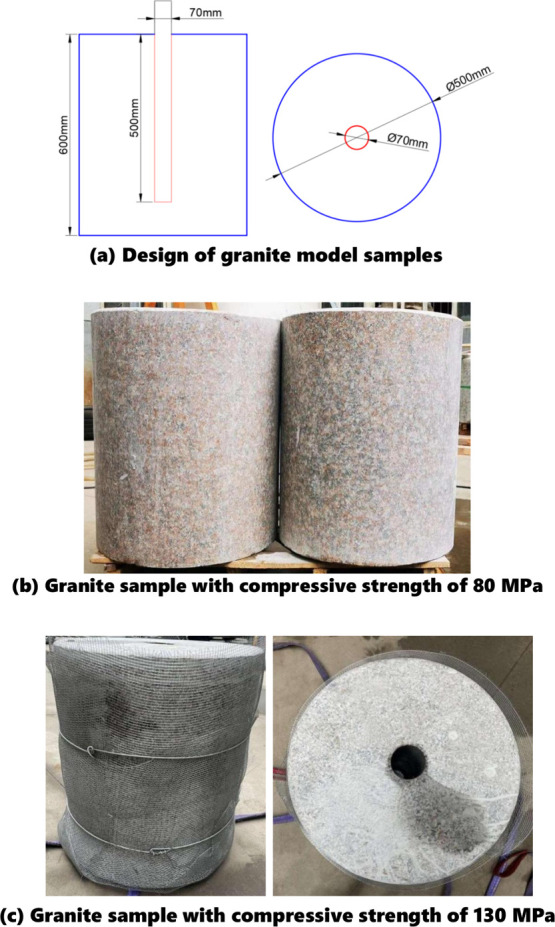
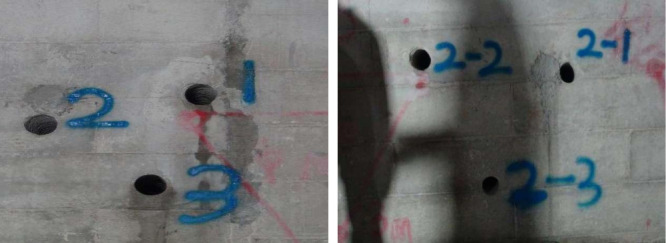
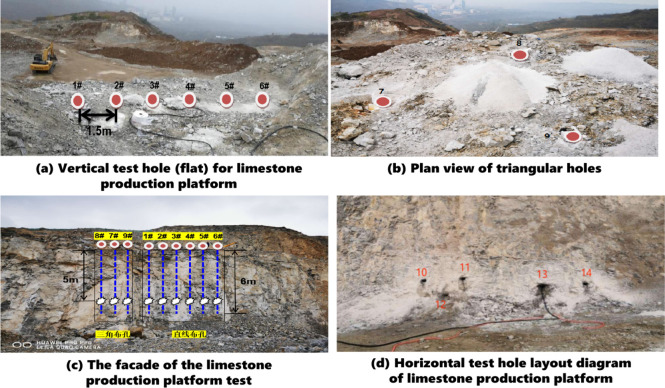
Given that conducting controllable shock wave tests in actual rock formations underground in coal mines affects coal mine production with the parameters required for equipment design and incurs significant costs, a series of ground tests were conducted separately. First, the impact of energy storage on rock breaking efficiency was analyzed. Then, physical simulation experiments were conducted on the differential efficiency of controllable shock waves on high-strength cement, sandstone, granite, solid granite, and limestone. Results show that (a) for high-strength cement, the energy storage of 50 kJ is driven by pulse power, and the energy converter uses a metal wire with a length of 120 mm and a diameter of 1.6 mm to convert energy. (b) For sandstone, after a single impact on the sample, due to the lack of confining pressure and outer protection, the physical model sample was directly exploded, and the cracking effect was very good. (c) For granite, the experimental results of three energy levels of 50, 70, and 100 kJ have basically verified that the energy storage of the pulse power driving source with an energy of 100 kJ can achieve the result of fracturing material mode. (d) For solid granite, endoscopic exploration was conducted on the drilling holes and adjacent guide holes where impact was implemented. (e) For limestone strata, when the energy storage design of the pulse power drive source is 100 kJ, the existing metal wire electric explosion energy conversion efficiency and three impacts can meet the cutting seam requirements of most coal seam roofs.
鉴于在煤矿井下实际岩层中进行可控冲击波试验会因设备设计所需参数而影响煤矿生产,且成本高昂,因此分别进行了一系列地面试验。首先,分析了储能对破岩效率的影响。然后,针对可控冲击波对高强度水泥、砂岩、花岗岩、实心花岗岩和石灰岩的差异化效率进行了物理模拟实验。结果表明:(a)对于高强度水泥,50 kJ的储能由脉冲功率驱动,能量转换器使用长度为120 mm、直径为1.6 mm的金属丝来转换能量。(b)对于砂岩,对样品单次冲击后,由于缺乏围压和外部保护,物理模型样品直接爆炸,开裂效果非常好。(c)对于花岗岩,50、70和100 kJ三个能量级别的实验结果基本验证了能量为100 kJ的脉冲功率驱动源的储能能够实现压裂材料模式的结果。(d)对于实心花岗岩,对实施冲击的钻孔和相邻导向孔进行了内窥镜探测。(e)对于石灰岩地层,当脉冲功率驱动源的储能设计为100 kJ时,现有的金属丝电爆炸能量转换效率和三次冲击能够满足大多数煤层顶板的割缝要求。