
泰国将乙肝疫苗纳入扩大免疫规划32年后,乙肝病毒感染显著减少。
Significant reduction in Hepatitis B virus infections following 32 years of universal Hepatitis B vaccination as part of EPI, Thailand.
作者信息
Nilyanimit Pornjarim, Wanlapakorn Nasamon, Vichaiwattana Preeyaporn, Wongsrisang Lakkhana, Klinfueng Sirapa, Suntronwong Nungruthai, Bhunyakitikorn Wichan, Angsuwatcharakon Piyada, Sonthichai Chaninan, Thawinwisan Narong, Puedkuntod Pichet, Phattharasrivongchai Sunsanee, Loprakhon Parichaya, Tinnaitorn Watcharanan, Luankaew Thawatchai, Vinothai Sasithorn, Chaijaroen Somjet, Meechin Pornsawan, Pongpichit Chalermpol, Poovorawan Yong
机构信息
Centers of Excellence in Clinical Virology, Chulalongkorn University, Bangkok, Thailand.
Division of Communicable Diseases, Department of Disease Control, Ministry of Public Health, Nonthaburi, Thailand.
出版信息
Sci Rep. 2025 Jan 7;15(1):1167. doi: 10.1038/s41598-024-84854-7.
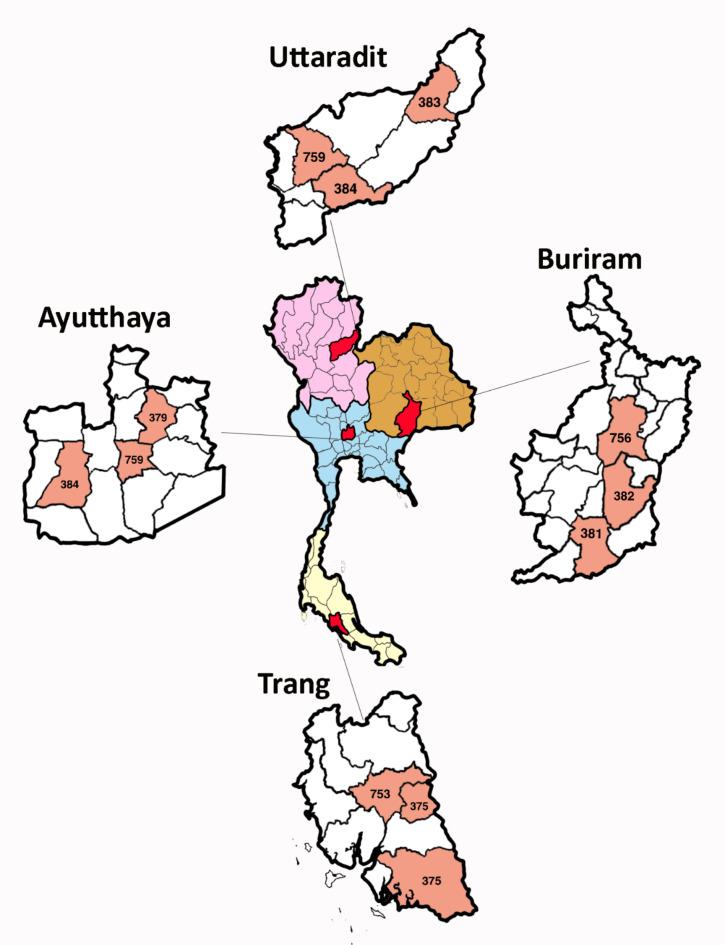
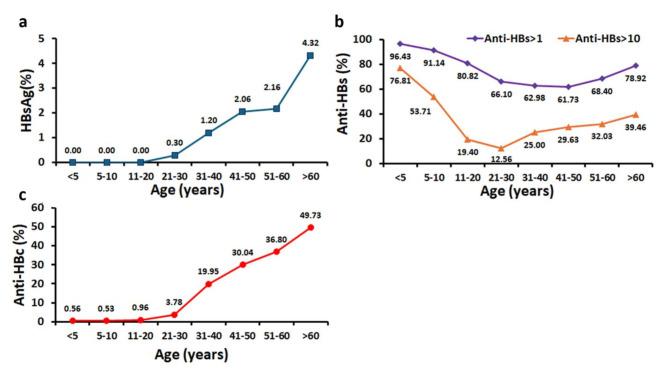
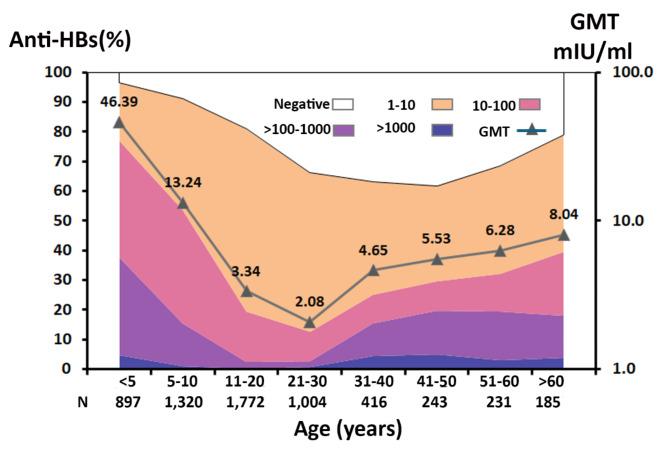
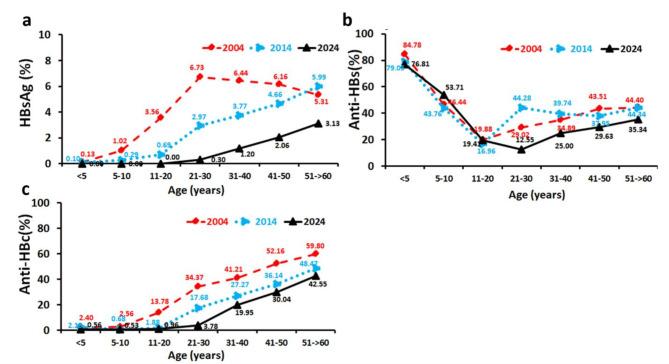
This study aimed to evaluate the impact of Thailand's hepatitis B virus (HBV) National Program Immunization (NPI), 32 years post-implementation, on infection rates and immunity in various age groups. A cross-sectional study involved 6,068 participants aged 6 months to 80 years from four regions in Thailand. Blood samples were tested for HBsAg, anti-HBs, and anti-HBc using a chemiluminescent immunoassay. Data were compared across age groups and with previous surveys from 2004 to 2014. Individuals born after the implementation of the NPI had significantly lower HBV infection rates (p < 0.0001). No HBsAg was detected in individuals under 20 years old. The prevalence of HBV carriers increased with age, from 0.3% in the 21-30 group to 4.3% in those over 60, with an overall prevalence of 1.7%. Percentages of seroprotected individuals (anti-HBs ≥ 10 mIU/mL) were high in young children but dropped to 19.4% in ages 11-20 and 12.5% in ages 21-30. Anti-HBc was found at very low rates in children but increased significantly after age 30. Thailand's HBV NPI significantly reduced HBV infection rates, especially in younger populations. This study highlighted the program's success and guided future elimination efforts to achieve hepatitis elimination goal by 2030.
本研究旨在评估泰国乙肝病毒(HBV)国家计划免疫(NPI)实施32年后对各年龄组感染率和免疫力的影响。一项横断面研究纳入了来自泰国四个地区的6068名年龄在6个月至80岁之间的参与者。使用化学发光免疫分析法对血样进行HBsAg、抗-HBs和抗-HBc检测。对各年龄组的数据进行了比较,并与2004年至2014年的以往调查结果进行了对比。NPI实施后出生的个体HBV感染率显著较低(p < 0.0001)。20岁以下个体未检测到HBsAg。HBV携带者的患病率随年龄增长而增加,从21 - 30岁组的0.3%增至60岁以上组的4.3%,总体患病率为1.7%。血清保护个体(抗-HBs≥10 mIU/mL)的百分比在幼儿中较高,但在11 - 20岁年龄组降至19.4%,在21 - 30岁年龄组降至12.5%。抗-HBc在儿童中的检出率极低,但在30岁以后显著增加。泰国的HBV NPI显著降低了HBV感染率,尤其是在年轻人群中。本研究突出了该计划的成功之处,并为未来到2030年实现消除肝炎目标的消除工作提供了指导。
 Zotero 插件