
肿瘤相关纤维化和活跃的胶原蛋白-CD44轴是胃癌预后不良亚型的特征,并导致肿瘤免疫抑制。
Tumor-associated-fibrosis and active collagen-CD44 axis characterize a poor-prognosis subtype of gastric cancer and contribute to tumor immunosuppression.
作者信息
Yang Yingqi, Sun Haohan, Yu Hongkai, Wang Luyao, Gao Chang, Mei Haokun, Jiang Xiaomeng, Ji Minghui
机构信息
The Second School of Clinical Medicine, Nanjing Medical University, Nanjing, 211166, China.
The Fourth School of Clinical Medicine, Nanjing Medical University, Nanjing, 211166, China.
出版信息
J Transl Med. 2025 Jan 27;23(1):123. doi: 10.1186/s12967-025-06070-9.
BACKGROUND
Tumor-associated fibrosis modifies the tumor microenvironment (TME), hinders the infiltration and activity of cytotoxic immune cells, and is a critical pathological process leading to the ineffectiveness of tumor immunotherapy in gastric cancer (GC). However, the specific mechanisms and interventions are yet to be fully explored.
METHODS
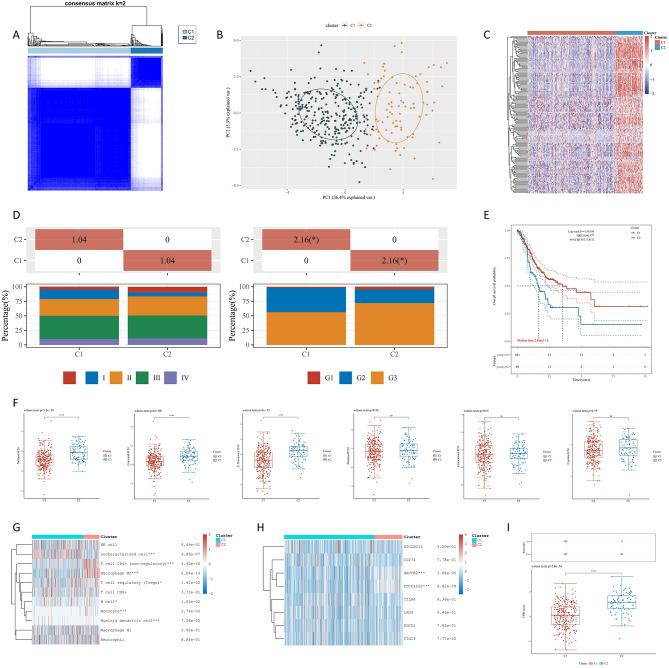
Our study included 375 gastric cancer samples from TCGA, 1 single-cell RNA sequencing (scRNA-seq) dataset comprising of 15 gastric cancer samples from GEO, 19 cohorts of immunotherapy and 2 GWAS datasets. Consensus clustering identified a gastric cancer subtype characterized primarily by fibrosis, and various methods such as pseudotime analysis, CellChat analysis and Colocalization analysis were used to explore its mechanisms.
RESULTS
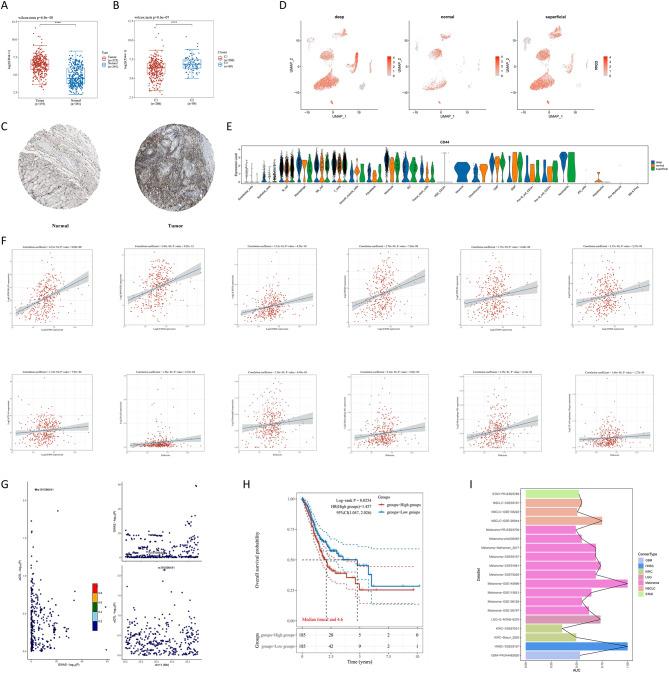
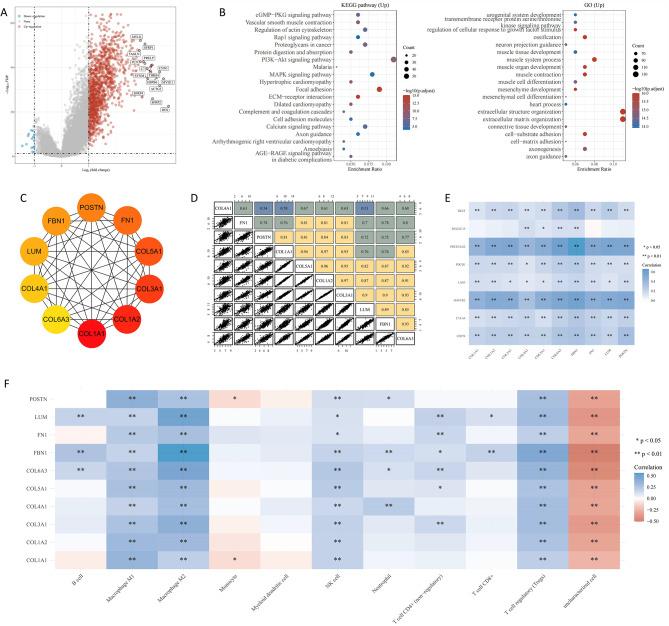
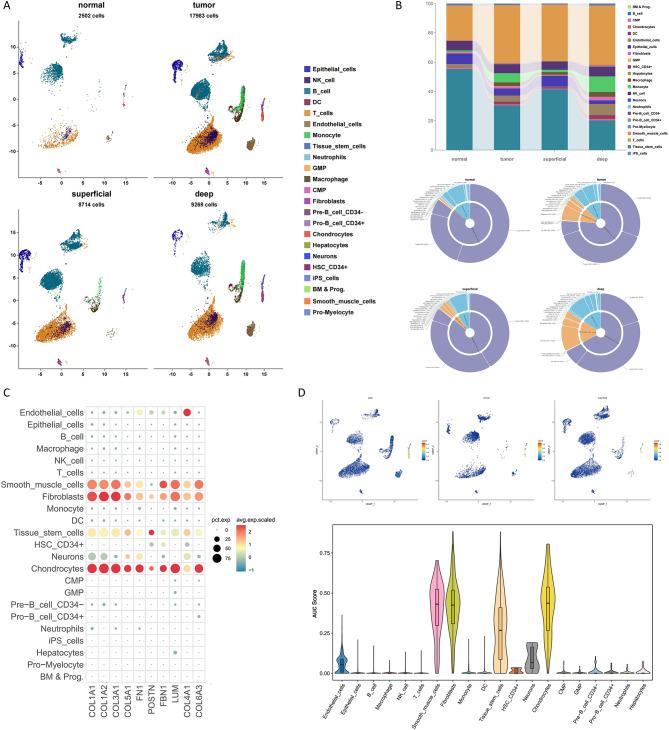
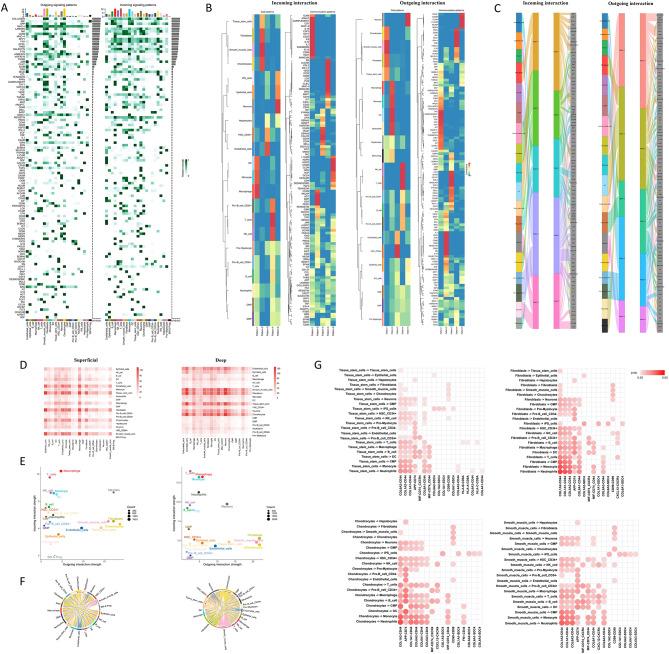
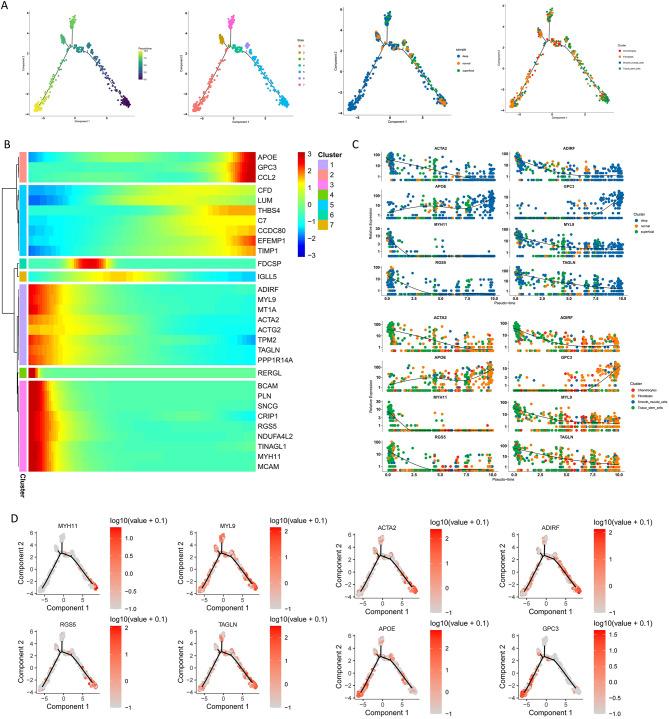
A subtype of gastric cancer was identified with poor prognosis, characterized by higher malignancy, drug resistance, and poor immune infiltration, associated with elevated expression of genes related with Extracellular matrix (ECM). Single-cell transcriptome analysis showed active Collagen-CD44 signaling axis between cancer-associated fibroblasts (CAFs) and immune cells in gastric cancer, with ECM-related genes upregulated during tumor progression. The expression of CD44 was significantly elevated in the subtype, associated with poor prognosis and tumor immune suppression in gastric cancer, potentially involved in the recruitment of immunosuppressive cells such as M2 macrophages and regulatory T cells (Tregs) and the upregulation of multiple immune checkpoints including PD-1/PD-L1.
CONCLUSION
Our study identified a new subtype of gastric cancer, revealing that fibrosis is a critical mechanism driving immune suppression in gastric cancer and emphasizing the central role of the Collagen-CD44 signaling axis. The Collagen-CD44 signaling axis has the potential to serve as a novel therapeutic target for gastric cancer by enhancing immune cell-mediated tumor suppression. By combining it with immune checkpoint inhibitors (ICIs), it may improve the efficacy of immunotherapy for gastric cancer and offer new hope for treatment.
背景
肿瘤相关纤维化改变肿瘤微环境(TME),阻碍细胞毒性免疫细胞的浸润和活性,是导致胃癌(GC)肿瘤免疫治疗无效的关键病理过程。然而,具体机制和干预措施尚待充分探索。
方法
我们的研究纳入了来自TCGA的375份胃癌样本、1个包含来自GEO的15份胃癌样本的单细胞RNA测序(scRNA-seq)数据集、19个免疫治疗队列和2个全基因组关联研究(GWAS)数据集。共识聚类确定了一种主要以纤维化为特征的胃癌亚型,并采用了诸如伪时间分析、CellChat分析和共定位分析等多种方法来探索其机制。
结果
鉴定出一种预后不良的胃癌亚型,其特征为更高的恶性程度、耐药性和较差的免疫浸润,与细胞外基质(ECM)相关基因的表达升高有关。单细胞转录组分析显示,胃癌中癌相关成纤维细胞(CAF)与免疫细胞之间存在活跃的胶原蛋白-CD44信号轴,在肿瘤进展过程中ECM相关基因上调。CD44的表达在该亚型中显著升高,与胃癌的预后不良和肿瘤免疫抑制相关,可能参与了M2巨噬细胞和调节性T细胞(Treg)等免疫抑制细胞 的募集以及包括PD-1/PD-L1在内的多个免疫检查点的上调。
结论
我们的研究鉴定出一种新的胃癌亚型,揭示纤维化是驱动胃癌免疫抑制的关键机制,并强调了胶原蛋白-CD44信号轴的核心作用。胶原蛋白-CD44信号轴有潜力通过增强免疫细胞介导的肿瘤抑制作用,作为胃癌的新型治疗靶点。将其与免疫检查点抑制剂(ICI)联合使用,可能提高胃癌免疫治疗的疗效并为治疗带来新希望。
 Zotero 插件