
使用非常规溶液进行渗透脱水对鲜切橙子某些特性的影响。
The Effect of the Use of Unconventional Solutions for Osmotic Dehydration on Selected Properties of Fresh-Cut Oranges.
作者信息
Galus Sabina, Rybak Katarzyna, Dadan Magdalena, Witrowa-Rajchert Dorota, Nowacka Małgorzata
机构信息
Department of Food Engineering and Process Management, Institute of Food Science, Warsaw University of Life Sciences, 159c Nowoursynowska St., 02-776 Warsaw, Poland.
出版信息
Foods. 2025 Feb 1;14(3):468. doi: 10.3390/foods14030468.
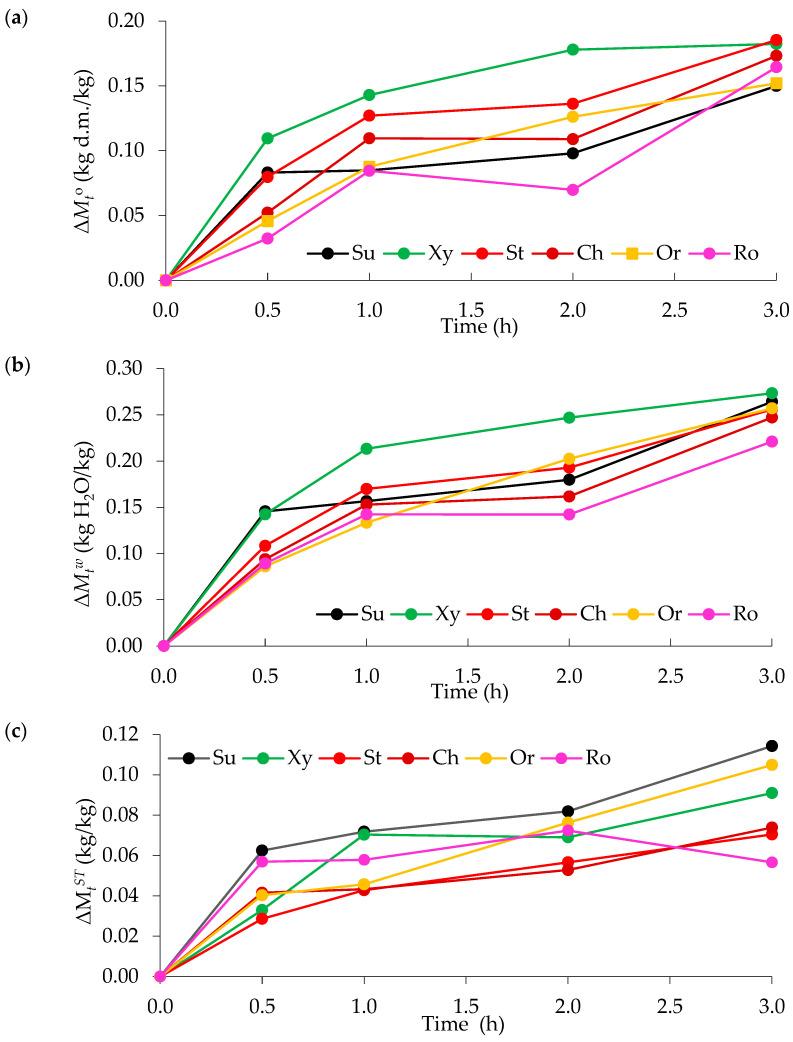
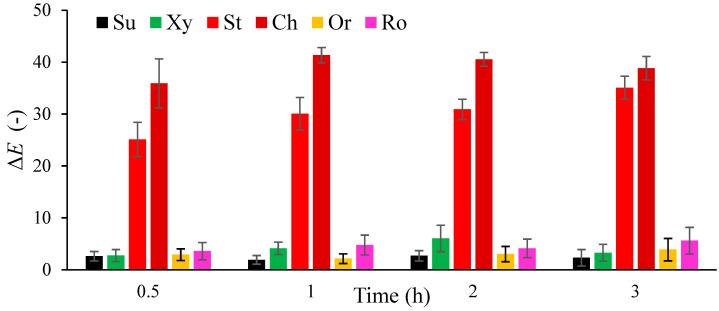
This study investigated the effects of unconventional solutions on the osmotic dehydration of oranges. These solutions included xylitol, fruit concentrates (strawberry, cherry, orange), rosehip juice, and sucrose. The study examined dehydration kinetics, dry matter, total soluble solids, water activity, color, texture, sugars, vitamin C, polyphenols, carotenoids, and antioxidant potential, alongside microstructural observations. The results indicated that osmotic solutions and the dehydration time (3 h) significantly influenced the oranges' physical and chemical properties. Cherry and strawberry concentrate solutions caused the greatest color changes, enhancing the dried product's visual appeal. Oranges dehydrated with strawberry concentrate exhibited the highest polyphenol content (2909 mg chlorogenic acid/100 g d.m.) and antioxidant potential (11.0 mg TE/d.m.), while rosehip solution yielded the highest vitamin C levels (80.27 g/100 g d.m.), followed by strawberry (62.32 g/100 g d.m.) and orange (47.67 g/100 g d.m.) concentrates. These findings highlight the benefits of using fruit concentrates and juices in osmotic dehydration. The unconventional osmotic solutions resulted in a reduction in the hardness of dehydrated orange sliced from 0.65 N to the range of 0.36-0.60 N, except for strawberry concentrate, which resulted in the highest value (0.72 N). Key parameters, such as the water activity, dry matter, and dehydration efficiency, were more favorable compared to those in the sucrose solution samples. The organoleptic assessment recommended xylitol for maintaining sweetness without altering taste or smell, whereas strawberry juice scored lowest due to its foreign taste and smell. Overall, osmotic dehydration enhanced the nutritional and sensory attributes of oranges by allowing the penetration of bioactive compounds, making them superior to fresh raw material in tested parameters.
本研究调查了非常规溶液对橙子渗透脱水的影响。这些溶液包括木糖醇、浓缩果汁(草莓、樱桃、橙子)、玫瑰果果汁和蔗糖。该研究考察了脱水动力学、干物质、总可溶性固形物、水分活度、颜色、质地、糖类、维生素C、多酚、类胡萝卜素和抗氧化潜力,同时进行了微观结构观察。结果表明,渗透溶液和脱水时间(3小时)对橙子的物理和化学性质有显著影响。樱桃和草莓浓缩液导致的颜色变化最大,增强了干燥产品的视觉吸引力。用草莓浓缩液脱水的橙子表现出最高的多酚含量(2909毫克绿原酸/100克干物质)和抗氧化潜力(11.0毫克TE/干物质),而玫瑰果溶液产生的维生素C含量最高(80.27克/100克干物质),其次是草莓(62.32克/100克干物质)和橙子(47.67克/100克干物质)浓缩液。这些发现突出了在渗透脱水中使用浓缩果汁和果汁的好处。除了草莓浓缩液导致硬度最高值(0.72牛)外,非常规渗透溶液使脱水橙子片的硬度从0.65牛降低到0.36 - 0.60牛的范围。与蔗糖溶液样品相比,水分活度、干物质和脱水效率等关键参数更有利。感官评估推荐木糖醇用于保持甜味而不改变味道或气味,而草莓汁因其外来的味道和气味得分最低。总体而言,渗透脱水通过使生物活性化合物渗透,增强了橙子的营养和感官特性,使其在测试参数方面优于新鲜原料。




 Zotero 插件