Kjær Lene Jung, Kirkeby Carsten Thure, Boklund Anette Ella, Hjulsager Charlotte Kristiane, Fox Anthony D, Ward Michael P
Department of Veterinary and Animal Sciences, Faculty of Health and Medical Sciences, University of Copenhagen, Frederiksberg, Denmark.
Department for Virology and Microbiological Preparedness, Statens Serum Institut, Copenhagen, Denmark.
Sci Rep. 2025 Feb 25;15(1):6783. doi: 10.1038/s41598-025-91384-3.
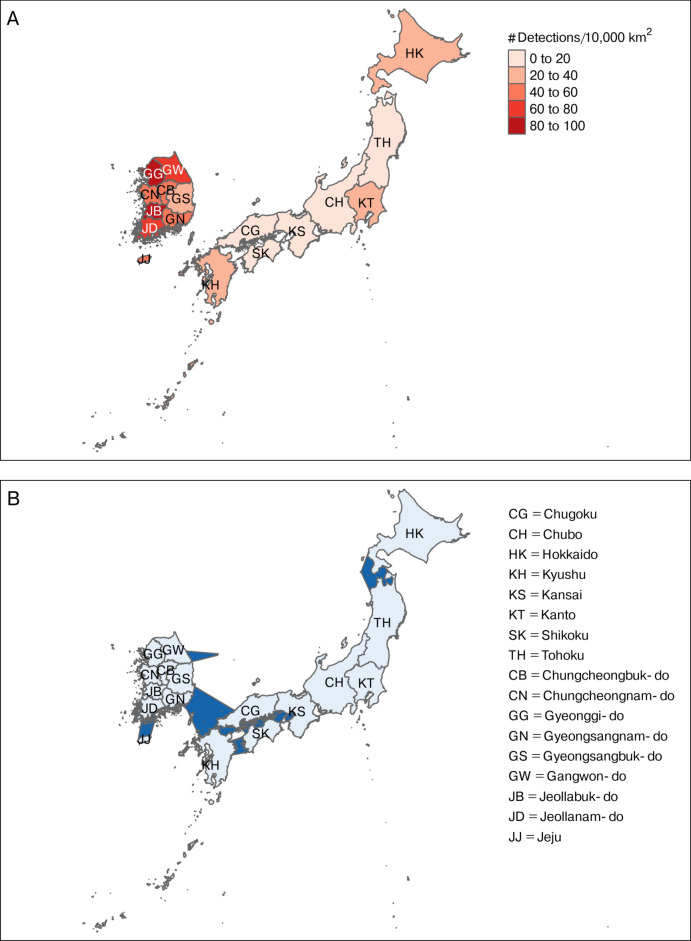
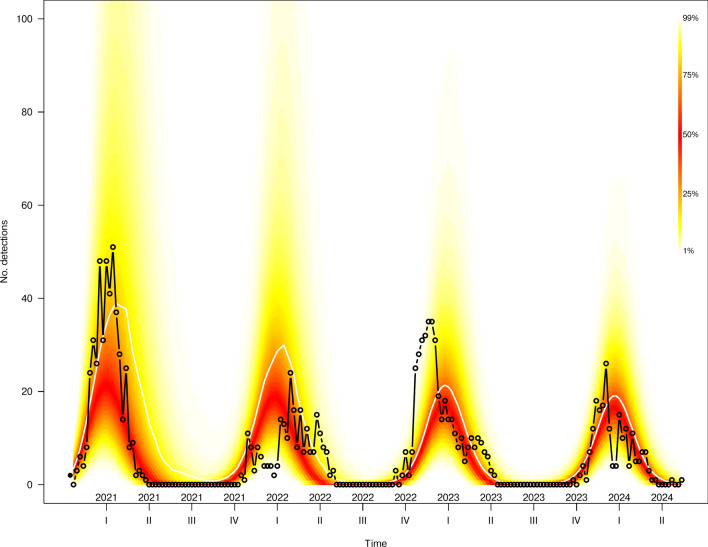
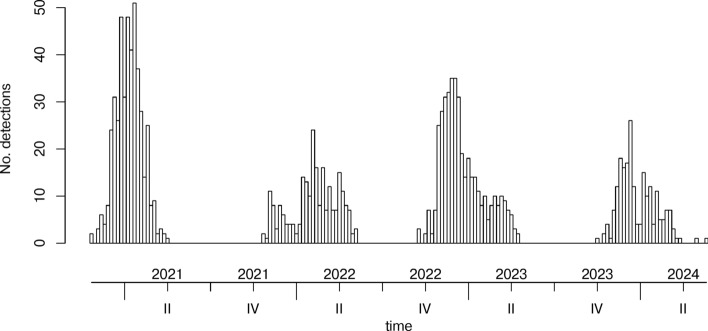
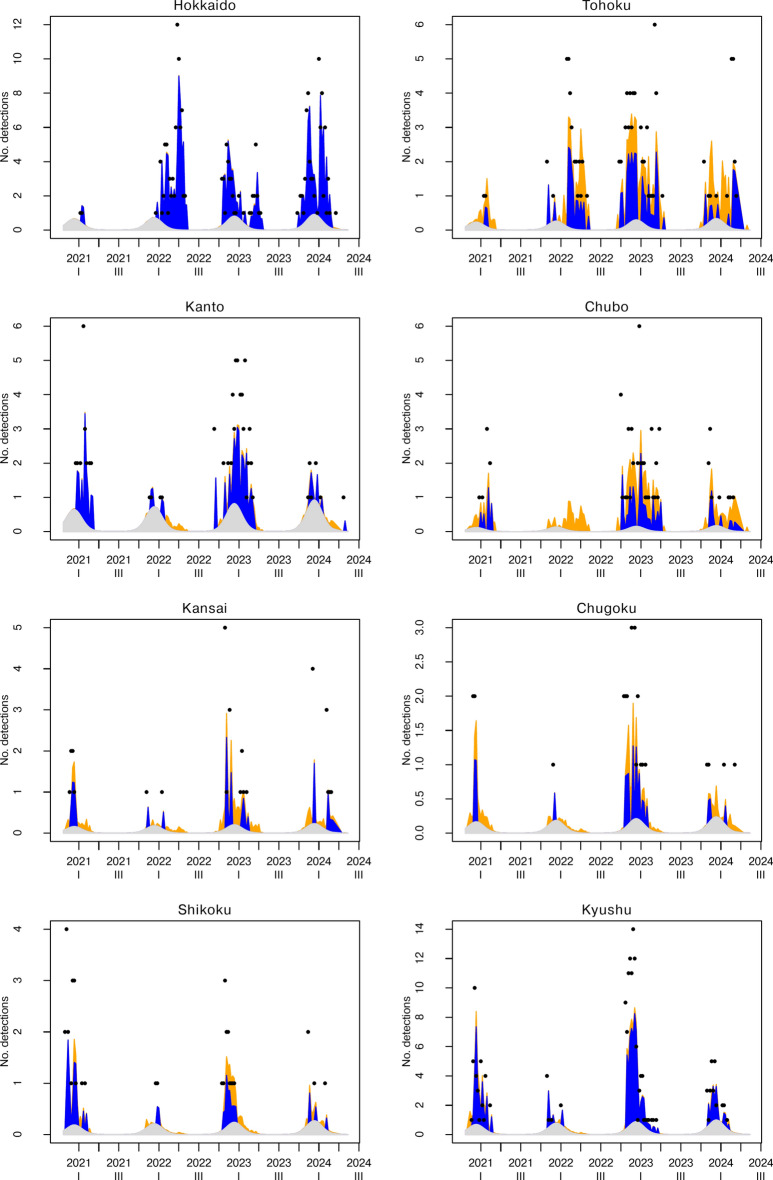
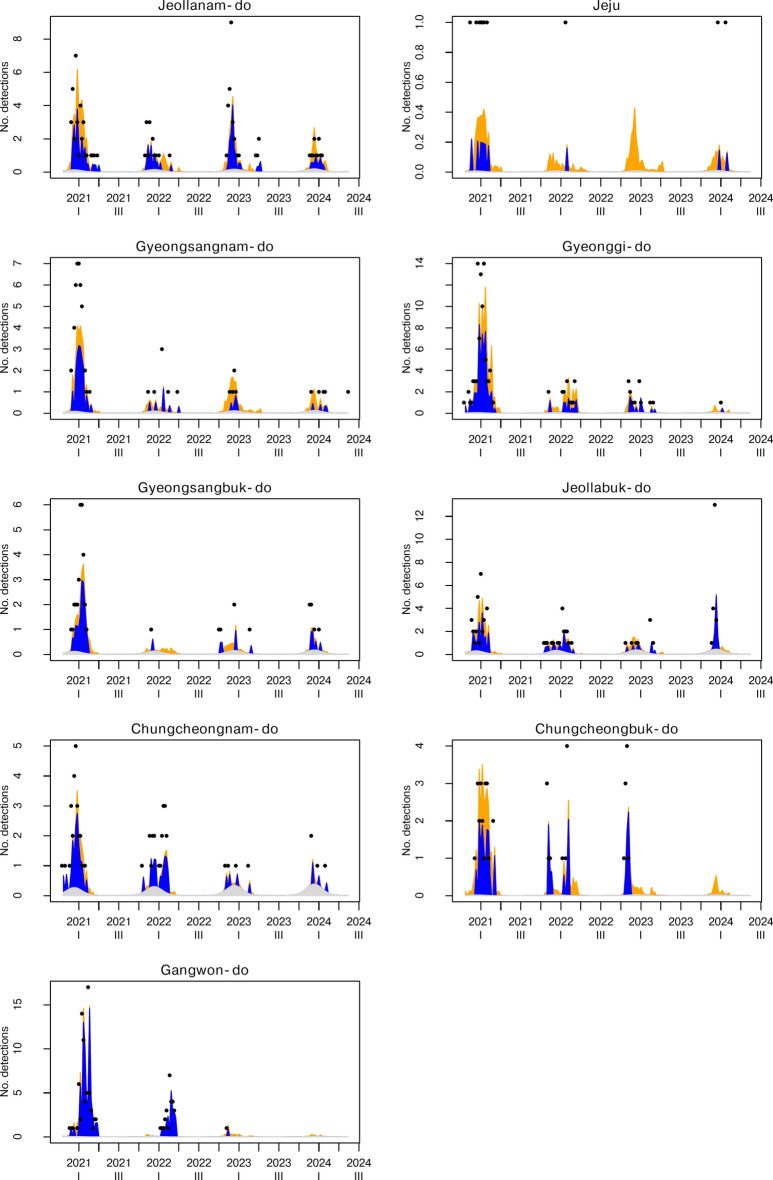
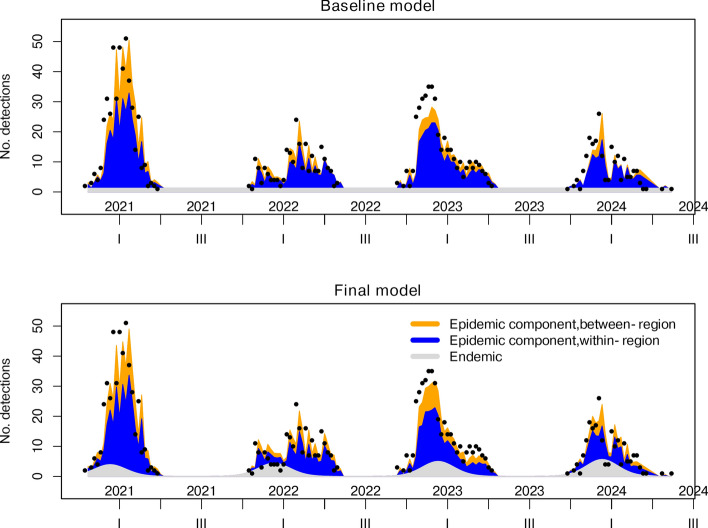
Avian influenza poses substantial risks to animal welfare and public health. The recent surge in highly pathogenic avian influenza (HPAI) outbreaks has led to extensive poultry culling, highlighting the need for early warning systems. Using data on H5 HPAI virus (HPAIV) occurrence from the World Organization for Animal Health and the Food and Agriculture Organization, we employed a spatial time-series modelling framework to predict occurrences in Japan and South Korea, 2020-2024. This framework decomposes time-series data into endemic and epidemic components and has previously been used to model HPAIV in Europe. We identified 1,310 HPAIV detections from 2020 to 2024, the majority being H5N1 (55.3%) and H5N8 (35.0%). These data consisted of 827 and 483 detections in wild and domestic birds, respectively. The model included seasonality and covariates in both endemic and epidemic components and revealed consistent yearly seasonal patterns. This contrasts with previous modelling of European data where seasonality changed over time. The model predicted 81% of detections as epidemic, primarily due to within-region transmission (53%), whereas only 19% were endemic. This model effectively predicts weekly H5 HPAIV detections, aiding decision-makers in identifying high-risk periods. This study confirms the robustness and usefulness of endemic-epidemic modelling of HPAIV in different regions of the world.
禽流感对动物福利和公共卫生构成重大风险。近期高致病性禽流感(HPAI)疫情激增导致大量家禽被扑杀,凸显了早期预警系统的必要性。利用世界动物卫生组织和联合国粮食及农业组织提供的H5高致病性禽流感病毒(HPAIV)发生数据,我们采用空间时间序列建模框架来预测2020 - 2024年日本和韩国的疫情发生情况。该框架将时间序列数据分解为地方病和流行病成分,此前已用于欧洲的HPAIV建模。我们确定了2020年至2024年期间的1310次HPAIV检测,其中大多数是H5N1(55.3%)和H5N8(35.0%)。这些数据分别包括野生鸟类和家禽中的827次和483次检测。该模型在地方病和流行病成分中都纳入了季节性和协变量,并揭示了一致的年度季节性模式。这与之前对欧洲数据的建模不同,欧洲数据中的季节性随时间变化。该模型预测81%的检测为流行病,主要是由于区域内传播(53%),而只有19%为地方病。该模型有效地预测了每周的H5 HPAIV检测情况,有助于决策者识别高风险时期。本研究证实了HPAIV地方病 - 流行病建模在世界不同地区的稳健性和实用性。