
阿尔茨海默病中PP2A/GSK3β/PTEN轴的靶向作用:有争议的证据、优点与缺陷
Targeting of PP2 A/GSK3β/PTEN Axis in Alzheimer Disease: The Mooting Evidence, Divine, and Devil.
作者信息
Alqahtani Saad Misfer, Al-Kuraishy Hayder M, Al-Gareeb Ali I, Abdel-Fattah Maha M, Alsaiari Ahad Amer, Alruwaili Mubarak, Papadakis Marios, Alexiou Athanasios, Batiha Gaber El-Saber
机构信息
Department of Pathology, College of Medicine, The University Hospital, Najran University, Najran, Saudi Arabia.
Department of Clinical Pharmacology and Medicine, College of Medicine, Mustansiriyah University, Baghdad, Iraq.
出版信息
Cell Mol Neurobiol. 2025 Apr 18;45(1):36. doi: 10.1007/s10571-025-01554-0.
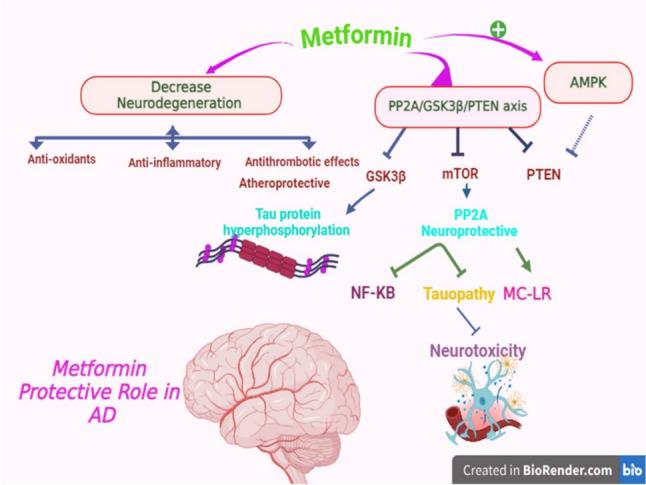
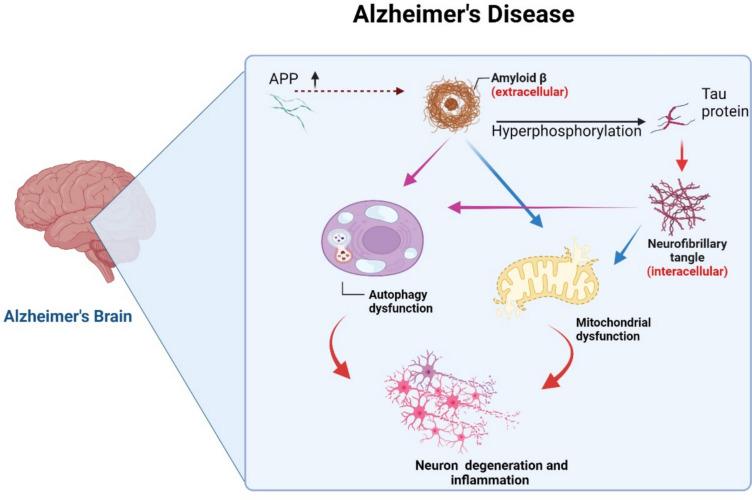
Alzheimer disease (AD) is a progressive neurodegenerative disease of the brain due to extracellular accumulation of Aβ. In addition, intracellular accumulation of hyperphosphorlyated tau protein which form neurofibrillary tangle (NFT) is associated with progressive neuronal injury and the development of AD. Aβ and NFTs interact together to induce inflammation and oxidative stress which further induce neurodegeneration in AD. The exact relationship between Aβ and tau, the two proteins that accumulate within these lesions, has proven elusive. A growing body of work supports the notion that Aβ may directly or indirectly interact with tau to accelerate NFTs formation. Aβ can adversely affect distinct molecular and cellular pathways, thereby facilitating tau phosphorylation, aggregation, mislocalization, and accumulation. Aβ may drive tau pathology by activating specific kinases, providing a straightforward mechanism by which Aβ may enhance tau hyperphosphorylation and NFT formation. Many cellular signaling pathways such as protein phosphatase 2A (PP2A), glycogen synthase kinase 3β (GSK3β), and phosphatase and tensin homologue (PTEN) are intricate in AD neuropathology. PP2A which involved in the dephosphorylation of tau protein is deregulated in AD, and correlated with cognitive impairment. PTEN is a critical regulator of neuronal growth, survival, and development, improving synaptic plasticity and axonal regeneration. Nevertheless, mutated PTEN is associated with the development of cognitive impairment by inhibiting the expression and the activity of PP2A. Furthermore, dysregulation of GSK3β affects Aβ, tau protein phosphorylation, synaptic plasticity and other signaling pathways involved in the pathogenesis of AD. Therefore, there is a close interaction among GSK3β, PTEN, and PP2A. GSK3β exaggerates AD neuropathology by inhibiting PP2A and activates the expression of PTEN. These findings specified a related interaction among GSK3β, PTEN, and PP2A, and modulation of the single component of this axis may not produce an effective effect against AD neuropathology. Modulation of this axis by metformin and statins can reduce AD neuropathology. Therefore, this review aims to discuss the role of GSK3β/PTEN/PP2A axis in AD neuropathology and how targeting of this axis by metformin and statins can produce effective therapeutic strategy in the management of AD. In conclusion, inhibition of GSK3β and PTEN and activation of PP2A may be more suitable than modulation of single signaling pathway. Metformin and statins by activating PP2A and inhibiting of GSK3β and PTEN attenuate the development and progression of AD.
阿尔茨海默病(AD)是一种由于β-淀粉样蛋白(Aβ)在细胞外积聚而导致的进行性脑 neurodegenerative 疾病。此外,形成神经原纤维缠结(NFT)的高度磷酸化 tau 蛋白在细胞内积聚与神经元的进行性损伤及 AD 的发展相关。Aβ和 NFT 相互作用共同诱导炎症和氧化应激,进而在 AD 中进一步诱导神经退行性变。Aβ和 tau 这两种在这些病变中积聚的蛋白质之间的确切关系一直难以捉摸。越来越多的研究支持这样一种观点,即 Aβ可能直接或间接与 tau 相互作用以加速 NFT 的形成。Aβ可对不同的分子和细胞途径产生不利影响,从而促进 tau 的磷酸化、聚集、错误定位和积聚。Aβ可能通过激活特定激酶来驱动 tau 病理变化,这为 Aβ增强 tau 过度磷酸化和 NFT 形成提供了一种直接机制。许多细胞信号通路如蛋白磷酸酶 2A(PP2A)、糖原合酶激酶 3β(GSK3β)和磷酸酶及张力蛋白同源物(PTEN)在 AD 神经病理学中错综复杂。参与 tau 蛋白去磷酸化的 PP2A 在 AD 中失调,并与认知障碍相关。PTEN 是神经元生长、存活和发育的关键调节因子,可改善突触可塑性和轴突再生。然而,突变的 PTEN 通过抑制 PP2A 的表达和活性与认知障碍的发展相关。此外,GSK3β的失调影响 Aβ、tau 蛋白磷酸化、突触可塑性以及参与 AD 发病机制的其他信号通路。因此,GSK3β、PTEN 和 PP2A 之间存在密切相互作用。GSK3β通过抑制 PP2A 加剧 AD 神经病理学并激活 PTEN 的表达。这些发现明确了 GSK3β、PTEN 和 PP2A 之间的相关相互作用,调节该轴的单一成分可能不会对 AD 神经病理学产生有效作用。二甲双胍和他汀类药物对该轴的调节可减轻 AD 神经病理学。因此,本综述旨在讨论 GSK3β/PTEN/PP2A 轴在 AD 神经病理学中的作用,以及二甲双胍和他汀类药物如何通过靶向该轴在 AD 管理中产生有效的治疗策略。总之,抑制 GSK3β和 PTEN 并激活 PP2A 可能比调节单一信号通路更合适。二甲双胍和他汀类药物通过激活 PP2A 并抑制 GSK3β和 PTEN 减轻 AD 的发展和进展。


 Zotero 插件