
综合多组学分析确定了自噬相关急性肾损伤向慢性肾病转变的潜在生物标志物和治疗靶点。
Integrated multiomics analysis identifies potential biomarkers and therapeutic targets for autophagy associated AKI to CKD transition.
作者信息
Wang Yaojun, Li Qiang
机构信息
Clinical Medical College, Affiliated Hospital, Hebei University, Baoding, 071000, Hebei, China.
Department of Dermatology, Air Force Medical Center, PLA, Beijing, 100142, China.
出版信息
Sci Rep. 2025 Apr 21;15(1):13687. doi: 10.1038/s41598-025-97269-9.
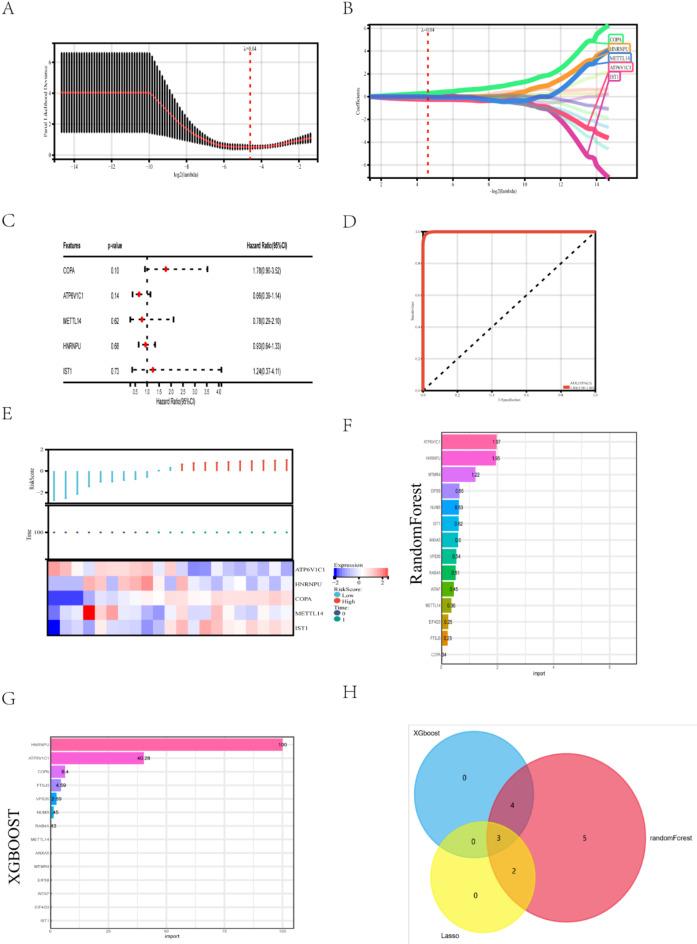
This study explored the relationship between acute kidney injury (AKI) and chronic kidney disease (CKD), focusing on autophagy-related genes and their immune infiltration during the transition from AKI to CKD. We performed weighted correlation network analysis (WGCNA) using two microarray datasets (GSE139061 and GSE66494) in the GEO database and identified autophagy signatures by Gene Ontology (GO) and Kyoto Encyclopedia of Genes and Genomes (KEGG), and GSEA enrichment analysis. Machine learning algorithms such as LASSO, random forest, and XGBoost were used to construct the diagnostic model, and the diagnostic performance of GSE30718 (AKI) and GSE37171 (CKD) was used as validation cohorts to evaluate its diagnostic performance. The study identified 14 autophagy candidate genes, among which ATP6V1C1 and COPA were identified as key biomarkers that were able to effectively distinguish between AKI and CKD. Immune cell infiltration and GSEA analysis revealed immune dysregulation in AKI, and these genes were associated with inflammation and immune pathways. Single-cell analysis showed that ATP6V1C1 and COPA were specifically expressed in AKI and CKD, which may be related to renal fibrosis. In addition, drug prediction and molecular docking analysis proposed SZ(+)-(S)-202-791 and PDE4 inhibitor 16 as potential therapeutic agents. In summary, this study provides new insights into the relationship between AKI and CKD and lays a foundation for the development of new treatment strategies.
本研究探讨了急性肾损伤(AKI)与慢性肾脏病(CKD)之间的关系,重点关注从AKI向CKD转变过程中自噬相关基因及其免疫浸润情况。我们使用基因表达综合数据库(GEO数据库)中的两个微阵列数据集(GSE139061和GSE66494)进行加权基因共表达网络分析(WGCNA),并通过基因本体论(GO)、京都基因与基因组百科全书(KEGG)以及基因集富集分析(GSEA)确定自噬特征。使用套索回归(LASSO)算法、随机森林算法和XGBoost等机器学习算法构建诊断模型,并将GSE30718(AKI)和GSE37171(CKD)的诊断性能作为验证队列来评估其诊断性能。该研究确定了14个自噬候选基因,其中ATP6V1C1和COPA被确定为能够有效区分AKI和CKD的关键生物标志物。免疫细胞浸润和GSEA分析揭示了AKI中的免疫失调,且这些基因与炎症和免疫途径相关。单细胞分析表明,ATP6V1C1和COPA在AKI和CKD中特异性表达,这可能与肾纤维化有关。此外,药物预测和分子对接分析提出SZ(+)-(S)-202-791和磷酸二酯酶4抑制剂16作为潜在治疗药物。总之,本研究为AKI与CKD之间的关系提供了新见解,并为新治疗策略的开发奠定了基础。




 Zotero 插件