
康复治疗可提高2型脊髓性肌萎缩症患儿使用诺西那生钠的疗效:磷酸化神经丝蛋白重链和肌肉磁共振成像作为潜在生物标志物
Rehabilitation improves the effectiveness of nusinersen in children with type 2 spinal muscular atrophy: pNF-H and muscle MRI as potential biomarkers.
作者信息
Sun Yifan, Li Wei, Cui Xin, Li Yang, Gao Xiucheng, Fu Dalin, Zhao Xiaoke, Cao Tong, Zhu Min
机构信息
Department of Rehabilitation, Children's Hospital of Nanjing Medical University, Nanjing, Jiangsu, China.
Department of Neurology, Children's Hospital of Nanjing Medical University, Nanjing, Jiangsu, China.
出版信息
Front Neurol. 2025 Apr 11;16:1549587. doi: 10.3389/fneur.2025.1549587. eCollection 2025.
INTRODUCTION
Rehabilitation therapy is an important approach for spinal muscular atrophy (SMA) management. Currently, rare articles introduce that the combination of nusinersen and rehabilitation yields better results in SMA patients compared to using nusinersen alone. The present study examined whether rehabilitation therapy can improve the effectiveness of nusinersen and phosphorylated neurofilament heavy chain (pNF-H) and muscle magnetic resonance imaging (MRI) can serve as potential biomarkers for evaluating the therapeutic effects in type-2 SMA patients.
METHODS
This observational study enrolled 22 pediatric patients with type-2 SMA. Enrolled patients were divided into two groups based on the rehabilitation treatment. Motor function and swallowing function were analyzed at baseline, 6, 10, and 14 months. The level of pNF-H and MRI of the thigh skeletal muscles were analyzed at baseline and 14 months.
RESULTS
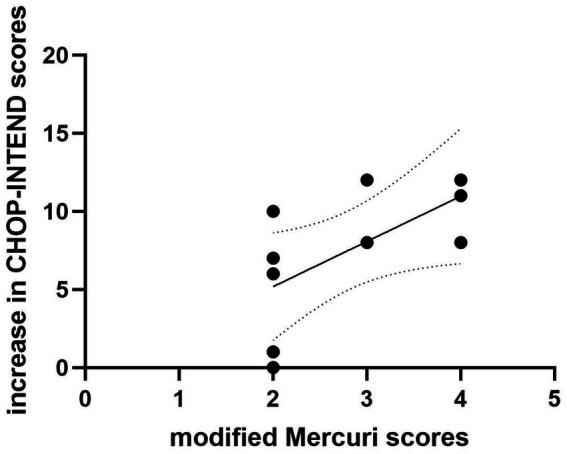
Greater improvement in motor function was observed in the rehabilitation group compared with the non-rehabilitation group. The levels of pNF-H in the serum and cerebrospinal fluid significantly decreased at 14 months. One patient from the rehabilitation treatment group showed mild improvement in the degree of fatty infiltration in the quadriceps muscles after 14 months.
CONCLUSION
This study suggests that rehabilitation therapy improves the effectiveness of nusinersen on type-2 SMA patients, and the levels of pNF-H and skeletal muscle MRI can serve as potential biomarkers for evaluating the effectiveness of SMA treatment.
引言
康复治疗是脊髓性肌萎缩症(SMA)管理的重要方法。目前,很少有文章介绍与单独使用诺西那生相比,诺西那生和康复治疗相结合对SMA患者产生更好的效果。本研究探讨康复治疗是否能提高诺西那生的疗效,以及磷酸化神经丝重链(pNF-H)和肌肉磁共振成像(MRI)是否可作为评估2型SMA患者治疗效果的潜在生物标志物。
方法
本观察性研究纳入了22例2型SMA患儿。根据康复治疗情况将纳入的患者分为两组。在基线、6个月、10个月和14个月时分析运动功能和吞咽功能。在基线和14个月时分析大腿骨骼肌的pNF-H水平和MRI。
结果
与非康复组相比,康复组的运动功能改善更明显。血清和脑脊液中的pNF-H水平在14个月时显著下降。康复治疗组的1例患者在14个月后股四头肌脂肪浸润程度有轻度改善。
结论
本研究表明,康复治疗可提高诺西那生对2型SMA患者的疗效,pNF-H水平和骨骼肌MRI可作为评估SMA治疗效果的潜在生物标志物。


 Zotero 插件