
脑膜淋巴管与胶质母细胞瘤之间的免疫肿瘤学相互作用:从机制到治疗
Immuno-oncological interactions between meningeal lymphatics and glioblastoma: from mechanisms to therapies.
作者信息
Wen Nan, Xiao Xiao, Lu Huangjie, Chen Qingyuan, He Genghong, Qian Zhiyuan, Zeng Jianfeng, Xiao Li
机构信息
The Second Affiliated Hospital of Soochow University, Suzhou 215004, China.
Center for Molecular Imaging and Nuclear Medicine, State Key Laboratory of Radiation Medicine and Protection, School for Radiological and Interdisciplinary Sciences (RAD-X), Collaborative Innovation Center of Radiological Medicine of Jiangsu Higher Education Institutions, Soochow University, Suzhou 215123, China.
出版信息
Theranostics. 2025 Jun 9;15(14):6983-7000. doi: 10.7150/thno.111972. eCollection 2025.
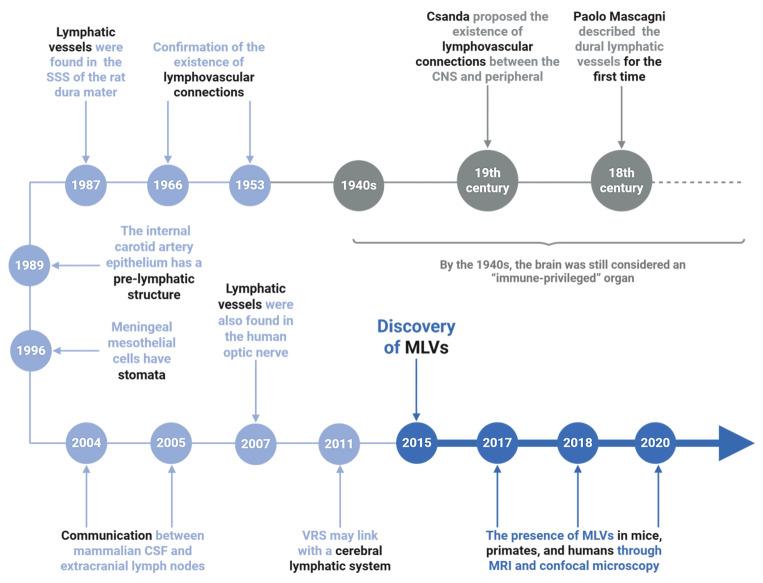
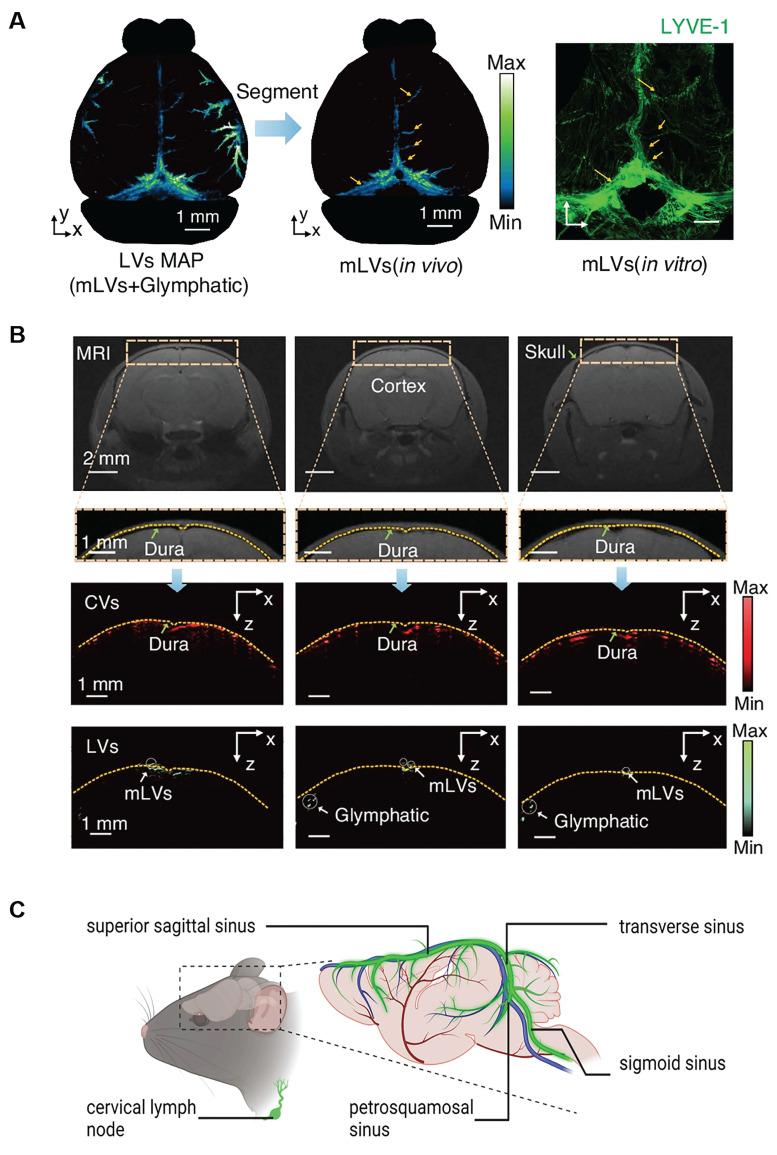
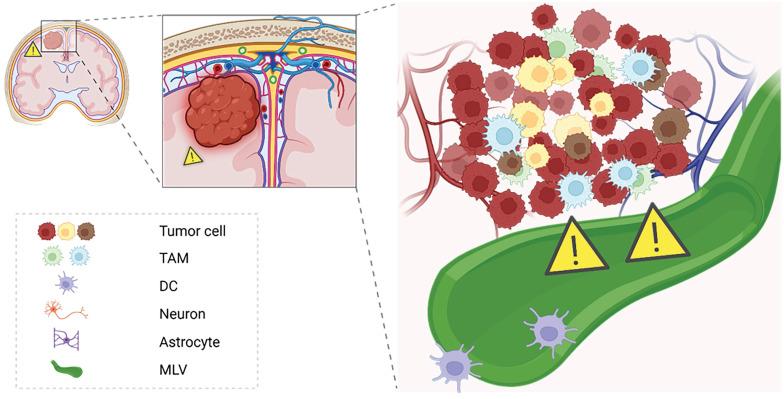
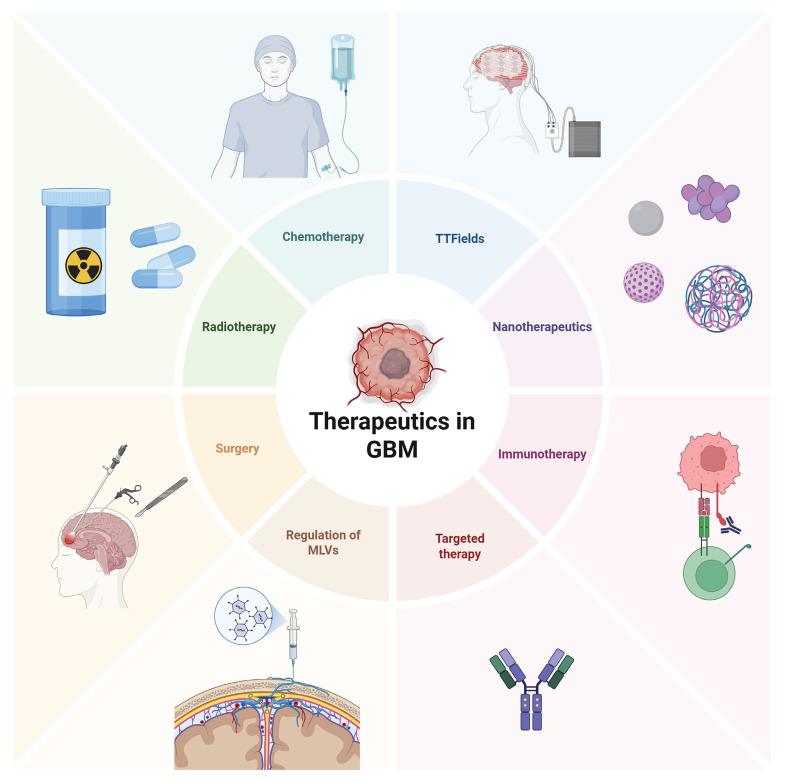
The recent discovery of meningeal lymphatic vessels (MLVs) has revolutionized our understanding of immune regulation within the central nervous system (CNS), overturning the long-standing view of the brain as an immune-privileged organ. Glioblastoma (GBM), the most aggressive primary brain tumor, remains therapeutically intractable due to its highly immunosuppressive microenvironment and poor response to conventional and immune-based therapies. Emerging evidence suggests that MLVs play a crucial role in CNS immune surveillance, cerebrospinal fluid drainage, and solute clearance, all of which are directly linked to GBM pathophysiology. This review is motivated by the urgent need to explore novel therapeutic strategies that address GBM's immune escape and therapeutic resistance. We comprehensively analyze the bidirectional interactions between MLVs and GBM, including their role in antigen transport, T cell activation, and tumor dissemination. Furthermore, we evaluate the therapeutic potential of targeting MLVs through lymphangiogenic stimulation or as alternative routes for immune modulation and drug delivery. These approaches offer promising avenues to enhance anti-tumor immunity and may pave the way for next-generation treatment paradigms in GBM.
脑膜淋巴管(MLVs)的最新发现彻底改变了我们对中枢神经系统(CNS)内免疫调节的理解,颠覆了长期以来将大脑视为免疫特权器官的观点。胶质母细胞瘤(GBM)是最具侵袭性的原发性脑肿瘤,由于其高度免疫抑制的微环境以及对传统疗法和免疫疗法的不良反应,在治疗上仍然难以攻克。新出现的证据表明,脑膜淋巴管在中枢神经系统免疫监视、脑脊液引流和溶质清除中起着关键作用,所有这些都与胶质母细胞瘤的病理生理学直接相关。这篇综述的动机是迫切需要探索解决胶质母细胞瘤免疫逃逸和治疗抗性的新治疗策略。我们全面分析了脑膜淋巴管与胶质母细胞瘤之间的双向相互作用,包括它们在抗原运输、T细胞活化和肿瘤播散中的作用。此外,我们评估了通过淋巴管生成刺激靶向脑膜淋巴管或作为免疫调节和药物递送替代途径的治疗潜力。这些方法为增强抗肿瘤免疫力提供了有希望的途径,并可能为胶质母细胞瘤的下一代治疗模式铺平道路。
 Zotero 插件