
TIM3的表面下调可保护健康细胞,但不能保护急性髓性白血病免受CAR T细胞疗法的影响。
Surface downmodulation of TIM3 safeguards healthy cells but not acute myeloid leukemia from CAR T-cell therapy.
作者信息
van der Schans Jort J, Vishwasrao Paresh, Poels Renée, Antti Morgan, Wang Ziyu, Quik Marjolein, van Arkel Jennemiek, Reuvekamp Tom, van de Donk Niels W C J, Themeli Maria, Ossenkoppele Gert J, van de Loosdrecht Arjan A, Richards Rebecca, Mutis Tuna
机构信息
Department of Hematology, Amsterdam UMC, VU University Medical Center Cancer Center Amsterdam Amsterdam the Netherlands.
Department of Pediatrics, Division of Pediatric Hematology, Oncology, and Bone Marrow Transplantation University of Wisconsin-Madison Madison Wisconsin USA.
出版信息
Hemasphere. 2025 Jul 13;9(7):e70155. doi: 10.1002/hem3.70155. eCollection 2025 Jul.
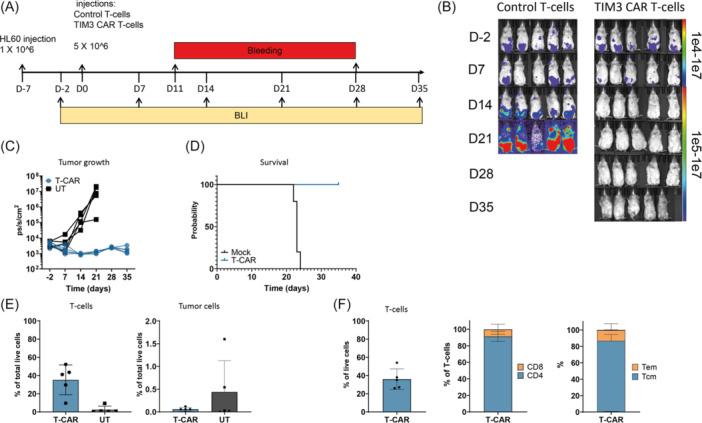
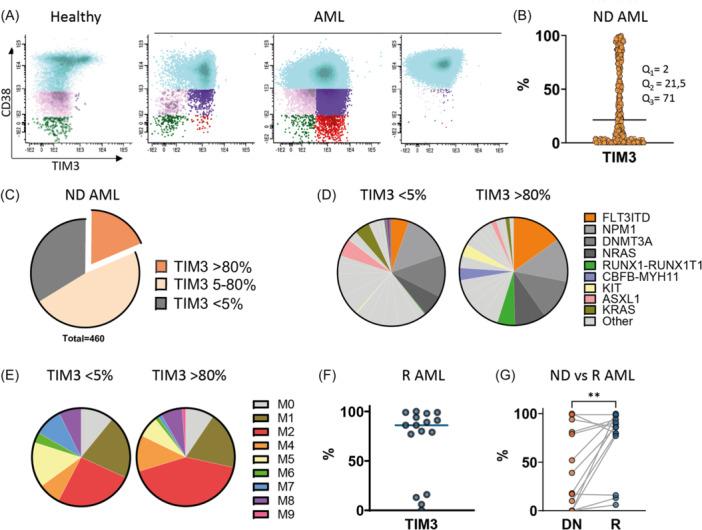
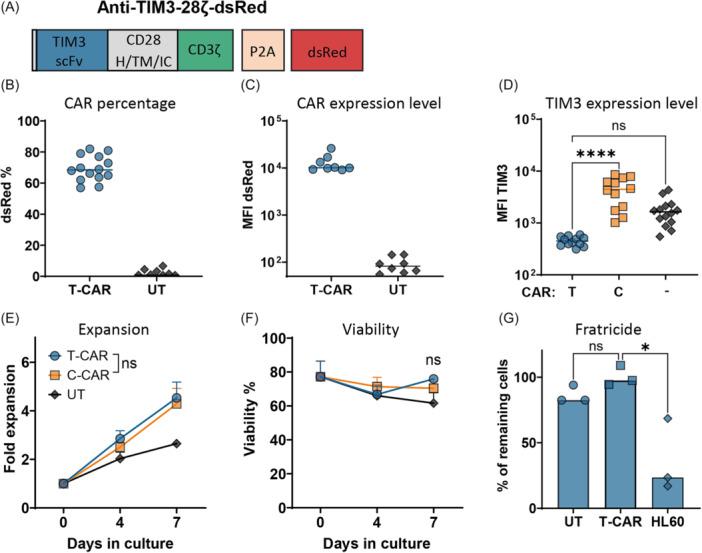
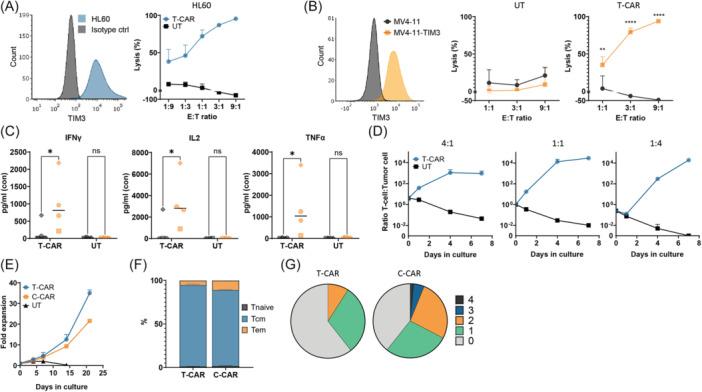
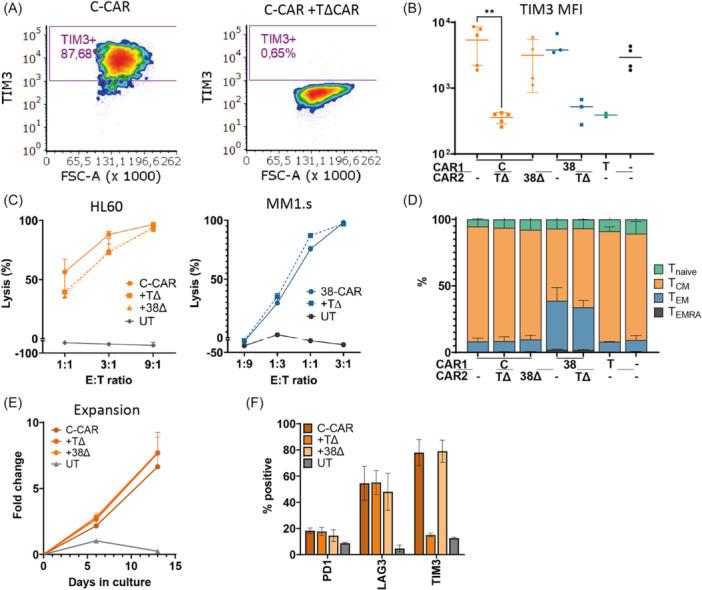
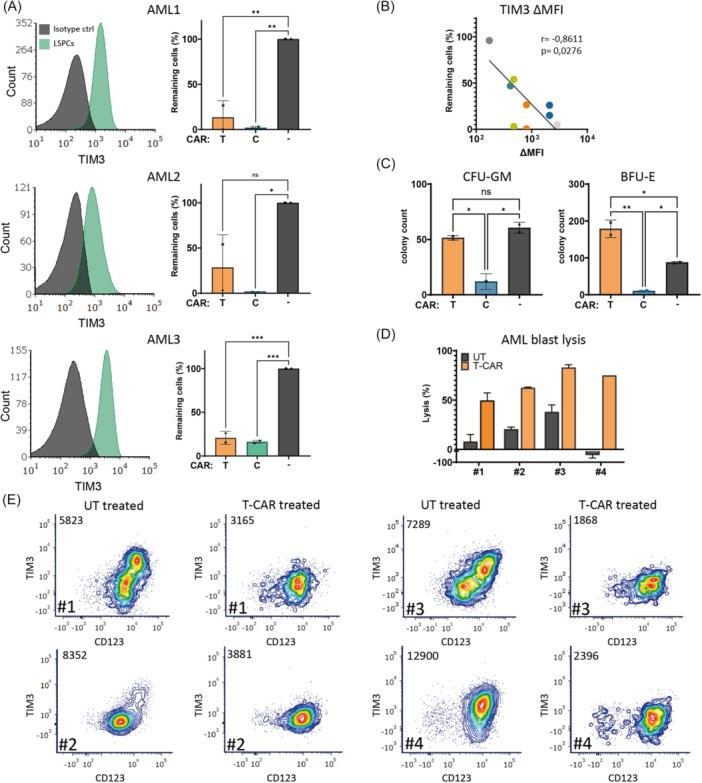
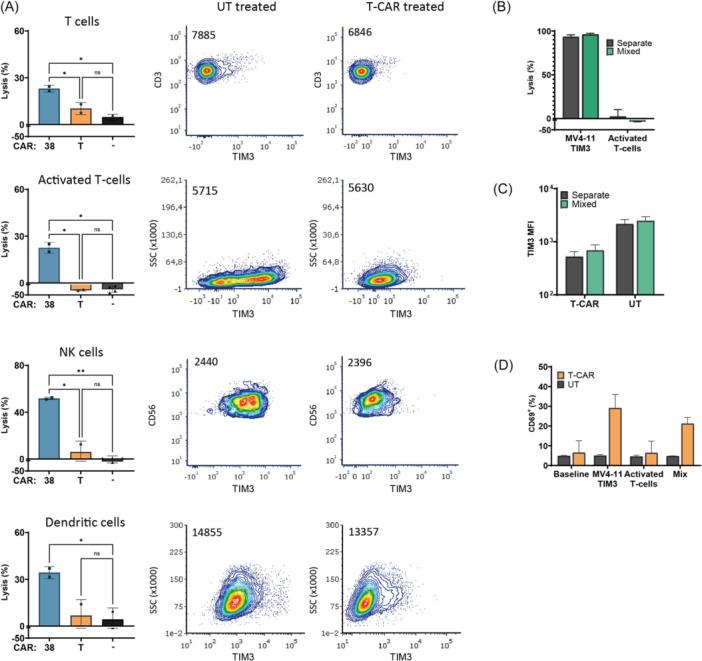
T-cell immunoglobulin and mucin-domain containing-3 (TIM3), generally known as an immune checkpoint receptor, is expressed on leukemic stem and progenitor cells (LSPCs) in acute myeloid leukemia (AML), and has an active role in LSC self-renewal. Therefore, TIM3 has been suggested as a potential target for AML treatment. Hence, we explored the feasibility of targeting TIM3 with chimeric antigen receptor (CAR) T-cells. Despite the expression of TIM3 on activated T-cells, TIM3 CAR T-cells were successfully generated from different healthy individuals with excellent in vitro expansion without signs of fratricide and sustained central-memory phenotype with minimal expression of exhaustion-related markers, including complete loss of TIM3 expression. TIM3 loss also did not affect effector functions since TIM3 CAR T-cells efficiently lysed TIM3 leukemic cell lines, produced Th1-predominant cytokines, successfully inhibited the colony-forming of TIM3 AML-derived LSPCs, and showed excellent AML tumor control in xenogeneic mouse models. Notably, TIM3 CAR T-cells did not affect healthy hematopoietic progenitor cells and healthy mature hematopoietic cells that express TIM3 at moderate levels, suggesting an optimal therapeutic window for the treatment of AML.
T细胞免疫球蛋白和粘蛋白结构域包含分子3(TIM3),通常被认为是一种免疫检查点受体,在急性髓系白血病(AML)的白血病干细胞和祖细胞(LSPCs)上表达,并在白血病干细胞自我更新中发挥积极作用。因此,TIM3被认为是AML治疗的一个潜在靶点。因此,我们探索了用嵌合抗原受体(CAR)T细胞靶向TIM3的可行性。尽管TIM3在活化的T细胞上表达,但TIM3 CAR T细胞成功地从不同健康个体中产生,在体外具有出色的扩增能力,没有自相残杀的迹象,并且维持中央记忆表型,与耗竭相关标志物的表达极低,包括TIM3表达完全丧失。TIM3的缺失也不影响效应功能,因为TIM3 CAR T细胞能有效地裂解TIM3白血病细胞系,产生以Th1为主的细胞因子,成功抑制TIM3 AML来源的LSPCs的集落形成,并在异种小鼠模型中显示出出色的AML肿瘤控制效果。值得注意的是,TIM3 CAR T细胞不影响健康的造血祖细胞和中等水平表达TIM3的健康成熟造血细胞,这表明治疗AML存在最佳治疗窗口。
 Zotero 插件