Banda Kutha, Sande Nicholus C, Chunga Chipwaila C, Longwe Belia, Nkumbwa Kayawe, Silondwa Madaliso, Maambo Nsanzya, Michelo Japhet, Haimbe Prudence, Mwamba Trevor, Shakwelele Hilda, Chilengi-Sakala Sandra, Bwalya Ireen
Clinton Health Access Initiative, Lusaka, Zambia.
Women in Global Health Zambia, Lusaka, Zambia.
J Public Health Afr. 2025 Jul 10;16(1):1306. doi: 10.4102/jphia.v16i1.1306. eCollection 2025.
Pre-exposure prophylaxis (PrEP) for human immunodeficiency virus (HIV) was introduced in Zambia to prevent transmission, but it does not protect against sexually transmitted infections (STIs) such as syphilis. Globally, STIs have risen alongside PrEP rollout, posing significant public health concerns that require urgent attention and targeted intervention strategies.
We examined trends in syphilis incidence and assessed its association with PrEP use, given the increasing global burden of STIs, including among PrEP users between 2021 and 2023.
Among individuals in Zambia.
A retrospective database analysis of secondary data was conducted using District Health Information Software 2 (DHIS2), the Ministry of Health's primary data system. Microsoft Excel and Stata were used for descriptive statistics and regression analysis to examine potential associations.
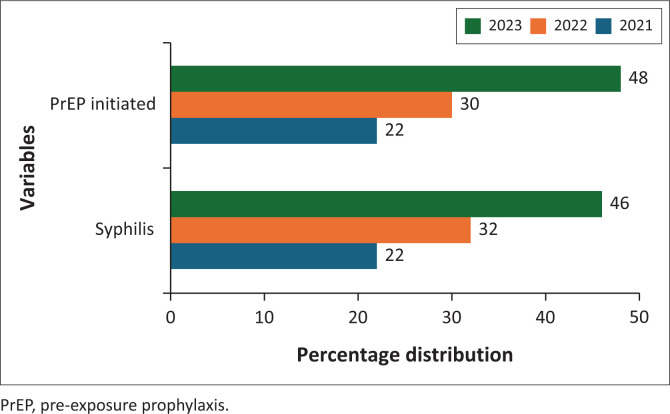
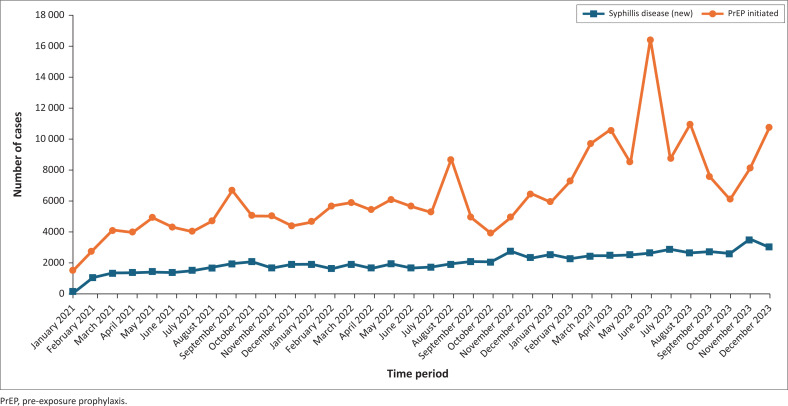
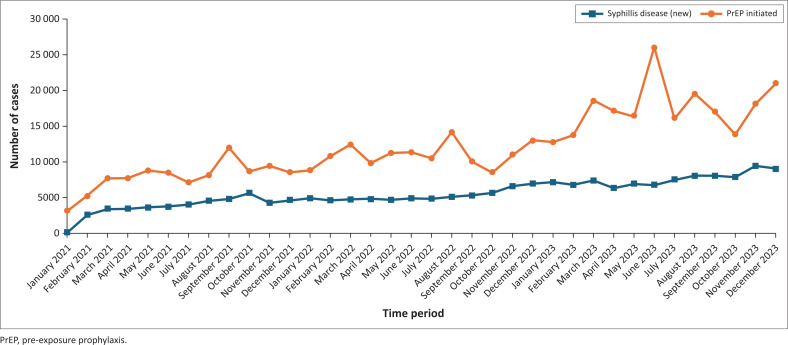
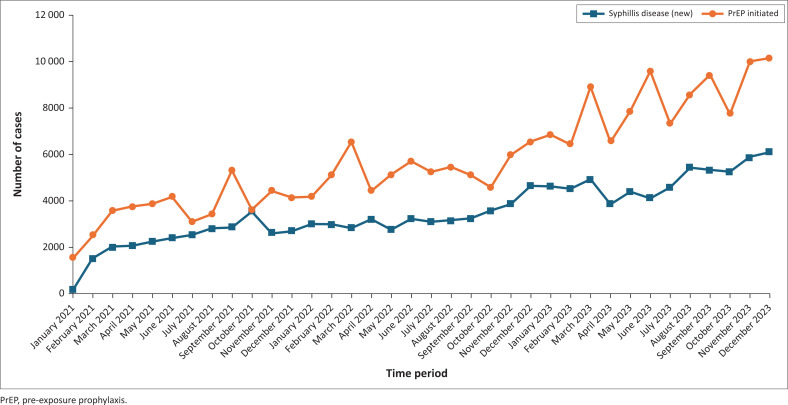
From 2021 to 2023, syphilis cases (199 273) and PrEP initiation (436 460) increased annually. Syphilis cases rose from 22% to 46%, while PrEP initiation grew from 22% to 48%. We found a positive association between syphilis incidence and PrEP initiation, with each unit increase in PrEP initiation corresponding to a 0.33-unit rise in syphilis cases ( < 0.001; 95% confidence interval [CI]: 0.25-0.4), underscoring this relationship.
This analysis found a significant positive link between syphilis incidence and PrEP initiation, emphasising the need for integrated HIV and STI management to enhance public health interventions.
This study provides valuable insights for policy and programme implications; it highlights the importance of integrating STI prevention into HIV prevention service delivery; an integrated approach is critical to ensure that the country does not regress the achievements made towards HIV epidemic control.
赞比亚引入了针对人类免疫缺陷病毒(HIV)的暴露前预防(PrEP)措施以预防传播,但它不能预防梅毒等性传播感染(STIs)。在全球范围内,随着PrEP的推广,性传播感染有所增加,这引发了重大的公共卫生问题,需要紧急关注和有针对性的干预策略。
鉴于包括2021年至2023年期间PrEP使用者在内的性传播感染全球负担不断增加,我们研究了梅毒发病率趋势,并评估了其与PrEP使用之间的关联。
赞比亚的个体中。
使用卫生部的主要数据系统——地区卫生信息软件2(DHIS2)对二手数据进行回顾性数据库分析。使用Microsoft Excel和Stata进行描述性统计和回归分析,以检验潜在关联。
2021年至2023年期间,梅毒病例(199273例)和开始使用PrEP的人数(436460人)每年都在增加。梅毒病例从22%上升至46%,而开始使用PrEP的人数从22%增长至48%。我们发现梅毒发病率与开始使用PrEP之间存在正相关,PrEP开始使用每增加一个单位,梅毒病例相应增加0.33个单位(<0.001;95%置信区间[CI]:0.25 - 0.4),突出了这种关系。
该分析发现梅毒发病率与开始使用PrEP之间存在显著的正相关,强调了需要综合管理HIV和性传播感染以加强公共卫生干预措施。
本研究为政策和项目影响提供了有价值的见解;它强调了将性传播感染预防纳入HIV预防服务提供的重要性;综合方法对于确保该国在HIV疫情控制方面取得的成就不致倒退至关重要。