
糖皮质激素介导的骨骼肌萎缩:分子机制与潜在治疗靶点
Glucocorticoid-Mediated Skeletal Muscle Atrophy: Molecular Mechanisms and Potential Therapeutic Targets.
作者信息
Permpoon Uttapol, Moon Jiyeong, Kim Chul Young, Nam Tae-Gyu
机构信息
Department of Pharmacy, Institute of Pharmaceutical Science and Technology, Hanyang University ERICA, Ansan 15588, Gyeonggi-do, Republic of Korea.
出版信息
Int J Mol Sci. 2025 Aug 6;26(15):7616. doi: 10.3390/ijms26157616.
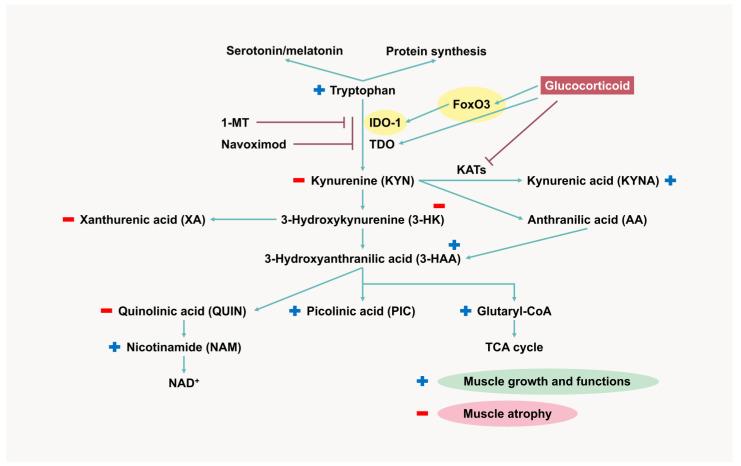
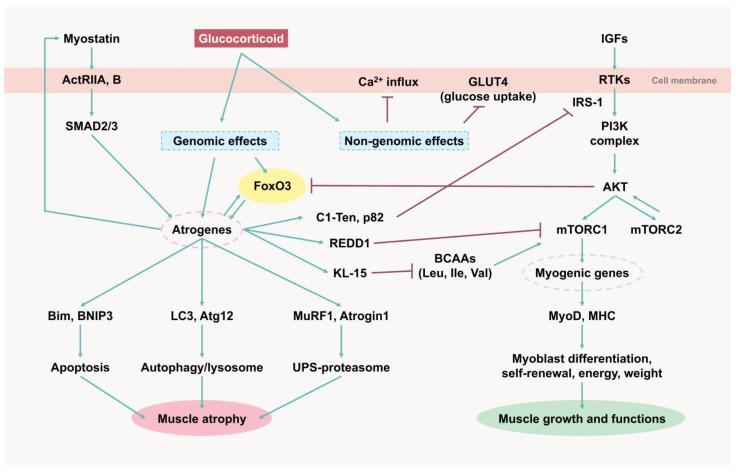
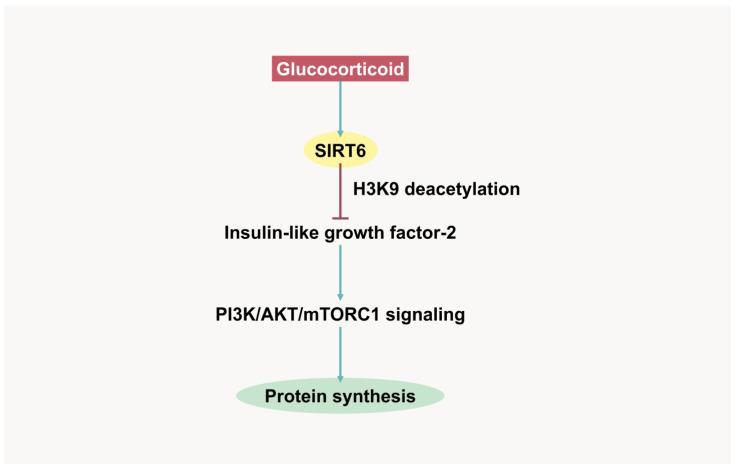
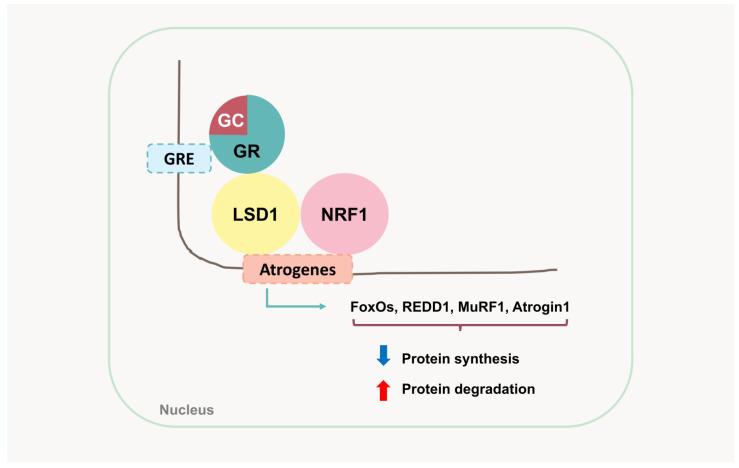
Skeletal muscle atrophy is a critical health issue affecting the quality of life of elderly individuals and patients with chronic diseases. These conditions induce dysregulation of glucocorticoid (GC) secretion. GCs play a critical role in maintaining homeostasis in the stress response and glucose metabolism. However, prolonged exposure to GC is directly linked to muscle atrophy, which is characterized by a reduction in muscle size and weight, particularly affecting fast-twitch muscle fibers. The GC-activated glucocorticoid receptor (GR) decreases protein synthesis and facilitates protein breakdown. Numerous antagonists have been developed to mitigate GC-induced muscle atrophy, including 11β-HSD1 inhibitors and myostatin and activin receptor blockers. However, the clinical trial results have fallen short of the expected efficacy. Recently, several emerging pathways and targets have been identified. For instance, GC-induced sirtuin 6 isoform (SIRT6) expression suppresses AKT/mTORC1 signaling. Lysine-specific demethylase 1 (LSD1) cooperates with the GR for the transcription of atrogenes. The kynurenine pathway and indoleamine 2,3-dioxygenase 1 (IDO-1) also play crucial roles in protein synthesis and energy production in skeletal muscle. Therefore, a deeper understanding of the complexities of GR transactivation and transrepression will provide new strategies for the discovery of novel drugs to overcome the detrimental effects of GCs on muscle tissues.
骨骼肌萎缩是一个严重的健康问题,影响着老年人和慢性病患者的生活质量。这些情况会导致糖皮质激素(GC)分泌失调。糖皮质激素在维持应激反应和葡萄糖代谢的体内平衡中起着关键作用。然而,长期暴露于糖皮质激素与肌肉萎缩直接相关,其特征是肌肉大小和重量减少,尤其影响快肌纤维。糖皮质激素激活的糖皮质激素受体(GR)会减少蛋白质合成并促进蛋白质分解。已经开发了许多拮抗剂来减轻糖皮质激素诱导的肌肉萎缩,包括11β-HSD1抑制剂以及肌肉生长抑制素和激活素受体阻滞剂。然而,临床试验结果未达到预期疗效。最近,已经确定了几种新出现的途径和靶点。例如,糖皮质激素诱导的沉默调节蛋白6亚型(SIRT6)表达会抑制AKT/mTORC1信号传导。赖氨酸特异性去甲基化酶1(LSD1)与糖皮质激素受体协同作用,促进萎缩相关基因的转录。犬尿氨酸途径和吲哚胺2,3-双加氧酶1(IDO-1)在骨骼肌的蛋白质合成和能量产生中也起着关键作用。因此,更深入地了解糖皮质激素受体反式激活和反式抑制的复杂性,将为发现新型药物提供新策略,以克服糖皮质激素对肌肉组织的有害影响。
 Zotero 插件