
靶向FAP癌相关成纤维细胞中的LINC01711可克服乳酸介导的免疫抑制并增强肺腺癌中抗PD-1的疗效。
Targeting LINC01711 in FAP cancer-associated fibroblasts overcomes lactate-mediated immunosuppression and enhances anti-PD-1 efficacy in lung adenocarcinoma.
作者信息
Wang Qinglin, Sun Yuxiang, Li Jianyu, Li Zhizong, Yuan Fangwei, Xia Zhijun, Meng Fanchen, Shen Ziyang, Shen Yiyang, Xu Lin, Wang Jie, Chen Xi, Liu Tongyan, Yin Rong
机构信息
Department of Thoracic Surgery, Jiangsu Cancer Hospital, Jiangsu Institute of Cancer Research, Nanjing Medical University Affiliated Cancer Hospital, Nanjing, 210009, China.
Jiangsu Key Laboratory of Innovative Cancer Diagnosis & Therapeutics, Nanjing Medical University Affiliated Cancer Hospital, Cancer Institute of Jiangsu Province, Nanjing, 210009, China.
出版信息
Cell Death Dis. 2025 Aug 25;16(1):642. doi: 10.1038/s41419-025-07974-6.
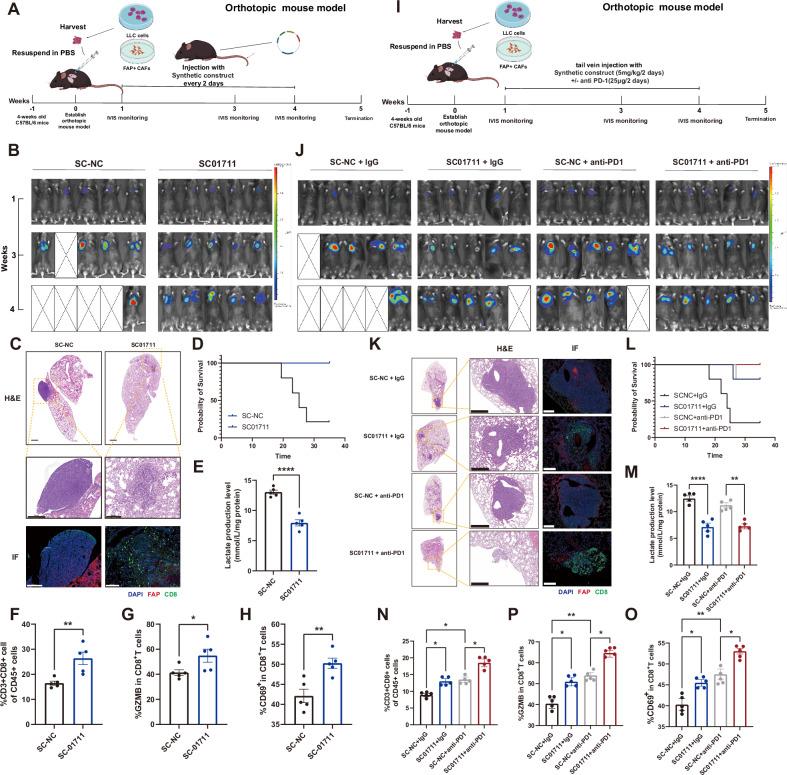
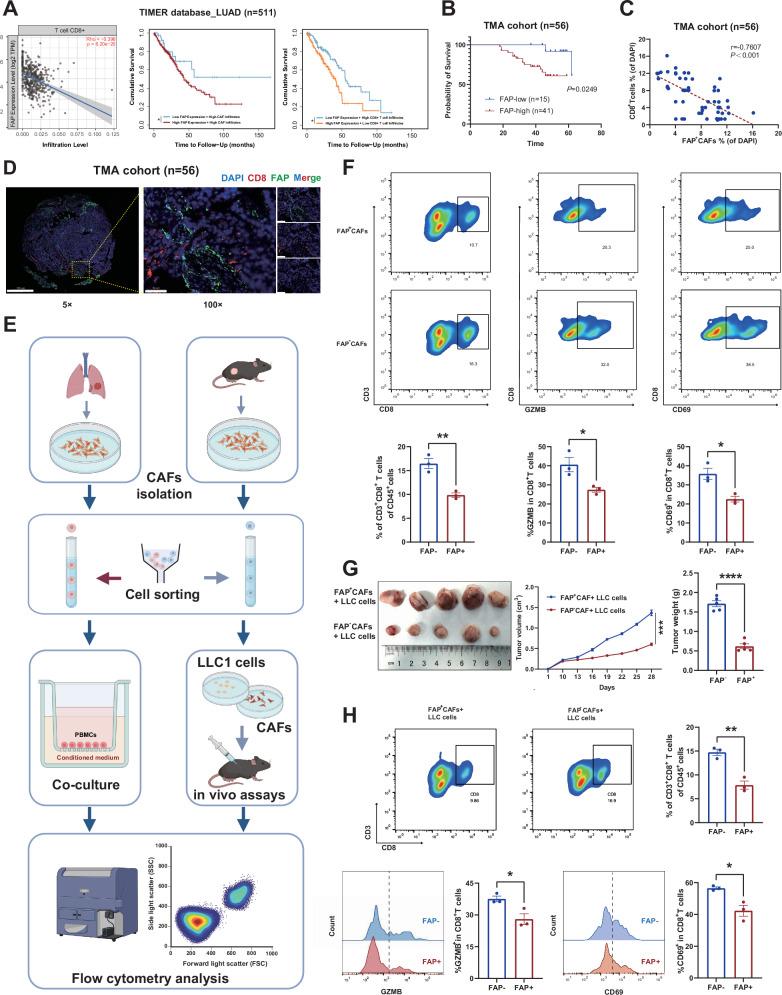
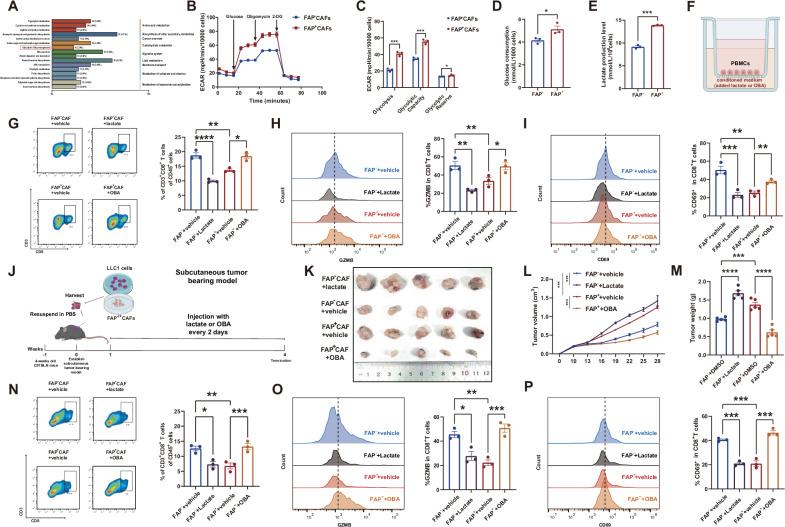
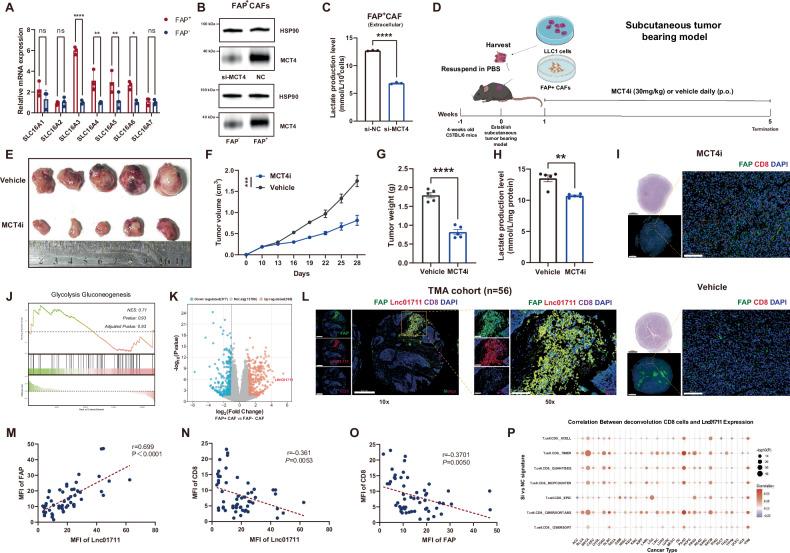
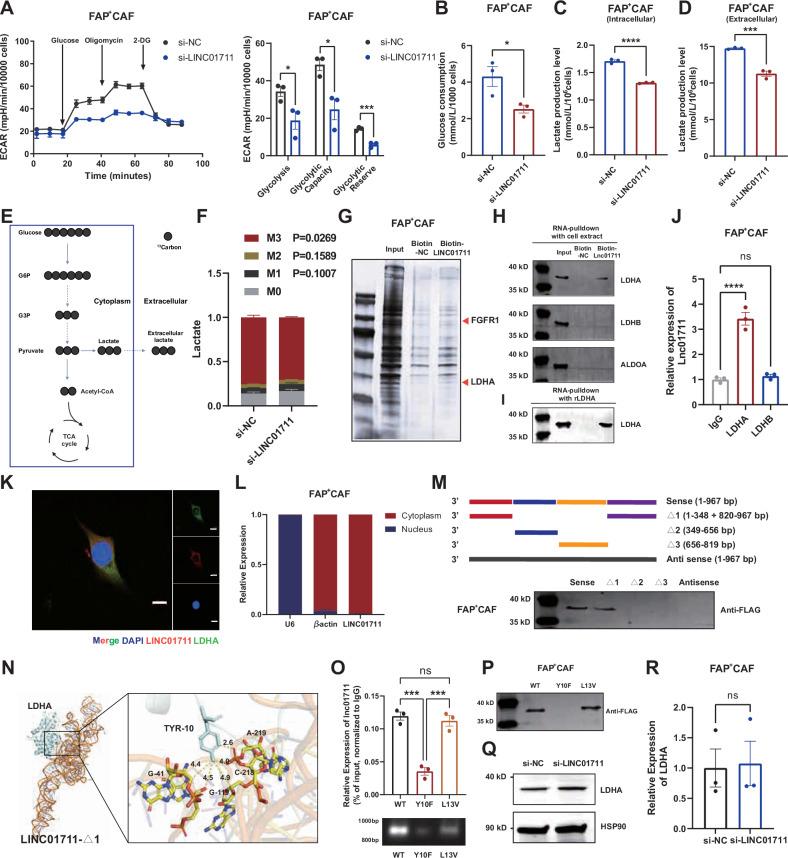
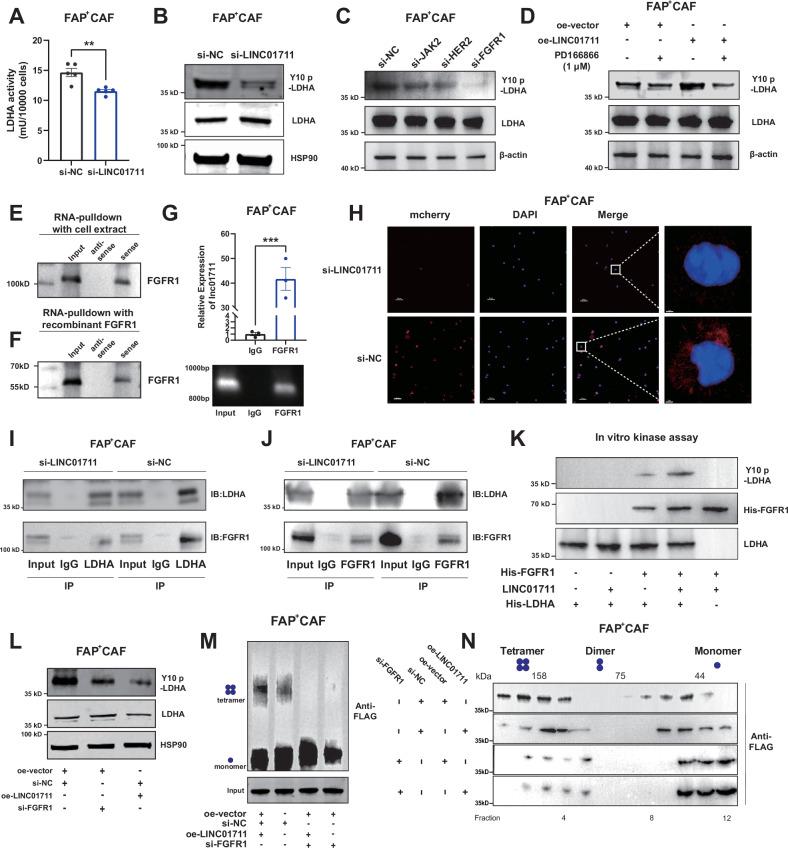
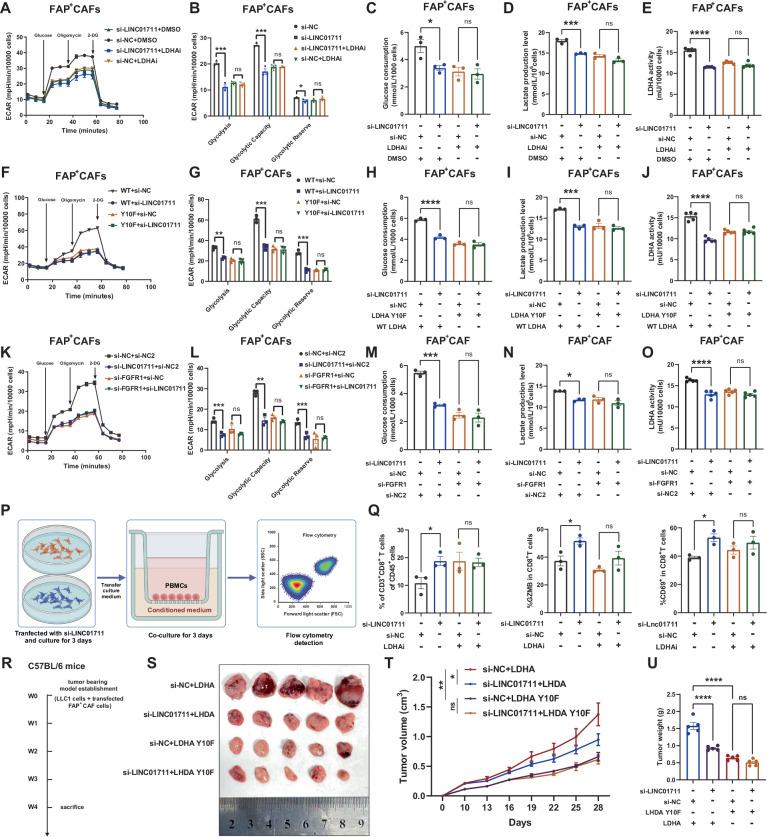
The limited response rate to immune checkpoint inhibitors (ICIs) remains a significant challenge in the treatment of lung adenocarcinoma (LUAD). In our study, we identified a lactate-based chemical barrier surrounding FAP cancer-associated fibroblasts (CAFs) within the LUAD microenvironment (TME), which may hinder the infiltration and function of CD8 T cells. Further investigation revealed that FAP CAFs specifically overexpress LINC01711, which drives lactate production by promoting FGFR1-mediated phosphorylation of lactic dehydrogenase A (LDHA) at the Y10 site and facilitating the formation of active LDHA tetramers. These FAP CAFs then export lactate into TME via the MCT4 transporter, thereby establishing a chemical barrier and fostering an immunosuppressive TME. Notably, we developed a small extracellular vesicle (sEV)-based in vivo self-assembled siRNA system for in vivo knockdown of LINC01711 and demonstrated its potential to enhance the response rate to ICIs in LUAD. Our findings underscore the pivotal role of FAP CAFs in driving resistance to ICIs and propose novel therapeutic strategies to overcome this obstacle.
免疫检查点抑制剂(ICI)的有限反应率仍然是肺腺癌(LUAD)治疗中的一个重大挑战。在我们的研究中,我们在LUAD微环境(TME)中发现了一种围绕FAP癌相关成纤维细胞(CAF)的基于乳酸的化学屏障,这可能会阻碍CD8 T细胞的浸润和功能。进一步研究发现,FAP CAF特异性过表达LINC01711,它通过促进FGFR1介导的乳酸脱氢酶A(LDHA)在Y10位点的磷酸化以及促进活性LDHA四聚体的形成来驱动乳酸生成。这些FAP CAF随后通过MCT4转运蛋白将乳酸输出到TME中,从而建立化学屏障并促进免疫抑制性TME的形成。值得注意的是,我们开发了一种基于小细胞外囊泡(sEV)的体内自组装siRNA系统,用于在体内敲低LINC01711,并证明了其提高LUAD对ICI反应率的潜力。我们的研究结果强调了FAP CAF在驱动对ICI耐药性中的关键作用,并提出了克服这一障碍的新治疗策略。
 Zotero 插件