
急性肺水肿患者血尿素氮与28天全因死亡率的关系:MIMIC-IV数据库的回顾性分析
Relationship between blood urea nitrogen and 28-day all-cause mortality in patients with acute pulmonary edema: a retrospective analysis of the MIMIC-IV database.
作者信息
Tu Guang, Liu Yuwen, Huang Xiaomi, Zeng Yanfang, Cai Zhonglan, Wang Chunyan
机构信息
Department of Cardiology, Lichuan People's Hospital, Fuzhou, China.
Department of Cardiovascular Medicine, Suizhou Hospital, Hubei Medicine University, Suizhou, China.
出版信息
Front Cardiovasc Med. 2025 Aug 5;12:1569218. doi: 10.3389/fcvm.2025.1569218. eCollection 2025.
BACKGROUND
Acute pulmonary edema is a severe clinical syndrome with high mortality. Blood Urea Nitrogen (BUN) levels, which indicate renal function and metabolic state, may have prognostic value in critically ill patients. However, their relationship with outcomes in acute pulmonary edema remains unclear.
OBJECTIVE
This study aims to investigate the association between admission BUN levels and 28-day all-cause mortality in patients with acute pulmonary edema.
METHODS
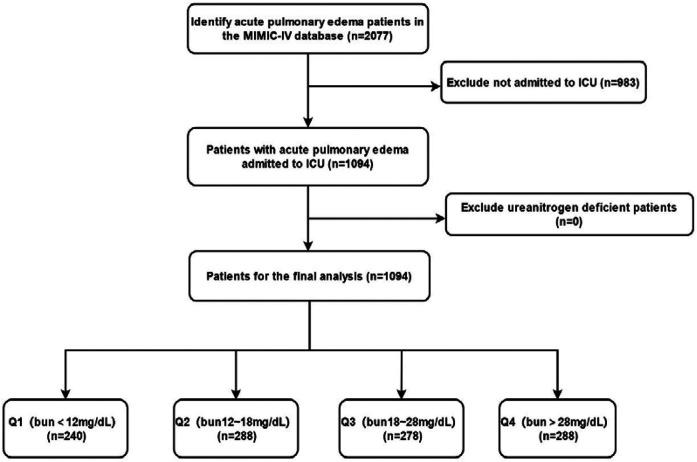
This retrospective cohort study utilized data from the Medical Information Mart for Intensive Care IV (MIMIC-IV) database, covering the period from 2008-2019. It included adult patients diagnosed with acute pulmonary edema. Patients were divided into four groups based on their BUN levels. Cox regression models, restricted cubic spline (RCS) curves, Kaplan-Meier analysis, and subgroup analyses were used to assess the relationship between BUN levels and mortality.
RESULTS
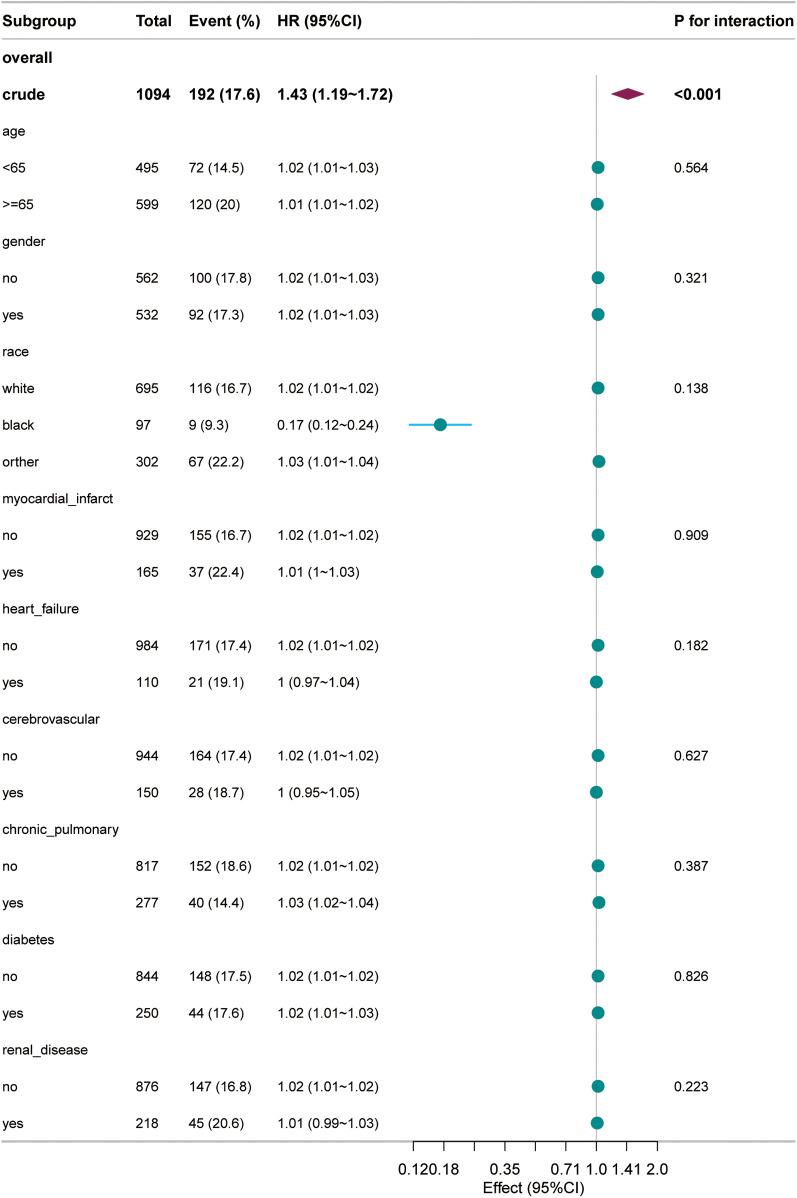
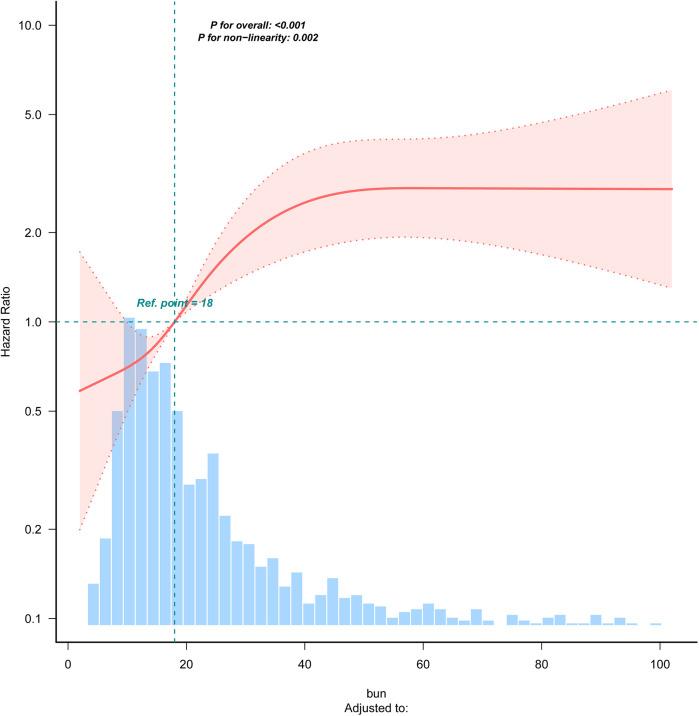
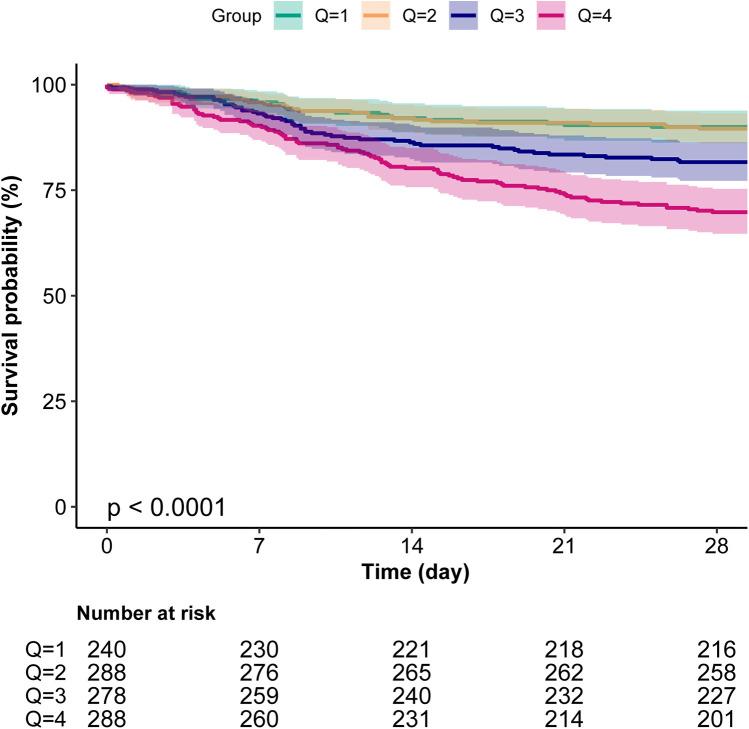
A total of 1,094 patients were included in the study. Univariate Cox regression analysis revealed a positive correlation between BUN levels and 28-day mortality (HR = 1.02, 95% CI: 1.01-1.02, < 0.001). Multivariate analysis confirmed BUN as an independent predictor of mortality (HR = 1.02, 95% CI: 1.01-1.02, < 0.001). The RCS curve indicated a nonlinear relationship, and Kaplan-Meier analysis showed lower survival in the higher BUN groups ( < 0.001). Subgroup analysis found the association to be significant across all subgroups.
CONCLUSION
Admission BUN levels predict 28-day all-cause mortality in patients with acute pulmonary edema. Clinically, BUN monitoring should be emphasized, and individualized prognostic and treatment strategies should be developed to improve outcomes.
背景
急性肺水肿是一种死亡率很高的严重临床综合征。血尿素氮(BUN)水平可反映肾功能和代谢状态,对危重症患者可能具有预后价值。然而,其与急性肺水肿患者预后的关系仍不明确。
目的
本研究旨在探讨急性肺水肿患者入院时BUN水平与28天全因死亡率之间的关联。
方法
这项回顾性队列研究利用重症监护医学信息数据库IV(MIMIC-IV)2008年至2019年期间的数据。纳入诊断为急性肺水肿的成年患者。根据BUN水平将患者分为四组。采用Cox回归模型、限制性立方样条(RCS)曲线、Kaplan-Meier分析和亚组分析来评估BUN水平与死亡率之间的关系。
结果
本研究共纳入1094例患者。单因素Cox回归分析显示BUN水平与28天死亡率呈正相关(HR = 1.02,95%CI:1.01 - 1.02,P < 0.001)。多因素分析证实BUN是死亡率的独立预测因素(HR = 1.02,95%CI:1.01 - 1.02,P < 0.001)。RCS曲线表明二者呈非线性关系,Kaplan-Meier分析显示BUN水平较高组的生存率较低(P < 0.001)。亚组分析发现该关联在所有亚组中均具有统计学意义。
结论
入院时BUN水平可预测急性肺水肿患者的28天全因死亡率。临床上应重视BUN监测,并制定个体化的预后和治疗策略以改善预后。
 Zotero 插件