
阿布扎比综合学校反欺凌逻辑模型的开发:一种多方法参与式方法。
Development of a comprehensive school anti-bullying logic model in Abu Dhabi: a multi-method participatory approach.
作者信息
Al-Ketbi Alfan
机构信息
Department of Health Care Management, College of Health Sciences, University of Sharjah, Sharjah, United Arab Emirates.
出版信息
Front Public Health. 2025 Aug 20;13:1649884. doi: 10.3389/fpubh.2025.1649884. eCollection 2025.
BACKGROUND
Bullying remains a critical issue affecting the well-being, academic performance, and long-term development of school-aged children. This study documents the participatory development of a Comprehensive School Anti-Bullying Logic Model in the Emirate of Abu Dhabi, United Arab Emirates (UAE).
METHODS
Utilizing a multi-method process consisting of stakeholders' interviews, focus group discussions (FGDs), group workshops, and a scoping review-the study sought to construct a culturally sensitive and actionable anti-bullying logic model.
RESULTS
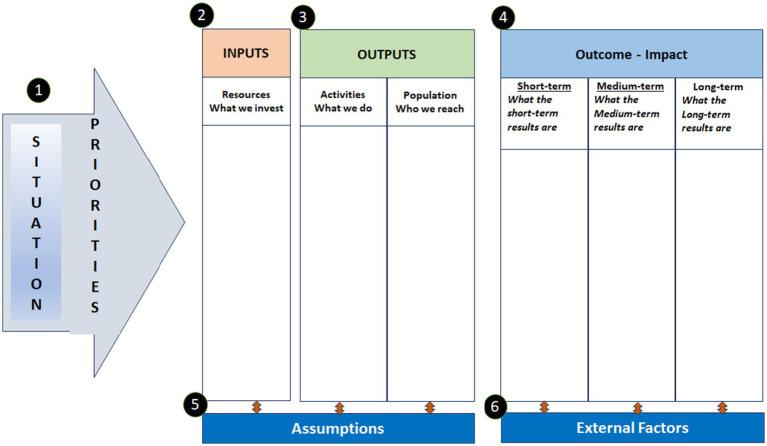
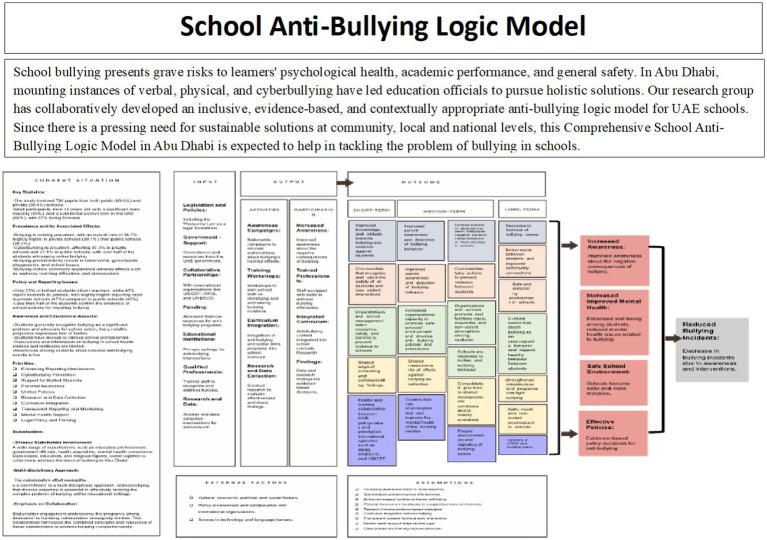
Themes that emerged from interviews and FGDs were underreporting of bullying, the requirement of clearer policies, and a call for more support mechanisms. The logic model developed has organized components: inputs/resources, activities, outputs, outcomes, impact and assumption and external factors. This model combines global best practices with local knowledge and provides a strategic framework for efficient policy design and implementation for all schools in the Emirate. The process emphasizes the necessity of multi-stakeholder involvement in solving intricate education problems. This collaborative process led to a strategic, culturally suitable anti-bullying logic model. The model provides a blueprint for effective implementation and evaluation within and between schools in the emirate. The creation of this Abu Dhabi Comprehensive School Anti-Bullying Logic Model is a reflective and culturally appropriate approach in reducing bullying in schools. The utilization of a multi-method study and involving a broad cross-section of stakeholders has yielded a framework that is underpinned by local context and international best practice.
CONCLUSION
This model offers a strategic roadmap for schools to effectively implement policies and programs to minimize bullying and establish a safer, more supportive learning environment. The research highlights the need for concerted effort in solving intricate problems such as bullying to ensure that solutions are practical, relevant, and sustainable.
背景
欺凌仍然是一个严重影响学龄儿童福祉、学业成绩和长期发展的问题。本研究记录了阿拉伯联合酋长国(阿联酋)阿布扎比酋长国综合学校反欺凌逻辑模型的参与式开发过程。
方法
该研究采用了多方法流程,包括利益相关者访谈、焦点小组讨论(FGD)、小组研讨会和范围审查,旨在构建一个具有文化敏感性且可操作的反欺凌逻辑模型。
结果
访谈和焦点小组讨论中出现的主题包括欺凌行为举报不足、需要更明确的政策以及呼吁建立更多支持机制。所开发的逻辑模型有组织的组成部分:输入/资源、活动、产出、成果、影响以及假设和外部因素。该模型将全球最佳实践与当地知识相结合,为酋长国所有学校的有效政策设计和实施提供了战略框架。该过程强调了多利益相关者参与解决复杂教育问题的必要性。这种协作过程产生了一个具有战略意义、适合当地文化的反欺凌逻辑模型。该模型为酋长国学校内部及之间的有效实施和评估提供了蓝图。创建阿布扎比综合学校反欺凌逻辑模型是一种在减少学校欺凌方面具有反思性且适合当地文化的方法。采用多方法研究并让广泛的利益相关者参与,产生了一个基于当地背景和国际最佳实践的框架。
结论
该模型为学校有效实施政策和计划以尽量减少欺凌并建立更安全、更具支持性的学习环境提供了战略路线图。该研究强调了解决欺凌等复杂问题需要共同努力,以确保解决方案切实可行、相关且可持续。

 Zotero 插件