
磷酸酶抑制剂钒酸盐对系膜细胞的激活作用。对糖尿病肾病的潜在影响。
Activation of mesangial cells by the phosphatase inhibitor vanadate. Potential implications for diabetic nephropathy.
作者信息
Wenzel U O, Fouqueray B, Biswas P, Grandaliano G, Choudhury G G, Abboud H E
机构信息
Department of Medicine, University Hospital, San Antonio, Texas.
出版信息
J Clin Invest. 1995 Mar;95(3):1244-52. doi: 10.1172/JCI117774.
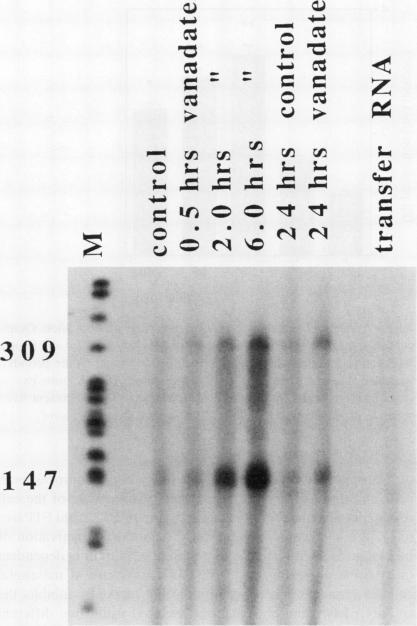
The metalion vanadate has insulin-like effects and has been advocated for use in humans as a therapeutic modality for diabetes mellitus. However, since vanadate is a tyrosine phosphatase inhibitor, it may result in undesirable activation of target cells. We studied the effect of vanadate on human mesangial cells, an important target in diabetic nephropathy. Vanadate stimulated DNA synthesis and PDGF B chain gene expression. Vanadate also inhibited total tyrosine phosphatase activity and stimulated tyrosine phosphorylation of a set of cellular proteins. Two chemically and mechanistically dissimilar tyrosine kinase inhibitors, genistein and herbimycin A, blocked DNA synthesis induced by vanadate. Vanadate also stimulated phospholipase C and protein kinase C. Downregulation of protein kinase C abolished vanadate-induced DNA synthesis. Thus, vanadate-induced mitogenesis is dependent on tyrosine kinases and protein kinase C activation. The most likely mechanism for the effect of vanadate on these diverse processes involves the inhibition of cellular phosphotyrosine phosphatases. These studies demonstrating that vanadate activates mesangial cells may have major implications for the therapeutic potential of vanadate administration in diabetes. Although vanadate exerts beneficial insulin-like effects and potentiates the effect of insulin in sensitive tissue, it may result in undesirable activation of other target cells, such as mesangial cells.
金属离子钒酸盐具有胰岛素样作用,已被提倡用于人类作为糖尿病的一种治疗方式。然而,由于钒酸盐是一种酪氨酸磷酸酶抑制剂,它可能导致靶细胞的不良激活。我们研究了钒酸盐对人系膜细胞的影响,人系膜细胞是糖尿病肾病中的一个重要靶点。钒酸盐刺激DNA合成和血小板衍生生长因子B链基因表达。钒酸盐还抑制总酪氨酸磷酸酶活性,并刺激一组细胞蛋白的酪氨酸磷酸化。两种化学和作用机制不同的酪氨酸激酶抑制剂,染料木黄酮和赫曲霉素A,阻断了钒酸盐诱导的DNA合成。钒酸盐还刺激磷脂酶C和蛋白激酶C。蛋白激酶C的下调消除了钒酸盐诱导的DNA合成。因此,钒酸盐诱导的有丝分裂依赖于酪氨酸激酶和蛋白激酶C的激活。钒酸盐对这些不同过程产生影响的最可能机制涉及对细胞磷酸酪氨酸磷酸酶的抑制。这些表明钒酸盐激活系膜细胞的研究可能对钒酸盐在糖尿病治疗中的潜在应用具有重要意义。尽管钒酸盐发挥有益的胰岛素样作用并增强胰岛素在敏感组织中的作用,但它可能导致其他靶细胞如系膜细胞的不良激活。
 Zotero 插件