Saccomanno L, Bass B L
Department of Biochemistry, University of Utah, Salt Lake City 84132.
Mol Cell Biol. 1994 Aug;14(8):5425-32. doi: 10.1128/mcb.14.8.5425-5432.1994.
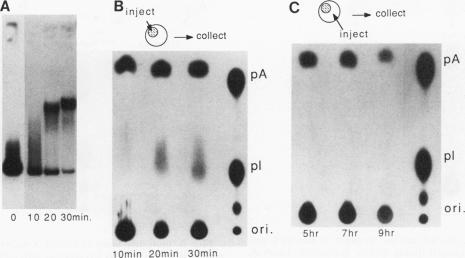
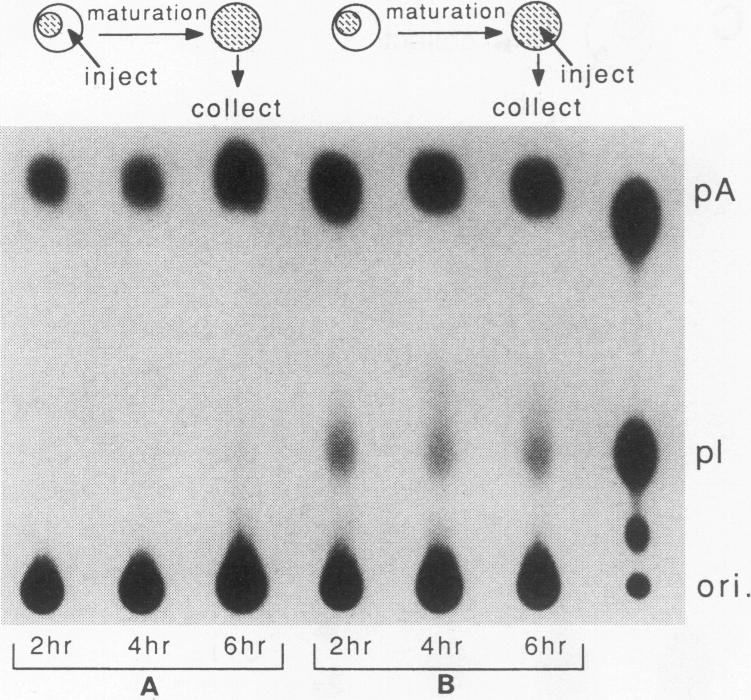
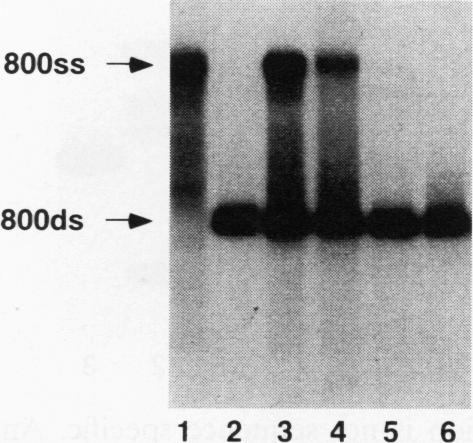
Here we describe studies of double-stranded RNA (dsRNA) adenosine deaminase in Xenopus laevis, in particular during meiotic maturation, the period during which a stage VI oocyte matures to an egg. We show that dsRNA adenosine deaminase is in the nuclei of stage VI oocytes. Most importantly, we demonstrate that the cytoplasm of stage VI oocytes contains a factor that protects microinjected dsRNA from deamination when dsRNA adenosine deaminase is released from the nucleus during meiotic maturation. Our data suggest that the protection factor is a cytoplasmic dsRNA-binding protein or proteins that bind to dsRNA in a sequence-independent manner to occlude dsRNA from binding to dsRNA adenosine deaminase. The cytoplasmic double-stranded RNA-binding protein(s) does not bind to other nucleic acids and can be titrated at high concentrations of dsRNA. These studies raise the question of whether all dsRNA-binding proteins share endogenous substrates and also suggest potential means of regulating dsRNA adenosine deaminase in vivo.
在此,我们描述了非洲爪蟾中双链RNA(dsRNA)腺苷脱氨酶的研究,特别是在减数分裂成熟过程中,即VI期卵母细胞成熟为卵子的时期。我们发现dsRNA腺苷脱氨酶存在于VI期卵母细胞的细胞核中。最重要的是,我们证明,当dsRNA腺苷脱氨酶在减数分裂成熟过程中从细胞核释放时,VI期卵母细胞的细胞质中含有一种保护因子,可保护显微注射的dsRNA不被脱氨。我们的数据表明,该保护因子是一种细胞质dsRNA结合蛋白或多种蛋白,它们以序列非依赖的方式与dsRNA结合,从而阻止dsRNA与dsRNA腺苷脱氨酶结合。细胞质双链RNA结合蛋白不与其他核酸结合,并且在高浓度dsRNA下可被滴定。这些研究提出了一个问题,即是否所有dsRNA结合蛋白都共享内源性底物,同时也提示了在体内调节dsRNA腺苷脱氨酶的潜在方法。