Schaapveld R Q, Borradori L, Geerts D, van Leusden M R, Kuikman I, Nievers M G, Niessen C M, Steenbergen R D, Snijders P J, Sonnenberg A
Division of Cell Biology, The Netherlands Cancer Institute, 1066 CX Amsterdam, The Netherlands.
J Cell Biol. 1998 Jul 13;142(1):271-84. doi: 10.1083/jcb.142.1.271.
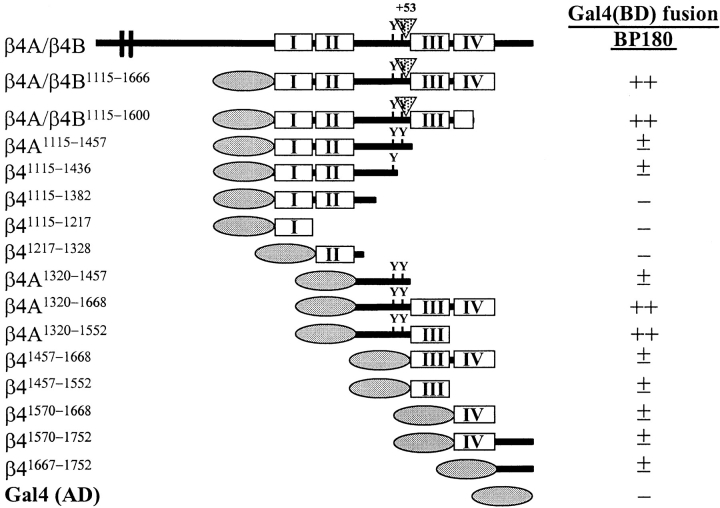
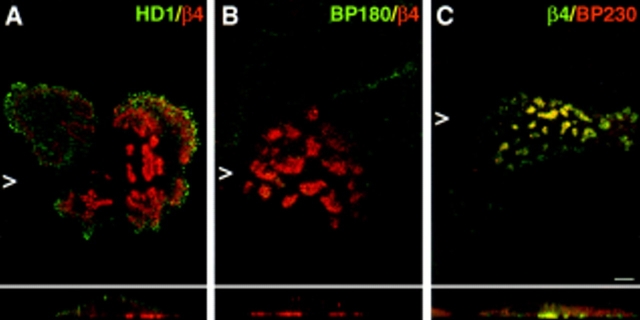
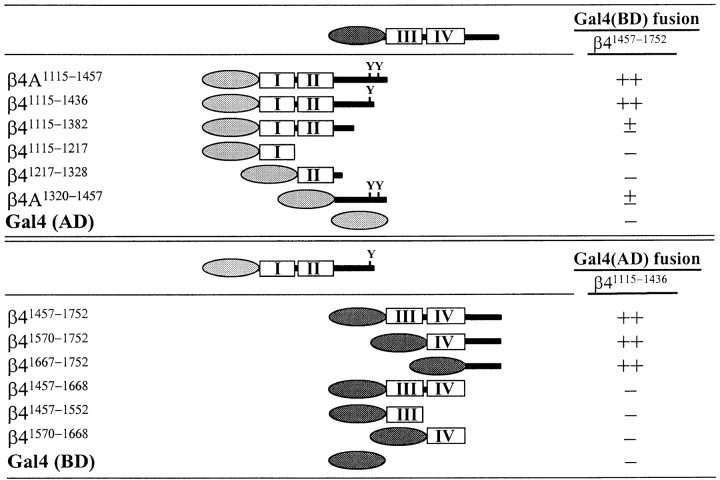
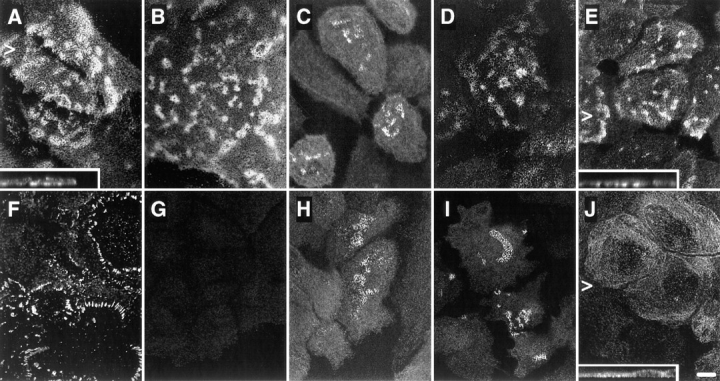
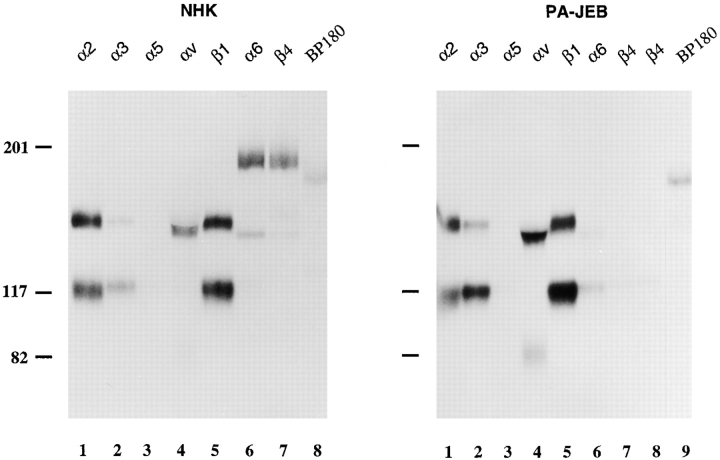
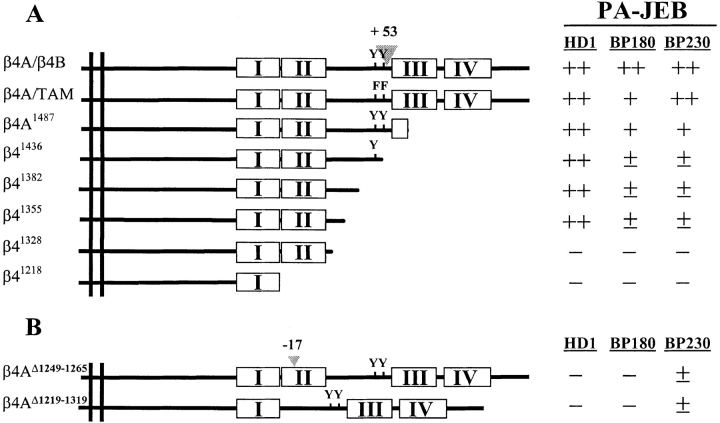
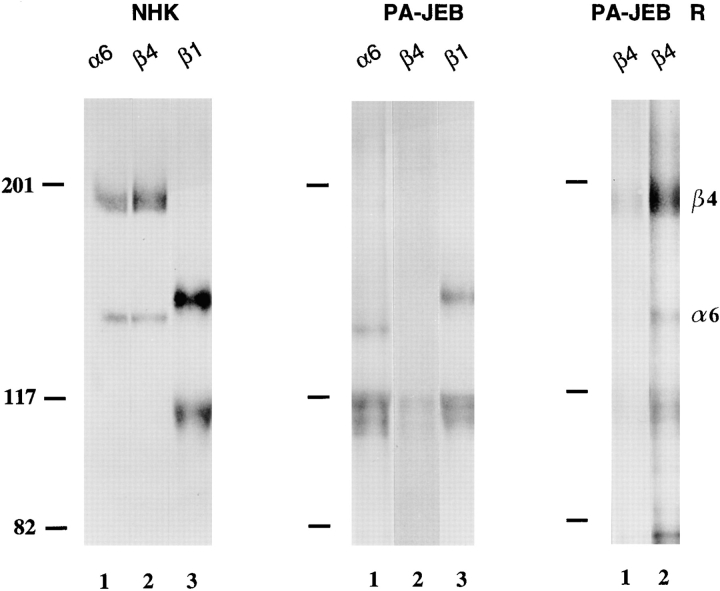
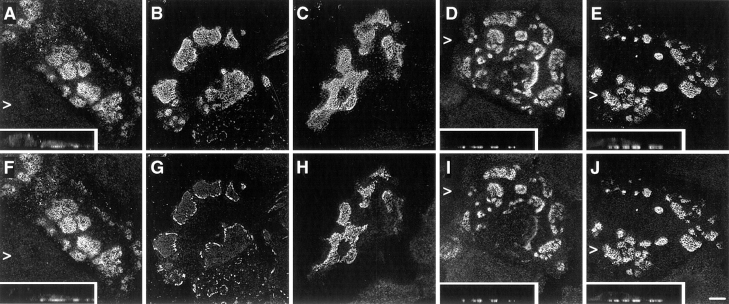
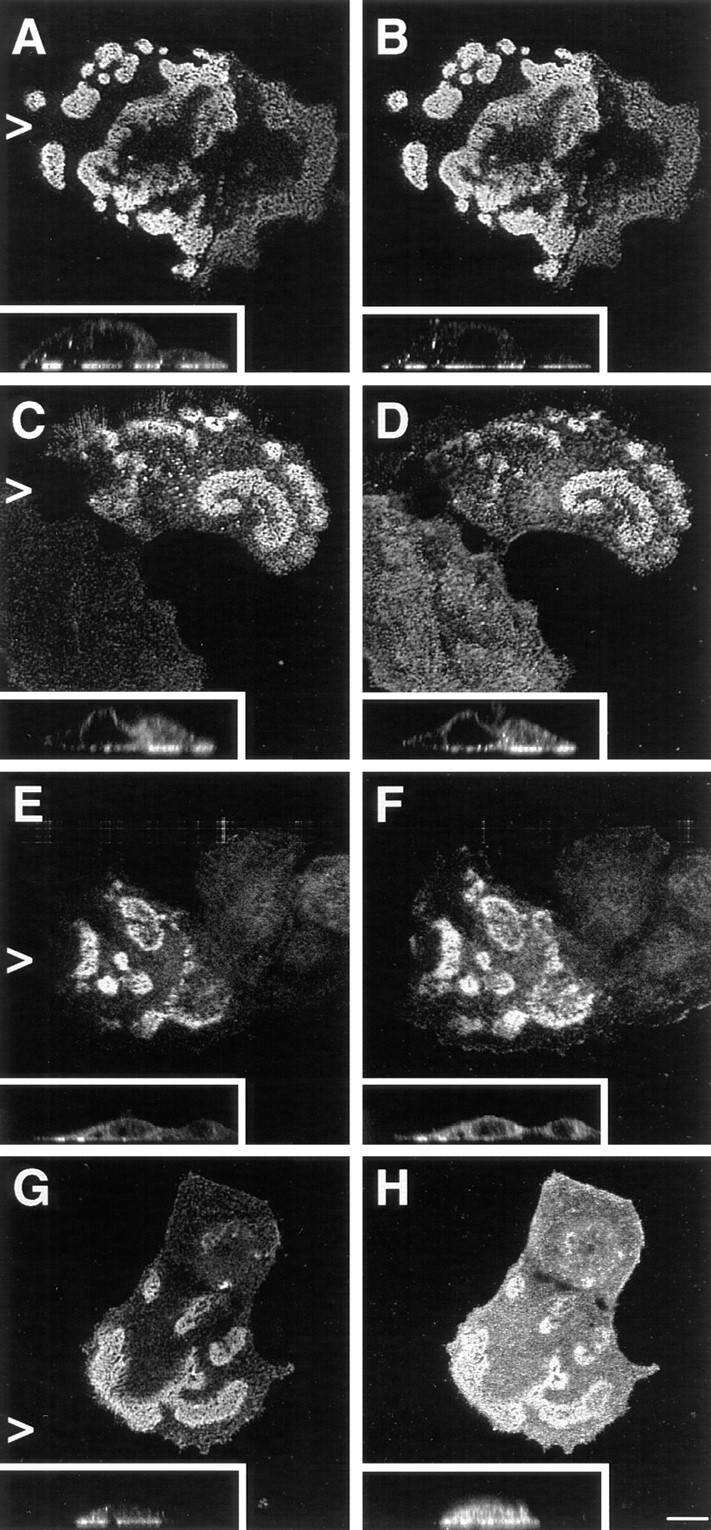
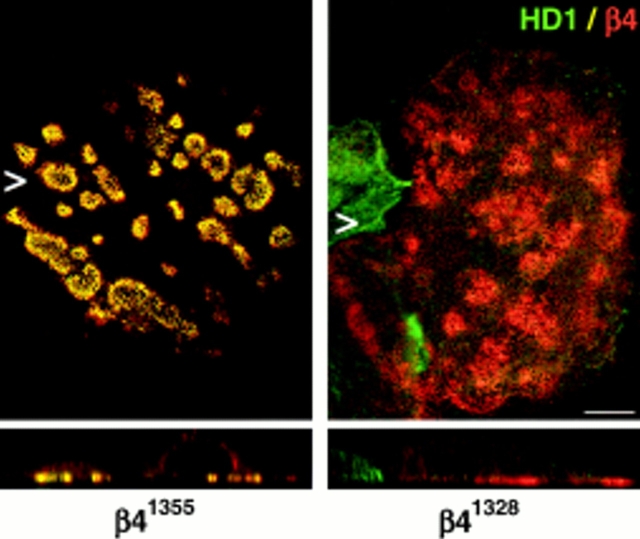
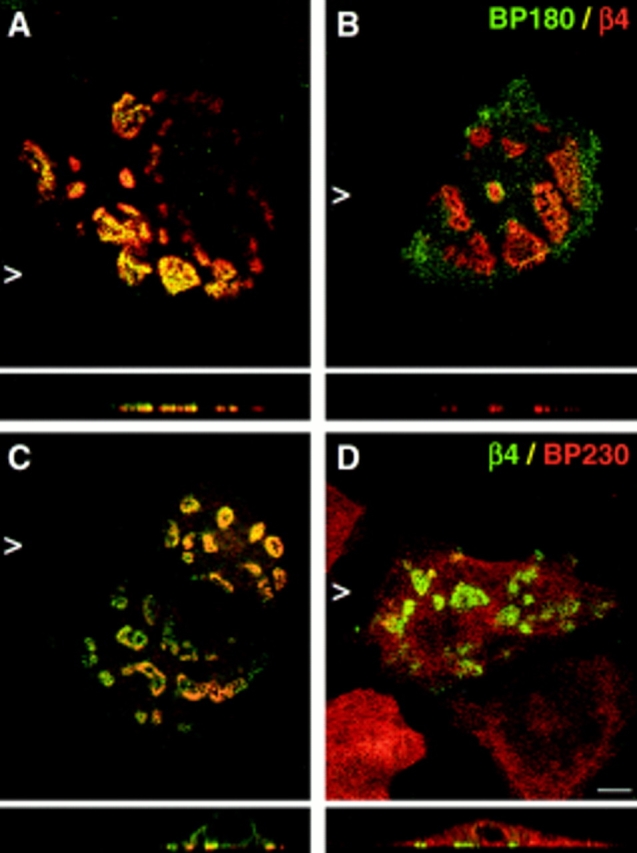
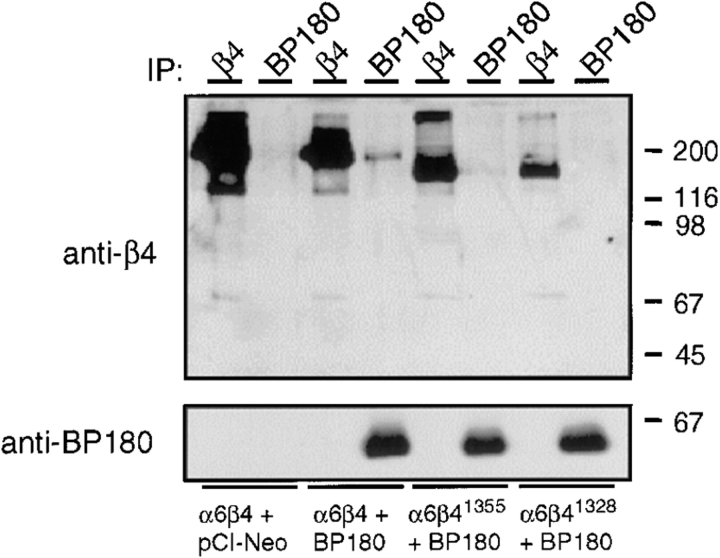
Hemidesmosomes (HDs) are stable anchoring structures that mediate the link between the intermediate filament cytoskeleton and the cell substratum. We investigated the contribution of various segments of the beta4 integrin cytoplasmic domain in the formation of HDs in transient transfection studies using immortalized keratinocytes derived from an epidermolysis bullosa patient deficient in beta4 expression. We found that the expression of wild-type beta4 restored the ability of the beta4-deficient cells to form HDs and that distinct domains in the NH2- and COOH-terminal regions of the beta4 cytoplasmic domain are required for the localization of HD1/plectin and the bullous pemphigoid antigens 180 (BP180) and 230 (BP230) in these HDs. The tyrosine activation motif located in the connecting segment (CS) of the beta4 cytoplasmic domain was dispensable for HD formation, although it may be involved in the efficient localization of BP180. Using the yeast two-hybrid system, we could demonstrate a direct interaction between beta4 and BP180 which involves sequences within the COOH-terminal part of the CS and the third fibronectin type III (FNIII) repeat. Immunoprecipitation studies using COS-7 cells transfected with cDNAs for alpha6 and beta4 and a mutant BP180 which lacks the collagenous extracellular domain confirmed the interaction of beta4 with BP180. Nevertheless, beta4 mutants which contained the BP180-binding region, but lacked sequences required for the localization of HD1/plectin, failed to localize BP180 in HDs. Additional yeast two- hybrid assays indicated that the 85 COOH-terminal residues of beta4 can interact with the first NH2-terminal pair of FNIII repeats and the CS, suggesting that the cytoplasmic domain of beta4 is folded back upon itself. Unfolding of the cytoplasmic domain may be part of a mechanism by which the interaction of beta4 with other hemidesmosomal components, e.g., BP180, is regulated.
半桥粒(HDs)是稳定的锚定结构,介导中间丝细胞骨架与细胞基质之间的连接。我们使用来自一名β4表达缺陷的大疱性表皮松解症患者的永生化角质形成细胞,在瞬时转染研究中调查了β4整合素细胞质结构域的各个片段在HDs形成中的作用。我们发现野生型β4的表达恢复了β4缺陷细胞形成HDs的能力,并且β4细胞质结构域的NH2-和COOH-末端区域中的不同结构域是HD1/网蛋白以及大疱性类天疱疮抗原180(BP180)和230(BP230)在这些HDs中定位所必需的。位于β4细胞质结构域连接段(CS)中的酪氨酸激活基序对于HD形成是可有可无的,尽管它可能参与BP180的有效定位。使用酵母双杂交系统,我们可以证明β4与BP180之间的直接相互作用,这涉及CS的COOH-末端部分和第三个III型纤连蛋白(FNIII)重复序列内的序列。使用转染了α6和β4 cDNA以及缺乏胶原细胞外结构域的突变型BP180的COS-7细胞进行的免疫沉淀研究证实了β4与BP180的相互作用。然而,包含BP180结合区域但缺乏HD1/网蛋白定位所需序列的β4突变体未能将BP180定位在HDs中。额外的酵母双杂交分析表明,β4的85个COOH-末端残基可以与FNIII重复序列的第一个NH2-末端对和CS相互作用,这表明β4的细胞质结构域自身折叠。细胞质结构域的展开可能是调节β4与其他半桥粒成分(例如BP180)相互作用的机制的一部分。