Pine P L, Gornick M, Lubitz J, Newton M
Health Care Financ Rev. 1981 Sep;3(1):89-116.
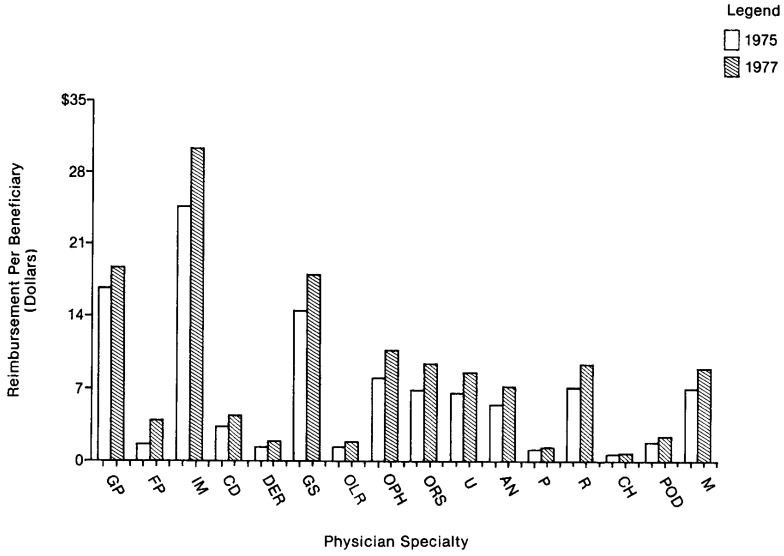
This paper examines use of physicians' services by Medicare beneficiaries according to the specialty of the physician providing care. The major objectives of this study were to determine which types of physicians are most frequently used, the average charge per service by specialty, the mix of physicians (by specialty) that patients saw during the year, and the amount Medicare reimburses in relation to total physician income. Data were studied for the total Medicare population and by age, sex, race, and geographic area. Claims data for 1975 and 1977 were used from the Part B Bill Summary System. This system collects information from bills from a 5 percent sample of Medicare enrollees. Major findings from this study indicate: (1) Physicians in general practice and internal medicine provided about the same number of services and each far outranked all other types of physicians in numbers of Medicare beneficiaries with reimbursed services. (2) There were marked differences by census region in the use of certain specialists, particularly pathologists, podiatrists, dermatologists, and the specialty group otology, laryngology, rhinology. (3) Average charges per service varied considerably by specialty. Internists' charges averaged 35 percent higher per service than charges by general practitioners. Charges submitted by the surgical specialties far outranked all others and showed the greatest increase during the period under study. (4) Of the total persons with reimbursement physicians' services in 1977, 85 percent saw a primary care physician during the year, while the remaining 15 percent received services from specialists only. (5) Of the total reimbursements made by Medicare, internists received 20 percent, general practitioners received 14 percent, and general surgeons 12 percent. Medicare's payments were estimated to be 21 percent of total gross income for internists, 20 percent for anesthesiologists, and 18 percent for surgical specialties.
本文根据提供医疗服务的医生专业,研究了医疗保险受益人的医生服务使用情况。本研究的主要目的是确定最常被使用的医生类型、各专业每项服务的平均收费、患者在一年中就诊的医生组合(按专业),以及医疗保险相对于医生总收入的报销金额。研究了医疗保险总人口的数据,并按年龄、性别、种族和地理区域进行了分析。使用了来自B部分账单汇总系统的1975年和1977年的索赔数据。该系统从医疗保险参保者5%的样本账单中收集信息。本研究的主要发现表明:(1)全科医生和内科医生提供的服务数量大致相同,在获得报销服务的医疗保险受益人数量上,他们都远远超过所有其他类型的医生。(2)在某些专科医生的使用上,人口普查区域存在显著差异,特别是病理学家、足病医生、皮肤科医生以及耳科、喉科、鼻科专业组。(3)每项服务的平均收费因专业而异。内科医生每项服务的收费平均比全科医生高35%。外科专科提交的收费远远高于所有其他专业,并且在研究期间增长幅度最大。(4)在1977年获得医生服务报销的总人数中,85%的人在这一年中看过初级保健医生,而其余15%的人仅接受专科医生的服务。(5)在医疗保险的总报销费用中,内科医生获得20%,全科医生获得14%,普通外科医生获得12%。据估计,医疗保险支付的费用占内科医生总收入的21%,麻醉师总收入的20%,外科专科总收入的18%。