Vacik J, Dean B S, Zimmer W E, Dean D A
Department of Microbiology and Immunology, College of Medicine, University of South Alabama, Mobile, AL 36688, USA.
Gene Ther. 1999 Jun;6(6):1006-14. doi: 10.1038/sj.gt.3300924.
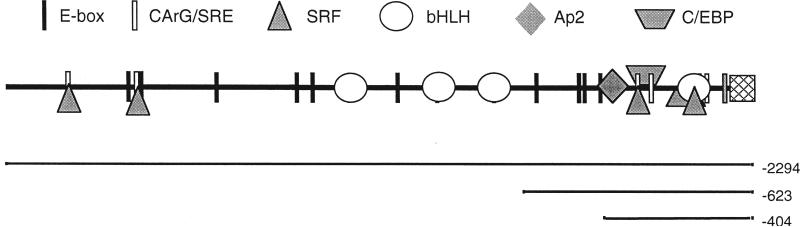
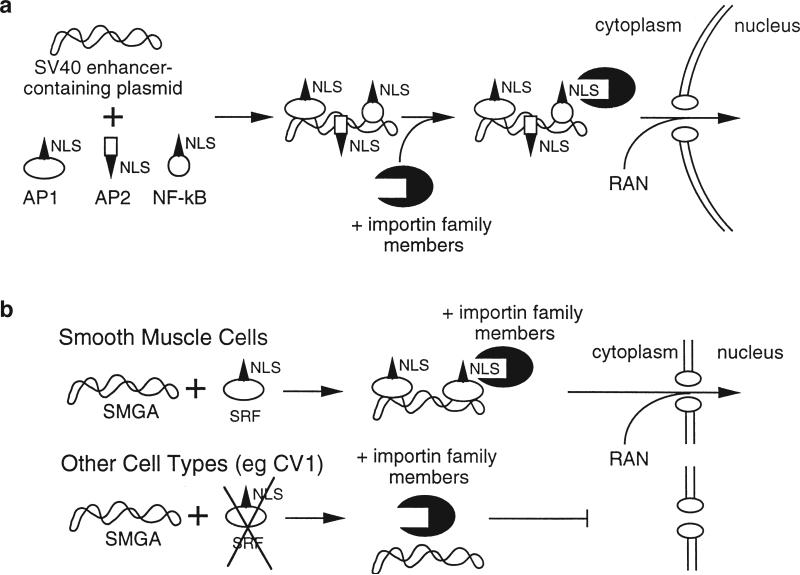
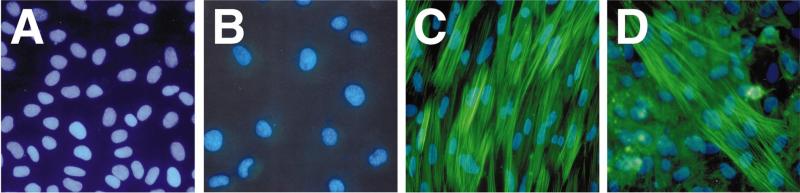
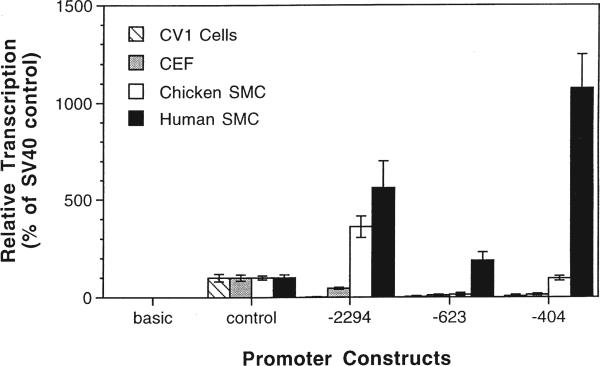
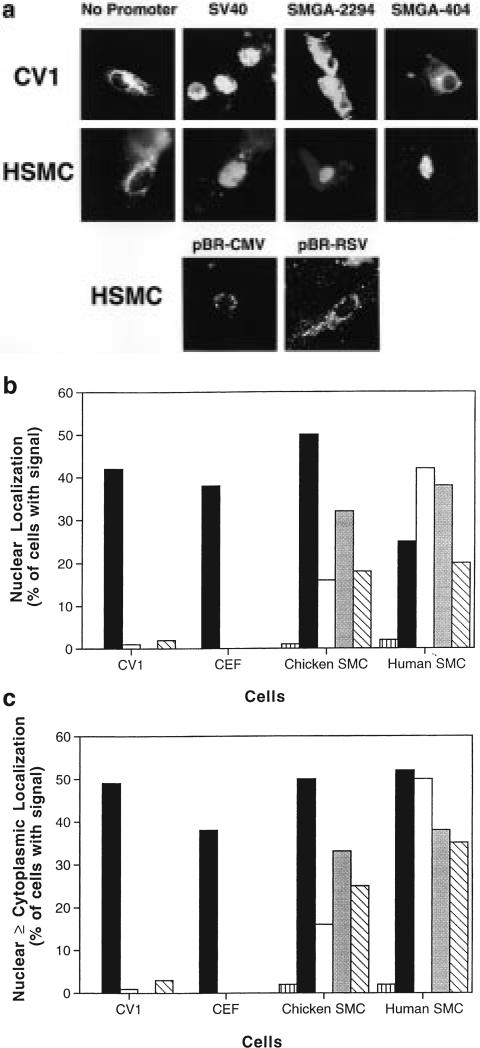
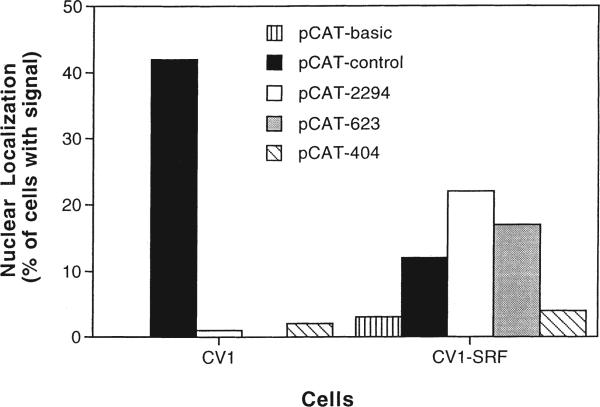
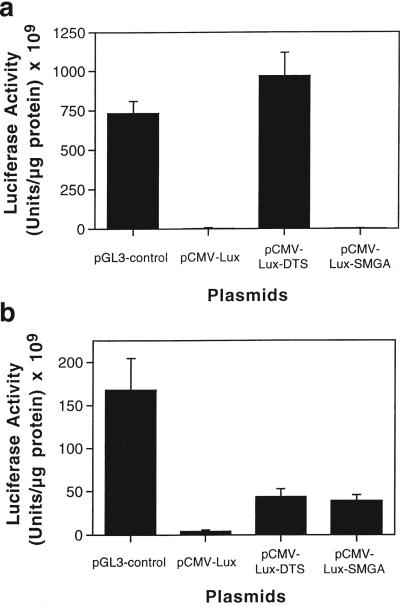
One factor limiting the success of non-viral gene therapy vectors is the relative inability to target genes specifically to a desired cell type. To address this limitation, we have begun to develop cell-specific vectors whose specificity is at the level of the nuclear import of the plasmid DNA. We have recently shown that nuclear import of plasmid DNA is a sequence-specific event, requiring the SV40 enhancer, a region known to bind to a number of general transcription factors (Dean DA, Exp Cell Res 1997; 230: 293). From these studies we developed a model whereby transcription factor(s) bind to the DNA in the cytoplasm to create a protein-DNA complex that can enter the nucleus using the protein import machinery. Our model predicts that by using DNA elements containing binding sites for transcription factors expressed in unique cell types, we should be able to create plasmids that target to the nucleus in a cell-specific manner. Using the promoter from the smooth muscle gamma actin (SMGA) gene whose expression is limited to smooth muscle cells, we have created a series of reporter plasmids that are expressed selectively in smooth muscle cells. Moreover, when injected into the cytoplasm, plasmids containing portions of the SMGA promoter localize to the nucleus of smooth muscle cells, but remain cytoplasmic in fibroblasts and CV1 cells. In contrast, a similar plasmid carrying the SV40 enhancer is transported into the nuclei of all cell types tested. Nuclear import of the SMGA promoter-containing plasmids could be achieved when the smooth muscle specific transcription factor SRF was expressed in stably transfected CV1 cells, supporting our model for the nuclear import of plasmids. Finally, these nuclear targeting sequences were also able to promote increased gene expression in liposome- and polycation-transfected non-dividing cells in a cell-specific manner, similar to their nuclear import activity. These results provide proof of principle for the development of cell-specific non-viral vectors for any desired cell type.
限制非病毒基因治疗载体成功的一个因素是相对无法将基因特异性靶向到所需的细胞类型。为了解决这一限制,我们已开始开发细胞特异性载体,其特异性处于质粒DNA核输入水平。我们最近表明,质粒DNA的核输入是一个序列特异性事件,需要SV40增强子,这是一个已知可与多种通用转录因子结合的区域(迪恩·DA,《实验细胞研究》1997年;230:293)。从这些研究中,我们建立了一个模型,即转录因子在细胞质中与DNA结合,形成一种蛋白质-DNA复合物,该复合物可利用蛋白质输入机制进入细胞核。我们的模型预测,通过使用含有在独特细胞类型中表达的转录因子结合位点的DNA元件,我们应该能够创建以细胞特异性方式靶向细胞核的质粒。利用平滑肌γ肌动蛋白(SMGA)基因的启动子,其表达仅限于平滑肌细胞,我们创建了一系列在平滑肌细胞中选择性表达的报告质粒。此外,当注射到细胞质中时,含有SMGA启动子部分的质粒定位于平滑肌细胞的细胞核,但在成纤维细胞和CV1细胞中仍保留在细胞质中。相比之下,携带SV40增强子的类似质粒被转运到所有测试细胞类型的细胞核中。当平滑肌特异性转录因子SRF在稳定转染的CV1细胞中表达时,含有SMGA启动子的质粒的核输入可以实现,这支持了我们关于质粒核输入的模型。最后,这些核靶向序列还能够以细胞特异性方式促进脂质体和聚阳离子转染的非分裂细胞中基因表达的增加,类似于它们的核输入活性。这些结果为开发针对任何所需细胞类型的细胞特异性非病毒载体提供了原理证明。