
环磷酸腺苷(cAMP)诱导的基因表达可减轻无诱发的巨噬细胞凋亡。
NO-Evoked macrophage apoptosis is attenuated by cAMP-induced gene expression.
作者信息
von Knethen A, Brockhaus F, Kleiter I, Brüne B
机构信息
Faculty of Medicine, Department of Medicine IV-Experimental Division, University of Erlangen-Nürnberg, Erlangen, Germany.
出版信息
Mol Med. 1999 Oct;5(10):672-84.
BACKGROUND
Previous work has suggested that an increase in expression of cyclooxygenase-2, concomitant formation of E-type prostanoids, and in turn intracellular cAMP conveys macrophage resistance against apoptosis.
MATERIALS AND METHODS
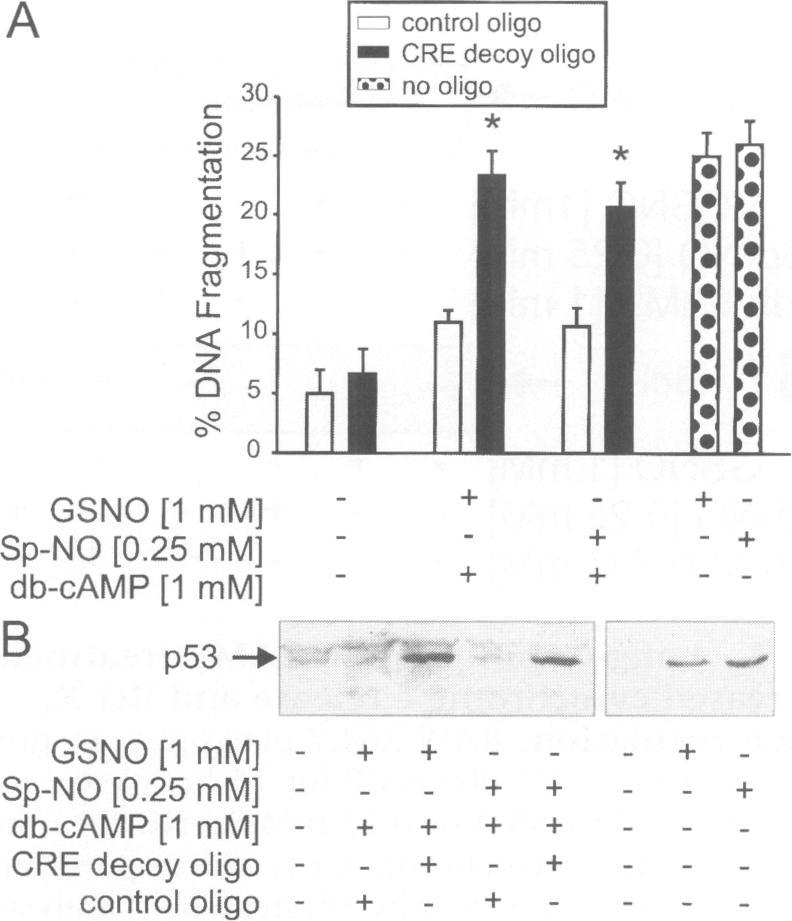
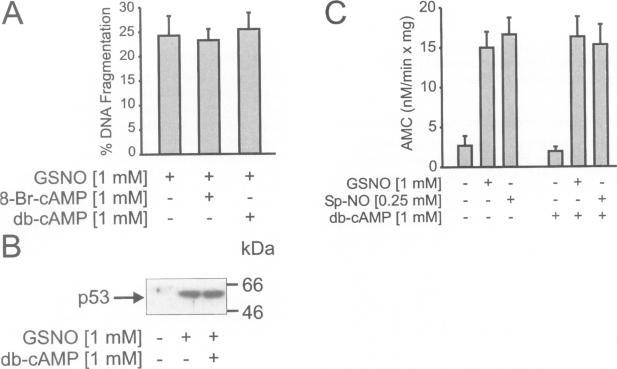
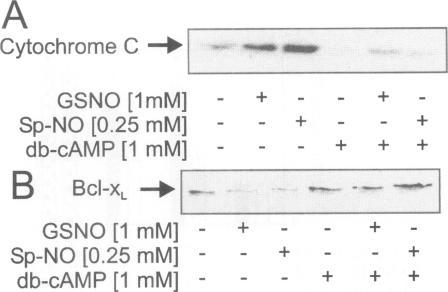
We analyzed the effects of lipophilic cAMP analogs on nitric oxide (NO)-induced apoptosis in RAW 264.7 macrophages and human primary monocyte-derived macrophages. Parameters comprised DNA fragmentation (diphenylamine assay), annexin V staining of phosphatidylserine, caspase activity (quantitated by the cleavage of a fluorogenic caspase-3-like substrate Ac-DEVD-AMC), and mitochondrial membrane depolarization (DeltaPsi), analyzed using DiOC(6)(3). Western blots detected accumulation of the tumor suppressor protein p53, relocation of cytochrome c, and expression of the antiapoptotic protein Bcl-X(L). A cAMP response-element decoy approach confirmed cAMP-dependent gene induction.
RESULTS
We verified resistance of murine and human macrophages against NO donors such as S-nitrosoglutathione or spermine-NO by pre-exposing cells to lipophilic cAMP analogs or by pretreatment with lipopolysaccaride, interferon-gamma, and N(G)-nitroarginine-methylester for 15 hr. Cellular prestimulation decreased NO-evoked apoptosis, as apoptotic parameters were basically absent. Macrophage protection was not achieved during a short period of preexposure, i.e., 1 hr. To verify gene induction as the underlying protective principle, we treated RAW cells with oligonucleotides containing a cAMP-responsive element in order to scavenge cAMP response element-binding protein prior to its promoter-activating ability. Decoy oligonucleotides, but not an unrelated control oligonucleotide, weakened cAMP-evoked protection and re-established a p53 response following NO addition.
CONCLUSION
Gene induction by cAMP protects macrophages against apoptosis that occurs as a result of excessive NO formation. Decreasing programmed cell death of macrophages may perpetuate inflammatory conditions in humans when macrophages become activated in close association with innate immune responses.
背景
先前的研究表明,环氧合酶-2表达增加、E型前列腺素随之形成以及细胞内cAMP进而传递巨噬细胞对凋亡的抗性。
材料与方法
我们分析了亲脂性cAMP类似物对RAW 264.7巨噬细胞和人原代单核细胞衍生巨噬细胞中一氧化氮(NO)诱导的凋亡的影响。参数包括DNA片段化(二苯胺测定)、磷脂酰丝氨酸的膜联蛋白V染色、半胱天冬酶活性(通过荧光半胱天冬酶-3样底物Ac-DEVD-AMC的切割进行定量)以及线粒体膜去极化(ΔΨ),使用DiOC(6)(3)进行分析。蛋白质免疫印迹检测肿瘤抑制蛋白p53的积累、细胞色素c的重新定位以及抗凋亡蛋白Bcl-X(L)的表达。一种cAMP反应元件诱饵方法证实了cAMP依赖性基因诱导。
结果
我们通过将细胞预先暴露于亲脂性cAMP类似物或用脂多糖、干扰素-γ和N(G)-硝基精氨酸甲酯预处理15小时,验证了小鼠和人巨噬细胞对NO供体如S-亚硝基谷胱甘肽或精胺-NO的抗性。细胞预刺激减少了NO诱发的凋亡,因为凋亡参数基本不存在。在短时间(即1小时)的预暴露期间未实现巨噬细胞保护。为了验证基因诱导作为潜在的保护机制,我们用含有cAMP反应元件的寡核苷酸处理RAW细胞,以便在其启动子激活能力之前清除cAMP反应元件结合蛋白。诱饵寡核苷酸而非无关的对照寡核苷酸削弱了cAMP诱发的保护作用,并在添加NO后重新建立了p53反应。
结论
cAMP诱导的基因保护巨噬细胞免受因过量NO形成而导致的凋亡。当巨噬细胞与先天免疫反应密切相关而被激活时,减少巨噬细胞的程序性细胞死亡可能会使人类的炎症状态持续存在。



 Zotero 插件