Aronoff-Spencer E, Burns C S, Avdievich N I, Gerfen G J, Peisach J, Antholine W E, Ball H L, Cohen F E, Prusiner S B, Millhauser G L
Department of Chemistry and Biochemistry, University of California, Santa Cruz, California 95064, USA.
Biochemistry. 2000 Nov 14;39(45):13760-71. doi: 10.1021/bi001472t.
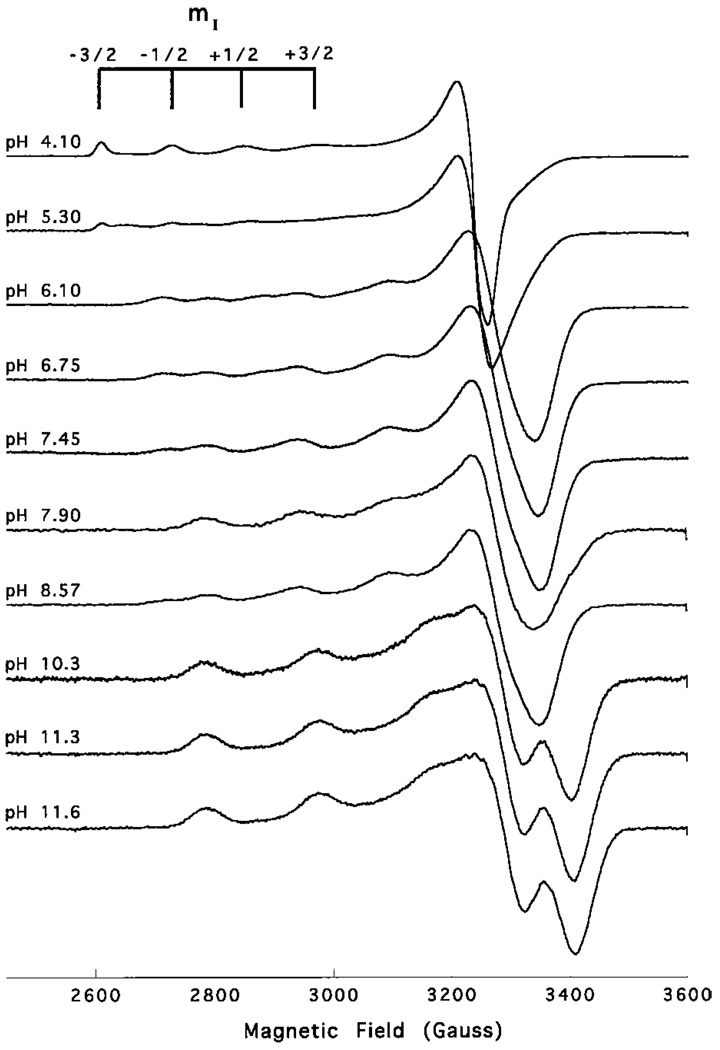
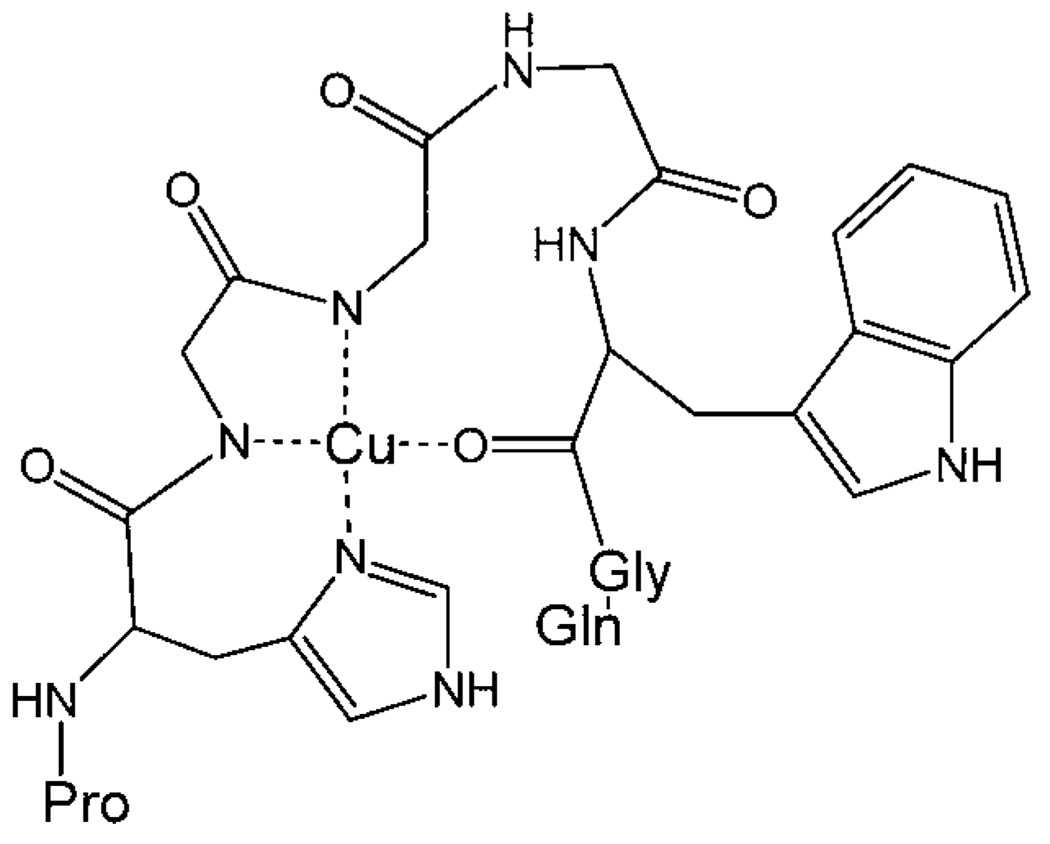
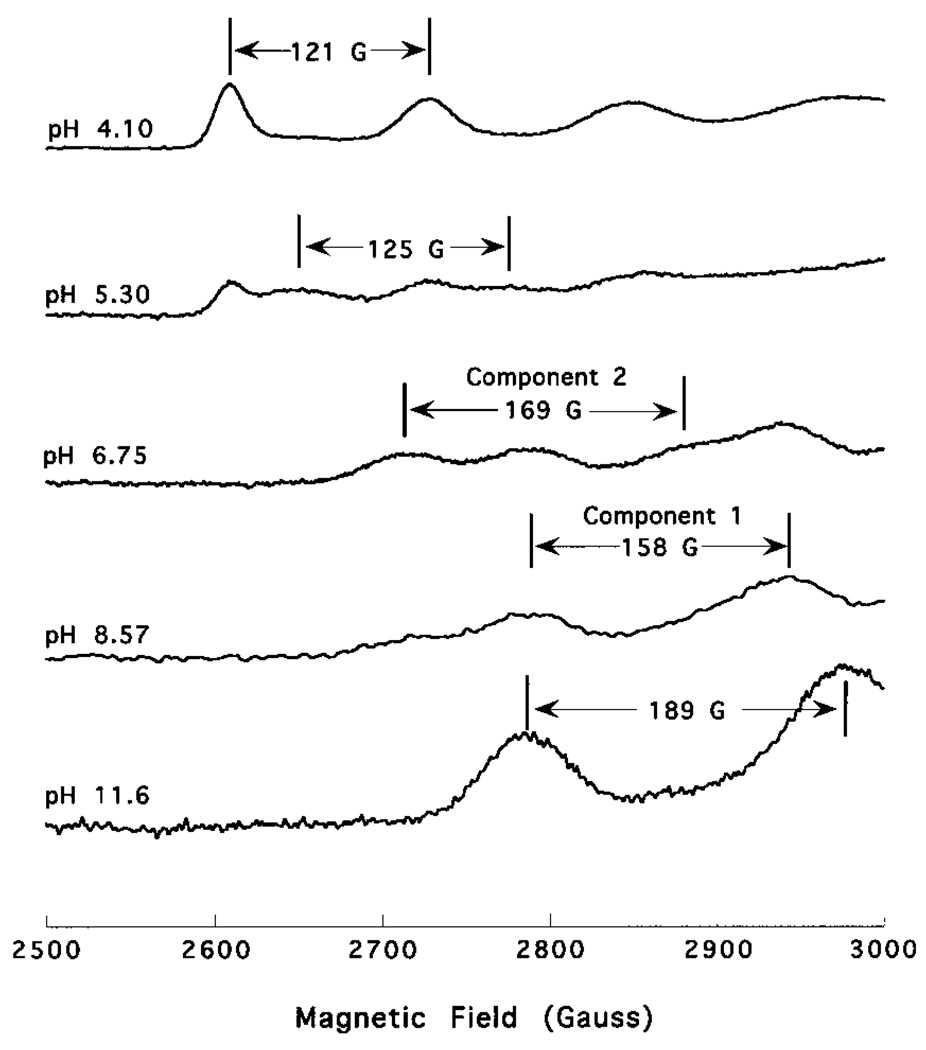
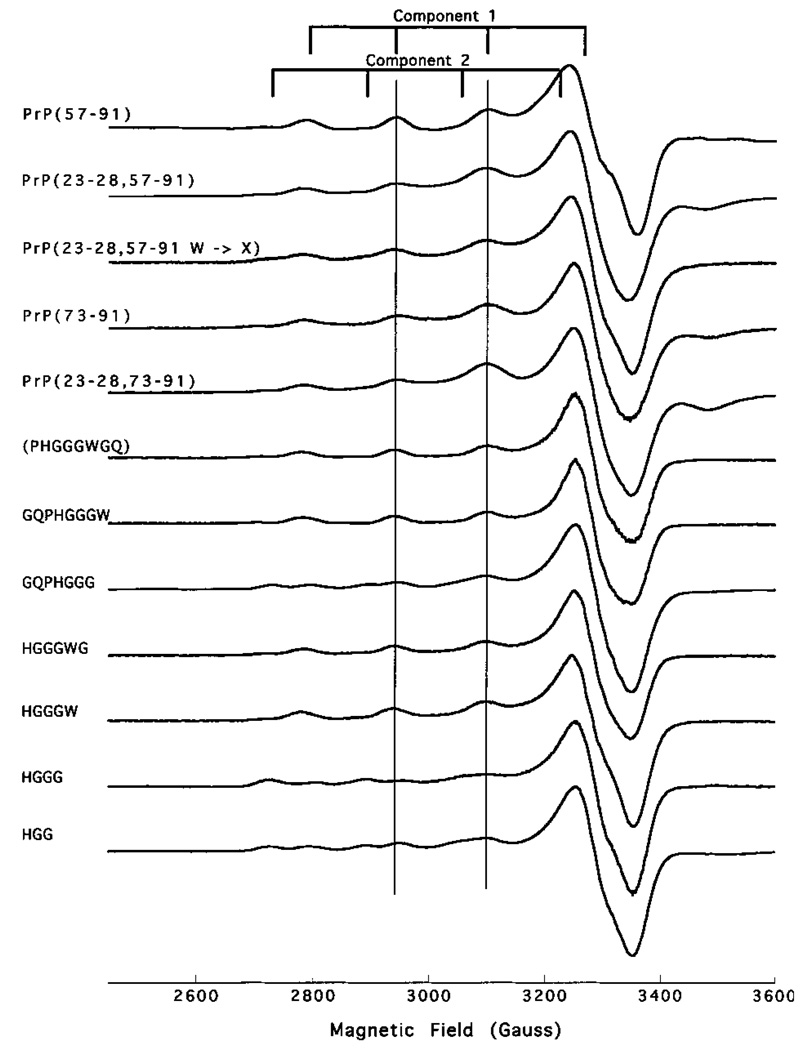
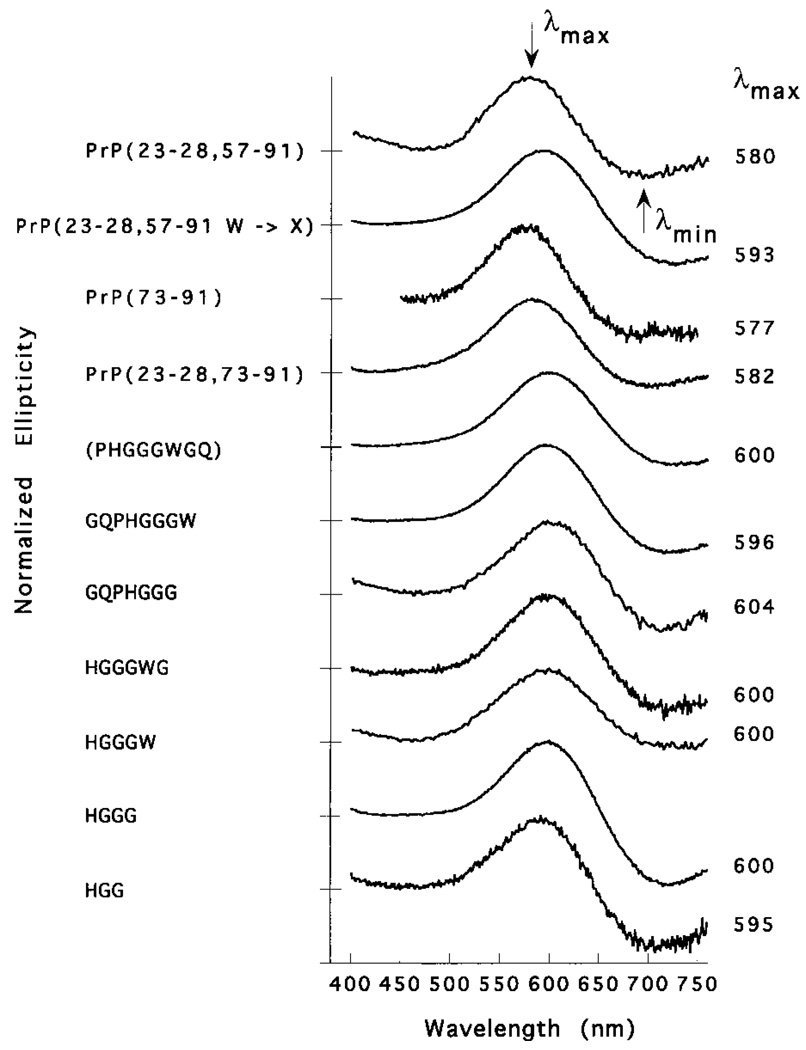
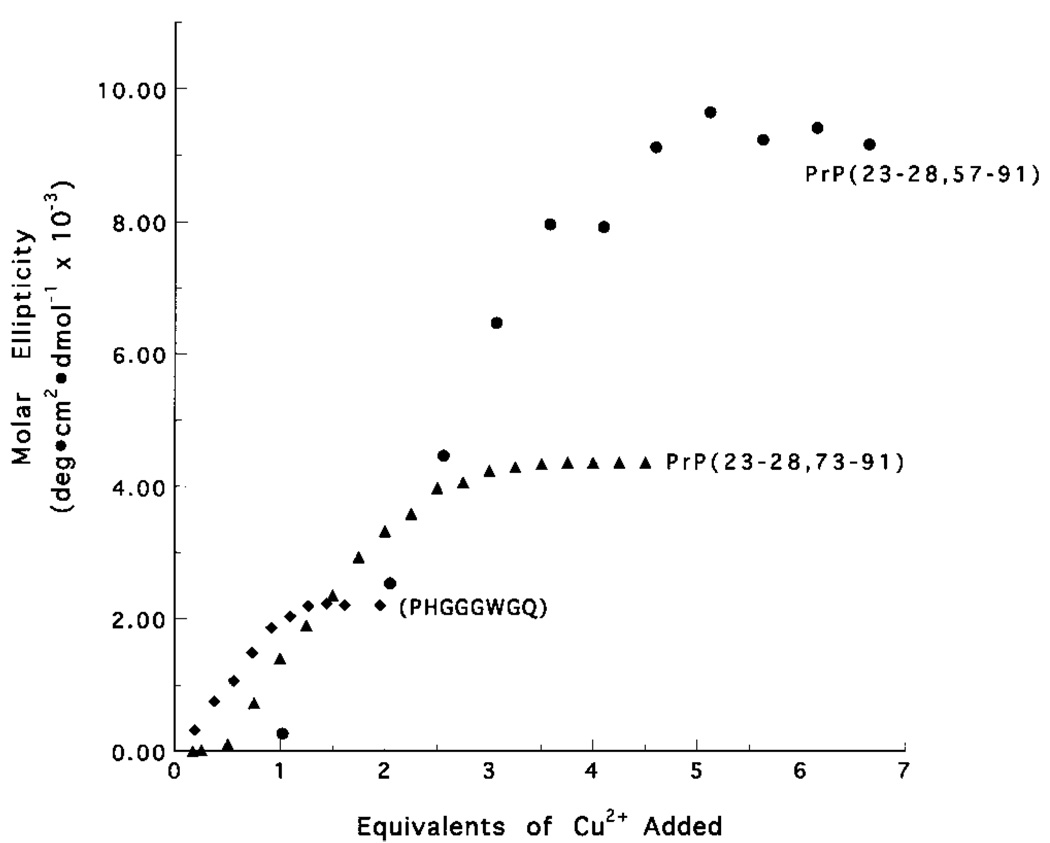
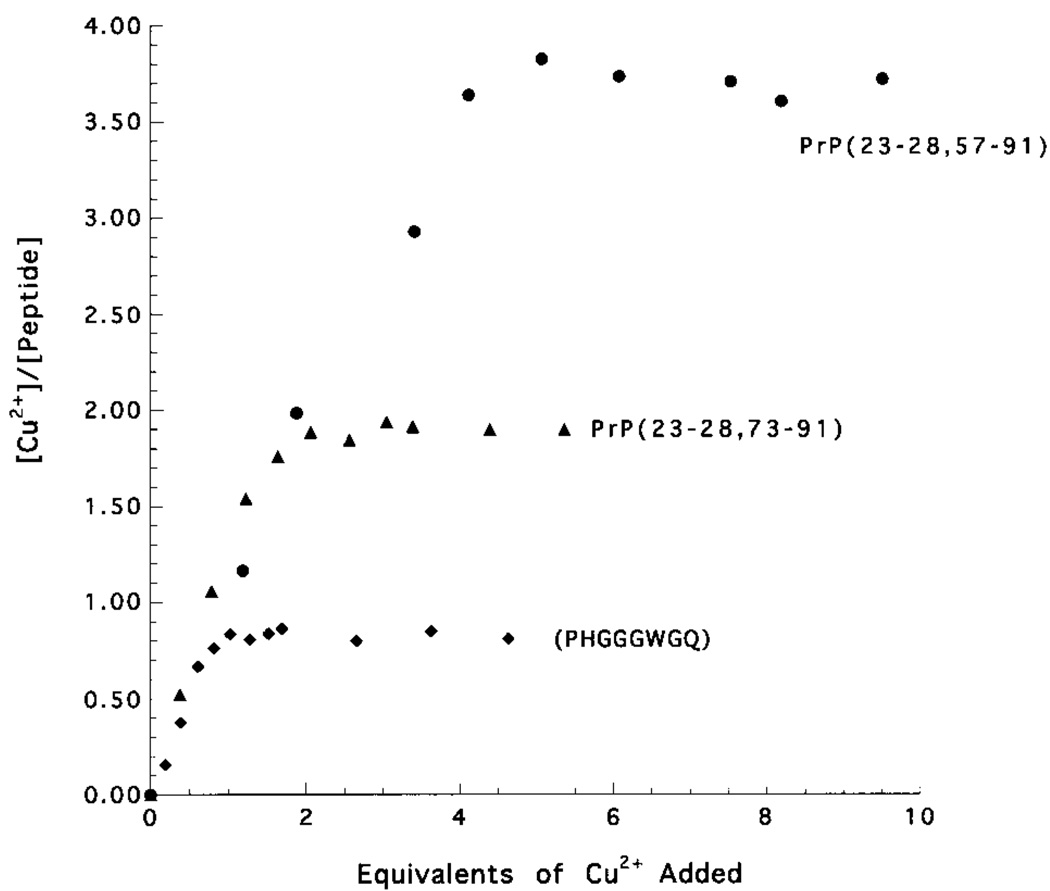
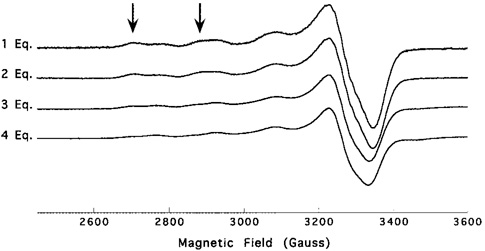
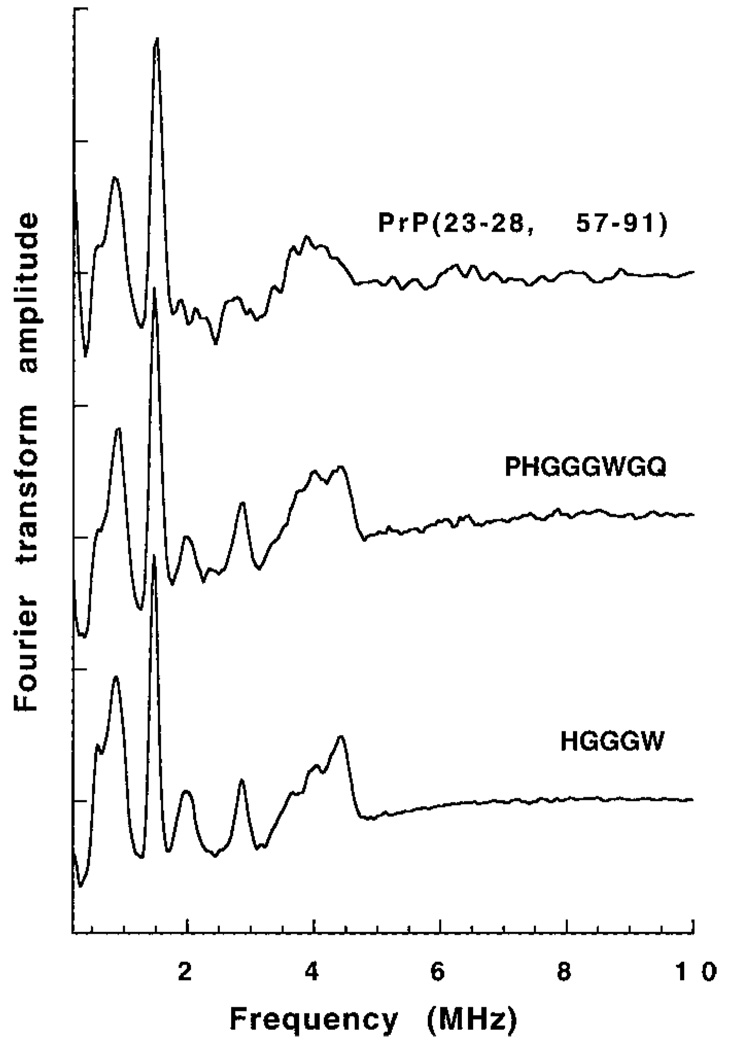
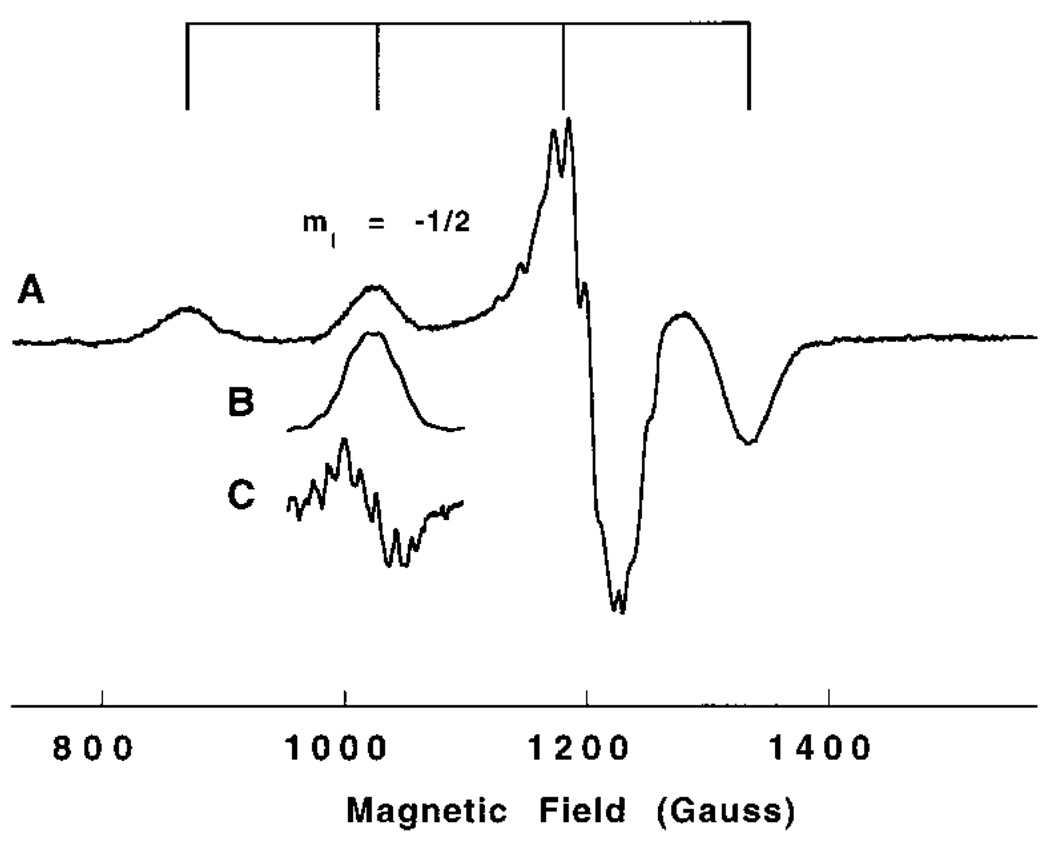
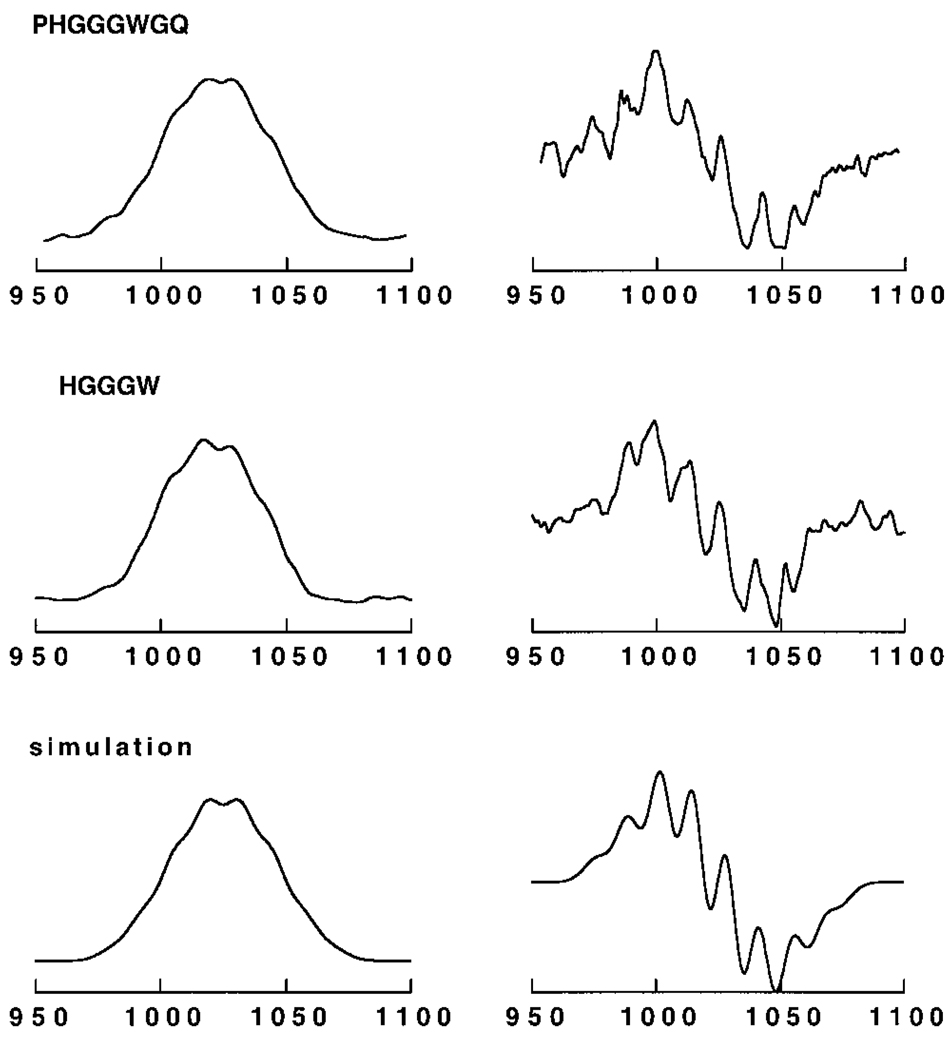
Recent evidence indicates that the prion protein (PrP) plays a role in copper metabolism in the central nervous system. The N-terminal region of human PrP contains four sequential copies of the highly conserved octarepeat sequence PHGGGWGQ spanning residues 60-91. This region selectively binds divalent copper ions (Cu(2+)) in vivo. To elucidate the specific mode and site of binding, we have studied a series of Cu(2+)-peptide complexes composed of 1-, 2-, and 4-octarepeats and several sub-octarepeat peptides, by electron paramagnetic resonance (EPR, conventional X-band and low-frequency S-band) and circular dichroism (CD) spectroscopy. At pH 7.45, two EPR active binding modes are observed where the dominant mode appears to involve coordination of three nitrogens and one oxygen to the copper ion, while in the minor mode two nitrogens and two oxygens coordinate. ESEEM spectra demonstrate that the histidine imidazole contributes one of these nitrogens. The truncated sequence HGGGW gives EPR and CD that are indistinguishable from the dominant binding mode observed for the multi-octarepeat sequences and may therefore comprise the fundamental Cu(2+) binding unit. Both EPR and CD titration experiments demonstrate rigorously a 1:1 Cu(2+)/octarepeat binding stoichiometry regardless of the number of octarepeats in a given peptide sequence. Detailed spin integration of the EPR signals demonstrates that all of the bound Cu(2+) is detected thereby ruling out strong exchange coupling that is often found when there is imidazolate bridging between paramagnetic metal centers. A model consistent with these data is proposed in which Cu(2+) is bound to the nitrogen of the histidine imidazole side chain and to two nitrogens from sequential glycine backbone amides.
最近的证据表明,朊病毒蛋白(PrP)在中枢神经系统的铜代谢中发挥作用。人PrP的N端区域包含四个连续的高度保守的八肽重复序列PHGGGWGQ,跨越60 - 91位残基。该区域在体内选择性结合二价铜离子(Cu(2+))。为了阐明结合的具体模式和位点,我们通过电子顺磁共振(EPR,传统X波段和低频S波段)和圆二色性(CD)光谱研究了一系列由1个、2个和4个八肽重复序列以及几个亚八肽重复序列组成的Cu(2+) - 肽复合物。在pH 7.45时,观察到两种EPR活性结合模式,其中主要模式似乎涉及三个氮原子和一个氧原子与铜离子配位,而次要模式中两个氮原子和两个氧原子配位。电子自旋回波包络调制(ESEEM)光谱表明,组氨酸咪唑贡献了其中一个氮原子。截短序列HGGGW给出的EPR和CD与多八肽重复序列观察到的主要结合模式无法区分,因此可能构成基本的Cu(2+)结合单元。EPR和CD滴定实验都严格证明了Cu(2+)/八肽重复序列的结合化学计量比为1:1,无论给定肽序列中的八肽重复序列数量如何。EPR信号的详细自旋积分表明,所有结合的Cu(2+)都被检测到,从而排除了顺磁金属中心之间存在咪唑桥联时常见的强交换耦合。提出了一个与这些数据一致的模型,其中Cu(2+)与组氨酸咪唑侧链的氮原子以及来自连续甘氨酸主链酰胺的两个氮原子结合。