Briggs S D, Scholtz B, Jacque J M, Swingler S, Stevenson M, Smithgall T E
Department of Molecular Genetics and Biochemistry, University of Pittsburgh School of Medicine, Pittsburgh, PA 15261, USA.
J Biol Chem. 2001 Jul 6;276(27):25605-11. doi: 10.1074/jbc.M103244200. Epub 2001 Apr 27.
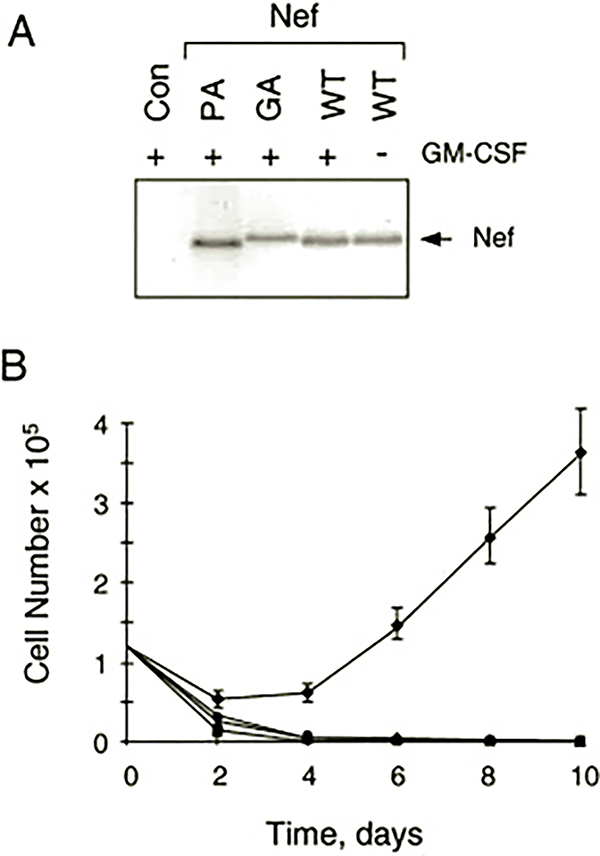
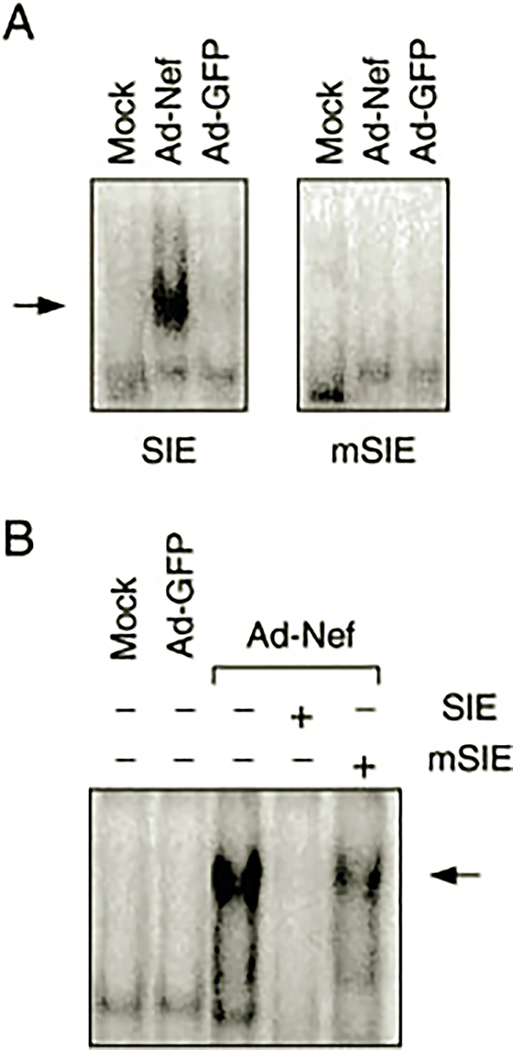
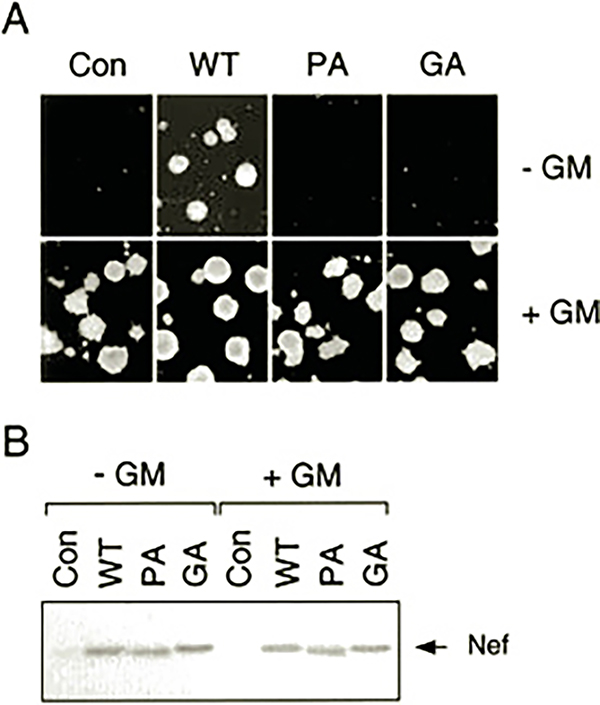
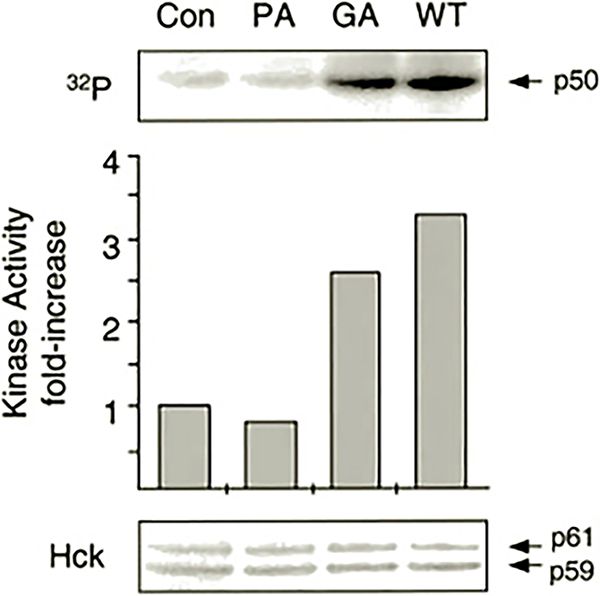
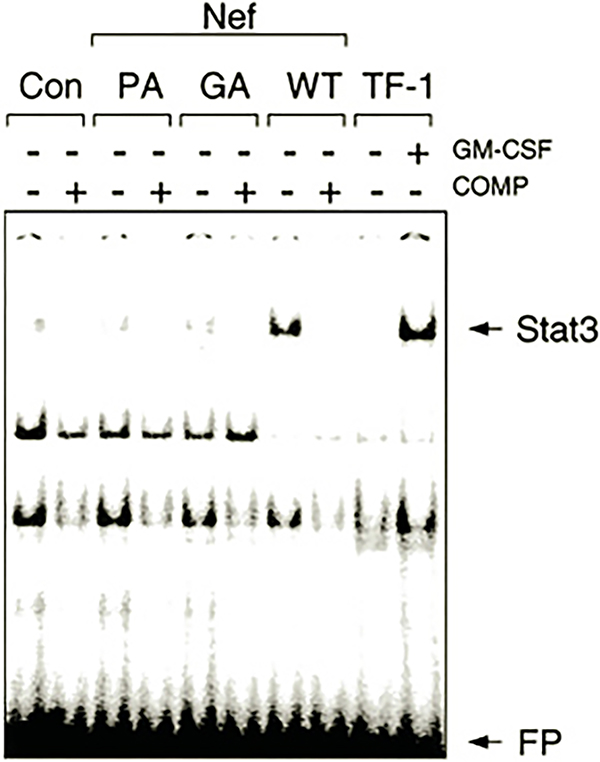
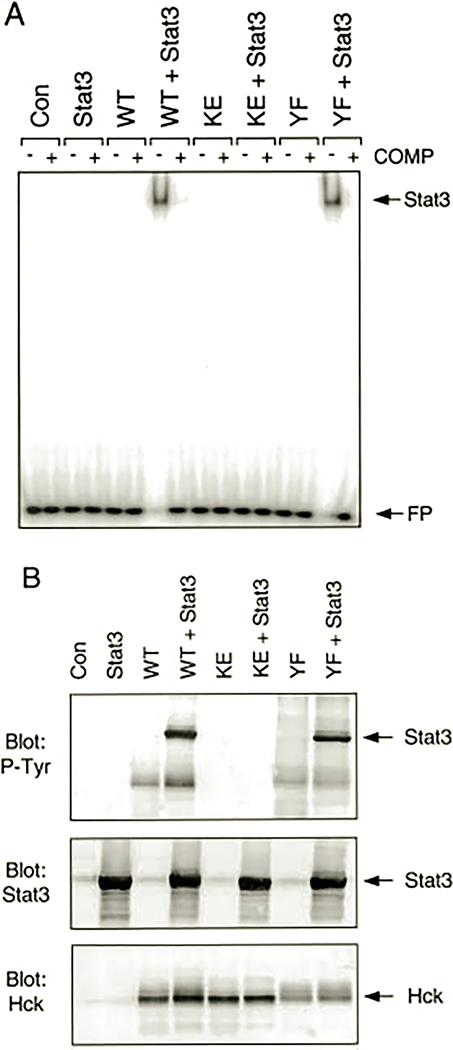
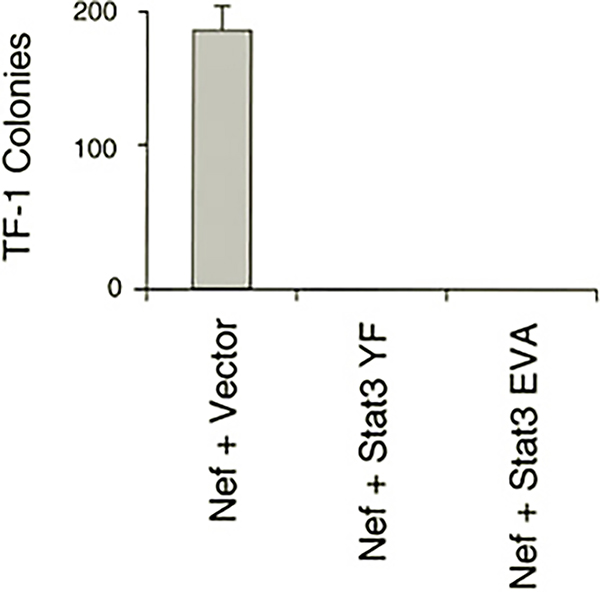
Human immunodeficiency virus Nef is a small myristylated protein that plays a critical role in AIDS progression. Nef binds with high affinity to the SH3 domain of the myeloid-restricted tyrosine kinase Hck in vitro, identifying this Src-related kinase as a possible cellular target for Nef in macrophages. Here we show that Nef activates endogenous Hck in the granulocyte-macrophage colony-stimulating factor-dependent myeloid cell line, TF-1. Unexpectedly, Nef induced cytokine-independent TF-1 cell outgrowth and constitutive activation of the Stat3 transcription factor. Induction of survival required the Nef SH3 binding and membrane-targeting motifs and was blocked by dominant-negative Stat3 mutants. Nef also stimulated Stat3 activation in primary human macrophages, providing evidence for Stat3 as a Nef effector in a target cell for human immunodeficiency virus.
人类免疫缺陷病毒Nef是一种小的肉豆蔻酰化蛋白,在艾滋病进展中起关键作用。在体外,Nef与髓系限制性酪氨酸激酶Hck的SH3结构域高亲和力结合,确定这种Src相关激酶是Nef在巨噬细胞中的一个可能的细胞靶点。在此我们表明,Nef在粒细胞-巨噬细胞集落刺激因子依赖性髓系细胞系TF-1中激活内源性Hck。出乎意料的是,Nef诱导了不依赖细胞因子的TF-1细胞生长和Stat3转录因子的组成型激活。生存诱导需要Nef的SH3结合和膜靶向基序,并被显性负性Stat3突变体阻断。Nef还刺激原代人巨噬细胞中的Stat3激活,为Stat3作为人类免疫缺陷病毒靶细胞中Nef的效应器提供了证据。