Kobori H, Harrison-Bernard L M, Navar L G
Department of Physiology, Tulane University School of Medicine, New Orleans, LA 70112-2699, USA.
Hypertension. 2001 May;37(5):1329-35. doi: 10.1161/01.hyp.37.5.1329.
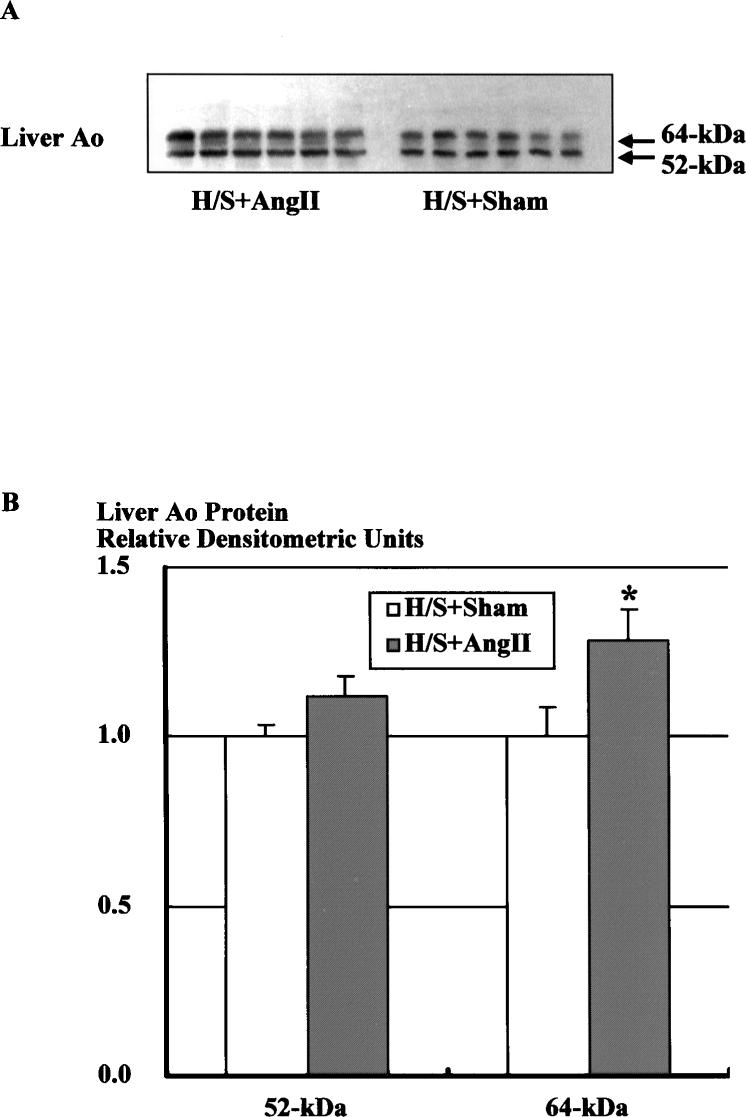
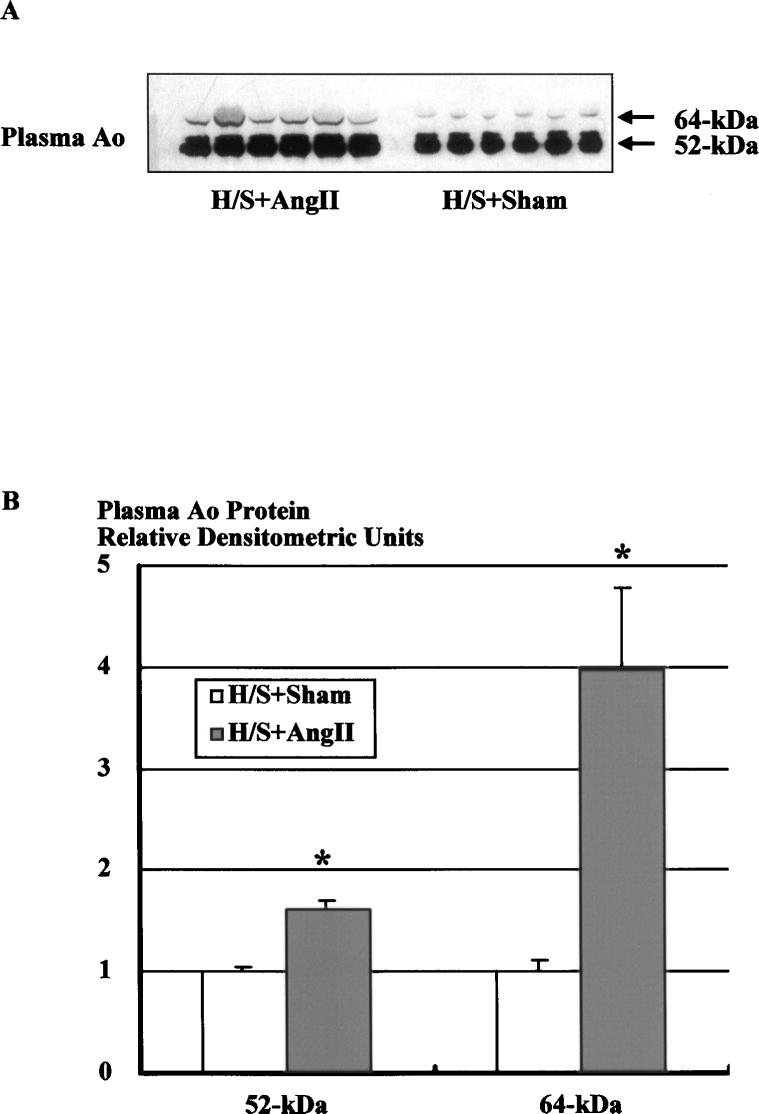
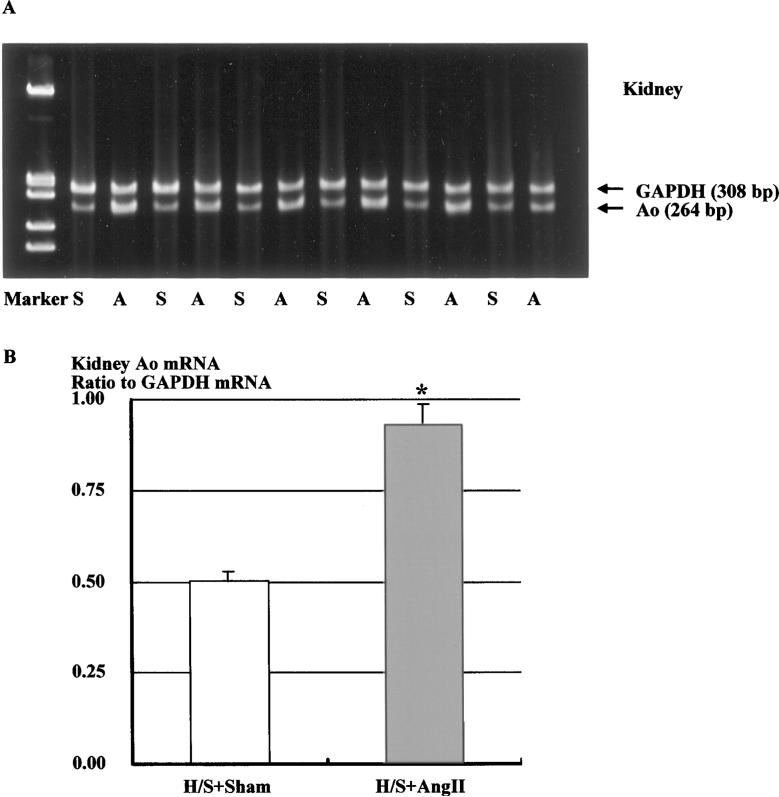
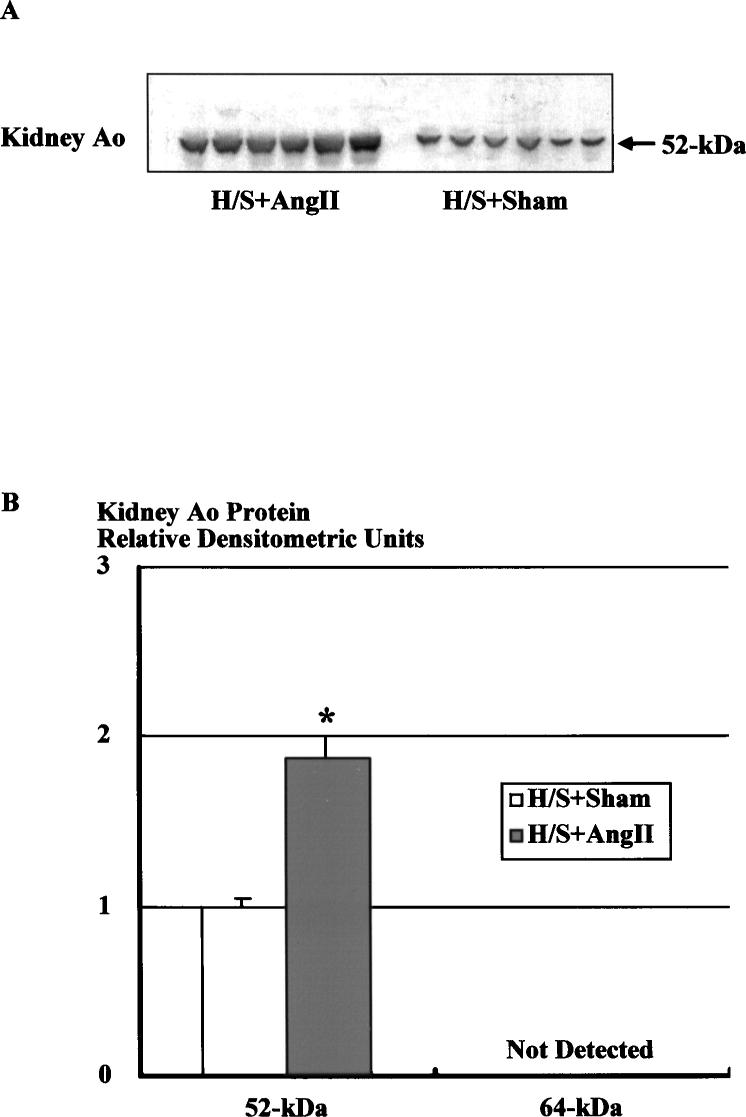
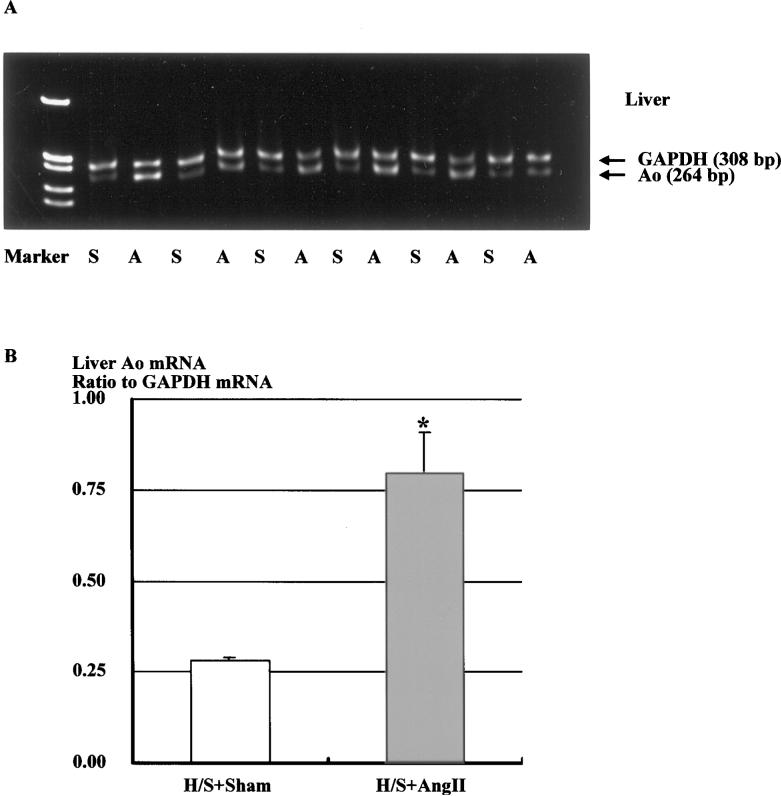
Chronic infusion of angiotensin (Ang) II leads to the development of hypertension and enhances intrarenal Ang II content to levels greater than can be explained from the circulating concentrations of the peptide. We previously reported that renal angiotensinogen (Ao) mRNA is enhanced in Ang II-dependent hypertension and may contribute to augmented intrarenal Ang II levels, but the Ao protein levels were not significantly increased. Because a high-salt diet (H/S) has been shown to suppress renal expression of Ao mRNA, we examined the effects of chronic Ang II infusion on kidney and liver Ao mRNA and protein levels in male Sprague-Dawley rats (n=12) maintained on an 8% salt diet. Ang II was administered via osmotic minipumps (40 ng/min) to 1 group (n=6) while the remaining rats were sham-operated. A H/S diet alone did not alter systolic blood pressure in sham animals (109+/-6 mm Hg at day 12); however, Ang II infusions to the H/S rats significantly increased systolic blood pressure (167+/-7 at day 12) and intrarenal Ang II content (459+/-107 fmol/g versus 270+/-42) despite a marked suppression of plasma renin activity (0.9+/-0.2 ng Ang I. mL(-1). h(-1) versus 2.8+/-1.3). Ang II infusions significantly increased kidney Ao mRNA compared with the H/S diet alone by 1.9+/-0.1-fold. Western blot analysis of kidney protein extracts showed that the Ang II-infused rats had increased kidney Ao protein levels compared with the H/S diet alone (1.9+/-0.1-fold). Liver Ao mRNA and protein and plasma Ao protein were also significantly increased by Ang II infusions. These data demonstrate the effects of Ang II infusion to stimulate Ao mRNA and protein. Thus, the augmented intrarenal Ang II in Ang II-dependent hypertension may result, in part, by a positive amplification mechanism to activate renal expression of AO:
长期输注血管紧张素(Ang)II会导致高血压的发生,并使肾内Ang II含量升高至超过循环中该肽浓度所能解释的水平。我们之前报道过,在Ang II依赖性高血压中,肾血管紧张素原(Ao)mRNA水平升高,这可能导致肾内Ang II水平升高,但Ao蛋白水平并未显著增加。由于高盐饮食(H/S)已被证明可抑制肾内Ao mRNA的表达,我们研究了长期输注Ang II对维持在8%盐饮食的雄性Sprague-Dawley大鼠(n = 12)肾脏和肝脏中Ao mRNA及蛋白水平的影响。将Ang II通过渗透微型泵(40 ng/min)给予1组(n = 6),其余大鼠进行假手术。单独的H/S饮食并未改变假手术动物的收缩压(第12天为109±6 mmHg);然而,向H/S大鼠输注Ang II显著升高了收缩压(第12天为167±7)和肾内Ang II含量(459±107 fmol/g对270±42),尽管血浆肾素活性显著降低(0.9±0.2 ng Ang I·mL⁻¹·h⁻¹对2.8±1.3)。与单独的H/S饮食相比,输注Ang II使肾脏Ao mRNA显著增加了1.9±0.1倍。对肾脏蛋白提取物的蛋白质印迹分析表明,与单独的H/S饮食相比,输注Ang II的大鼠肾脏Ao蛋白水平增加(1.9±0.1倍)。输注Ang II也显著增加了肝脏Ao mRNA和蛋白以及血浆Ao蛋白水平。这些数据证明了输注Ang II对刺激Ao mRNA和蛋白的作用。因此,在Ang II依赖性高血压中肾内Ang II增加,部分可能是通过一种正反馈放大机制激活肾脏中AO的表达所致。