Song I, Lu C R, Brock T G, Kaufman P B
Department of Biology, University of Michigan, Ann Arbor 48109, USA.
Plant Physiol. 1988;86(4):1155-62. doi: 10.1104/pp.86.4.1155.
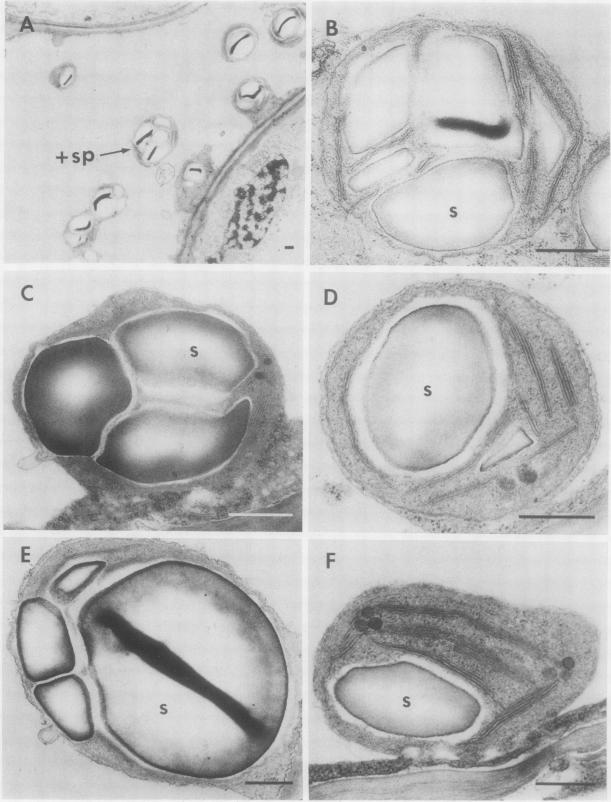
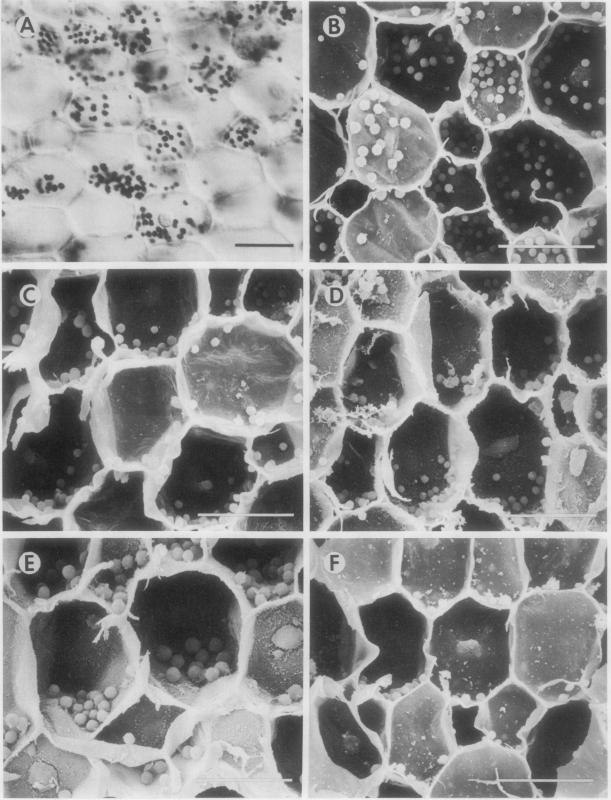
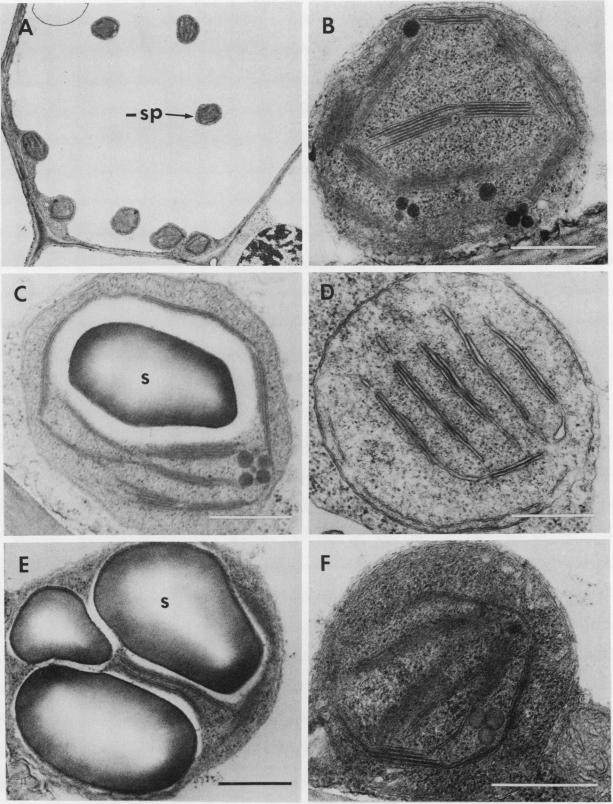
To determine if starch statoliths do, in fact, act as gravisensors in cereal grass shoots, starch was removed from the starch statoliths by placing 45-day-old intact barley plants (Hordeum vulgare cv 'Larker') in the dark at 25 degrees C for 5 days. Evidence from staining with I2-KI, scanning electron microscopy, and transmission electron microscopy indicated that starch grains were no longer present in plastids in the pulvini of plants placed in the dark for 5 days. Furthermore, gravitropic curvature response in these pulvini was reduced to zero, even though pulvini from vertically oriented plants were still capable of elongating in response to applied auxin plus gibberellic acid. However, when 0.1 molar sucrose was fed to the dark pretreated, starch statolith-free pulvini during gravistimulation in the dark, they not only reformed starch grains in the starch-depleted plastids in the pulvini, but they also showed an upward bending response. Starch grain reformation appeared to precede reappearance of the graviresponse in these sucrose-fed pulvini. These results strongly support the view that starch statoliths do indeed serve as the gravisensors in cereal grass shoots.
为了确定淀粉平衡石在禾本科植物茎中是否确实充当重力感受器,通过将45日龄完整大麦植株(大麦品种‘Larker’)在25℃黑暗环境中放置5天,从淀粉平衡石中去除淀粉。碘-碘化钾染色、扫描电子显微镜和透射电子显微镜的证据表明,在黑暗中放置5天的植株叶枕质体中不再存在淀粉粒。此外,这些叶枕的向重力性弯曲反应降至零,尽管垂直放置植株的叶枕仍能响应施加的生长素和赤霉素而伸长。然而,当在黑暗中进行重力刺激时,向黑暗预处理过的、不含淀粉平衡石的叶枕饲喂0.1摩尔蔗糖,它们不仅在叶枕中淀粉耗尽的质体中重新形成淀粉粒,而且还表现出向上弯曲反应。在这些饲喂蔗糖的叶枕中,淀粉粒的重新形成似乎先于重力反应的重新出现。这些结果有力地支持了淀粉平衡石确实在禾本科植物茎中充当重力感受器这一观点。