Papiris Spyros, Kotanidou Anastasia, Malagari Katerina, Roussos Charis
Department of Critical Care and Pulmonary Services, National and Kapodistrian University of Athens, Evangelismos Hospital, Athens, Greece.
Crit Care. 2002 Feb;6(1):30-44. doi: 10.1186/cc1451. Epub 2001 Nov 22.
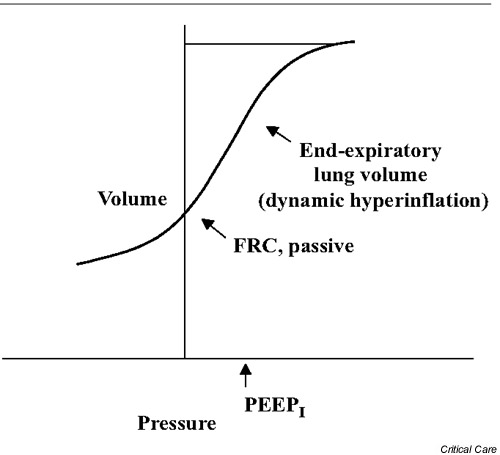
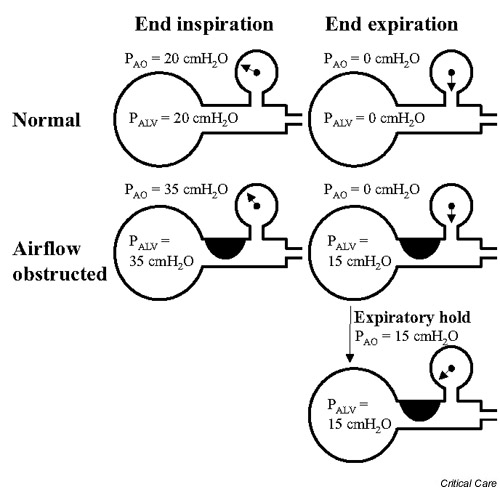
Severe asthma, although difficult to define, includes all cases of difficult/therapy-resistant disease of all age groups and bears the largest part of morbidity and mortality from asthma. Acute, severe asthma, status asthmaticus, is the more or less rapid but severe asthmatic exacerbation that may not respond to the usual medical treatment. The narrowing of airways causes ventilation perfusion imbalance, lung hyperinflation, and increased work of breathing that may lead to ventilatory muscle fatigue and life-threatening respiratory failure. Treatment for acute, severe asthma includes the administration of oxygen, beta2-agonists (by continuous or repetitive nebulisation), and systemic corticosteroids. Subcutaneous administration of epinephrine or terbutaline should be considered in patients not responding adequately to continuous nebulisation, in those unable to cooperate, and in intubated patients not responding to inhaled therapy. The exact time to intubate a patient in status asthmaticus is based mainly on clinical judgment, but intubation should not be delayed once it is deemed necessary. Mechanical ventilation in status asthmaticus supports gas-exchange and unloads ventilatory muscles until aggressive medical treatment improves the functional status of the patient. Patients intubated and mechanically ventilated should be appropriately sedated, but paralytic agents should be avoided. Permissive hypercapnia, increase in expiratory time, and promotion of patient-ventilator synchronism are the mainstay in mechanical ventilation of status asthmaticus. Close monitoring of the patient's condition is necessary to obviate complications and to identify the appropriate time for weaning. Finally, after successful treatment and prior to discharge, a careful strategy for prevention of subsequent asthma attacks is imperative.
重度哮喘虽然难以确切定义,但涵盖了所有年龄组中难治性/治疗抵抗性疾病的所有病例,且在哮喘导致的发病率和死亡率中占比最大。急性重度哮喘,即哮喘持续状态,是一种或多或少迅速发作但严重的哮喘加重情况,可能对常规治疗无反应。气道狭窄会导致通气灌注失衡、肺过度充气以及呼吸功增加,进而可能导致呼吸肌疲劳和危及生命的呼吸衰竭。急性重度哮喘的治疗包括吸氧、给予β2激动剂(通过持续或重复雾化)以及全身用糖皮质激素。对于对持续雾化治疗反应不佳的患者、无法配合的患者以及对吸入治疗无反应的插管患者,应考虑皮下注射肾上腺素或特布他林。对哮喘持续状态患者进行插管的确切时机主要基于临床判断,但一旦认为有必要,不应延迟插管。哮喘持续状态时的机械通气可支持气体交换并减轻呼吸肌负担,直至积极的药物治疗改善患者的功能状态。插管并进行机械通气的患者应适当镇静,但应避免使用麻痹剂。允许性高碳酸血症、延长呼气时间以及促进患者与呼吸机同步是哮喘持续状态机械通气的主要方法。密切监测患者病情对于避免并发症和确定合适的撤机时间至关重要。最后,在成功治疗后且出院前,必须制定仔细的预防后续哮喘发作的策略。