Prakriya Murali, Lewis Richard S
Department of Molecular and Cellular Physiology, Stanford University School of Medicine, Stanford, CA 94305, USA.
J Gen Physiol. 2002 May;119(5):487-507. doi: 10.1085/jgp.20028551.
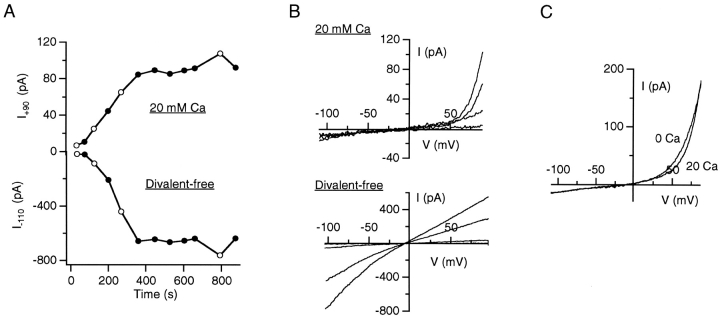
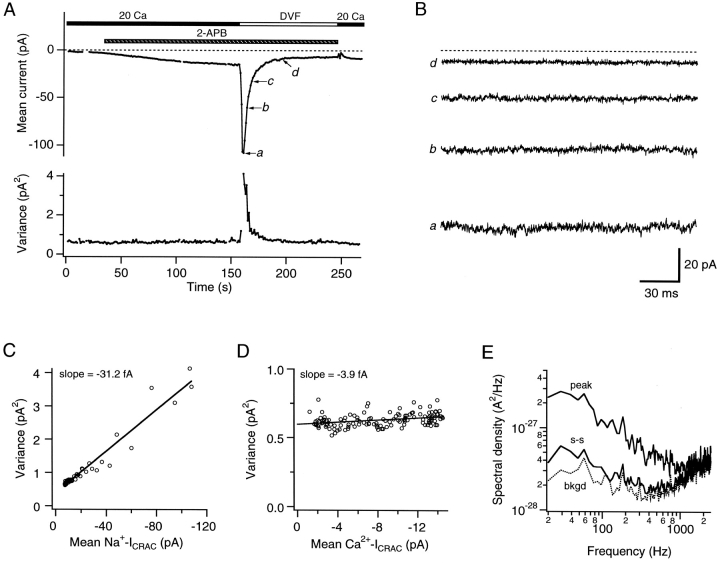
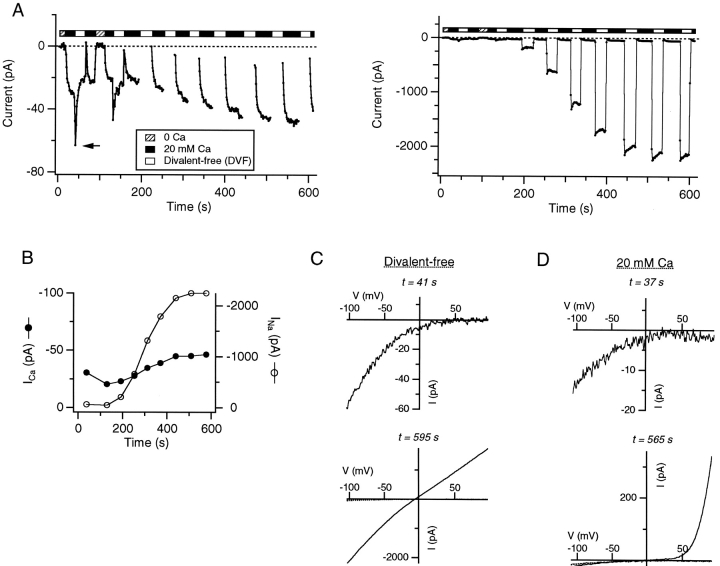
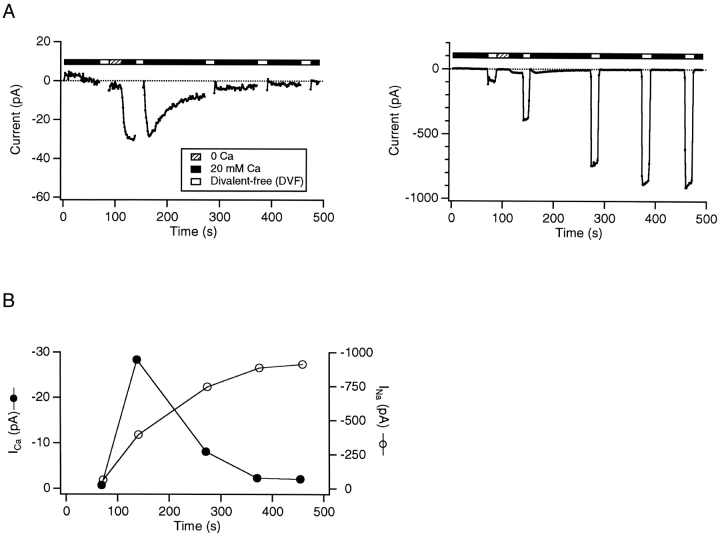
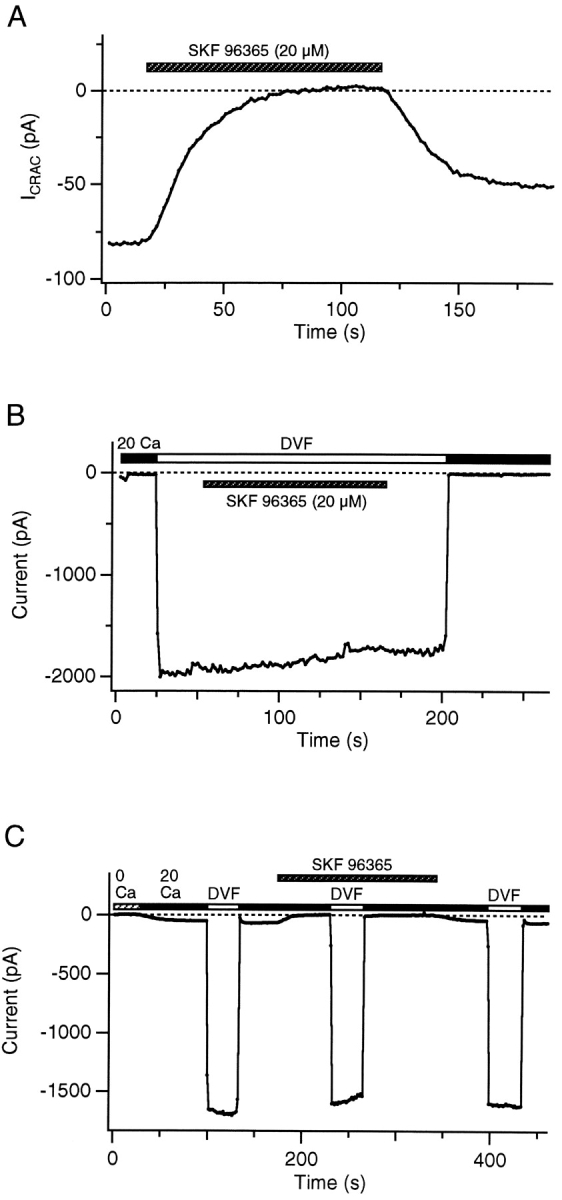
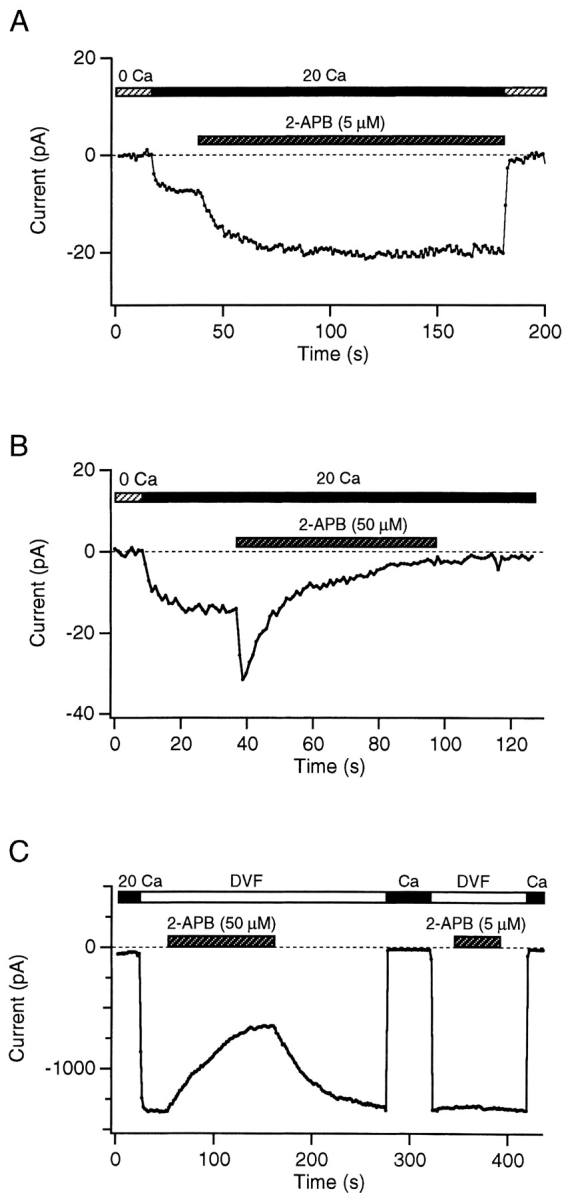
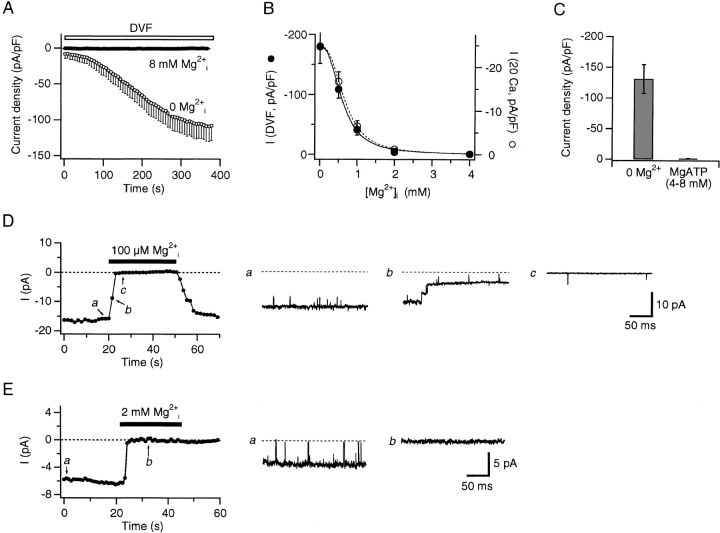
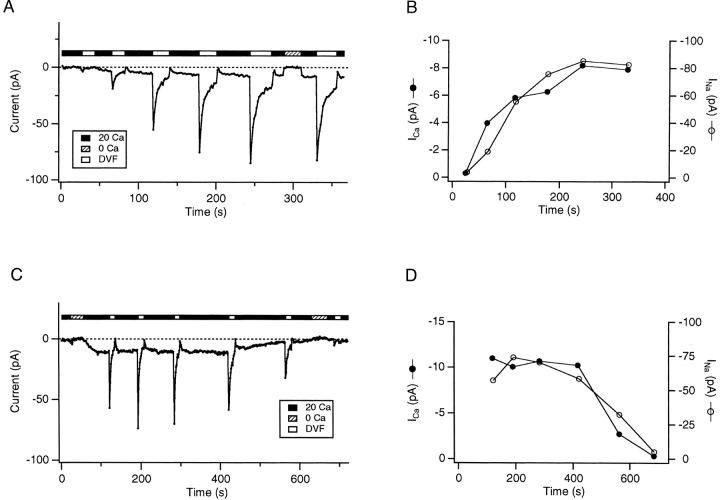
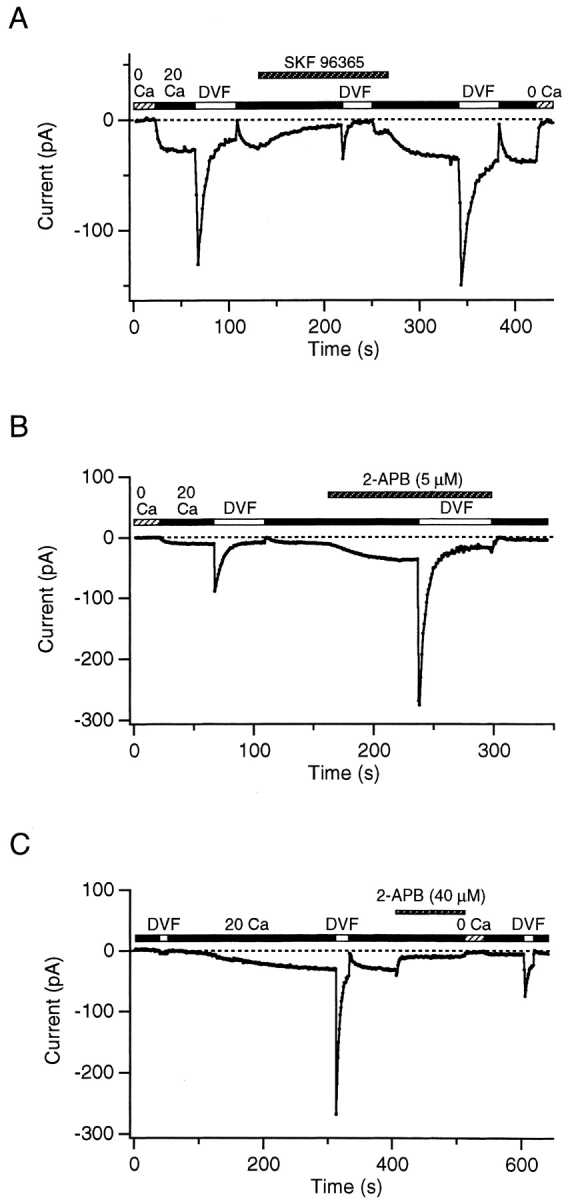
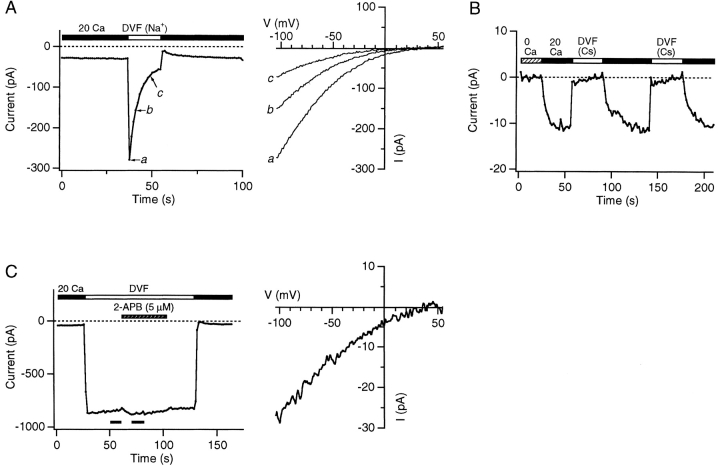
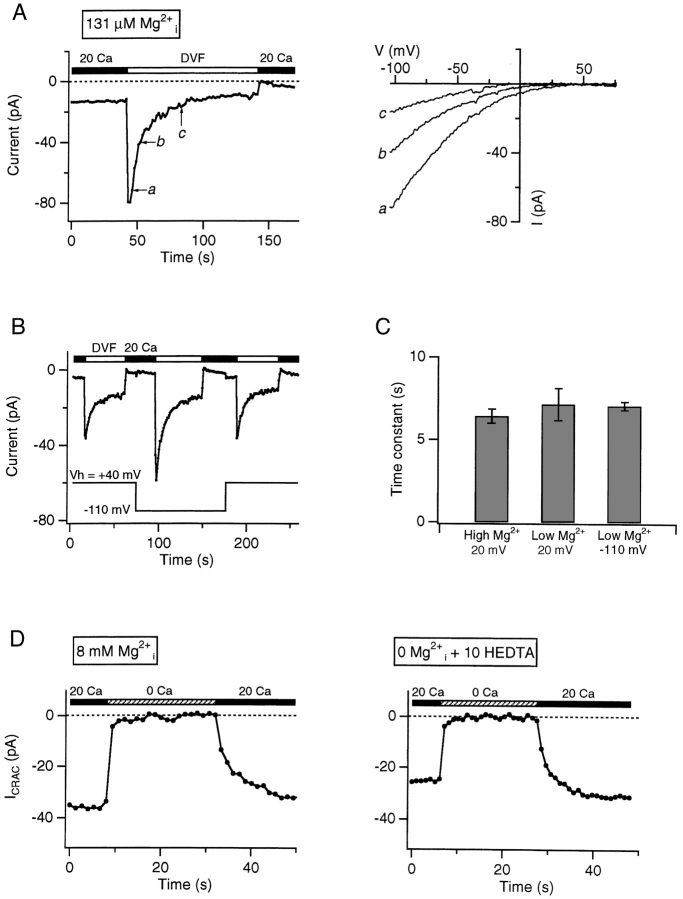
Although store-operated calcium release-activated Ca(2+) (CRAC) channels are highly Ca(2+)-selective under physiological ionic conditions, removal of extracellular divalent cations makes them freely permeable to monovalent cations. Several past studies have concluded that under these conditions CRAC channels conduct Na(+) and Cs(+) with a unitary conductance of approximately 40 pS, and that intracellular Mg(2+) modulates their activity and selectivity. These results have important implications for understanding ion permeation through CRAC channels and for screening potential CRAC channel genes. We find that the observed 40-pS channels are not CRAC channels, but are instead Mg(2+)-inhibited cation (MIC) channels that open as Mg(2+) is washed out of the cytosol. MIC channels differ from CRAC channels in several critical respects. Store depletion does not activate MIC channels, nor does store refilling deactivate them. Unlike CRAC channels, MIC channels are not blocked by SKF 96365, are not potentiated by low doses of 2-APB, and are less sensitive to block by high doses of the drug. By applying 8-10 mM intracellular Mg(2+) to inhibit MIC channels, we examined monovalent permeation through CRAC channels in isolation. A rapid switch from 20 mM Ca(2+) to divalent-free extracellular solution evokes Na(+) current through open CRAC channels (Na(+)-I(CRAC)) that is initially eightfold larger than the preceding Ca(2+) current and declines by approximately 80% over 20 s. Unlike MIC channels, CRAC channels are largely impermeable to Cs(+) (P(Cs)/P(Na) = 0.13 vs. 1.2 for MIC). Neither the decline in Na(+)-I(CRAC) nor its low Cs(+) permeability are affected by intracellular Mg(2+) (90 microM to 10 mM). Single openings of monovalent CRAC channels were not detectable in whole-cell recordings, but a unitary conductance of 0.2 pS was estimated from noise analysis. This new information about the selectivity, conductance, and regulation of CRAC channels forces a revision of the biophysical fingerprint of CRAC channels, and reveals intriguing similarities and differences in permeation mechanisms of voltage-gated and store-operated Ca(2+) channels.
尽管在生理离子条件下,储存式钙释放激活钙(Ca(2+))(CRAC)通道具有高度的Ca(2+)选择性,但去除细胞外二价阳离子会使其对单价阳离子自由通透。过去的几项研究得出结论,在这些条件下,CRAC通道传导Na(+)和Cs(+)的单位电导约为40 pS,并且细胞内Mg(2+)会调节其活性和选择性。这些结果对于理解离子通过CRAC通道的渗透以及筛选潜在的CRAC通道基因具有重要意义。我们发现,观察到的40-pS通道不是CRAC通道,而是Mg(2+)抑制性阳离子(MIC)通道,当Mg(2+)从细胞质中被洗脱时会打开。MIC通道在几个关键方面与CRAC通道不同。储存耗竭不会激活MIC通道,储存再填充也不会使其失活。与CRAC通道不同,MIC通道不会被SKF 96365阻断,不会被低剂量的2-APB增强,并且对高剂量该药物的阻断不太敏感。通过施加8-10 mM细胞内Mg(2+)来抑制MIC通道,我们单独研究了单价离子通过CRAC通道的渗透。从20 mM Ca(2+)快速切换到无二价阳离子的细胞外溶液会引发通过开放CRAC通道的Na(+)电流(Na(+)-I(CRAC)),该电流最初比先前的Ca(2+)电流大八倍,并在20秒内下降约80%。与MIC通道不同,CRAC通道对Cs(+)基本不通透(MIC的P(Cs)/P(Na) = 1.2,而CRAC的为0.13)。细胞内Mg(2+)(90 microM至10 mM)既不影响Na(+)-I(CRAC)的下降,也不影响其低Cs(+)通透性。在全细胞记录中无法检测到单价CRAC通道的单个开放,但通过噪声分析估计其单位电导为0.