Blair Jaime E, Ikeo Kazuho, Gojobori Takashi, Hedges S Blair
Astrobiology Research Center and Department of Biology, The Pennsylvania State University, University Park, PA 16802, USA.
BMC Evol Biol. 2002 Apr 8;2:7. doi: 10.1186/1471-2148-2-7.
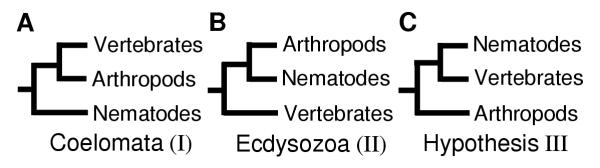
The complete genomes of three animals have been sequenced by global research efforts: a nematode worm (Caenorhabditis elegans), an insect (Drosophila melanogaster), and a vertebrate (Homo sapiens). Remarkably, their relationships have yet to be clarified. The confusion concerns the enigmatic position of nematodes. Traditionally, nematodes have occupied a basal position, in part because they lack a true body cavity. However, the leading hypothesis now joins nematodes with arthropods in a molting clade, Ecdysozoa, based on data from several genes.
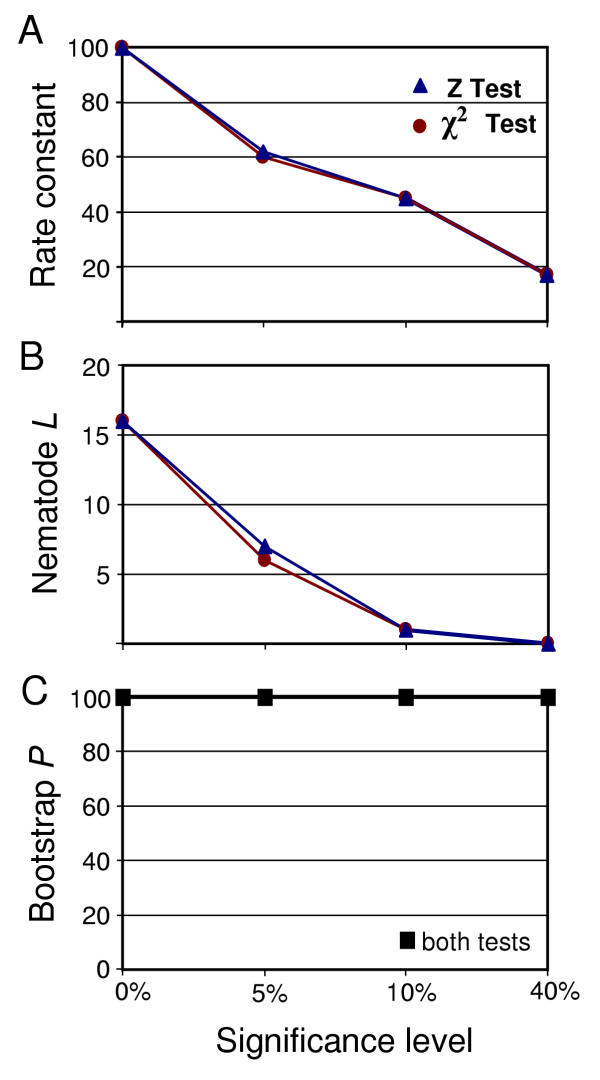
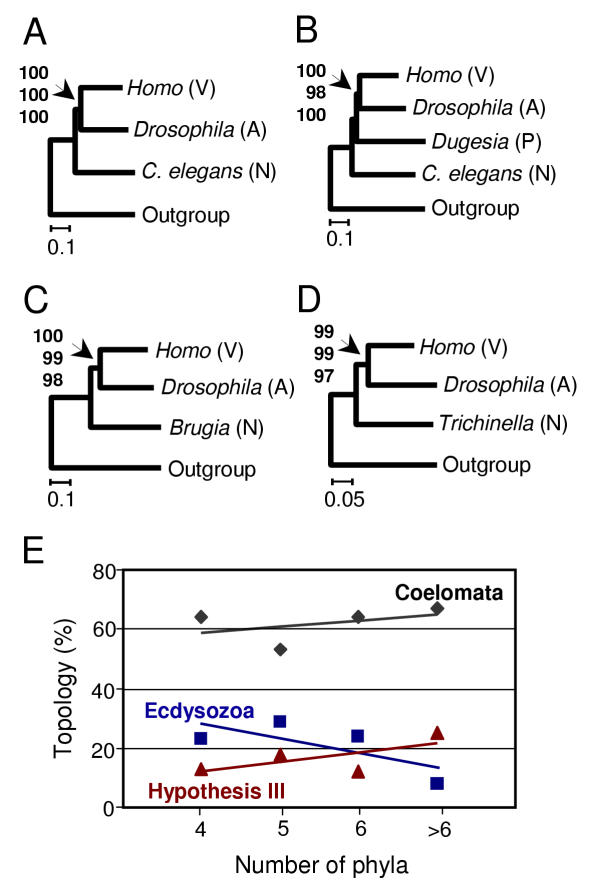
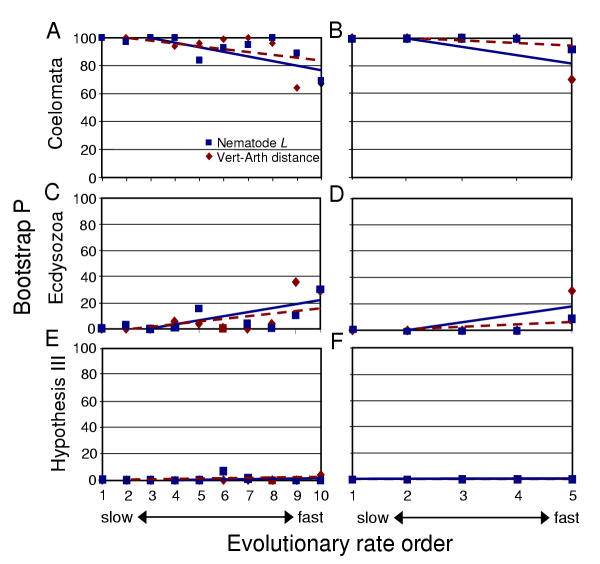
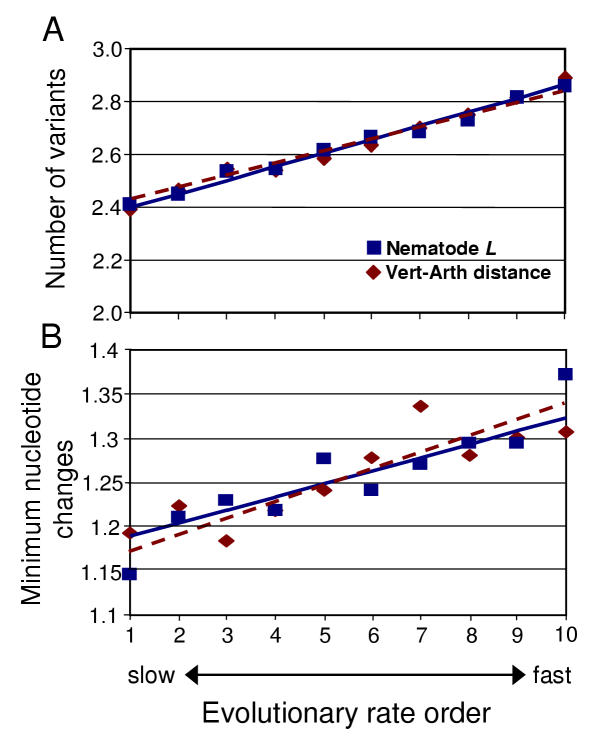
We tested the Ecdysozoa hypothesis with analyses of more than 100 nuclear protein alignments, under conditions that would expose biases, and found that it was not supported. Instead, we found significant support for the traditional hypothesis, Coelomata. Our result is robust to different rates of sequence change among genes and lineages, different numbers of taxa, and different species of nematodes.
We conclude that insects (arthropods) are genetically and evolutionarily closer to humans than to nematode worms.
通过全球研究努力,已对三种动物的全基因组进行了测序:一种线虫(秀丽隐杆线虫)、一种昆虫(黑腹果蝇)和一种脊椎动物(智人)。值得注意的是,它们之间的关系尚未明确。这种困惑涉及线虫的神秘地位。传统上,线虫处于基础地位,部分原因是它们缺乏真正的体腔。然而,基于多个基因的数据,目前的主流假说是将线虫与节肢动物归入蜕皮类群蜕皮动物总门。
我们在可能暴露偏差的条件下,通过对100多个核蛋白比对进行分析,检验了蜕皮动物总门假说,发现该假说不成立。相反,我们发现传统的体腔动物假说得到了有力支持。我们的结果对于基因和谱系间不同的序列变化速率、不同的分类单元数量以及不同种类的线虫具有稳健性。
我们得出结论,昆虫(节肢动物)在遗传和进化上与人类的关系比与线虫的关系更为密切。