Pazgal I, Zimra Y, Tzabar C, Okon E, Rabizadeh E, Shaklai M, Bairey O
Institute of Hematology and Felsenstein Medical Research Center, Rabin Medical Center, Beilinson Campus, Petah Tiqva, 49100, Israel.
Br J Cancer. 2002 Jun 5;86(11):1770-5. doi: 10.1038/sj.bjc.6600330.
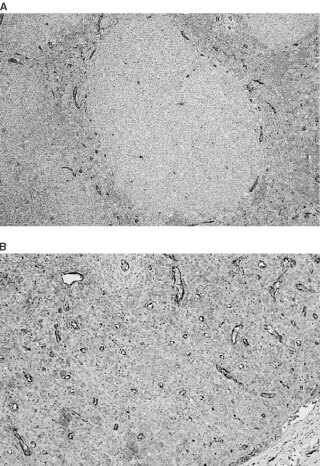
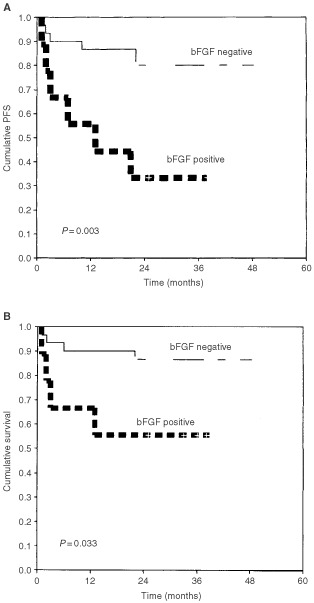
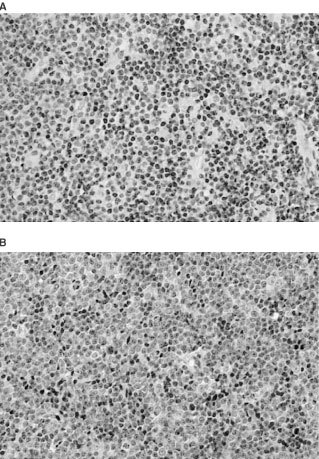
It is now clear that angiogenesis and angiogenesis factors are important in the pathogenesis of haematological malignancies. High pretreatment levels of serum basic fibroblast growth factor have been shown to be associated with poor prognosis in patients with non-Hodgkin's lymphoma. The aim of this study was to evaluate whether non-Hodgkin's lymphoma cells express basic fibroblast growth factor and/or its receptor (fibroblast growth factor receptor-1) and whether basic fibroblast growth factor expression correlates with basic fibroblast growth factor serum levels, intratumoral microvessel density, and patient outcome. We measured basic fibroblast growth factor by enzyme-linked immunosorbent assay in sera taken from 58 patients with non-Hodgkin's lymphoma before treatment and in 19 of them also after treatment. Pathological specimens at diagnosis were evaluated by immunohistochemistry staining using polyoclonal antibody against factor-VIII-related antigen, basic fibroblast growth factor and fibroblast growth factor receptor-1 to determine the expression of the microvessel count and basic fibroblast growth factor and fibroblast growth factor receptor-1. The lymphoma specimens demonstrated positive staining for basic fibroblast growth factor (in 23%) and fibroblast growth factor receptor-1 (in 58.5%). The patients who expressed basic fibroblast growth factor had a significantly worse progression-free and overall survival than those who did not (P=0.003 and P=0.03 respectively), while patients expressing fibroblast growth factor receptor-1 were less likely to achieve complete remission than those lacking the receptor (33% vs 65%, P=0.047). There was no correlation of basic fibroblast growth factor staining with either serum basic fibroblast growth factor levels or microvessel count. Basic fibroblast growth factor serum levels did not change significantly after treatment These results suggest that non-Hodgkin's lymphoma specimens express basic fibroblast growth factor and its receptor (fibroblast growth factor receptor-1) and this expression is associated with poor patient outcome.
现在已经清楚,血管生成和血管生成因子在血液系统恶性肿瘤的发病机制中很重要。血清碱性成纤维细胞生长因子的预处理水平高已被证明与非霍奇金淋巴瘤患者的预后不良有关。本研究的目的是评估非霍奇金淋巴瘤细胞是否表达碱性成纤维细胞生长因子和/或其受体(成纤维细胞生长因子受体-1),以及碱性成纤维细胞生长因子的表达是否与碱性成纤维细胞生长因子血清水平、肿瘤内微血管密度和患者预后相关。我们通过酶联免疫吸附测定法测量了58例未经治疗的非霍奇金淋巴瘤患者血清中的碱性成纤维细胞生长因子,其中19例患者在治疗后也进行了测量。使用针对因子VIII相关抗原、碱性成纤维细胞生长因子和成纤维细胞生长因子受体-1的多克隆抗体通过免疫组织化学染色评估诊断时的病理标本,以确定微血管计数、碱性成纤维细胞生长因子和成纤维细胞生长因子受体-1的表达。淋巴瘤标本显示碱性成纤维细胞生长因子(23%)和成纤维细胞生长因子受体-1(58.5%)呈阳性染色。表达碱性成纤维细胞生长因子的患者无进展生存期和总生存期明显比未表达者差(分别为P=0.003和P=0.03),而表达成纤维细胞生长因子受体-1的患者比缺乏该受体的患者更难实现完全缓解(33%对65%,P=0.047)。碱性成纤维细胞生长因子染色与血清碱性成纤维细胞生长因子水平或微血管计数均无相关性。治疗后碱性成纤维细胞生长因子血清水平无明显变化。这些结果表明,非霍奇金淋巴瘤标本表达碱性成纤维细胞生长因子及其受体(成纤维细胞生长因子受体-1),且这种表达与患者预后不良有关。