Bechtholt Anita J, Mark Gregory P
Department of Behavioral Neuroscience, Oregon Health & Science University, School of Medicine, 3181 S.W. Sam Jackson Park Road, Portland, OR 97201-3098, USA.
Psychopharmacology (Berl). 2002 Jul;162(2):178-85. doi: 10.1007/s00213-002-1079-1. Epub 2002 May 1.
Drugs with addictive liability have a high probability of co-abuse in many addicts. For example, cocaine users are several times more likely to smoke cigarettes than non-cocaine users, and smoking increases during cocaine use. Previous work has provided evidence that nicotine and cocaine have interactive neurochemical effects, particularly with regard to dopamine (DA) transmission.
The present study examined the impact of nicotine treatment on the reinforcement efficacy of self-administered cocaine and non-reinforced responding for cocaine in rats.
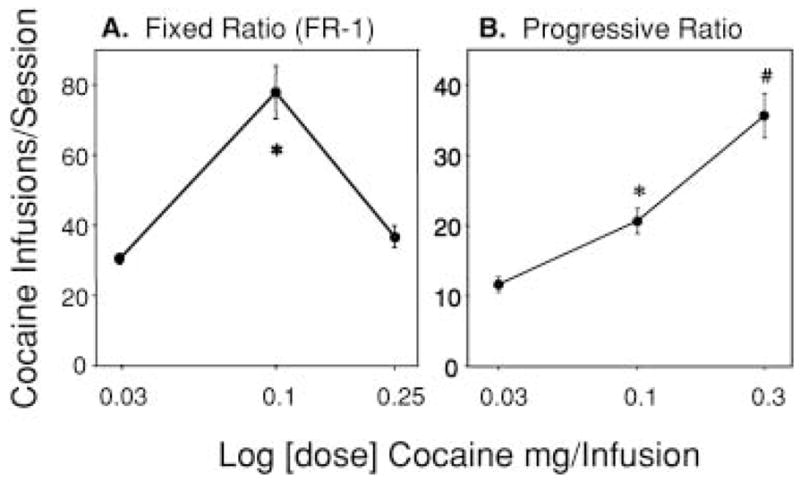
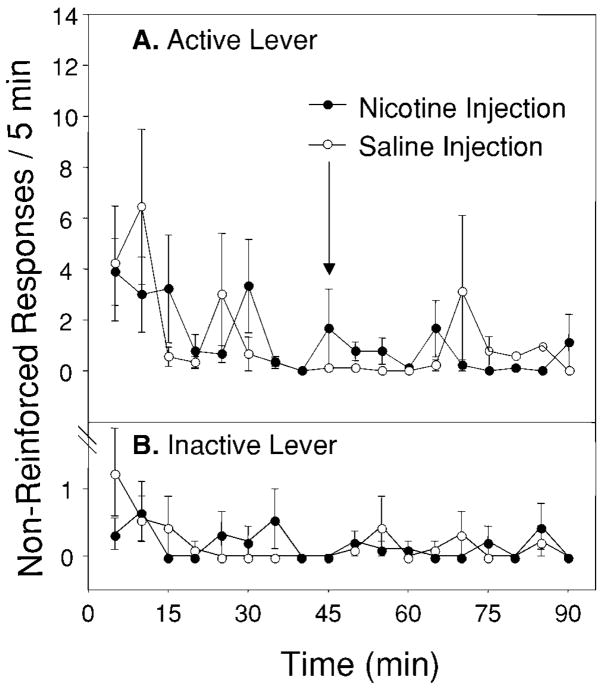
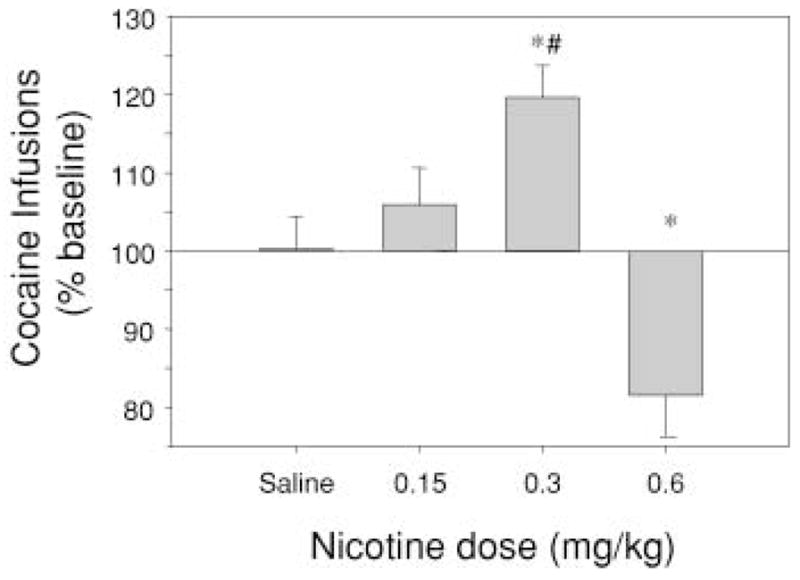
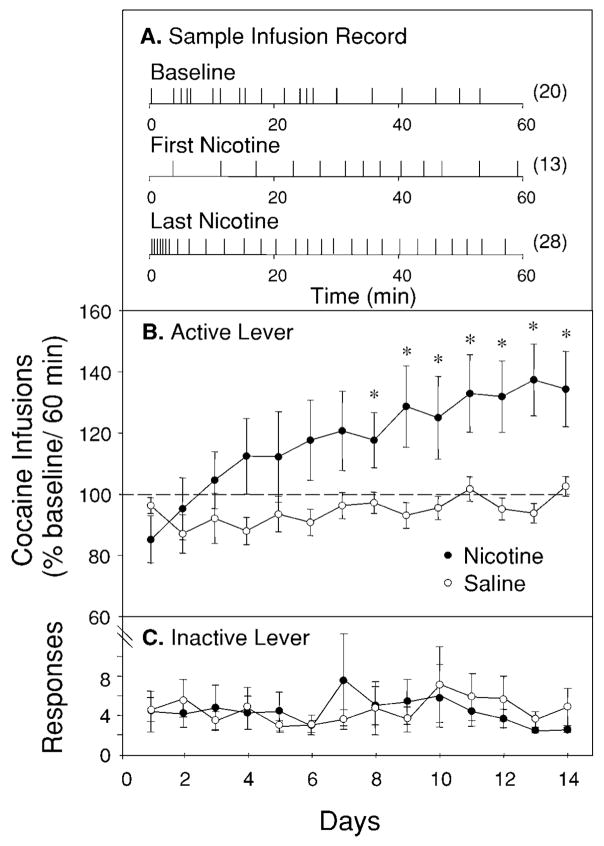
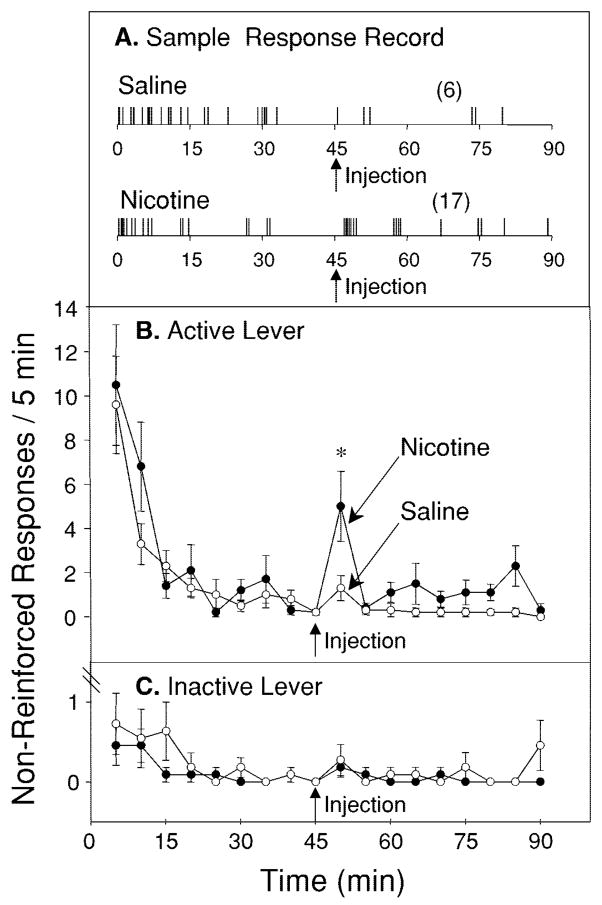
Rats were trained to self-administer cocaine (i.v.) on a progressive ratio (PR) schedule of reinforcement. Self-administration training continued until stable responding was obtained. Acute nicotine pretreatment consisted of a subcutaneous injection (0.15, 0.3 and 0.6 mg/kg) 3 min prior to cocaine access. In the repeated treatment condition, a separate group of animals was given nicotine (0.6 mg/kg, s.c.) 3 min prior to cocaine access for 14 consecutive days. During extinction trials, these animals were injected with nicotine (0.6 mg/kg, s.c.) after 45 min of non-reinforced responding.
Acute nicotine treatment produced an inverted U-shaped dose-response function with lower doses increasing and the highest dose decreasing the number of cocaine infusions obtained during a session. Animals treated repeatedly with the highest dose of nicotine showed a significant increase in the number of cocaine infusions by day 8 of nicotine treatment. During extinction sessions when cocaine was not available, injections of nicotine in these animals caused a reinstatement of the previously rewarded lever-press behavior.
These findings indicate that nicotine can facilitate cocaine reinforcement, may contribute to the transition from moderate drug-taking to an escalation of drug intake which is characteristic of addiction, and may trigger relapse.
具有成瘾倾向的药物在许多成瘾者中存在高共滥用概率。例如,可卡因使用者吸烟的可能性是非可卡因使用者的数倍,且在使用可卡因期间吸烟量会增加。先前的研究已提供证据表明,尼古丁和可卡因具有相互作用的神经化学效应,尤其是在多巴胺(DA)传递方面。
本研究考察了尼古丁治疗对大鼠自我给药可卡因的强化效果以及对可卡因非强化反应的影响。
训练大鼠在渐进比率(PR)强化程序上静脉自我给药可卡因。自我给药训练持续至获得稳定反应。急性尼古丁预处理包括在给予可卡因前3分钟皮下注射(0.15、0.3和0.6毫克/千克)。在重复治疗条件下,另一组动物在给予可卡因前3分钟皮下注射尼古丁(0.6毫克/千克),连续14天。在消退试验期间,这些动物在非强化反应45分钟后注射尼古丁(0.6毫克/千克,皮下注射)。
急性尼古丁治疗产生了倒U形剂量反应函数,较低剂量增加而最高剂量减少了一次实验中获得的可卡因注射次数。用最高剂量尼古丁重复治疗的动物在尼古丁治疗第8天时可卡因注射次数显著增加。在可卡因不可用的消退实验期间,给这些动物注射尼古丁会使先前获得奖励的杠杆按压行为恢复。
这些发现表明,尼古丁可促进可卡因强化,可能有助于从中度吸毒向成瘾特征性的药物摄入量增加转变,并可能引发复发。