Kimble Laura P, McGuire Deborah B, Dunbar Sandra B, Fazio Sharon, De Anindya, Weintraub William S, Strickland Ora S
Emory University School of Nursing, 1520 Clifton Rd, NE, Atlanta, GA 30322, USA.
Pain. 2003 Jan;101(1-2):45-53. doi: 10.1016/s0304-3959(02)00319-6.
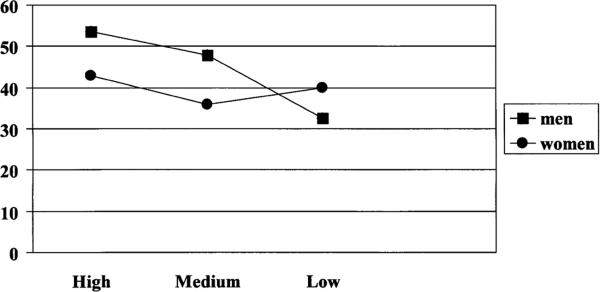
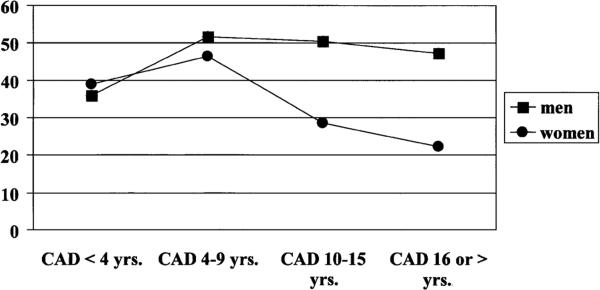
Chronic stable angina pectoris, the chest pain associated with reversible myocardial ischemia has detrimental effects on health-related quality of life, particularly in women. The limited research on gender differences in chronic stable angina suggests that angina may be experienced differently in women and that women report greater functional disability related to angina symptoms. No studies have examined gender differences in chronic stable angina from a multidimensional pain perspective or have included reliable and valid measures of pain that would facilitate comparing chronic angina patients with other chronic pain populations. The purpose of this descriptive study was to examine gender differences in characteristics of chronic stable angina using the short-form McGill pain questionnaire (SF-MPQ) and to explore relationships among these pain characteristics and perceived limitation in performing physical activities in patients with coronary artery disease (CAD) (physical limitation subscale of the Seattle angina questionnaire). One hundred and twenty-eight subjects (30.5% women) with stable CAD and angina pectoris documented by a cardiologist completed study questionnaires in an outpatient cardiology clinic. Results of the study suggest that men and women with chronic stable angina had more similarities than differences in chest pain characteristics. No significant gender differences were demonstrated in total sensory or affective intensity scores, the present pain intensity index, or the number of pain words chosen. However, women did report significantly greater pain intensity on the SF-MPQ visual analogue scale. Women were also significantly more likely to describe their chronic angina as 'hot-burning' and 'tender' and to have greater intensity of pain for these two descriptors. Despite the similarities in pain characteristics, women reported greater physical limitation related to anginal pain. The variables of social status and years diagnosed with CAD significantly interacted with gender in predicting physical limitation suggesting that gender-specific models of physical limitation in angina patients need to be explored. To our knowledge, this is one of the first studies that has assessed chronic anginal pain using a reliable and valid generic pain instrument. More research is needed to better understand the nature of gender differences in functional limitation secondary to anginal pain and the physiologic, cognitive-perceptual and psychosocial mechanisms that lead to angina-related functional disability.
慢性稳定性心绞痛,即与可逆性心肌缺血相关的胸痛,对健康相关生活质量有不利影响,尤其是在女性中。关于慢性稳定性心绞痛性别差异的研究有限,这表明女性对心绞痛的体验可能不同,而且女性报告与心绞痛症状相关的功能残疾更为严重。尚无研究从多维疼痛角度审视慢性稳定性心绞痛的性别差异,也没有纳入可靠且有效的疼痛测量方法,以便将慢性心绞痛患者与其他慢性疼痛人群进行比较。这项描述性研究的目的是使用简短麦吉尔疼痛问卷(SF-MPQ)来研究慢性稳定性心绞痛特征的性别差异,并探讨这些疼痛特征与冠心病(CAD)患者进行体力活动时的感知限制(西雅图心绞痛问卷的身体限制子量表)之间的关系。128名经心脏病专家确诊患有稳定性CAD和心绞痛的受试者(30.5%为女性)在门诊心脏病诊所完成了研究问卷。研究结果表明,患有慢性稳定性心绞痛的男性和女性在胸痛特征方面的相似之处多于差异。在总感觉或情感强度得分、当前疼痛强度指数或所选疼痛词汇数量方面,未显示出显著的性别差异。然而,女性在SF-MPQ视觉模拟量表上报告的疼痛强度明显更高。女性也更有可能将其慢性心绞痛描述为“灼痛”和“压痛”,并且这两个描述词的疼痛强度更大。尽管疼痛特征相似,但女性报告与心绞痛疼痛相关的身体限制更大。社会地位和CAD诊断年限变量在预测身体限制方面与性别存在显著交互作用,这表明需要探索心绞痛患者身体限制的性别特异性模型。据我们所知,这是首批使用可靠且有效的通用疼痛工具评估慢性心绞痛疼痛的研究之一。需要更多研究来更好地理解心绞痛疼痛继发的功能限制中性别差异的本质,以及导致与心绞痛相关功能残疾的生理、认知感知和心理社会机制。