Neef Rüdiger, Preisinger Christian, Sutcliffe Josephine, Kopajtich Robert, Nigg Erich A, Mayer Thomas U, Barr Francis A
Intracellular Protein Transport, Independent Junior Research Group, Max-Planck-Institute of Biochemistry, 82152 Martinsried, Germany.
J Cell Biol. 2003 Sep 1;162(5):863-75. doi: 10.1083/jcb.200306009. Epub 2003 Aug 25.
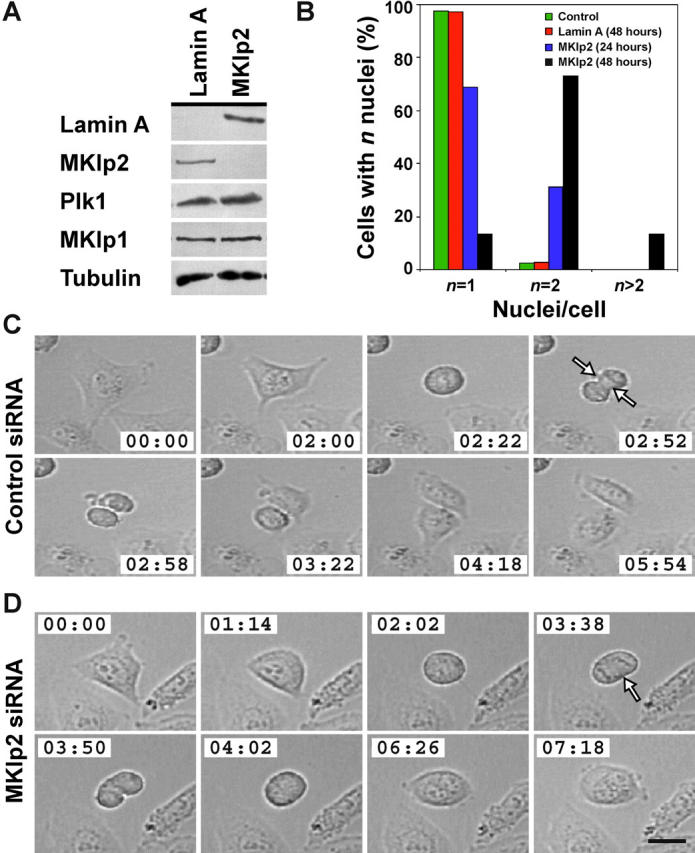
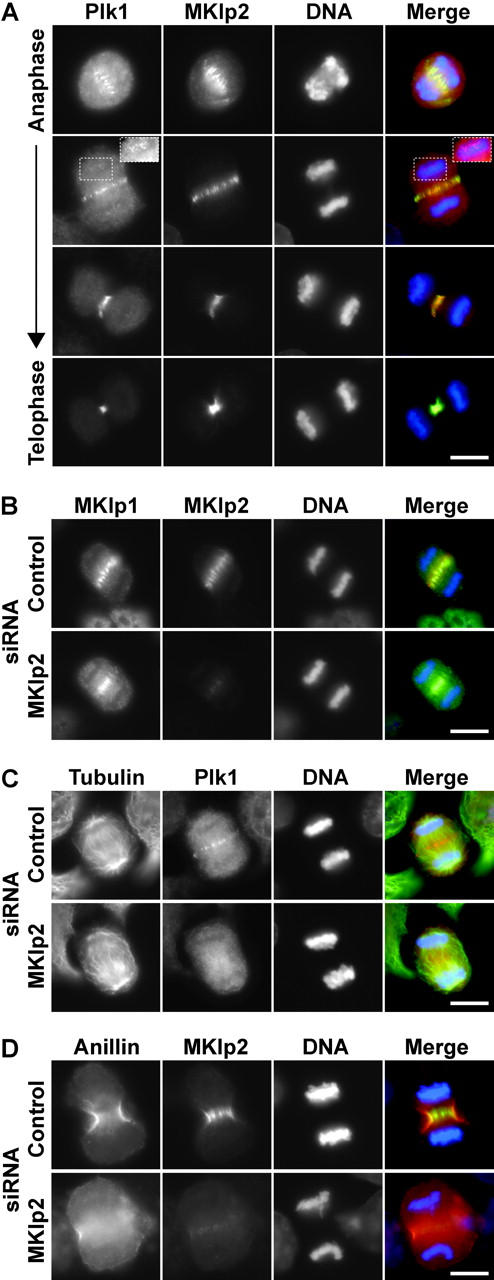
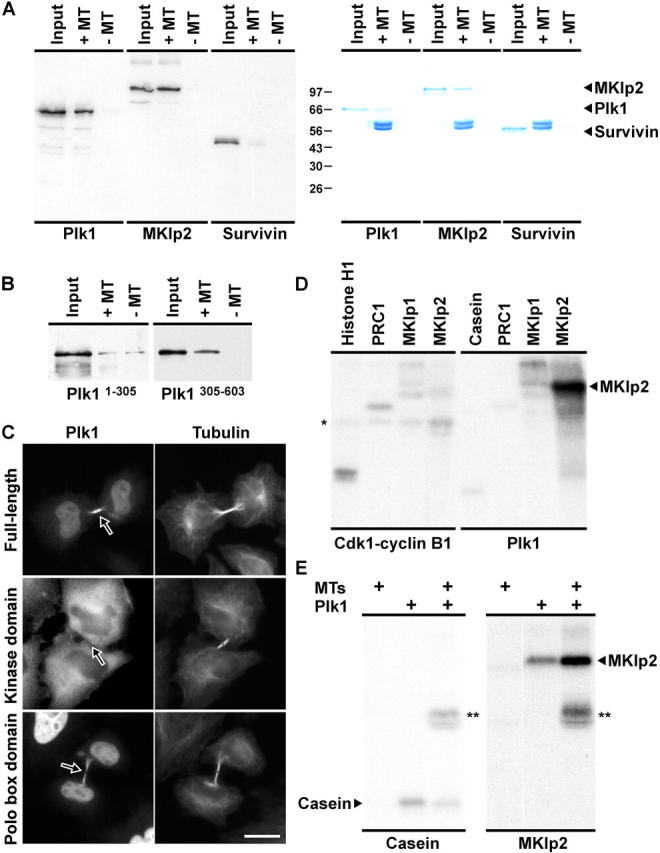
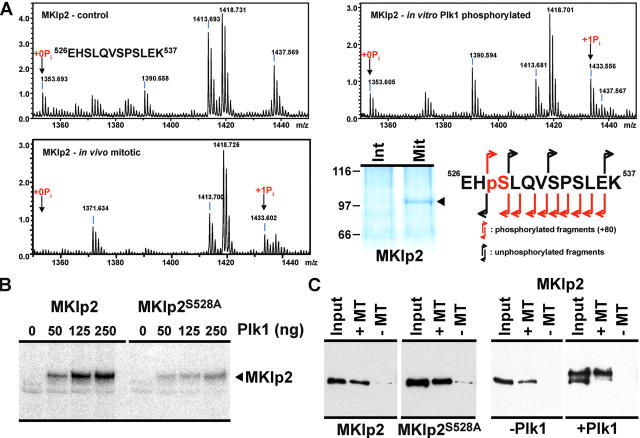
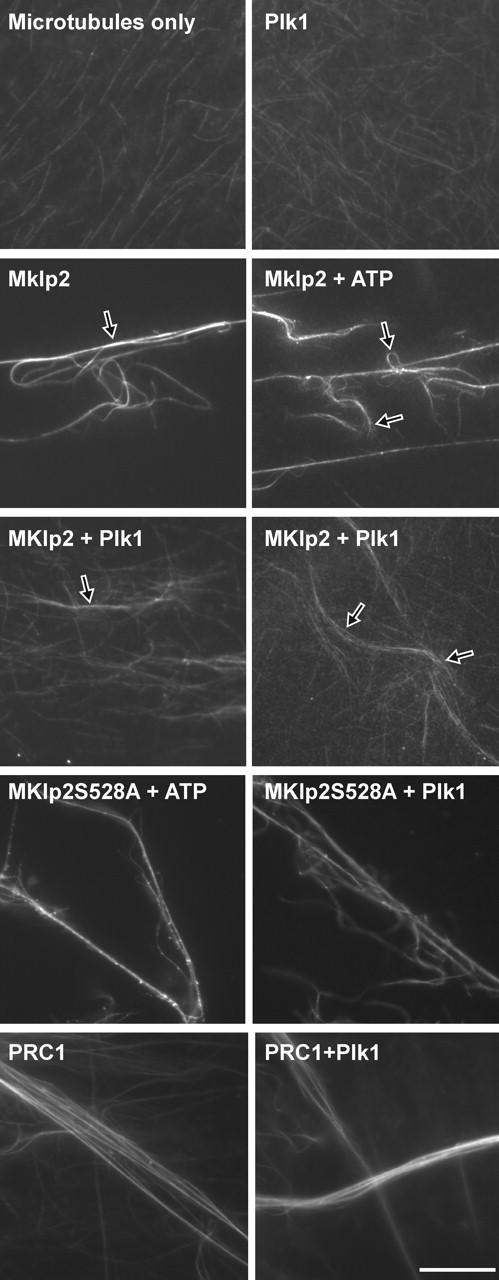
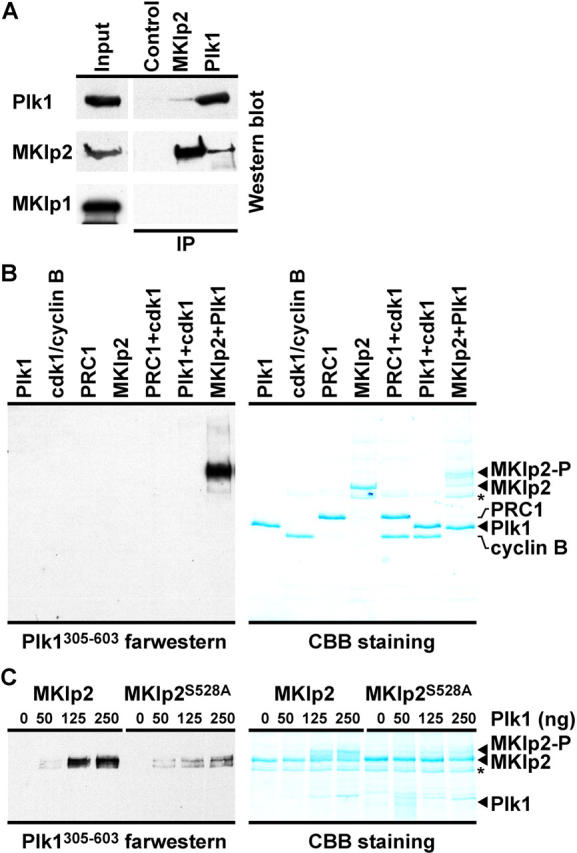
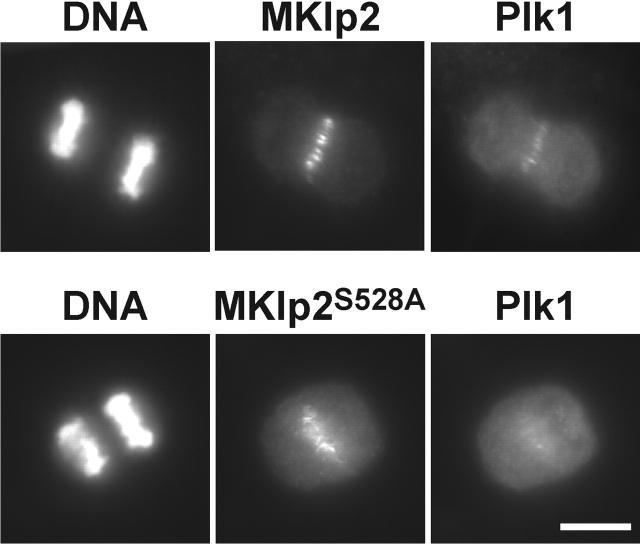
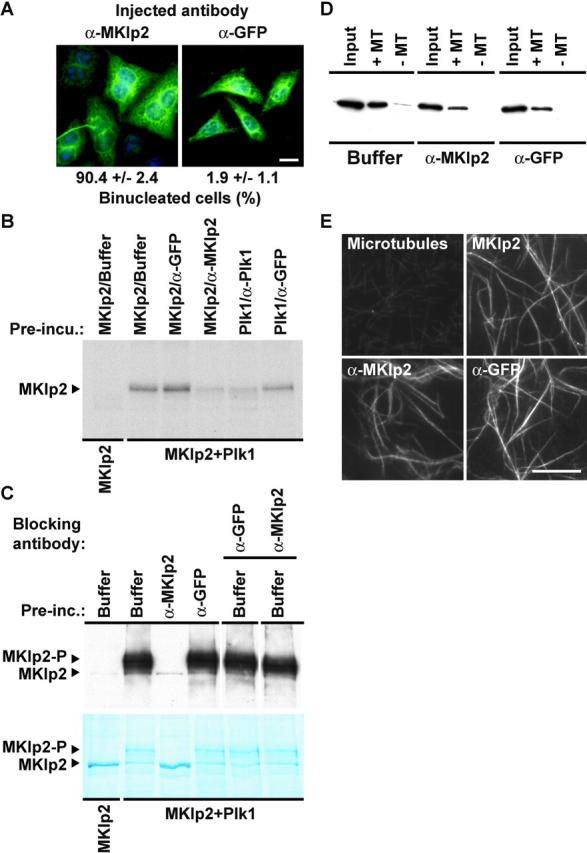
We have investigated the function of mitotic kinesin-like protein (MKlp) 2, a kinesin localized to the central spindle, and demonstrate that its depletion results in a failure of cleavage furrow ingression and cytokinesis, and disrupts localization of polo-like kinase 1 (Plk1). MKlp2 is a target for Plk1, and phosphorylated MKlp2 binds to the polo box domain of Plk1. Plk1 also binds directly to microtubules and targets to the central spindle via its polo box domain, and this interaction controls the activity of Plk1 toward MKlp2. An antibody to the neck region of MKlp2 that prevents phosphorylation of MKlp2 by Plk1 causes a cytokinesis defect when introduced into cells. We propose that phosphorylation of MKlp2 by Plk1 is necessary for the spatial restriction of Plk1 to the central spindle during anaphase and telophase, and the complex of these two proteins is required for cytokinesis.
我们研究了定位于中央纺锤体的驱动蛋白——有丝分裂驱动蛋白样蛋白(MKlp)2的功能,并证明其缺失会导致分裂沟内陷和胞质分裂失败,并破坏polo样激酶1(Plk1)的定位。MKlp2是Plk1的作用靶点,磷酸化的MKlp2与Plk1的polo盒结构域结合。Plk1也直接与微管结合,并通过其polo盒结构域定位于中央纺锤体,这种相互作用控制着Plk1对MKlp2的活性。当将一种针对MKlp2颈部区域且能阻止Plk1对MKlp2进行磷酸化的抗体导入细胞时,会导致胞质分裂缺陷。我们提出,Plk1对MKlp2的磷酸化对于后期和末期Plk1在中央纺锤体上的空间限制是必需的,并且这两种蛋白的复合物对于胞质分裂是必需的。