Dhillon V S, Young A R, Husain S A, Aslam M
Department of Molecular and Clinical Genetics, Royal Prince Alfred Hospital, Camperdown NSW 2050, Australia.
Br J Cancer. 2004 Feb 23;90(4):874-81. doi: 10.1038/sj.bjc.6601567.
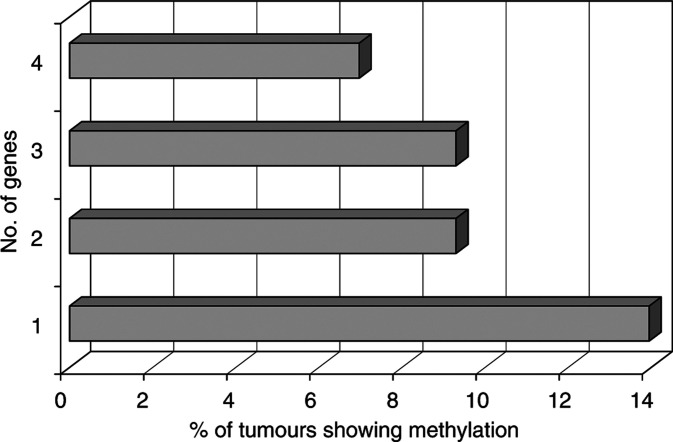
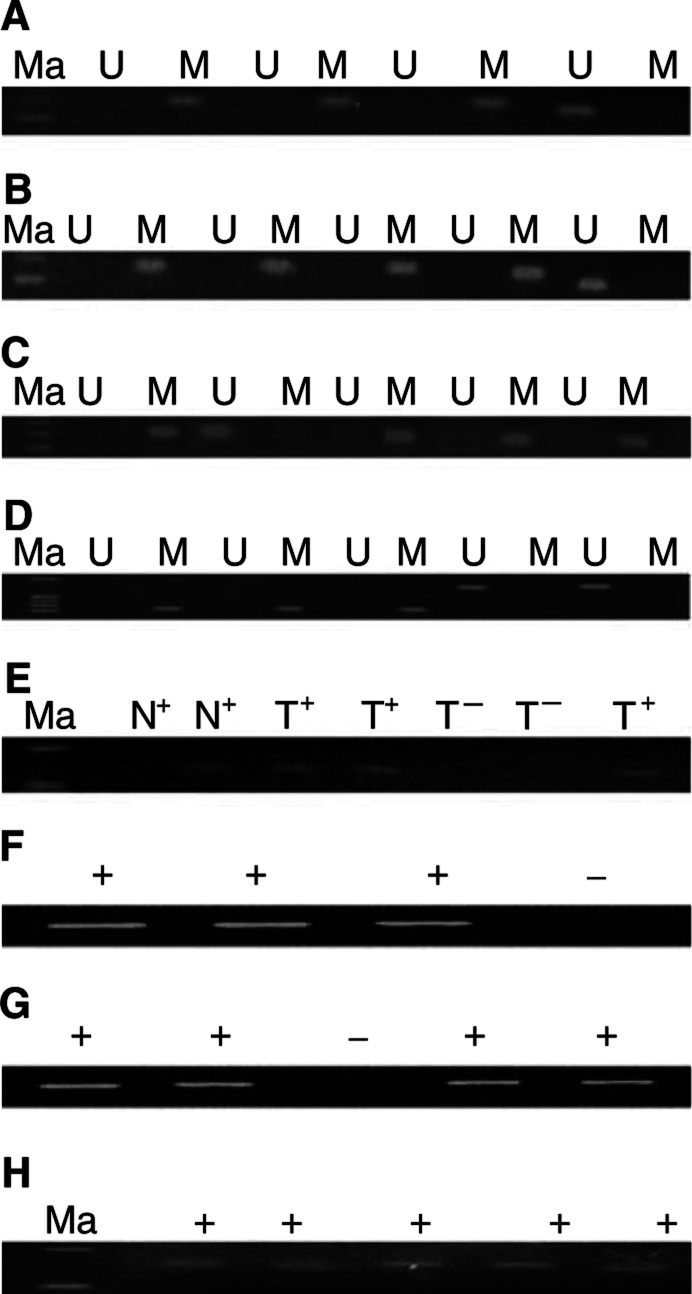
Ovarian carcinoma (OC) is a leading cause of death among women throughout the world. A number of cancer-associated genes have been shown to be inactivated by hypermethylation of CpG islands during tumorigenesis. We tested the hypothesis that methylation status of MGMT, CDH1, RAR-beta and SYK could be important in the ovarian tumorigenic process and can lead to the gene(s) inactivation. Therefore, we assessed the promoter hypermethylation of MGMT, CDH1, RAR-beta and SYK in 43 ovarian granulosa cell tumours (GCTs) (adult type) using methylation-specific PCR. These tumours are relatively rare, accounting for approximately 3% of all ovarian cancers. Hypermethylation of MGMT (in 14 tumours), CDH1 (in nine tumours), RAR-beta (in eight tumours) and SYK (in seven tumours) have been found. Selective loss of RAR-beta and RAR-beta2 mRNA has been found in seven patients, while that of MGMT and SYK in three patients who also show aberrant methylation in promoter region of RAR-beta in addition to MGMT, SYK and CDH1 genes. Promoter CpG hypermethylation may be an alternative to mutation(s) to inactivate tumour suppressor genes such as MGMT, CDH1, RAR-beta and SYK, and this can also be an early event in the pathogenesis of OCs. Moreover, hypermethylation of the MGMT and CDH1, MGMT and RAR-beta and CDH1 and RAR-beta promoters occurred concordantly (P< 0.001, 0.0421 and 0.0005 respectively; Fischer's exact test). In addition to this, monosomy 22 and trisomy 14 have also been found in 10 tumours. It is clear from the results that hypermethylation of the promoter region of these tumour suppressor genes, monosomy 22 and trisomy 14, may be critical steps in the tumorigenesis, which consequently play a permissive role for tumour aggressiveness. All these events might play an important role in the early clinical diagnosis of the disease. Our results, therefore, suggest a potential role for epigenetic modification of these critical tumour suppressor genes in pathways relevant to the transformation and differentiation of rare type of ovarian cancer (GCTs).
卵巢癌(OC)是全球女性死亡的主要原因之一。在肿瘤发生过程中,许多癌症相关基因已被证明因CpG岛的高甲基化而失活。我们检验了这样一个假设,即MGMT、CDH1、RAR-β和SYK的甲基化状态在卵巢肿瘤发生过程中可能很重要,并可能导致基因失活。因此,我们使用甲基化特异性PCR评估了43例卵巢颗粒细胞瘤(GCTs)(成人型)中MGMT、CDH1、RAR-β和SYK的启动子高甲基化情况。这些肿瘤相对罕见,约占所有卵巢癌的3%。已发现MGMT(14例肿瘤)、CDH1(9例肿瘤)、RAR-β(8例肿瘤)和SYK(7例肿瘤)存在高甲基化。在7例患者中发现了RAR-β和RAR-β2 mRNA的选择性缺失,而在3例患者中发现了MGMT和SYK的缺失,这些患者除了MGMT、SYK和CDH1基因外,RAR-β启动子区域也存在异常甲基化。启动子CpG高甲基化可能是使肿瘤抑制基因如MGMT、CDH1、RAR-β和SYK失活的一种替代突变的方式,这也可能是卵巢癌发病机制中的一个早期事件。此外,MGMT和CDH1、MGMT和RAR-β以及CDH1和RAR-β启动子的高甲基化同时出现(分别为P<0.001、0.0421和0.0005;费舍尔精确检验)。除此之外,在10例肿瘤中还发现了22号染色体单体和14号染色体三体。从结果可以明显看出,这些肿瘤抑制基因启动子区域的高甲基化、22号染色体单体和14号染色体三体可能是肿瘤发生的关键步骤,因此对肿瘤侵袭性起到了促进作用。所有这些事件可能在该疾病的早期临床诊断中发挥重要作用。因此,我们的结果表明这些关键肿瘤抑制基因的表观遗传修饰在与罕见类型卵巢癌(GCTs)的转化和分化相关的途径中可能具有潜在作用。