Bienengraeber Martin, Olson Timothy M, Selivanov Vitaliy A, Kathmann Eva C, O'Cochlain Fearghas, Gao Fan, Karger Amy B, Ballew Jeffrey D, Hodgson Denice M, Zingman Leonid V, Pang Yuan-Ping, Alekseev Alexey E, Terzic Andre
Division of Cardiovascular Diseases, Department of Medicine, Mayo Clinic College of Medicine, Mayo Foundation, Rochester, Minnesota 55905, USA.
Nat Genet. 2004 Apr;36(4):382-7. doi: 10.1038/ng1329. Epub 2004 Mar 21.
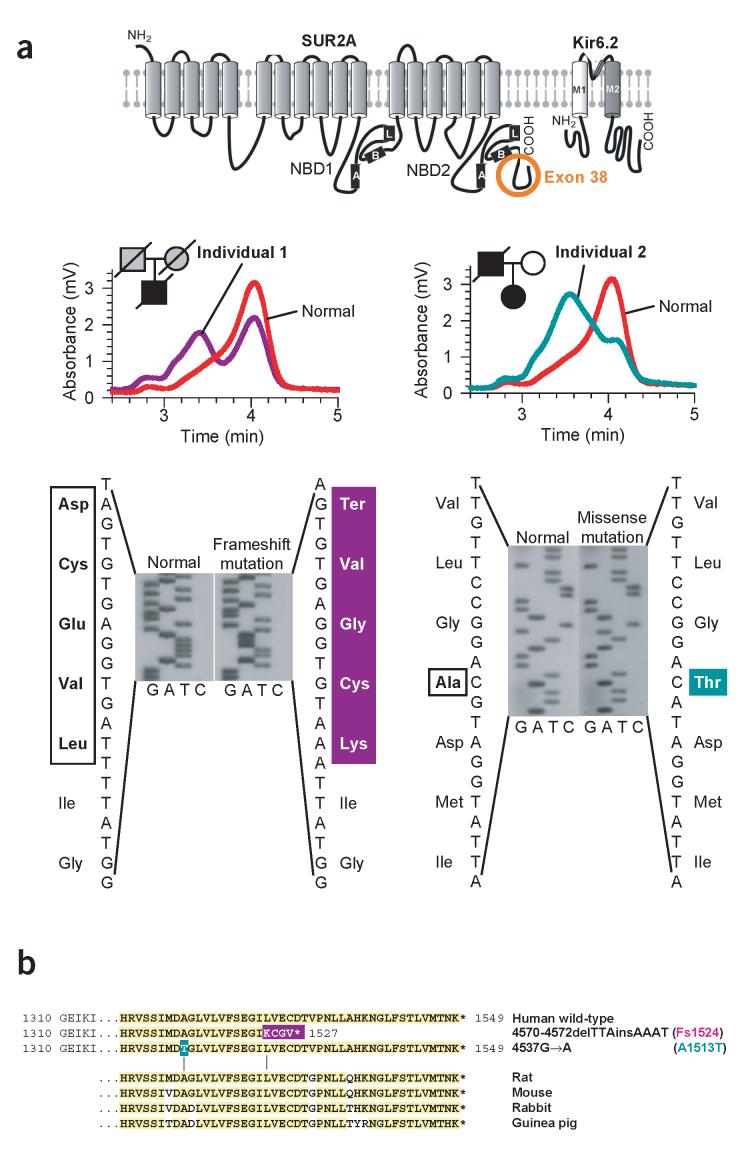
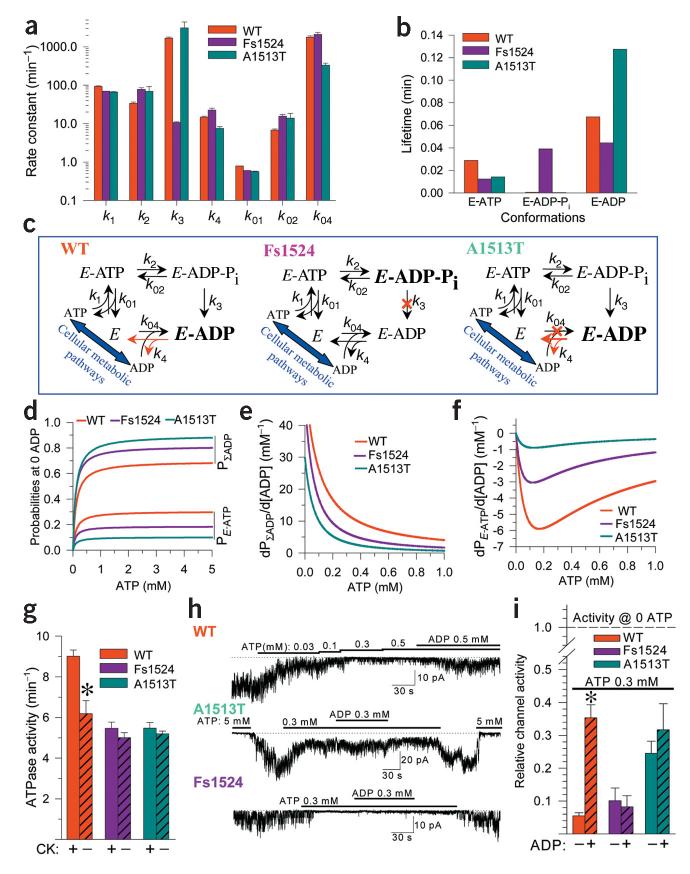
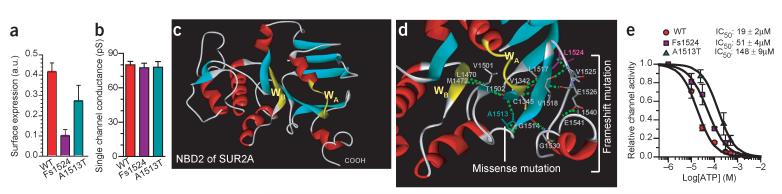
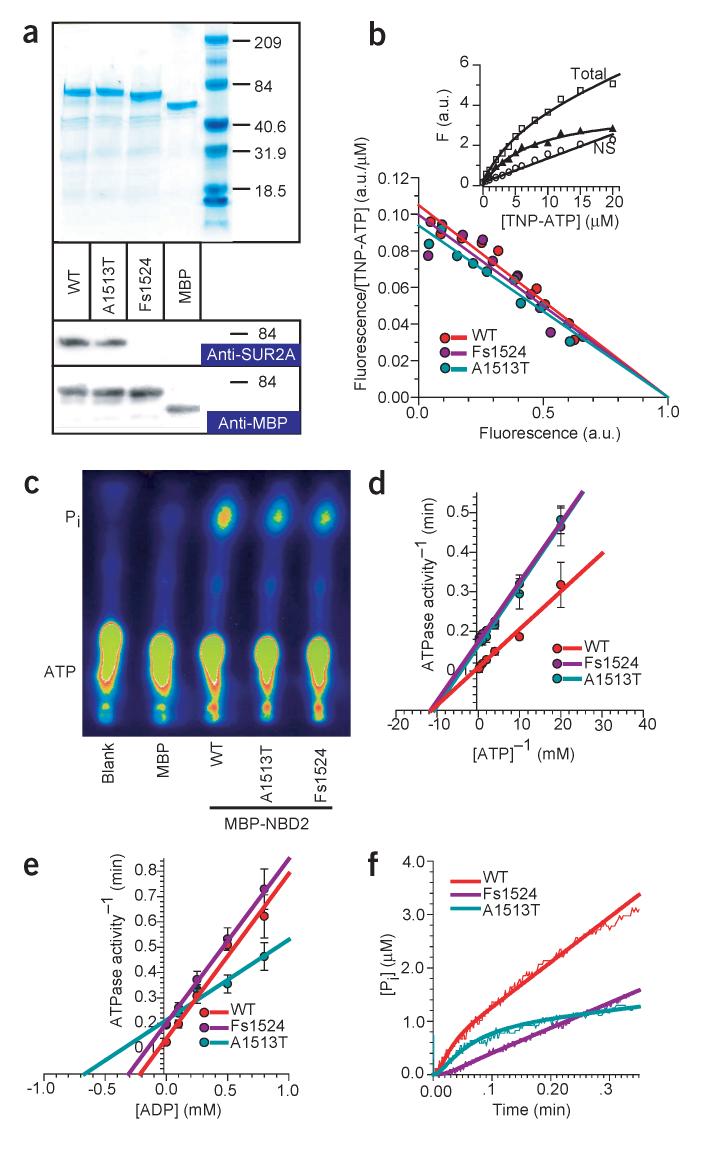
Stress tolerance of the heart requires high-fidelity metabolic sensing by ATP-sensitive potassium (K(ATP)) channels that adjust membrane potential-dependent functions to match cellular energetic demand. Scanning of genomic DNA from individuals with heart failure and rhythm disturbances due to idiopathic dilated cardiomyopathy identified two mutations in ABCC9, which encodes the regulatory SUR2A subunit of the cardiac K(ATP) channel. These missense and frameshift mutations mapped to evolutionarily conserved domains adjacent to the catalytic ATPase pocket within SUR2A. Mutant SUR2A proteins showed aberrant redistribution of conformations in the intrinsic ATP hydrolytic cycle, translating into abnormal K(ATP) channel phenotypes with compromised metabolic signal decoding. Defective catalysis-mediated pore regulation is thus a mechanism for channel dysfunction and susceptibility to dilated cardiomyopathy.
心脏的应激耐受性需要通过ATP敏感性钾(K(ATP))通道进行高保真代谢传感,该通道可调节膜电位依赖性功能以匹配细胞能量需求。对因特发性扩张型心肌病导致心力衰竭和节律紊乱的个体的基因组DNA进行扫描,发现ABCC9中有两个突变,ABCC9编码心脏K(ATP)通道的调节性SUR2A亚基。这些错义突变和移码突变定位于SUR2A内与催化性ATP酶口袋相邻的进化保守结构域。突变的SUR2A蛋白在内在ATP水解循环中显示出构象的异常重新分布,转化为代谢信号解码受损的异常K(ATP)通道表型。因此,催化介导的孔调节缺陷是通道功能障碍和扩张型心肌病易感性的一种机制。