Draenert Rika, Le Gall Sylvie, Pfafferott Katja J, Leslie Alasdair J, Chetty Polan, Brander Christian, Holmes Edward C, Chang Shih-Chung, Feeney Margaret E, Addo Marylyn M, Ruiz Lidia, Ramduth Danni, Jeena Prakash, Altfeld Marcus, Thomas Stephanie, Tang Yanhua, Verrill Cori L, Dixon Catherine, Prado Julia G, Kiepiela Photini, Martinez-Picado Javier, Walker Bruce D, Goulder Philip J R
Howard Hughes Medical Institute, Charlestown, MA 02129, USA.
J Exp Med. 2004 Apr 5;199(7):905-15. doi: 10.1084/jem.20031982.
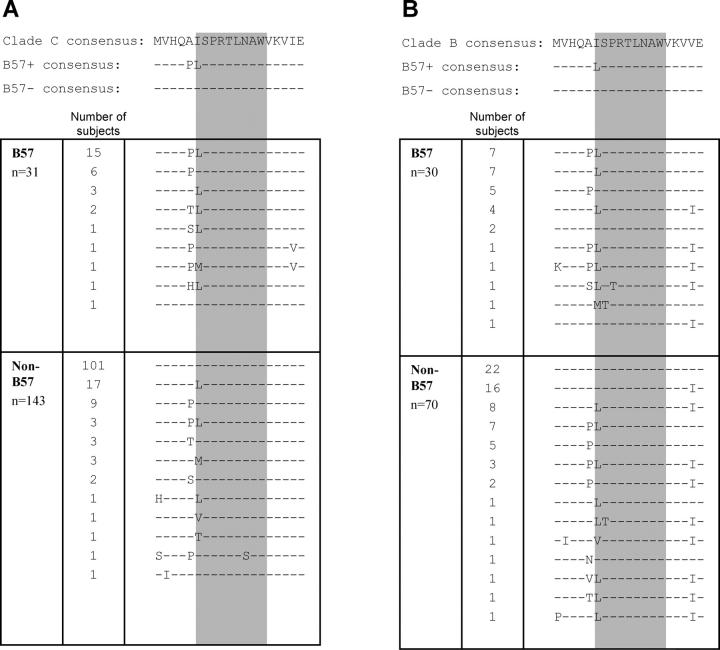
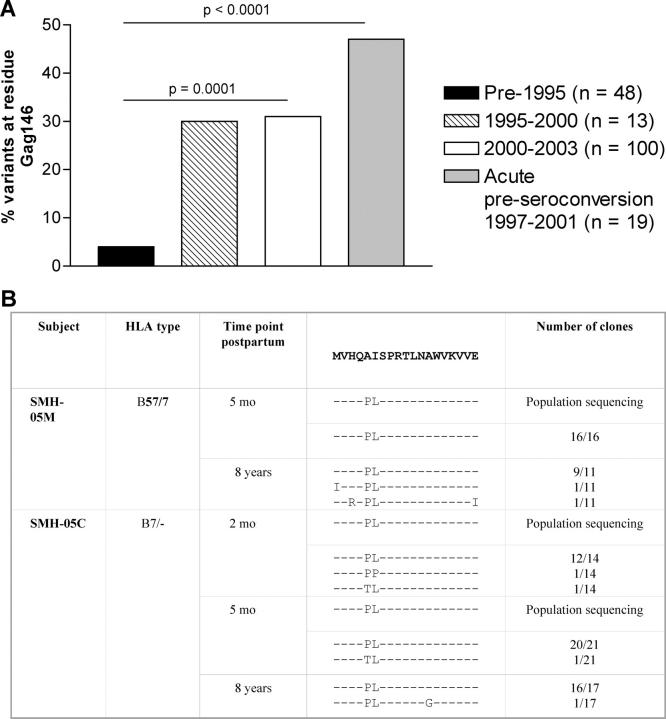
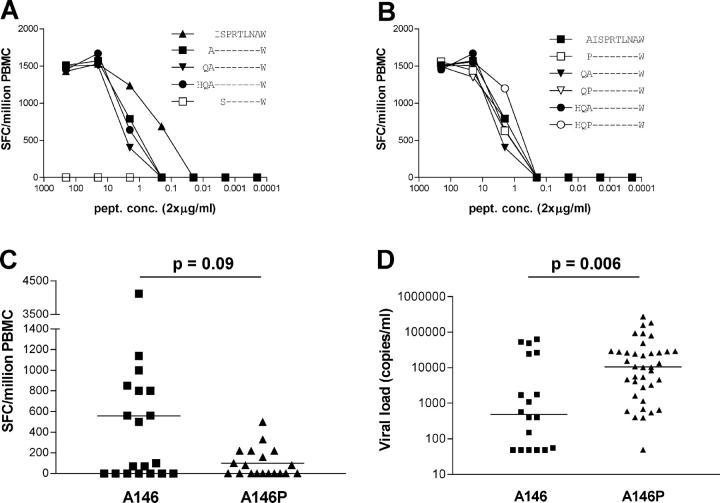
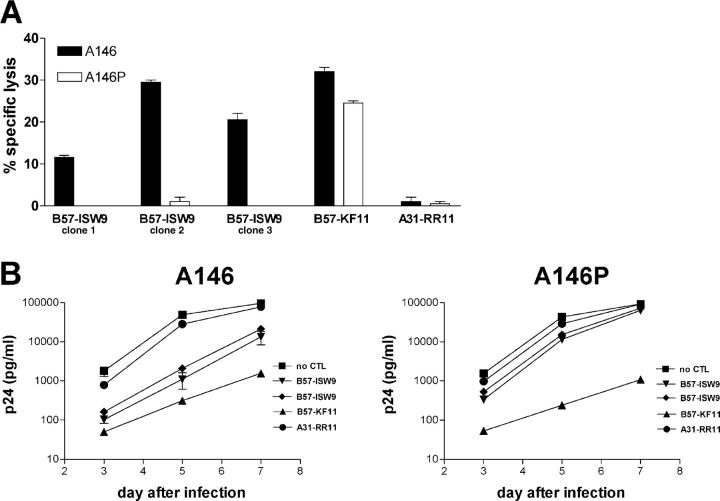
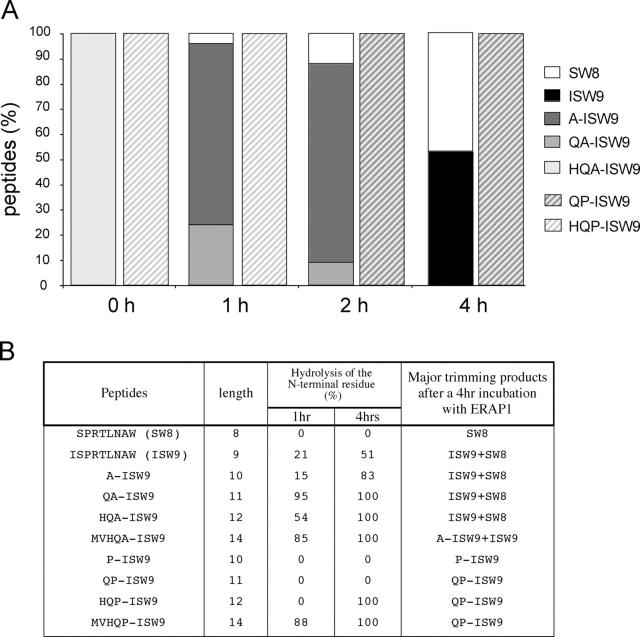
Mutations within cytotoxic T lymphocyte (CTL) epitopes impair T cell recognition, but escape mutations arising in flanking regions that alter antigen processing have not been defined in natural human infections. In human histocompatibility leukocyte antigen (HLA)-B57+ HIV-infected persons, immune selection pressure leads to a mutation from alanine to proline at Gag residue 146 immediately preceding the NH2 terminus of a dominant HLA-B57-restricted epitope, ISPRTLNAW. Although N-extended wild-type or mutant peptides remained well-recognized, mutant virus-infected CD4 T cells failed to be recognized by the same CTL clones. The A146P mutation prevented NH2-terminal trimming of the optimal epitope by the endoplasmic reticulum aminopeptidase I. These results demonstrate that allele-associated sequence variation within the flanking region of CTL epitopes can alter antigen processing. Identifying such mutations is of major relevance in the construction of vaccine sequences.
细胞毒性T淋巴细胞(CTL)表位内的突变会损害T细胞识别,但在自然人类感染中,尚未明确在改变抗原加工的侧翼区域出现的逃逸突变。在人类组织相容性白细胞抗原(HLA)-B57+的HIV感染者中,免疫选择压力导致在主要的HLA-B57限制性表位ISPRTLNAW的NH2末端之前的Gag残基146处发生从丙氨酸到脯氨酸的突变。尽管N端延伸的野生型或突变型肽仍能被很好地识别,但突变病毒感染的CD4 T细胞却不能被相同的CTL克隆识别。A146P突变阻止了内质网氨肽酶I对最佳表位的NH2末端修剪。这些结果表明,CTL表位侧翼区域内的等位基因相关序列变异可改变抗原加工。识别此类突变在疫苗序列构建中具有重要意义。