Ku Nam-On, Fu Haian, Omary M Bishr
Department of Medicine, VA Palo Alto Medical Center, 3801 Miranda Ave., 154J, Palo Alto, CA 94304, USA.
J Cell Biol. 2004 Aug 16;166(4):479-85. doi: 10.1083/jcb.200402051.
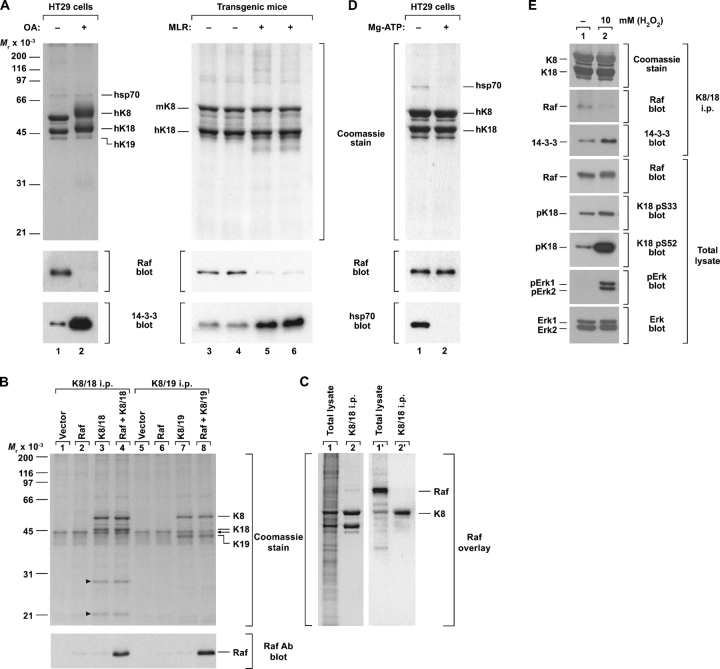
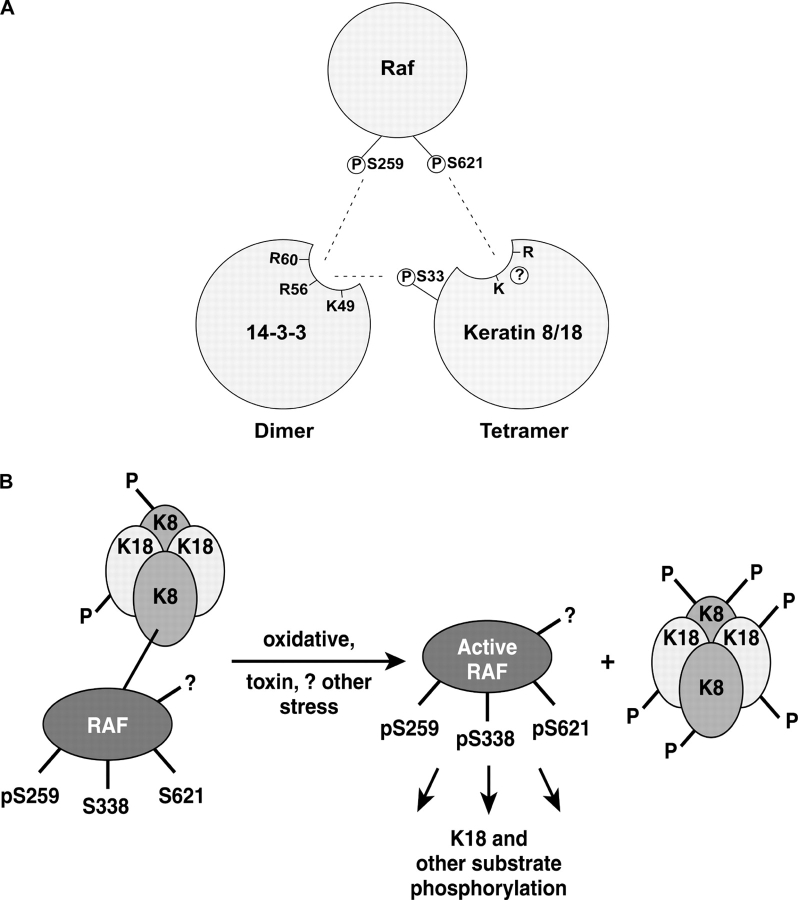
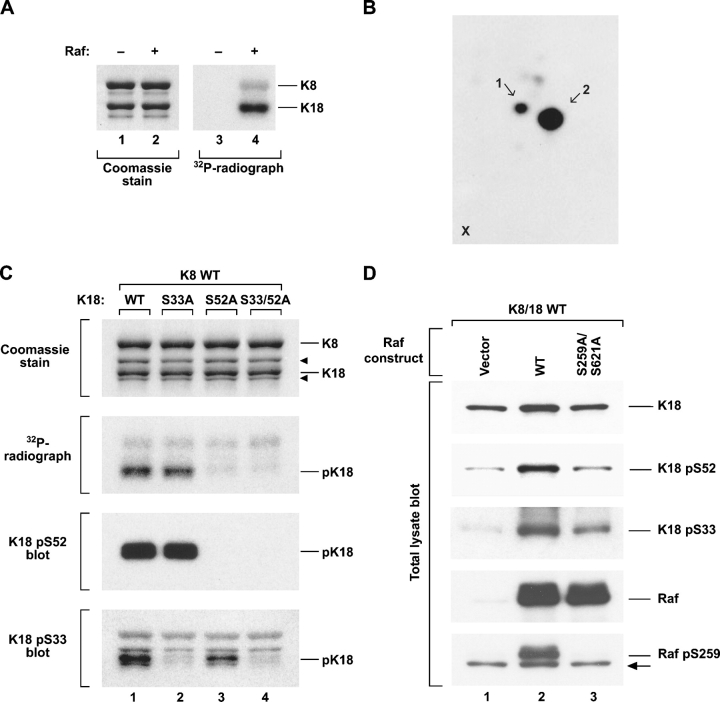
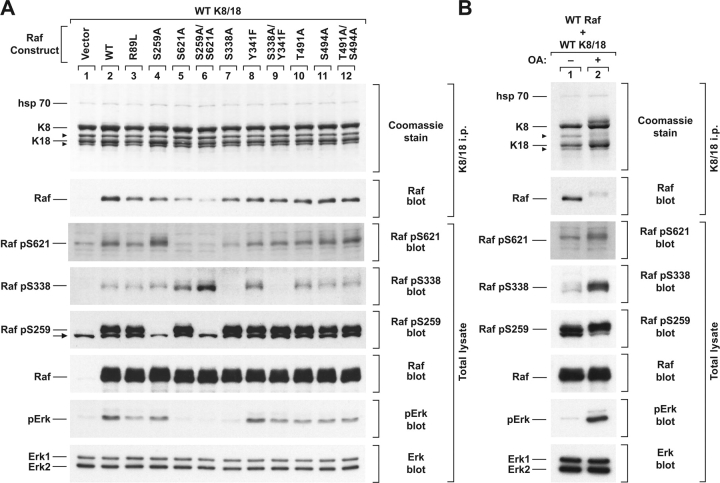
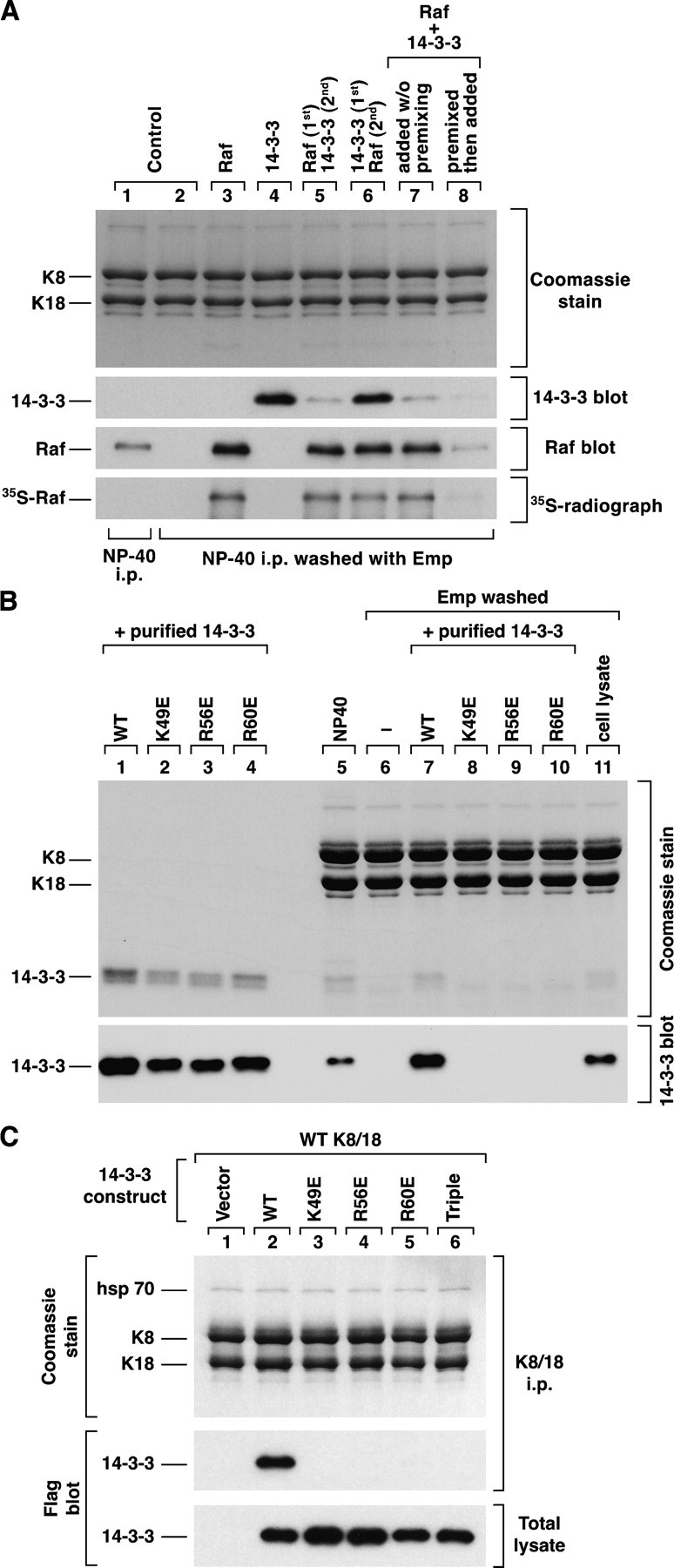
Keratins 8 and 18 (K8/18) heteropolymers may regulate cell signaling via the known K18 association with 14-3-3 proteins and 14-3-3 association with Raf-1 kinase. We characterized Raf-keratin-14-3-3 associations and show that Raf associates directly with K8, independent of Raf kinase activity or Ras-Raf interaction, and that K18 is a Raf physiologic substrate. Raf activation during oxidative and toxin exposure in cultured cells and animals disrupt keratin-Raf association in a phosphorylation-dependent manner. Mutational analysis showed that 14-3-3 residues that are essential for Raf binding also regulate 14-3-3-keratin association. Similarly, Raf phosphorylation sites that are important for binding to 14-3-3 are also essential for Raf binding to K8/18. Therefore, keratins may modulate some aspects of Raf signaling under basal conditions via sequestration by K8, akin to Raf-14-3-3 binding. Keratin-bound Raf kinase is released upon Raf hyperphosphorylation and activation during oxidative and other stresses.
角蛋白8和18(K8/18)异源聚合物可能通过已知的K18与14-3-3蛋白的结合以及14-3-3与Raf-1激酶的结合来调节细胞信号传导。我们对Raf-角蛋白-14-3-3的结合进行了表征,结果表明Raf直接与K8结合,这与Raf激酶活性或Ras-Raf相互作用无关,并且K18是Raf的生理底物。在培养细胞和动物中,氧化和毒素暴露期间的Raf激活以磷酸化依赖的方式破坏角蛋白-Raf的结合。突变分析表明,对Raf结合至关重要的14-3-3残基也调节14-3-3-角蛋白的结合。同样,对与14-3-3结合很重要的Raf磷酸化位点对于Raf与K8/18的结合也必不可少。因此,在基础条件下,角蛋白可能通过K8的隔离来调节Raf信号传导的某些方面,类似于Raf-14-3-3的结合。在氧化和其他应激过程中,当Raf过度磷酸化并激活时,与角蛋白结合的Raf激酶会被释放。