Yenugu Suresh, Hamil Katherine G, French Frank S, Hall Susan H
Laboratories for Reproductive Biology, Department of Pediatrics, University of North Carolina, Chapel Hill, NC 27599-7500, USA.
Reprod Biol Endocrinol. 2004 Aug 24;2:61. doi: 10.1186/1477-7827-2-61.
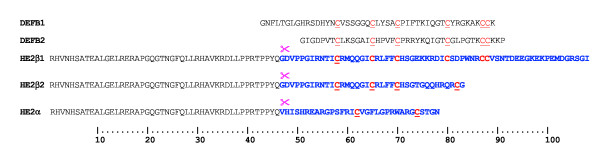
The HE2 gene encodes a group of isoforms with similarities to the antimicrobial beta-defensins. We demonstrated earlier that the antimicrobial activity of HE2 proteins and peptides is salt resistant and structure dependent and involves permeabilization of bacterial membranes. In this study, we further characterize the antimicrobial properties of HE2 peptides in terms of the structural changes induced in E. coli and the inhibition of macromolecular synthesis.
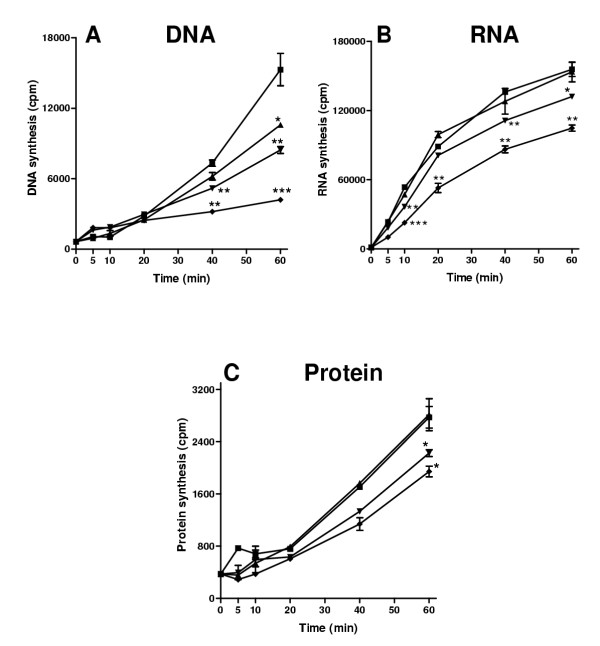
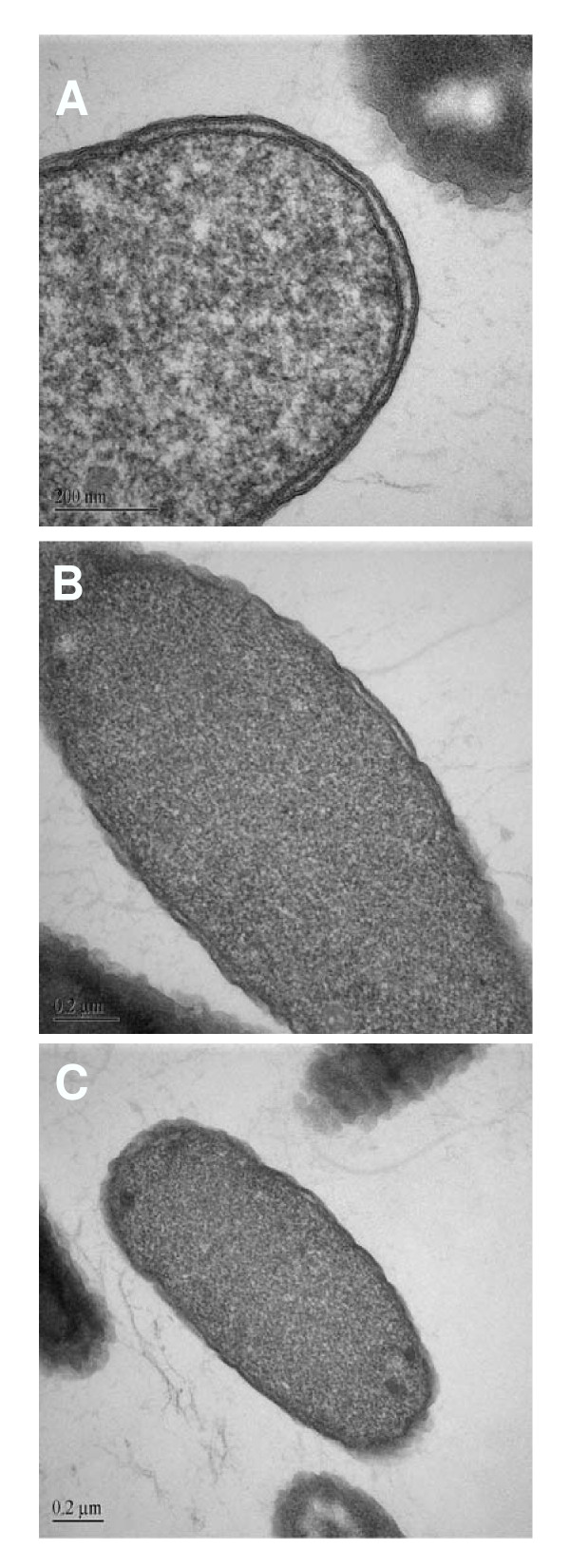
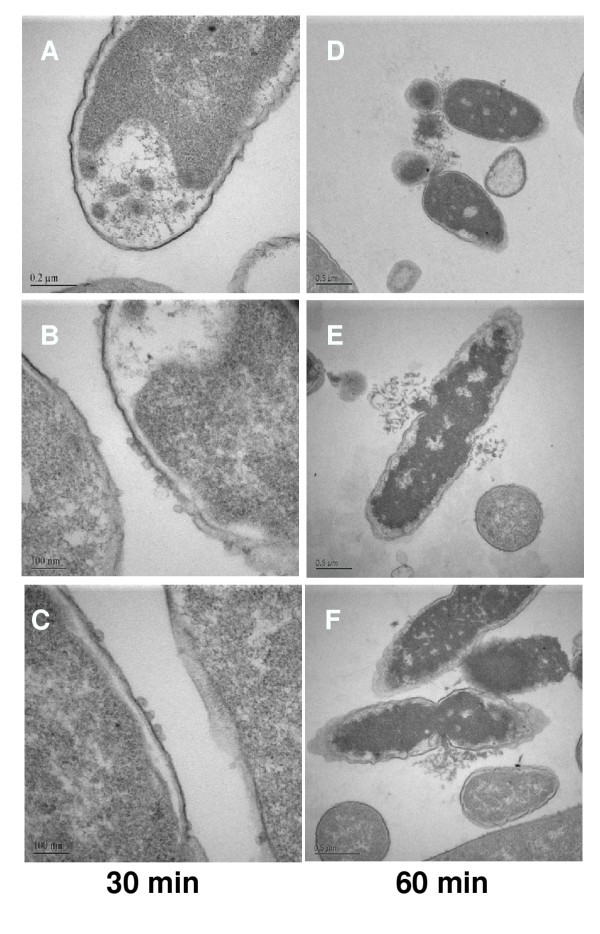
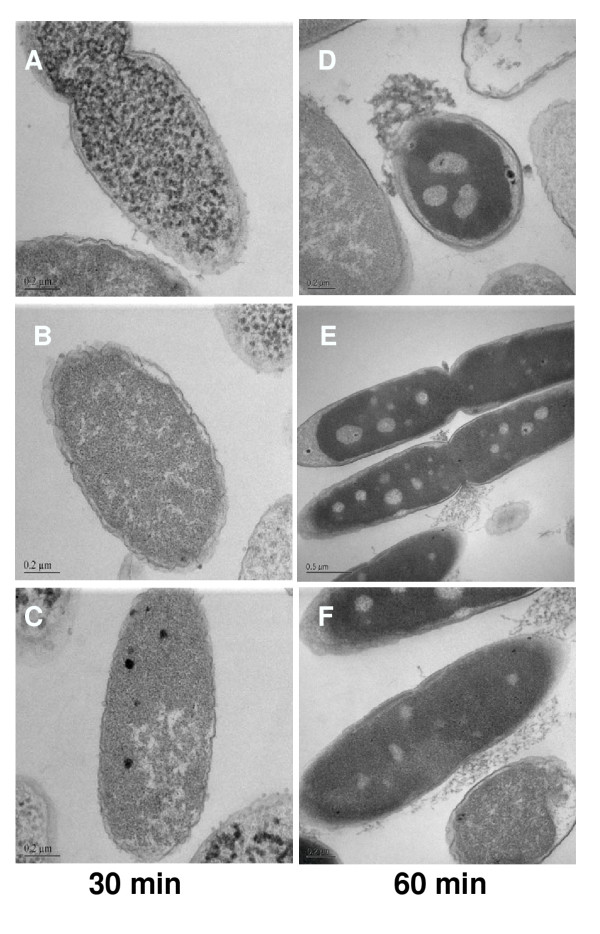
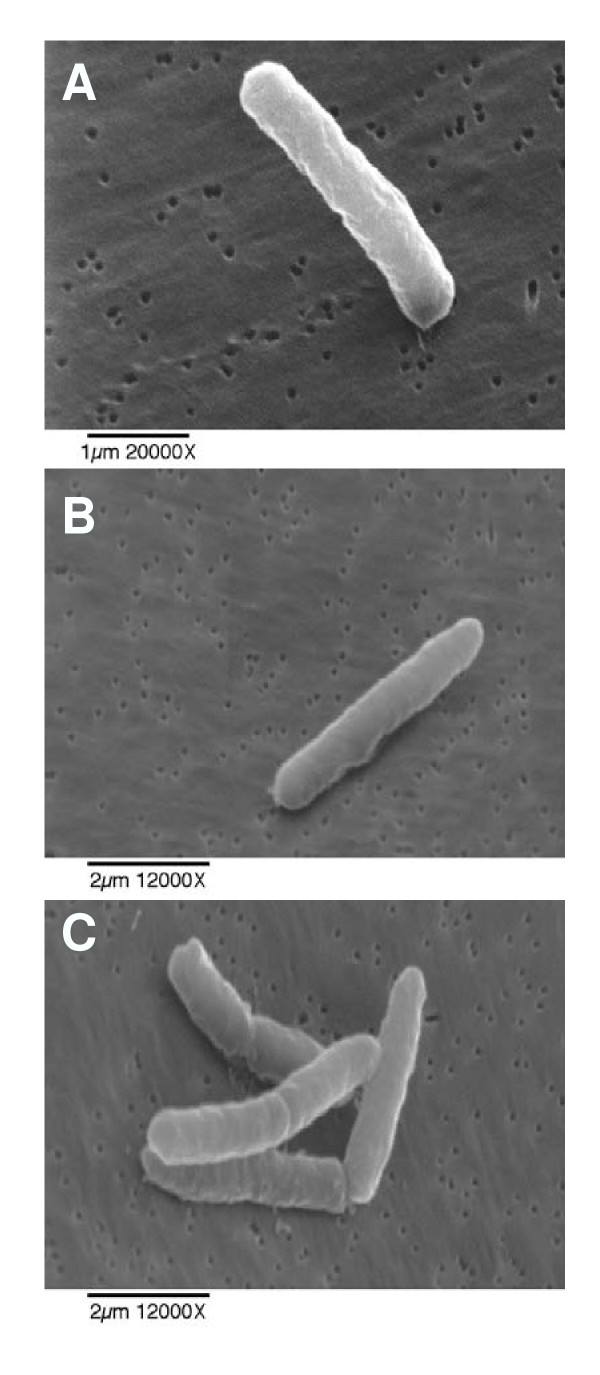
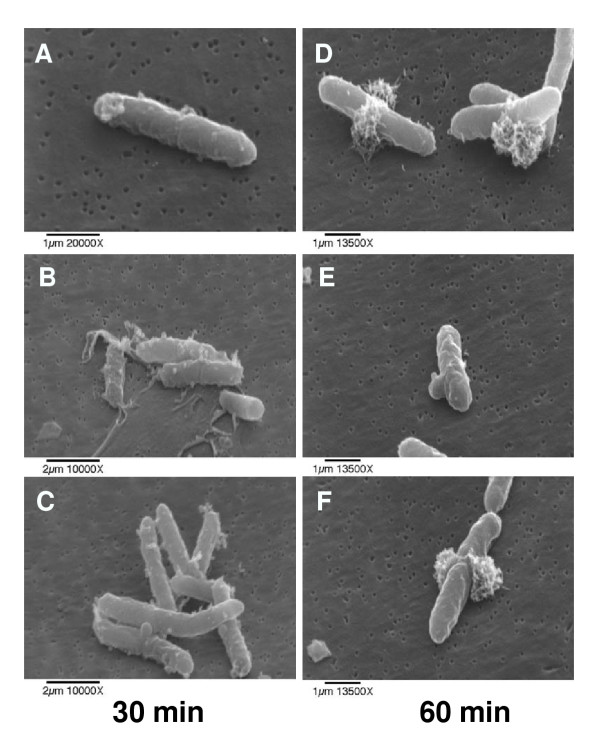
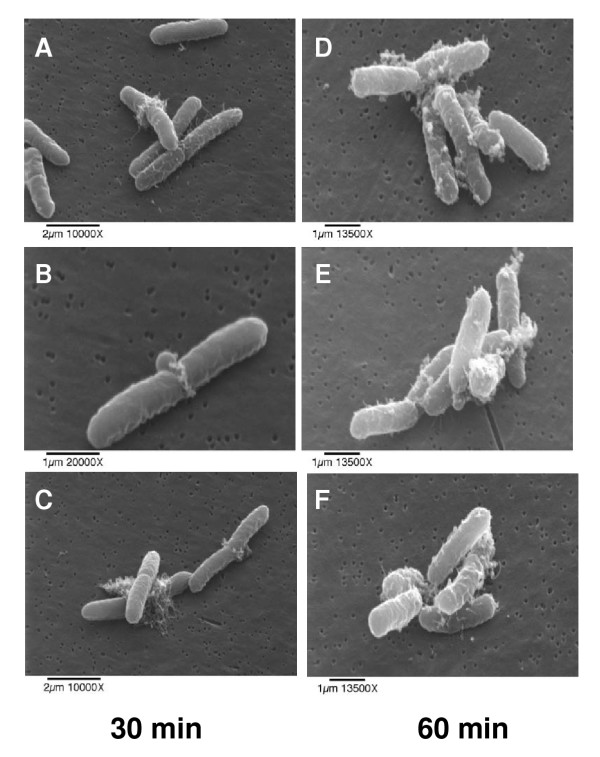
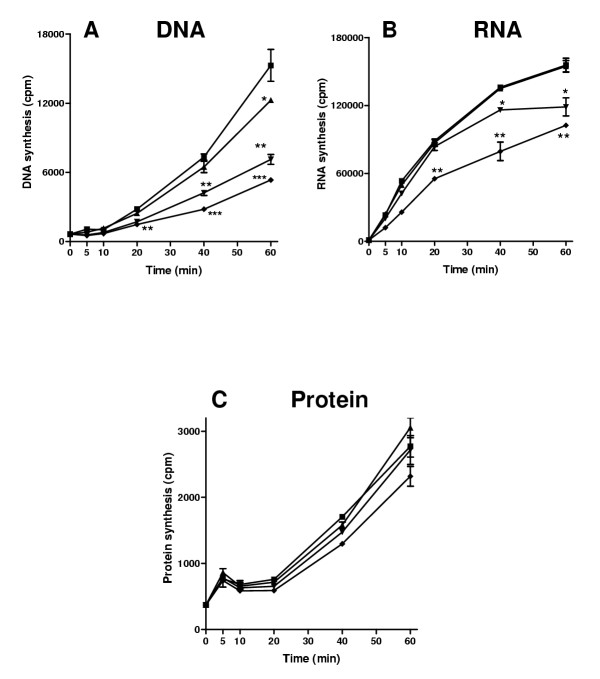
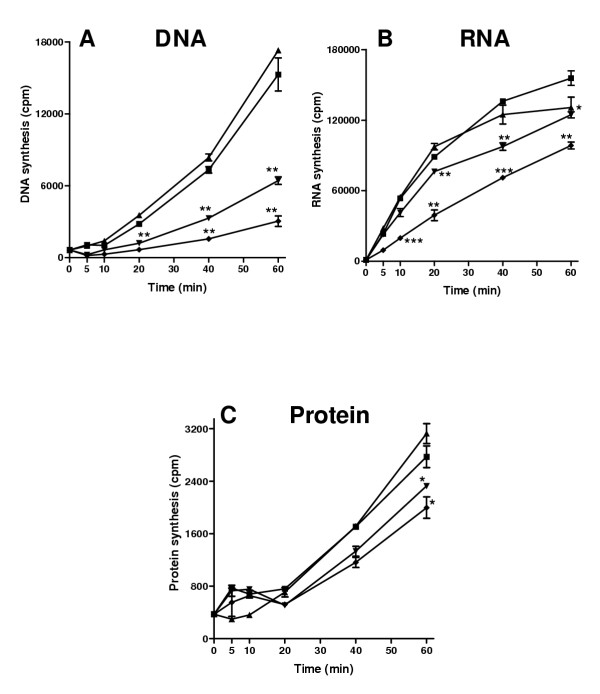
E. coli treated with 50 microg/ml of HE2alpha, HE2beta1 or HE2beta2 peptides for 30 and 60 min were visualized using transmission and scanning electron microscopy to investigate the impact of these peptides on bacterial internal and external structure. The effects of HE2alpha, HE2beta1 and HE2beta2 on E. coli macromolecular synthesis was assayed by incubating the bacteria with 2, 10 and 25 microg/ml of the individual peptides for 0-60 min and measuring the incorporation of the radioactive precursors [methyl-3H]thymidine, [5-3H]uridine and L-[4,5-3H(N)]leucine into DNA, RNA and protein. Statistical analyses using Student's t-test were performed using Sigma Plot software. Values shown are Mean +/- S.D.
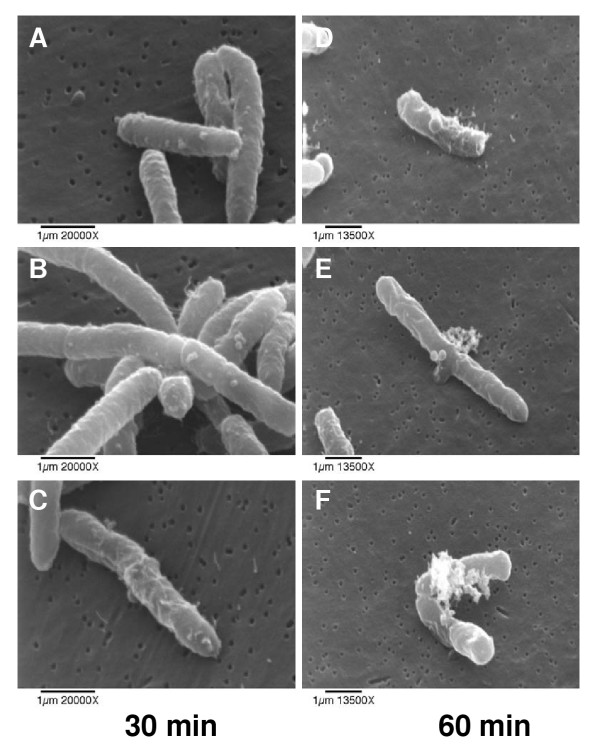
E. coli treated with HE2alpha, HE2beta1 and HE2beta2 peptides as visualized by transmission electron microscopy showed extensive damage characterized by membrane blebbing, thickening of the membrane, highly granulated cytoplasm and appearance of vacuoles in contrast to the smooth and continuous membrane structure of the untreated bacteria. Similarly, bacteria observed by scanning electron microscopy after treating with HE2alpha, HE2beta1 or HE2beta2 peptides exhibited membrane blebbing and wrinkling, leakage of cellular contents, especially at the dividing septa, and external accumulation of fibrous materials. In addition, HE2alpha, HE2beta1 and HE2beta2 peptides inhibited E. coli DNA, RNA and protein synthesis.
The morphological changes observed in E. coli treated with epididymal HE2 peptides provide further evidence for their membrane dependent mechanism of antibacterial action. HE2 C-terminal peptides can inhibit E. coli macromolecular synthesis, suggesting an additional mechanism of bacterial killing supplementary to membrane permeabilization.
HE2基因编码一组与抗菌β-防御素相似的亚型。我们之前证明,HE2蛋白和肽的抗菌活性具有耐盐性且依赖于结构,涉及细菌细胞膜的通透性改变。在本研究中,我们从大肠杆菌诱导的结构变化和大分子合成抑制方面进一步表征HE2肽的抗菌特性。
用透射电子显微镜和扫描电子显微镜观察经50微克/毫升的HE2α、HE2β1或HE2β2肽处理30分钟和60分钟的大肠杆菌,以研究这些肽对细菌内部和外部结构的影响。通过将细菌与2、10和25微克/毫升的各肽孵育0 - 60分钟,并测量放射性前体[甲基-3H]胸腺嘧啶核苷、[5-3H]尿苷和L-[4,5-3H(N)]亮氨酸掺入DNA、RNA和蛋白质中的情况,来测定HE2α、HE2β1和HE2β2对大肠杆菌大分子合成的影响。使用Sigma Plot软件进行Student's t检验的统计分析。所示值为平均值±标准差。
透射电子显微镜观察显示,经HE2α、HE2β1和HE2β2肽处理的大肠杆菌出现广泛损伤,其特征为膜泡形成、膜增厚、细胞质高度颗粒化以及出现液泡,这与未处理细菌光滑连续的膜结构形成对比。同样,用HE2α、HE2β1或HE2β2肽处理后通过扫描电子显微镜观察到的细菌表现出膜泡形成和起皱、细胞内容物泄漏,尤其是在分裂隔膜处,以及纤维物质的外部堆积。此外,HE2α、HE2β1和HE2β2肽抑制大肠杆菌DNA、RNA和蛋白质的合成。
在附睾HE2肽处理的大肠杆菌中观察到的形态变化为其依赖膜的抗菌作用机制提供了进一步证据。HE2 C末端肽可抑制大肠杆菌大分子合成,提示除膜通透性改变外还有一种额外的细菌杀伤机制。