Wheeler Michael D
Center for Alcohol Studies at the University of North Carolina, Chapel Hill, USA.
Alcohol Res Health. 2003;27(4):300-6.
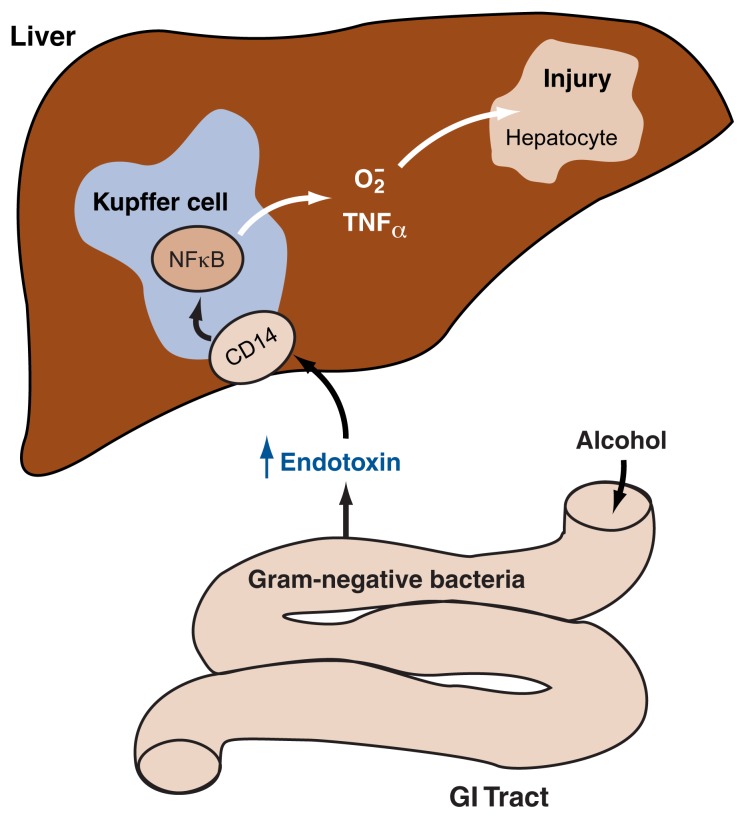
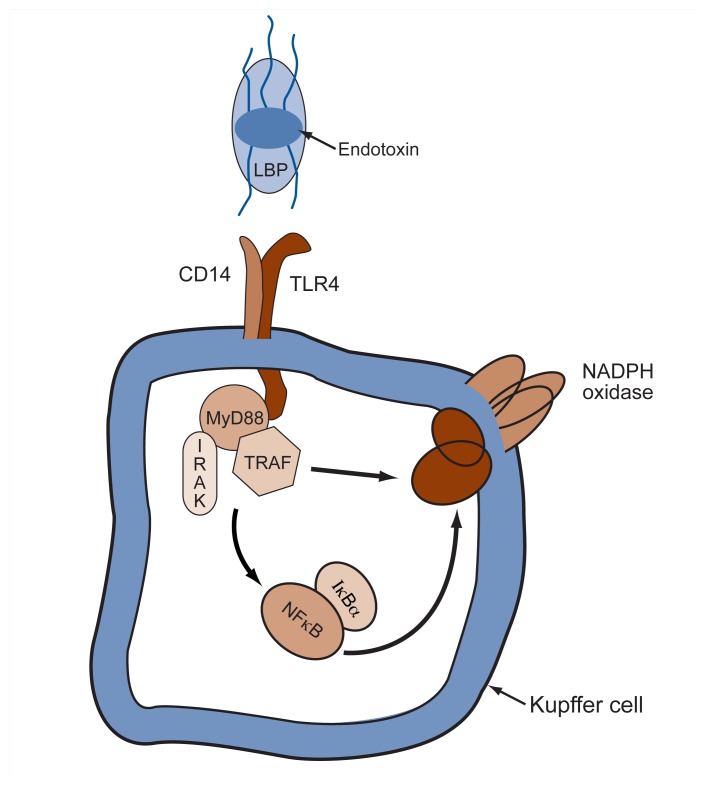
One central component in the complex network of processes leading to the development of alcoholic liver disease is the activation of immune cells residing in the liver (i.e., Kupffer cells) by a substance called endotoxin, which is released by bacteria living in the intestine. Alcohol consumption can lead to increased endotoxin levels in the blood and liver. When activated, Kupffer cells produce signaling molecules (i.e., cytokines) that promote inflammatory reactions as well as molecules called reactive oxygen species (ROS), which can damage liver cells. Endotoxin activates Kupffer cells by interacting with a complex of protein molecules that are located on the outside of the Kupffer cell or which extend into the cell. Binding of endotoxin alters the activities of the proteins in this complex so that they trigger a cascade of biochemical signals in the Kupffer cell, resulting in cytokine and ROS production and, ultimately, liver damage. Because alcohol can enhance endotoxin release and, therefore, Kupffer cell activation, novel approaches to inhibit these processes might help prevent or ameliorate alcoholic liver disease.
在导致酒精性肝病发生的复杂过程网络中,一个核心组成部分是一种名为内毒素的物质激活驻留在肝脏中的免疫细胞(即库普弗细胞),内毒素由生活在肠道中的细菌释放。饮酒会导致血液和肝脏中的内毒素水平升高。激活后,库普弗细胞会产生促进炎症反应的信号分子(即细胞因子)以及名为活性氧(ROS)的分子,活性氧会损害肝细胞。内毒素通过与位于库普弗细胞外部或延伸到细胞内的蛋白质分子复合物相互作用来激活库普弗细胞。内毒素的结合会改变该复合物中蛋白质的活性,从而在库普弗细胞中引发一系列生化信号,导致细胞因子和活性氧的产生,并最终造成肝脏损伤。由于酒精会增强内毒素的释放,进而增强库普弗细胞的激活,抑制这些过程的新方法可能有助于预防或改善酒精性肝病。