Lechardeur Delphine, Xu Ming, Lukacs Gergely L
Hospital for Sick Children Research Institute and Department of Laboratory Medicine and Pathobiology, University of Toronto, Ontario, Canada.
J Cell Biol. 2004 Dec 6;167(5):851-62. doi: 10.1083/jcb.200404105. Epub 2004 Nov 29.
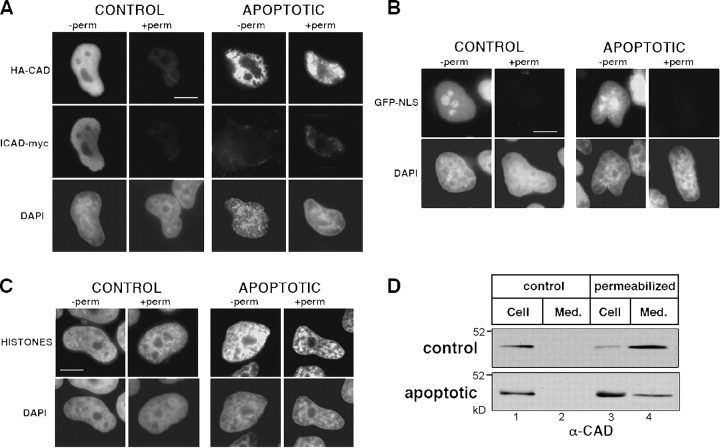
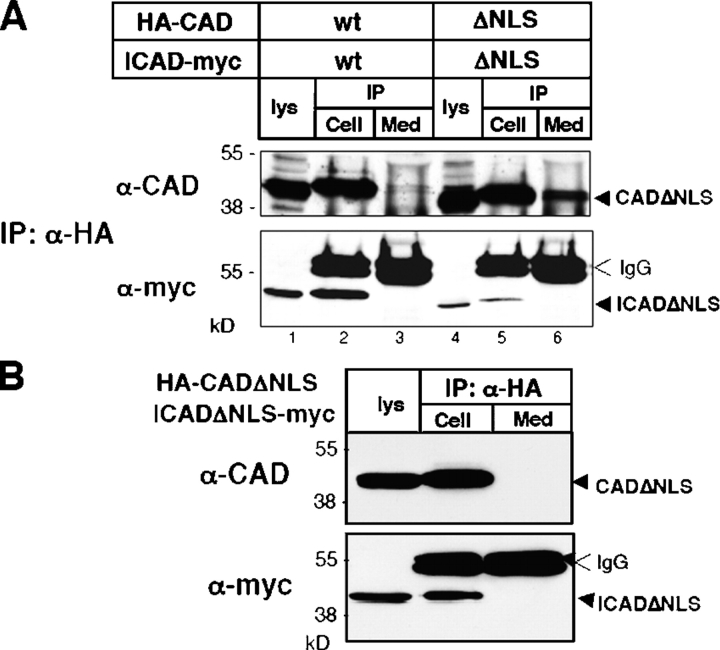
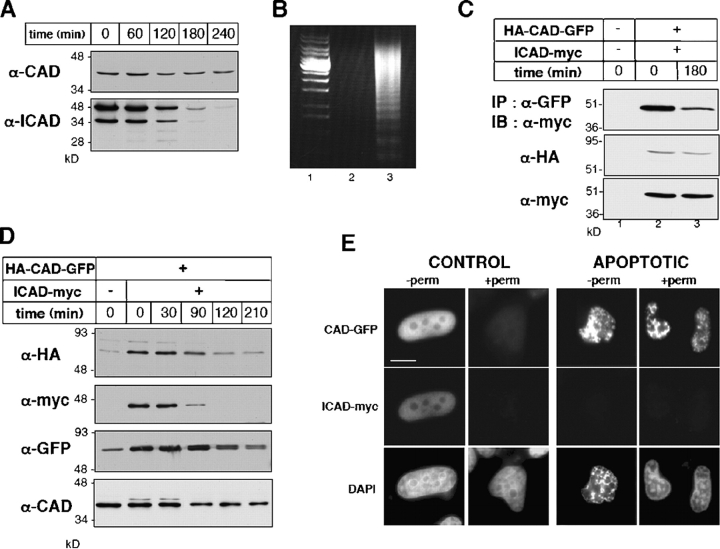
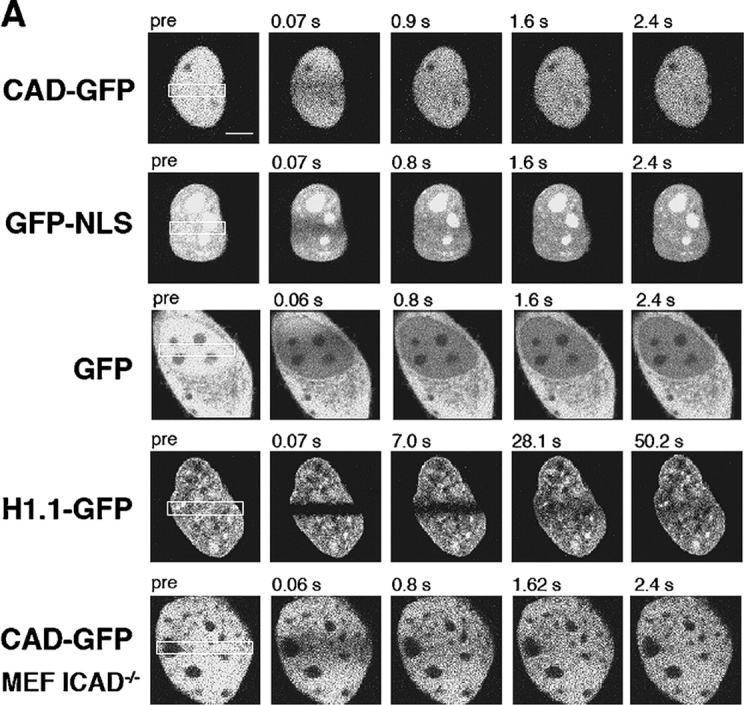
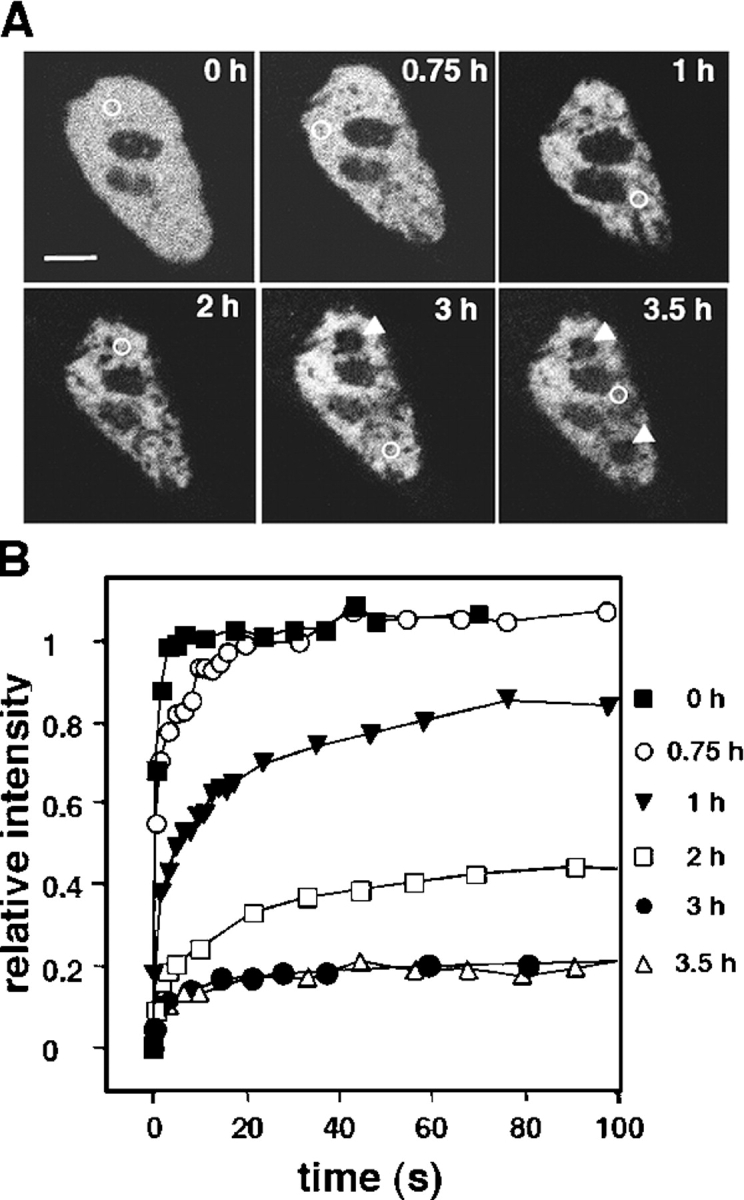
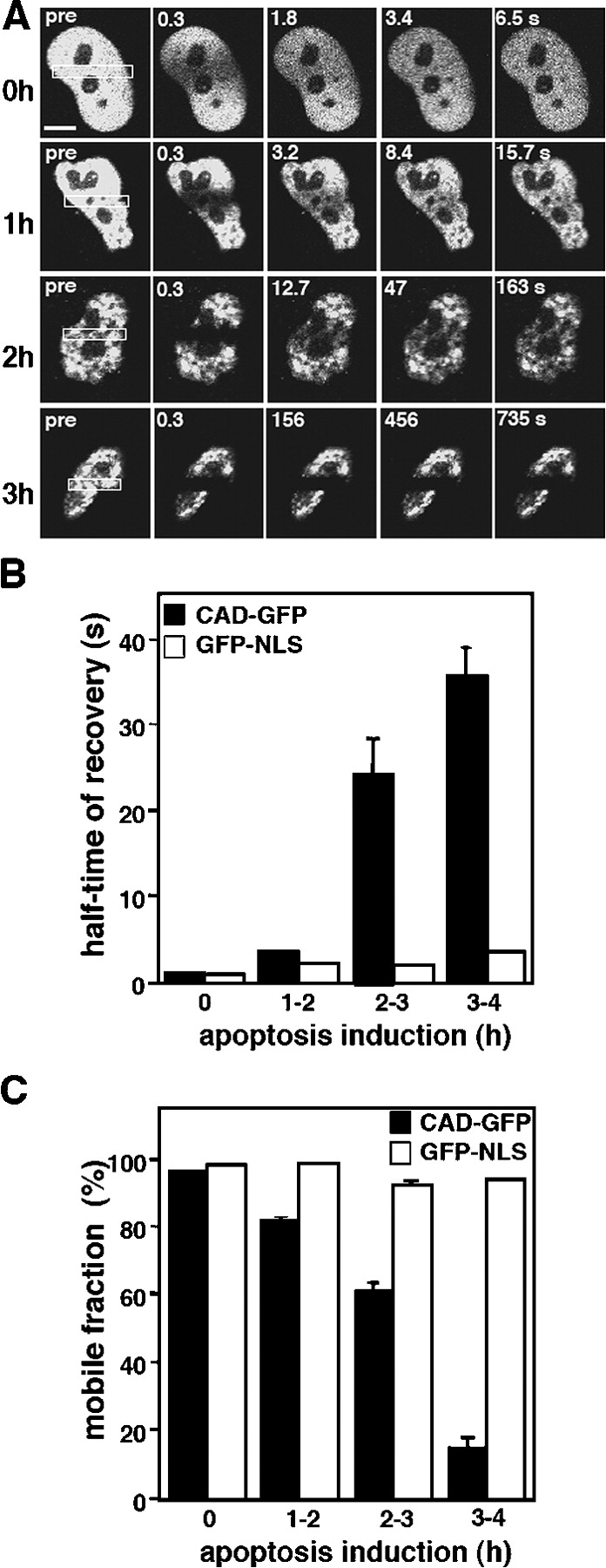
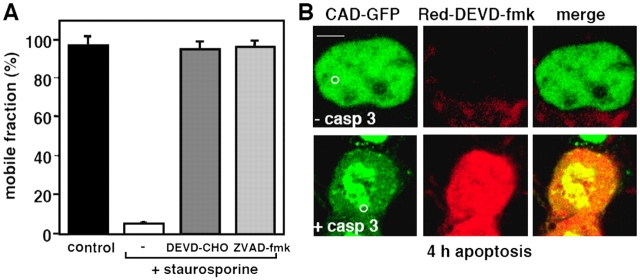
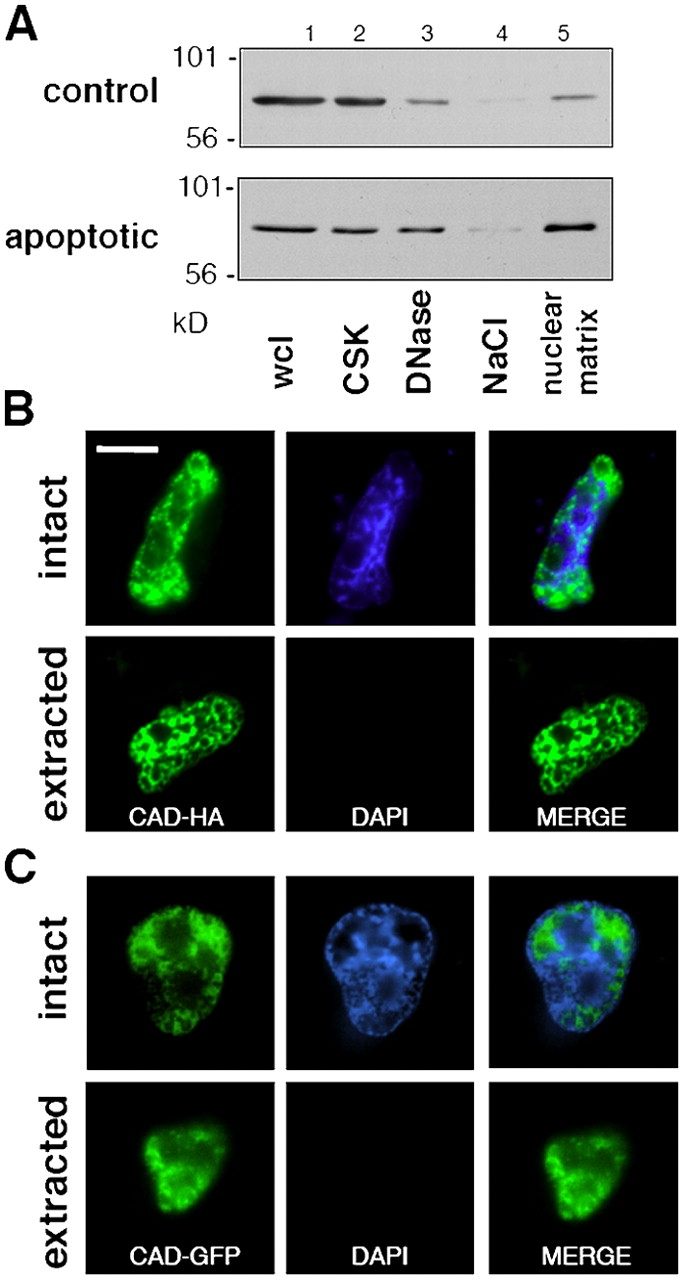
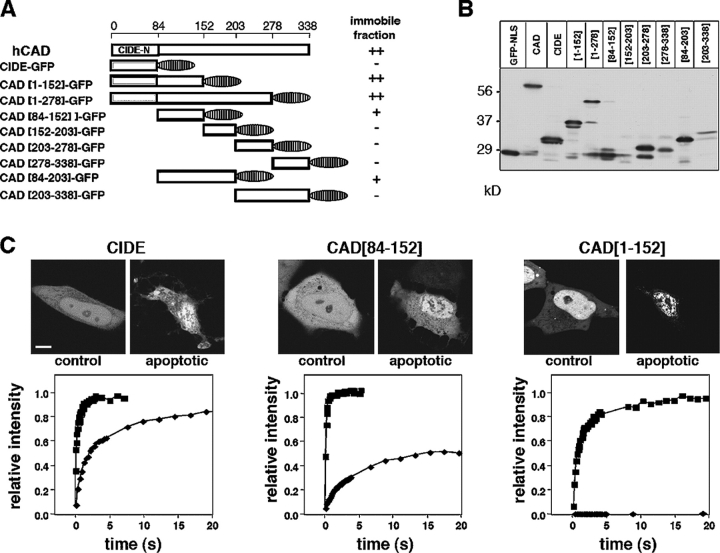
Although compelling evidence supports the central role of caspase-activated DNase (CAD) in oligonucleosomal DNA fragmentation in apoptotic nuclei, the regulation of CAD activity remains elusive in vivo. We used fluorescence photobleaching and biochemical techniques to investigate the molecular dynamics of CAD. The CAD-GFP fusion protein complexed with its inhibitor (ICAD) was as mobile as nuclear GFP in the nucleosol of dividing cells. Upon induction of caspase-3-dependent apoptosis, activated CAD underwent progressive immobilization, paralleled by its attenuated extractability from the nucleus. CAD immobilization was mediated by its NH2 terminus independently of its DNA-binding activity and correlated with its association to the interchromosomal space. Preventing the nuclear attachment of CAD provoked its extracellular release from apoptotic cells. We propose a novel paradigm for the regulation of CAD in the nucleus, involving unrestricted accessibility of chromosomal DNA at the initial phase of apoptosis, followed by its nuclear immobilization that may prevent the release of the active nuclease into the extracellular environment.
尽管有确凿证据支持半胱天冬酶激活的脱氧核糖核酸酶(CAD)在凋亡细胞核中寡核小体DNA片段化过程中的核心作用,但CAD活性在体内的调控机制仍不清楚。我们运用荧光光漂白和生化技术来研究CAD的分子动力学。与它的抑制剂(ICAD)复合的CAD - GFP融合蛋白在分裂细胞的核溶质中与核GFP一样具有流动性。在诱导依赖半胱天冬酶-3的凋亡时,活化的CAD逐渐固定化,同时其从细胞核中的可提取性减弱。CAD的固定化由其氨基末端介导,独立于其DNA结合活性,并与其与染色体间空间的结合相关。阻止CAD的核附着会促使其从凋亡细胞中释放到细胞外。我们提出了一种细胞核中CAD调控的新范式,即在凋亡初始阶段染色体DNA具有不受限制的可及性,随后其在细胞核中固定化,这可能会阻止活性核酸酶释放到细胞外环境中。