Okun Michael S, Bowers Dawn, Springer Utaka, Shapira Nathan A, Malone Donald, Rezai Ali R, Nuttin Bart, Heilman Kenneth M, Morecraft Robert J, Rasmussen Steven A, Greenberg Benjamin D, Foote Kelly D, Goodman Wayne K
Movement Disorders Center, University of Florida, Department of Neurology, McKnight Brain Institute, Gaineville, FL 32610, USA.
Neurocase. 2004 Aug;10(4):271-9. doi: 10.1080/13554790490507632.
To describe smiling and euphoria induced by deep brain stimulation (DBS).
The brain systems inducing emotional experiences and displays are not entirely known, but the ventral striatum including the nucleus accumbens has been posited to play a critical role in mediating emotions with positive valence. DBS has been successfully employed for the treatment of movement disorders, and most recently obsessive compulsive disorder (OCD). The purpose of this report is to describe the emotional changes associated with stimulation of the ventral striatum.
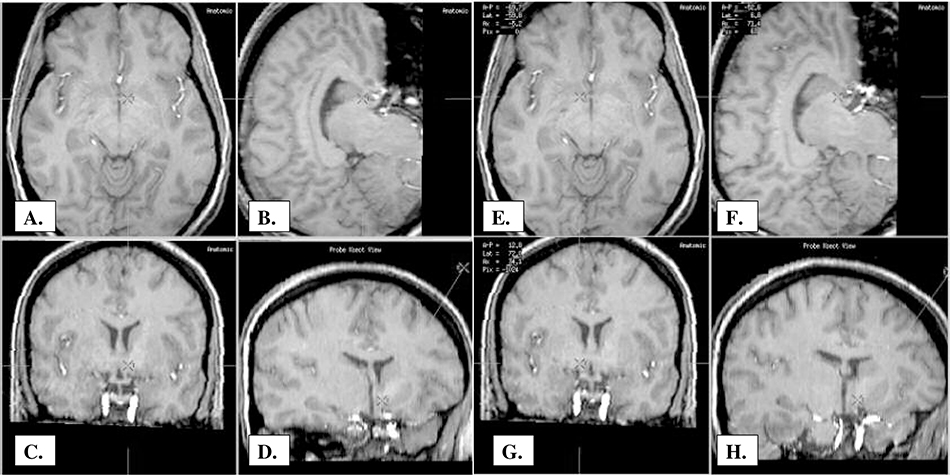
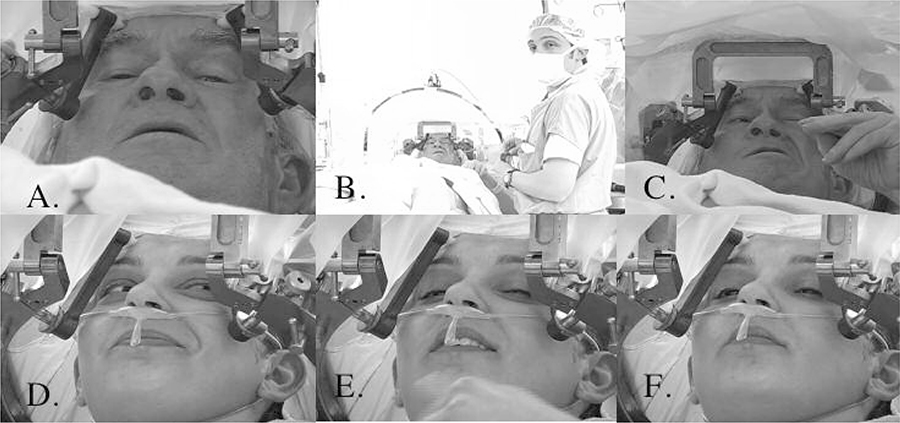
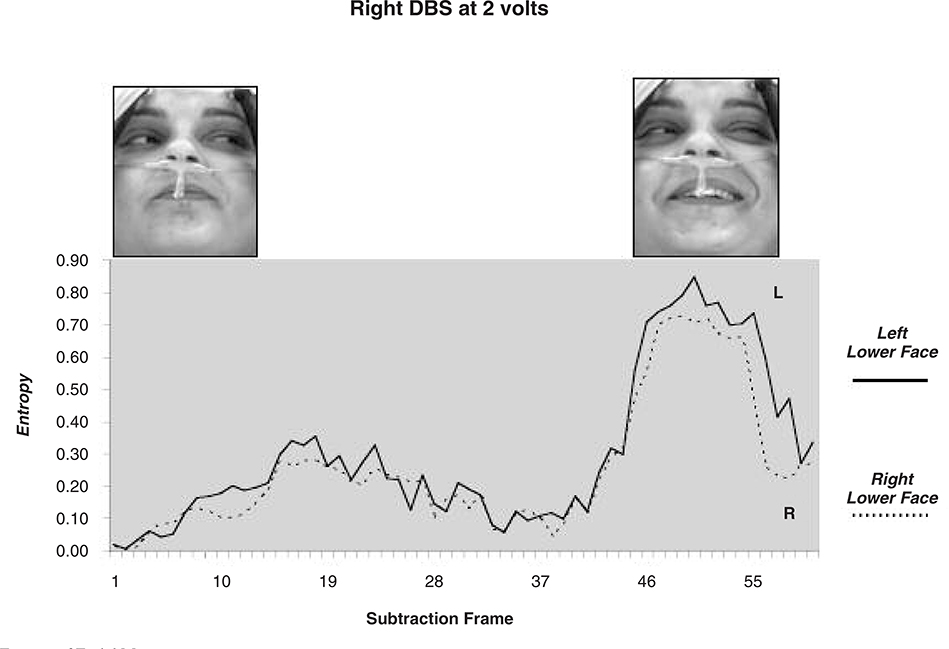
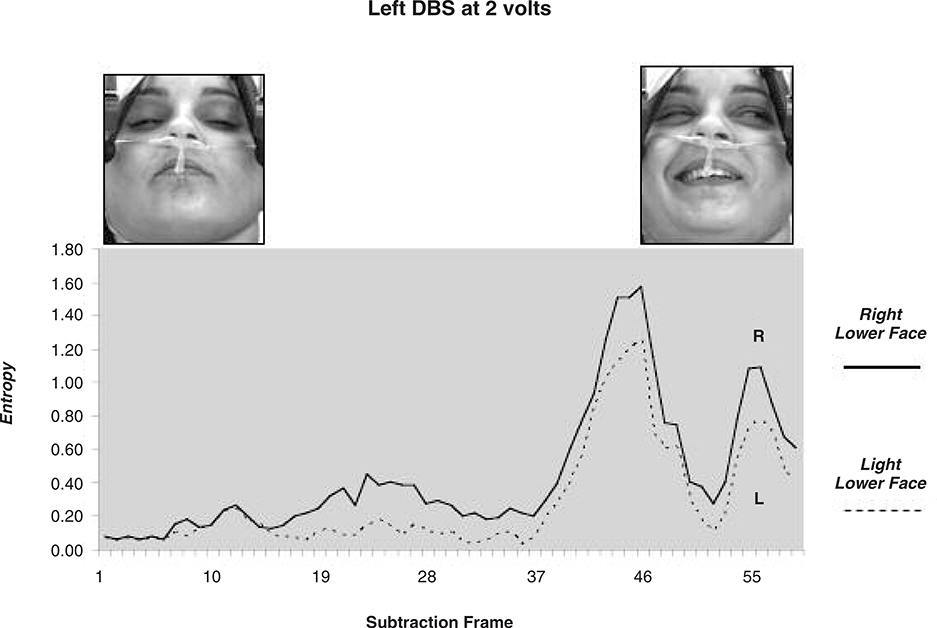
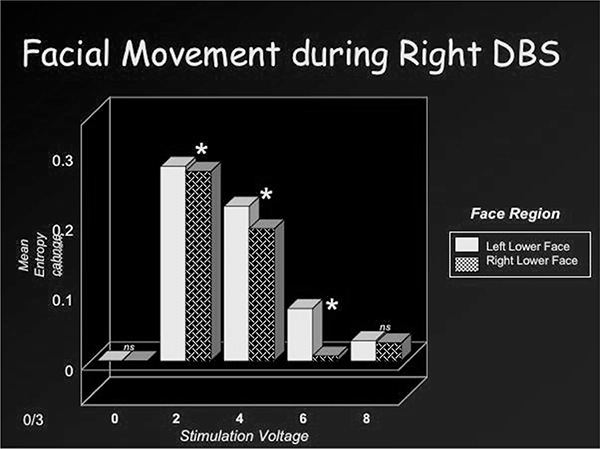
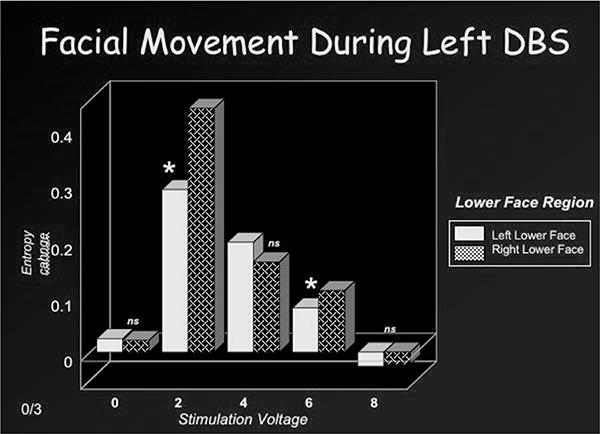
A single patient with intractable OCD had electrode arrays placed in the right and left anterior limbs of the internal capsule and region of the nucleus accumbens. Changes in facial movement during stimulation were quantified by video recording. Ten video segments, time locked to the onset of stimulation, were digitized and changes in pixel intensity that occurred over both sides of the lower face, on a frame by frame basis, following stimulation onset were computed. These summed changes in pixel intensity represented the dependent variable of "entropy" and directly corresponded to changes in light reflectance that occur during facial movement.
During stimulation on both the right and left side, the patient consistently developed a half smile on the side of the face contralateral to the stimulating electrode, and also became euphoric. The effect ceased when DBS was discontinued.
DBS in the region of the nucleus accumbens produced smile and euphoria suggesting that alterations in the ventral striatum may result in emotional experience and displays. We hypothesize the existence of a limbic-motor network responsible for such changes. This observation suggests that DBS may be useful as a therapy for mood disorders.
描述深部脑刺激(DBS)所诱发的微笑和欣快感。
诱发情感体验和表现的脑系统尚未完全明确,但包括伏隔核在内的腹侧纹状体被认为在介导正性情绪中起关键作用。DBS已成功用于治疗运动障碍,最近也用于治疗强迫症(OCD)。本报告的目的是描述与腹侧纹状体刺激相关的情绪变化。
一名患有难治性OCD的患者在内囊左右前肢及伏隔核区域植入电极阵列。通过视频记录对刺激期间的面部运动变化进行量化。选取与刺激开始时间锁定的10个视频片段进行数字化处理,并计算刺激开始后下脸两侧逐帧出现的像素强度变化。这些像素强度的总和变化代表“熵”的因变量,直接对应于面部运动期间发生的光反射变化。
在左右两侧刺激期间,患者在刺激电极对侧的面部始终出现半侧微笑,并且变得欣快。DBS停止后,这种效应消失。
伏隔核区域的DBS产生了微笑和欣快感,提示腹侧纹状体的改变可能导致情感体验和表现。我们推测存在一个负责此类变化的边缘-运动网络。这一观察结果表明,DBS可能作为一种治疗情绪障碍的方法。