Tommerdahl Mark, Simons Stephen B, Chiu Joannellyn S, Favorov Oleg, Whitsel Barry
Department of Biomedical Engineering, University of North Carolina, Chapel Hill, NC 27599, USA.
BMC Neurosci. 2005 Apr 22;6:29. doi: 10.1186/1471-2202-6-29.
While SII cortex is considered to be the first cortical stage of the pathway that integrates tactile information arising from both sides of the body, SI cortex is generally not considered as a region in which neuronal response is modulated by simultaneous stimulation of bilateral (and mirror-image) skin sites.
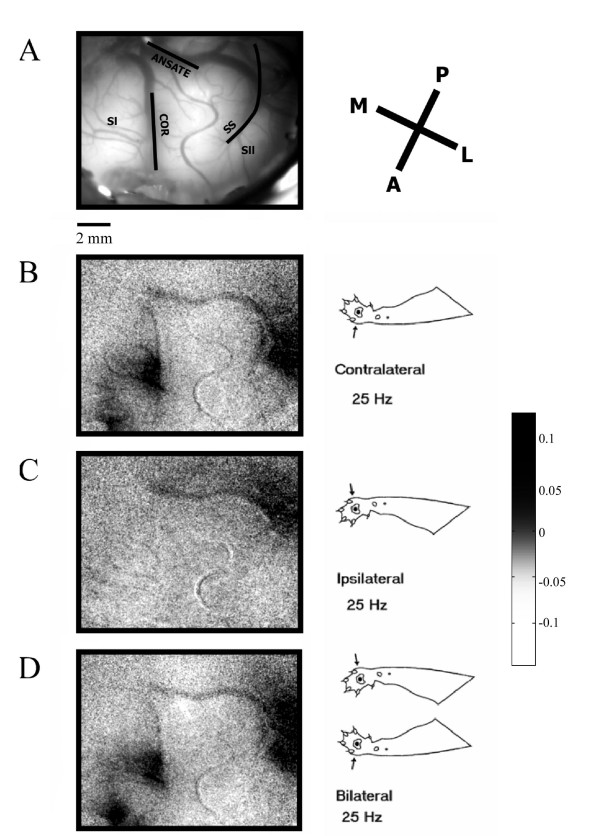
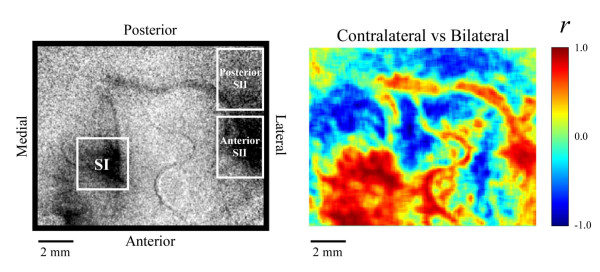
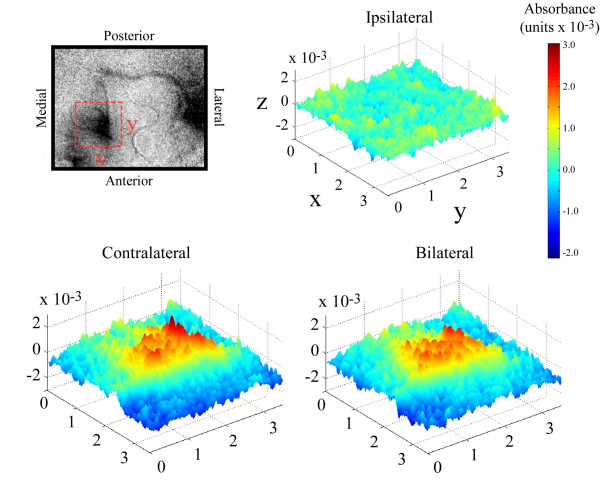
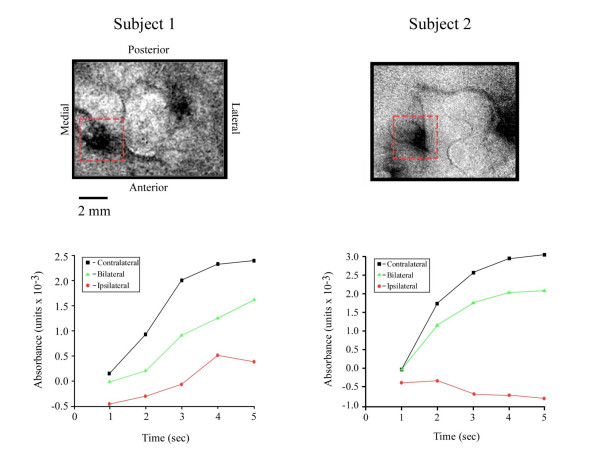
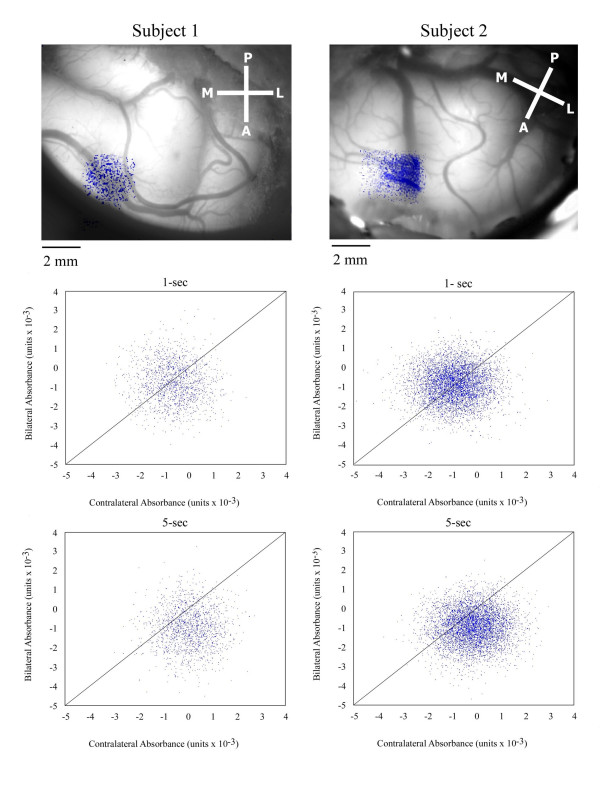
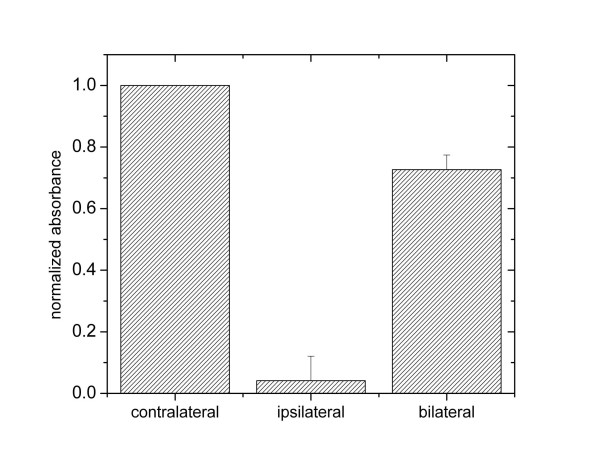
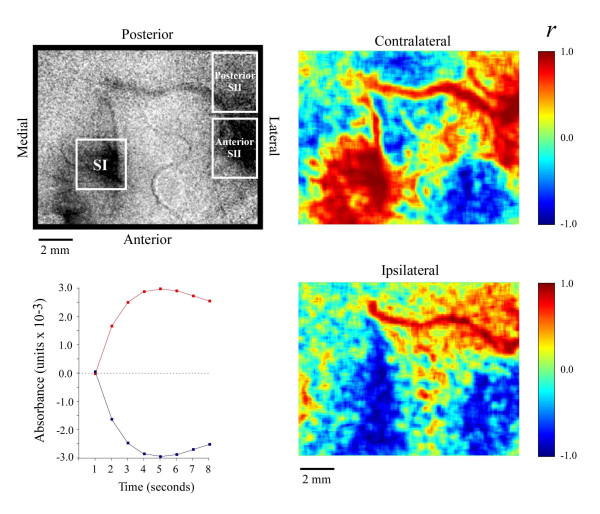
Optical intrinsic signal imaging was used to evaluate the response of SI and SII in the same hemisphere to 25 Hz sinusoidal vertical skin displacement stimulation ("skin flutter") applied contralaterally, ipsilaterally, and bilaterally (simultaneously) to the central pads of the forepaws. A localized increase in absorbance in both SI and SII occurred in response to both contralateral and bilateral flutter stimulation. Ipsilateral flutter stimulation evoked a localized increase in absorbance in SII, but little or no change in SI absorbance. In the forepaw representational region of SI, however, bilateral stimulation of the central pads evoked a response substantially smaller (approximately 30-35% smaller) than the response to flutter stimulation of the contralateral central pad.
The finding that the response of SI cortex to bilateral central pad flutter stimulation is substantially smaller than the response evoked by a contralateral flutter stimulus, together with the recently published observation that a region located posteriorly in SII responds with a substantially larger response to a bilateral flutter stimulus than the response evoked from the contralateral central pad, lead us to propose that the SI activity evoked by contralateral skin stimulation is suppressed/inhibited (via corticocortical connections between SII and SI in the same hemisphere) by the activity a simultaneous ipsilateral skin stimulus evokes in posterior SII.
虽然体感第二皮质(SII)被认为是整合来自身体两侧触觉信息的通路的第一个皮质阶段,但体感第一皮质(SI)通常不被视为一个神经元反应会因双侧(和镜像)皮肤部位同时受到刺激而被调节的区域。
采用光学内在信号成像技术,评估同一半球的SI和SII对以25Hz正弦垂直皮肤位移刺激(“皮肤颤动”)的反应,该刺激分别施加于前爪中央肉垫的对侧、同侧和双侧(同时)。对侧和双侧颤动刺激均引起SI和SII的吸光度局部增加。同侧颤动刺激引起SII的吸光度局部增加,但SI吸光度几乎没有变化或无变化。然而,在SI的前爪代表区,双侧刺激中央肉垫所诱发的反应明显小于对侧中央肉垫颤动刺激所诱发的反应(约小30 - 35%)。
SI皮质对双侧中央肉垫颤动刺激的反应明显小于对侧颤动刺激所诱发的反应,以及最近发表的观察结果,即SII后部的一个区域对双侧颤动刺激的反应比对侧中央肉垫诱发的反应大得多,这使我们提出,对侧皮肤刺激诱发的SI活动被同侧皮肤刺激在SII后部同时诱发的活动(通过同一半球内SII和SI之间的皮质皮质连接)抑制。