Leung Ray K M, Whittaker Paul A
Novartis Institutes for Biomedical Research, Respiratory Disease Area, Wimblehurst Road, Horsham, West Sussex, RH12 5AB, United Kingdom.
Pharmacol Ther. 2005 Aug;107(2):222-39. doi: 10.1016/j.pharmthera.2005.03.004.
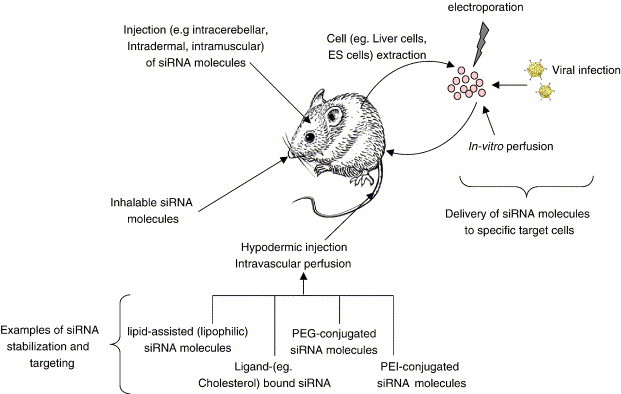
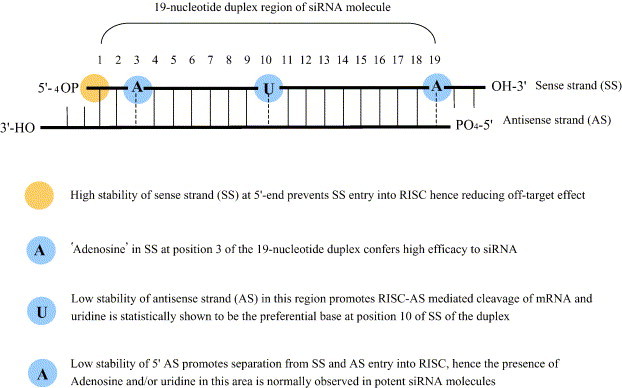
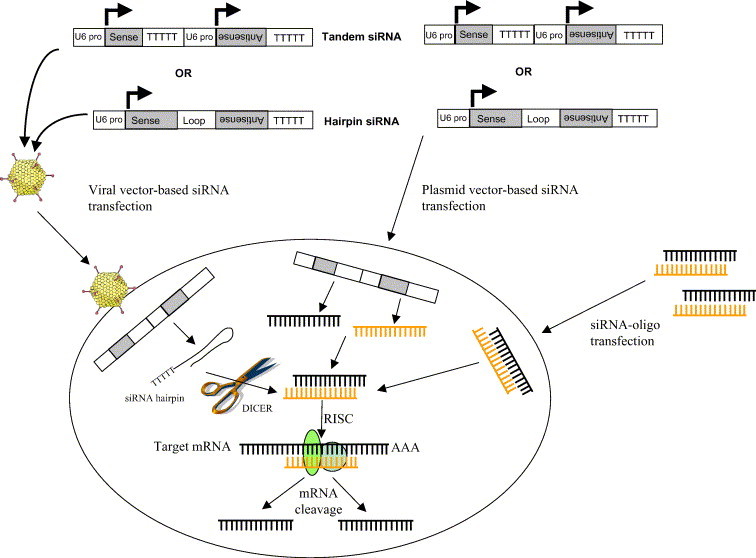
In the past 4 years, RNA interference (RNAi) has become widely used as an experimental tool to analyse the function of mammalian genes, both in vitro and in vivo. By harnessing an evolutionary conserved endogenous biological pathway, first identified in plants and lower organisms, double-stranded RNA (dsRNA) reagents are used to bind to and promote the degradation of target RNAs, resulting in knockdown of the expression of specific genes. RNAi can be induced in mammalian cells by the introduction of synthetic double-stranded small interfering RNAs (siRNAs) 21-23 base pairs (bp) in length or by plasmid and viral vector systems that express double-stranded short hairpin RNAs (shRNAs) that are subsequently processed to siRNAs by the cellular machinery. RNAi has been widely used in mammalian cells to define the functional roles of individual genes, particularly in disease. In addition, siRNA and shRNA libraries have been developed to allow the systematic analysis of genes required for disease processes such as cancer using high throughput RNAi screens. RNAi has been used for the knockdown of gene expression in experimental animals, with the development of shRNA systems that allow tissue-specific and inducible knockdown of genes promising to provide a quicker and cheaper way to generate transgenic animals than conventional approaches. Finally, because of the ability of RNAi to silence disease-associated genes in tissue culture and animal models, the development of RNAi-based reagents for clinical applications is gathering pace, as technological enhancements that improve siRNA stability and delivery in vivo, while minimising off-target and nonspecific effects, are developed.
在过去4年里,RNA干扰(RNAi)已被广泛用作一种实验工具,用于在体外和体内分析哺乳动物基因的功能。通过利用一种在植物和低等生物中首次发现的进化保守的内源性生物学途径,双链RNA(dsRNA)试剂被用于结合并促进靶RNA的降解,从而导致特定基因表达的敲低。在哺乳动物细胞中,可通过导入长度为21 - 23个碱基对(bp)的合成双链小干扰RNA(siRNA),或通过表达双链短发夹RNA(shRNA)的质粒和病毒载体系统来诱导RNAi,这些shRNA随后会被细胞机制加工成siRNA。RNAi已在哺乳动物细胞中广泛用于确定单个基因的功能作用,尤其是在疾病研究方面。此外,还开发了siRNA和shRNA文库,以便利用高通量RNAi筛选系统分析癌症等疾病过程所需的基因。随着允许组织特异性和可诱导性基因敲低的shRNA系统的开发,RNAi已被用于在实验动物中敲低基因表达,有望提供一种比传统方法更快、更便宜的方式来生成转基因动物。最后,由于RNAi能够在组织培养和动物模型中沉默与疾病相关的基因,随着能够提高siRNA在体内的稳定性和递送效率,同时将脱靶和非特异性效应降至最低的技术改进的发展,基于RNAi的临床应用试剂的开发正在加速。