Gonzalez-Santos Juana Maria, Cao Huibi, Wang Anan, Koehler David R, Martin Bernard, Navab Roya, Hu Jim
Programme in Lung Biology Research and the Canadian Institutes of Health Research Group in Lung Development, Hospital for Sick Children Toronto, Canada M5G 1X8.
Nucleic Acids Res. 2005 Jun 8;33(10):e94. doi: 10.1093/nar/gni093.
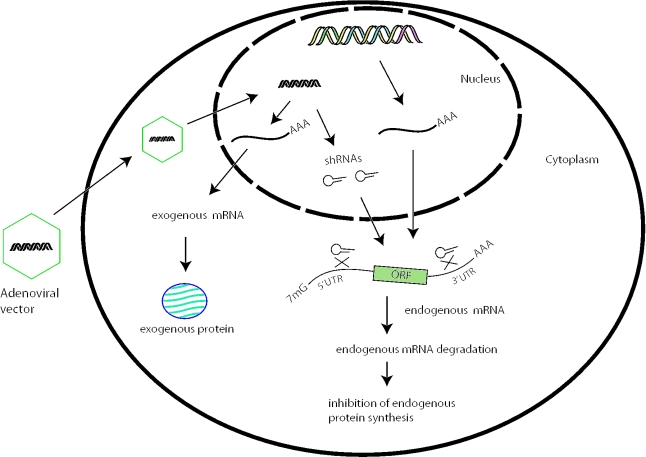
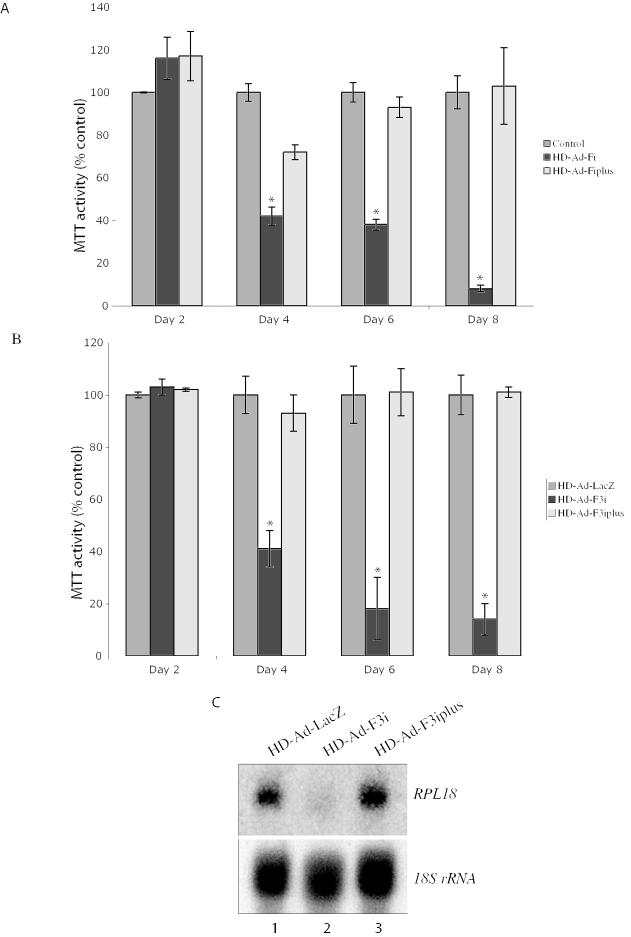
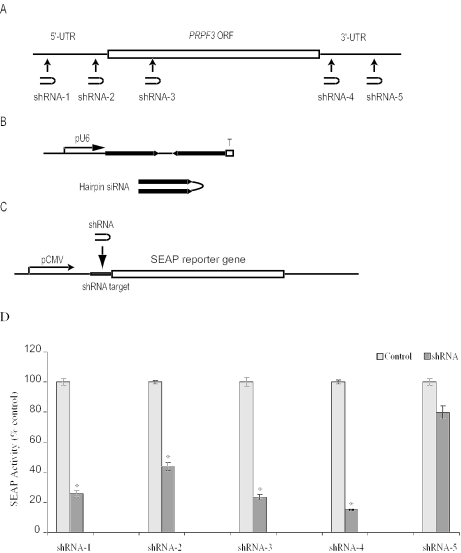
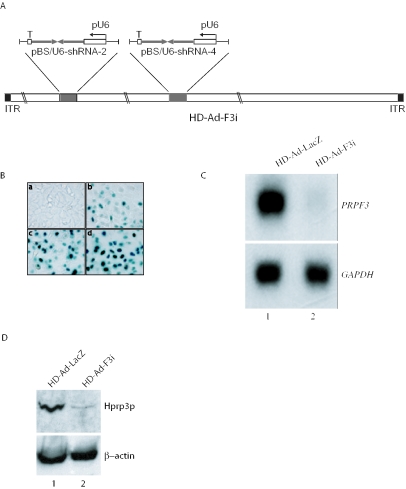
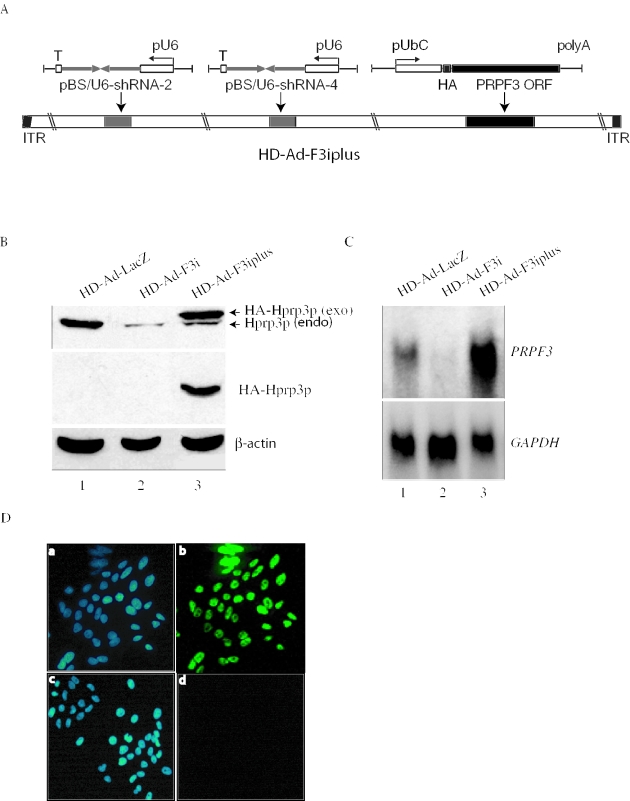
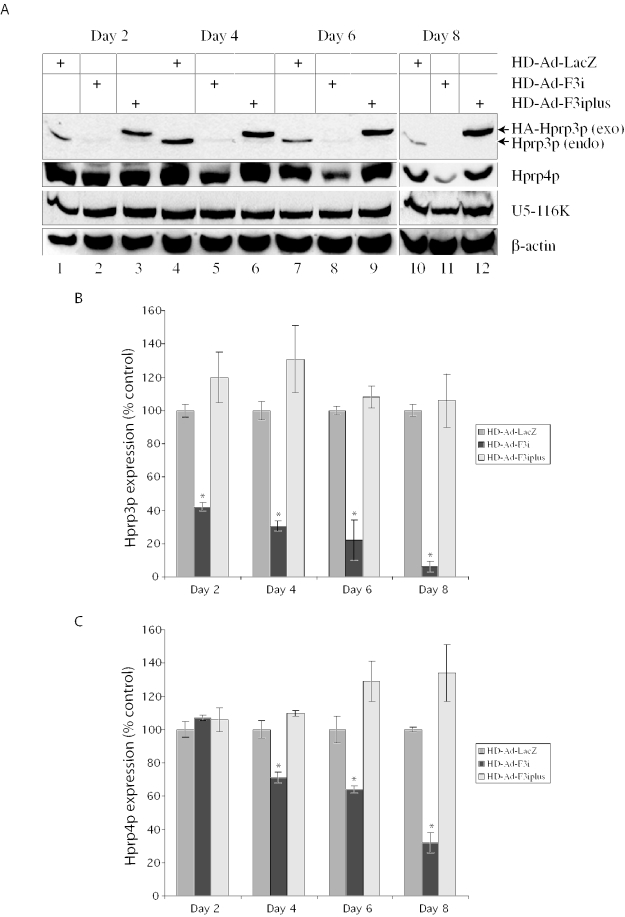
Our progress in understanding mammalian gene function has lagged behind that of gene identification. New methods for mammalian gene functional analysis are needed to accelerate the process. In yeast, the powerful genetic shuffle system allows deletion of any chromosomal gene by homologous recombination and episomal expression of a mutant allele in the same cell. Here, we report a method for mammalian cells, which employs a helper-dependent adenoviral (HD-Ad) vector to synthesize small hairpin (sh) RNAs to knock-down the expression of an endogenous gene by targeting untranslated regions (UTRs). The vector simultaneously expresses an exogenous version of the same gene (wild-type or mutant allele) lacking the UTRs for functional analysis. We demonstrated the utility of the method by using PRPF3, which encodes the human RNA splicing factor Hprp3p. Recently, missense mutations in PRPF3 were found to cause autosomal-dominant Retinitis Pigmentosa, a form of genetic eye diseases affecting the retina. We knocked-down endogenous PRPF3 in multiple cell lines and rescued the phenotype (cell death) with exogenous PRPF3 cDNA, thereby creating a genetic complementation method. Because Ad vectors can efficiently transduce a wide variety of cell types, and many tissues in vivo, this method could have a wide application for gene function studies.
我们在理解哺乳动物基因功能方面的进展落后于基因识别。需要新的哺乳动物基因功能分析方法来加速这一进程。在酵母中,强大的基因洗牌系统允许通过同源重组删除任何染色体基因,并在同一细胞中附加型表达突变等位基因。在此,我们报道一种适用于哺乳动物细胞的方法,该方法利用辅助依赖型腺病毒(HD-Ad)载体合成小发夹(sh)RNA,通过靶向非翻译区(UTR)来敲低内源基因的表达。该载体同时表达同一基因的外源版本(野生型或突变等位基因),缺失UTR用于功能分析。我们通过使用编码人类RNA剪接因子Hprp3p的PRPF3证明了该方法的实用性。最近,发现PRPF3中的错义突变会导致常染色体显性遗传性视网膜色素变性,这是一种影响视网膜的遗传性眼病。我们在多个细胞系中敲低内源PRPF3,并使用外源PRPF3 cDNA挽救了表型(细胞死亡),从而创建了一种基因互补方法。由于腺病毒载体可以有效地转导多种细胞类型以及体内的许多组织,因此该方法在基因功能研究中可能具有广泛的应用。