Zhang Yuhang, Rosenberg Stephen, Wang Hanming, Imtiyaz Hongxia Z, Hou Ying-Ju, Zhang Jianke
Kimmel Cancer Center, Department of Microbiology and Immunology, Thomas Jefferson University, Philadelphia, PA 19107, USA.
J Immunol. 2005 Sep 1;175(5):3033-44. doi: 10.4049/jimmunol.175.5.3033.
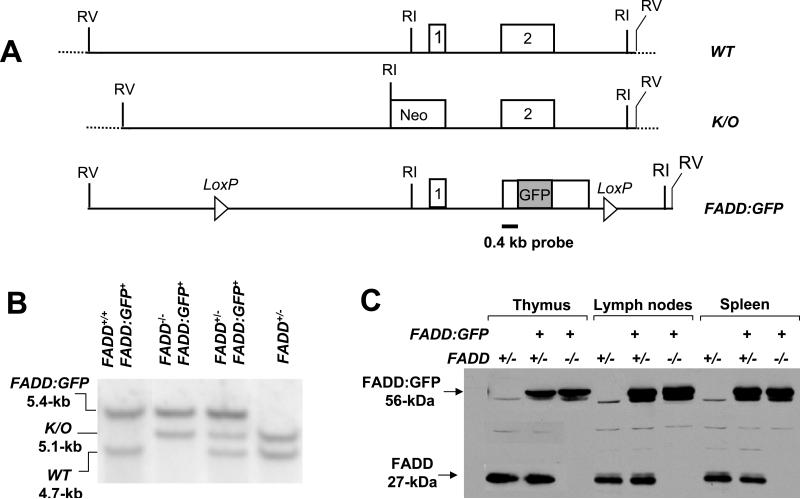
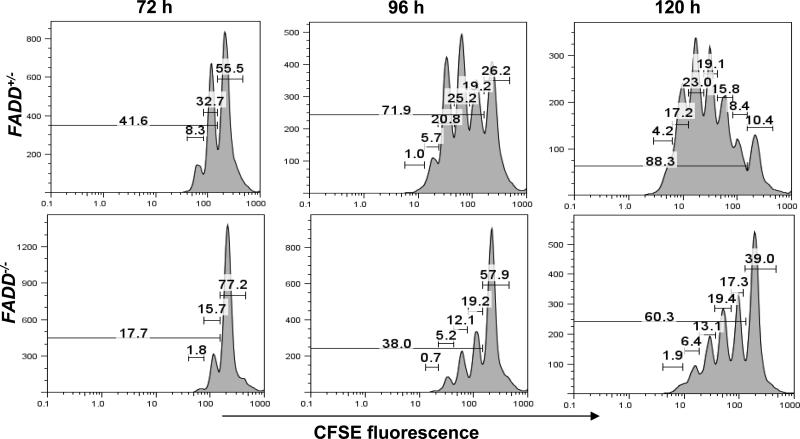
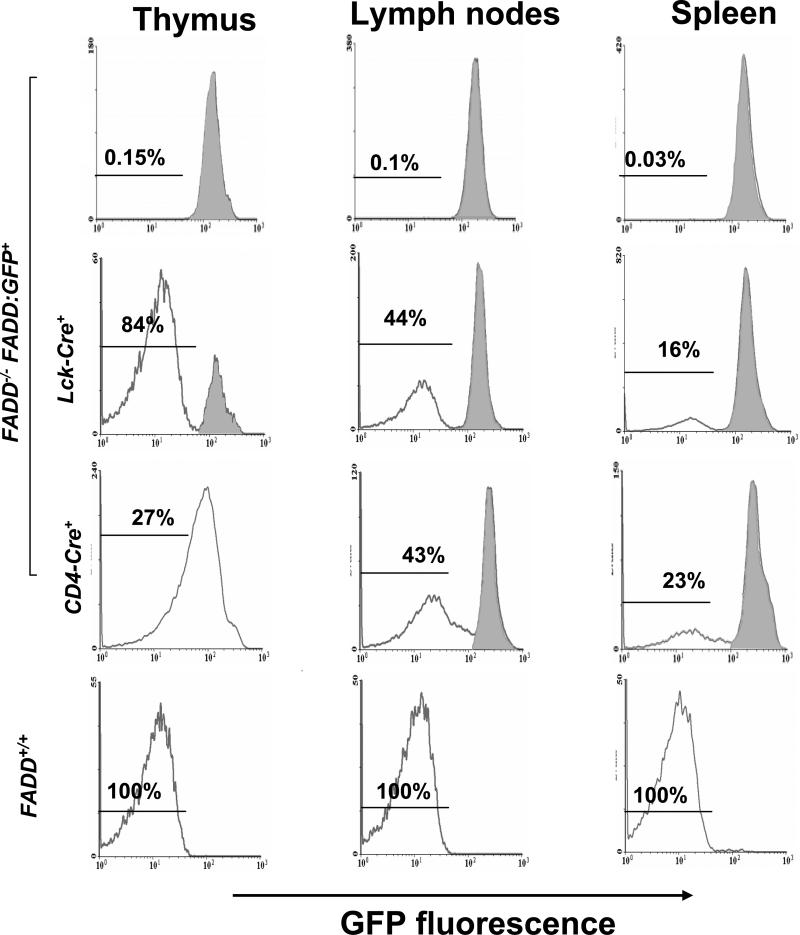
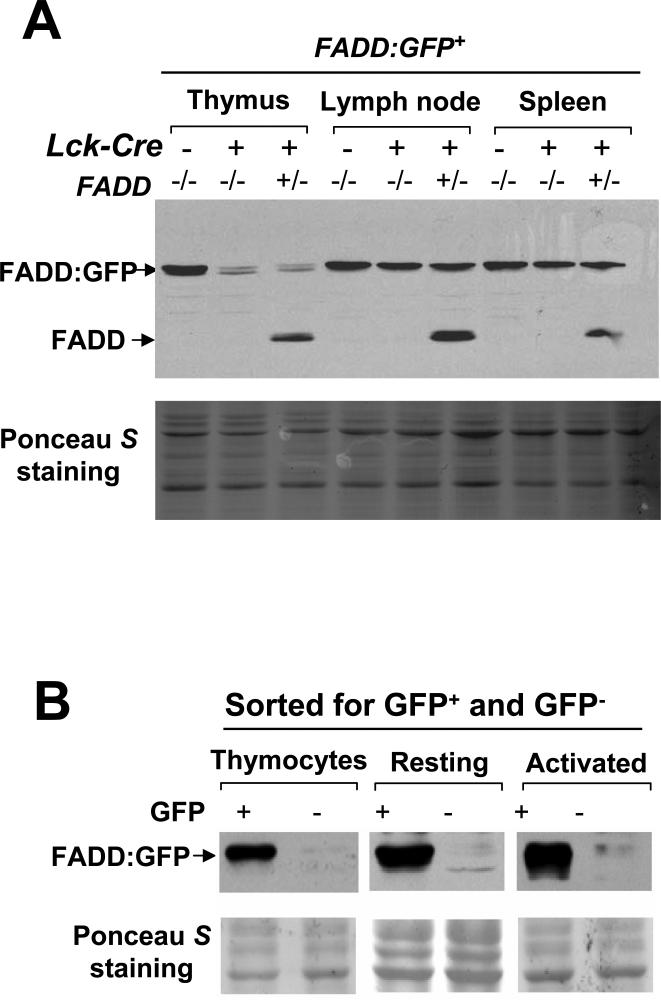
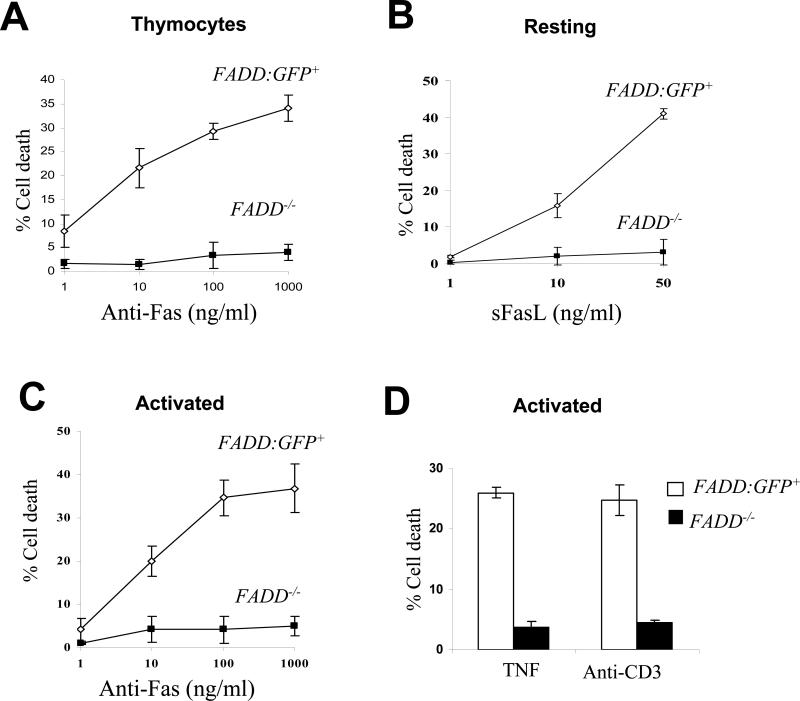
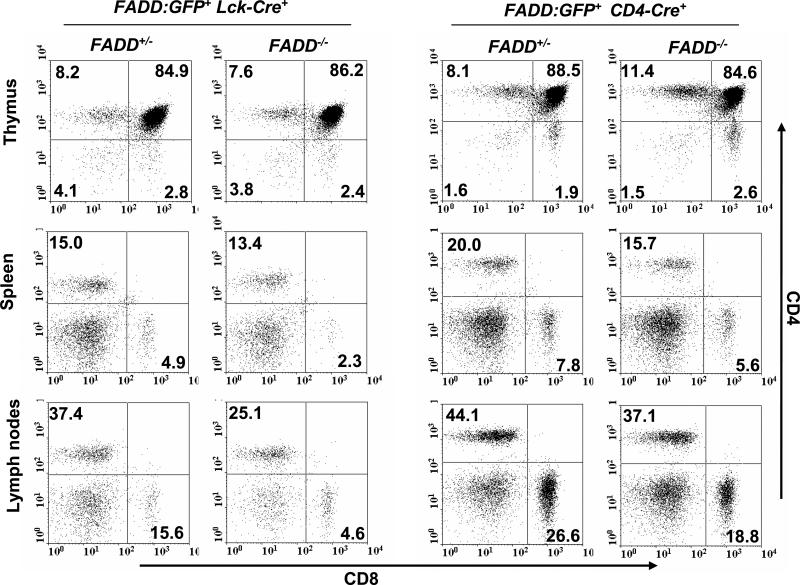
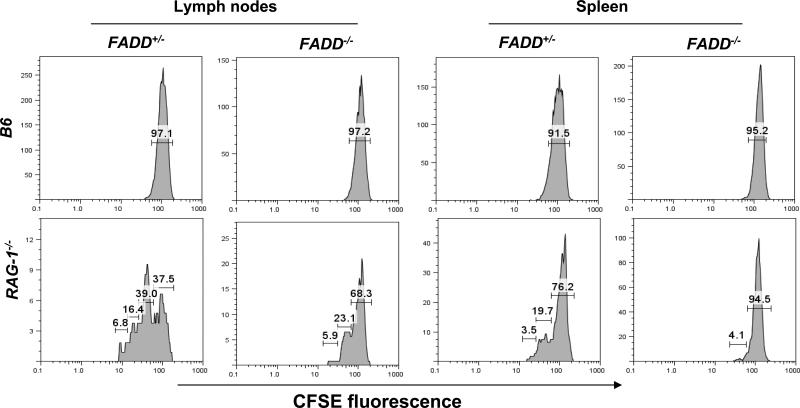
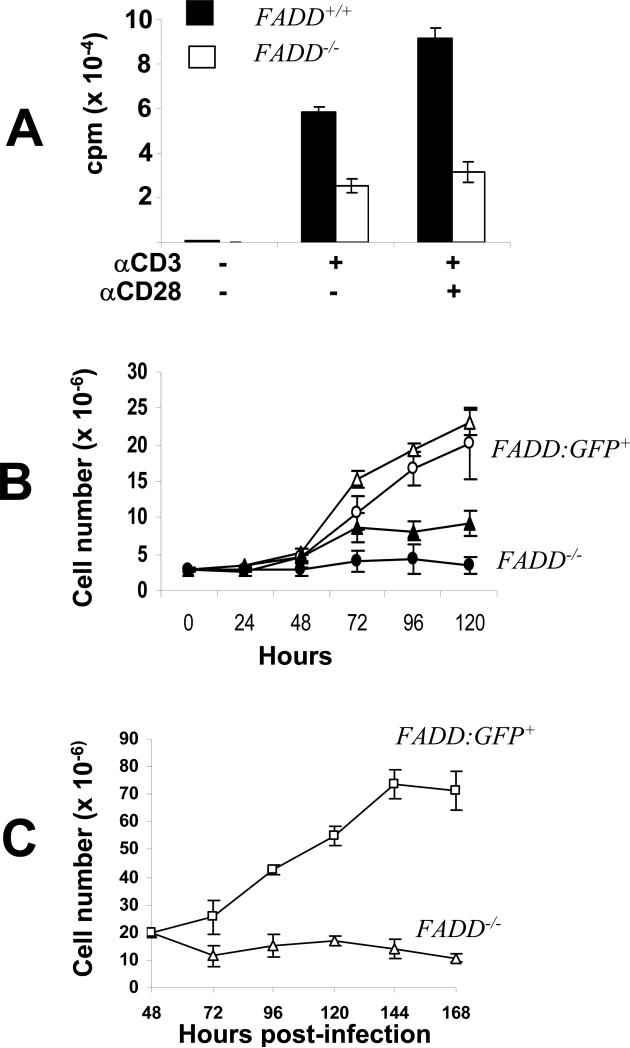
Fas-associated death domain protein (FADD)/mediator of receptor-induced toxicity-1 is required for signaling induced by death receptors such as Fas. In earlier studies, FADD-deficient mice died in utero, and a FADD deficiency in embryonic stem cells inhibited T cell production in viable FADD-/- -->RAG-1-/- chimeras. To analyze the temporal requirement of FADD in the development and function in the T lineage, it is necessary to establish viable mutant mice producing detectable FADD-deficient T cells. We generated mice that express a functional FADD:GFP fusion gene reconstituting normal embryogenesis and lymphopoiesis in the absence of the endogenous FADD. Efficient T cell-specific deletion of FADD:GFP was achieved, as indicated by the presence of a high percentage of GFP-negative thymocytes and peripheral T cells in mice expressing Lck-Cre or CD4-Cre. Sorted GFP-negative thymocytes and peripheral T cells contained undetectable levels of FADD and were resistant to apoptosis induced by Fas, TNF, and TCR restimulation. These T cell-specific FADD-deficient mice contain normal thymocyte numbers, but fewer peripheral T cells. Purified peripheral FADD-deficient T cells failed to undergo extensive homeostatic expansion after adoptive transfer into lymphocyte-deficient hosts, and responded poorly to proliferation induced by ex vivo TCR stimulation. Furthermore, deletion of FADD in preactivated mature T cells using retrovirus-Cre resulted in no proliferation. These results demonstrate that FADD plays a dispensable role during thymocyte development, but is essential in maintaining peripheral T cell homeostasis and regulating both apoptotic and proliferation signals.
Fas相关死亡结构域蛋白(FADD)/受体诱导毒性介质-1是Fas等死亡受体诱导信号传导所必需的。在早期研究中,FADD缺陷型小鼠在子宫内死亡,胚胎干细胞中的FADD缺陷抑制了存活的FADD-/-→RAG-1-/-嵌合体中T细胞的产生。为了分析FADD在T细胞谱系发育和功能中的时间需求,有必要建立能够产生可检测到的FADD缺陷型T细胞的存活突变小鼠。我们构建了在缺乏内源性FADD的情况下表达功能性FADD:GFP融合基因的小鼠,该基因可重建正常的胚胎发育和淋巴细胞生成。如在表达Lck-Cre或CD4-Cre的小鼠中存在高比例的GFP阴性胸腺细胞和外周T细胞所示,实现了FADD:GFP的高效T细胞特异性缺失。分选的GFP阴性胸腺细胞和外周T细胞中FADD水平检测不到,并且对Fas、TNF和TCR再刺激诱导的凋亡具有抗性。这些T细胞特异性FADD缺陷型小鼠胸腺细胞数量正常,但外周T细胞较少。纯化的外周FADD缺陷型T细胞在过继转移到淋巴细胞缺陷型宿主后未能进行广泛的稳态扩增,并且对体外TCR刺激诱导的增殖反应较差。此外,使用逆转录病毒-Cre在预激活的成熟T细胞中缺失FADD导致细胞不增殖。这些结果表明,FADD在胸腺细胞发育过程中起非必需作用,但在维持外周T细胞稳态以及调节凋亡和增殖信号方面至关重要。